Smoothness — or more precisely, the absence of orange peel texture — is one of the most visible quality attributes of a powder coated surface. While some degree of texture is inherent to the powder coating process, achieving the smoothest possible finish requires understanding and controlling the multiple factors that influence surface flow during the melt and cure phase.
Guides
How to Achieve a Smooth Powder Coating Finish: From Substrate Prep to Flow Optimization
Sundial Powder Coating·April 22, 2026·13 min
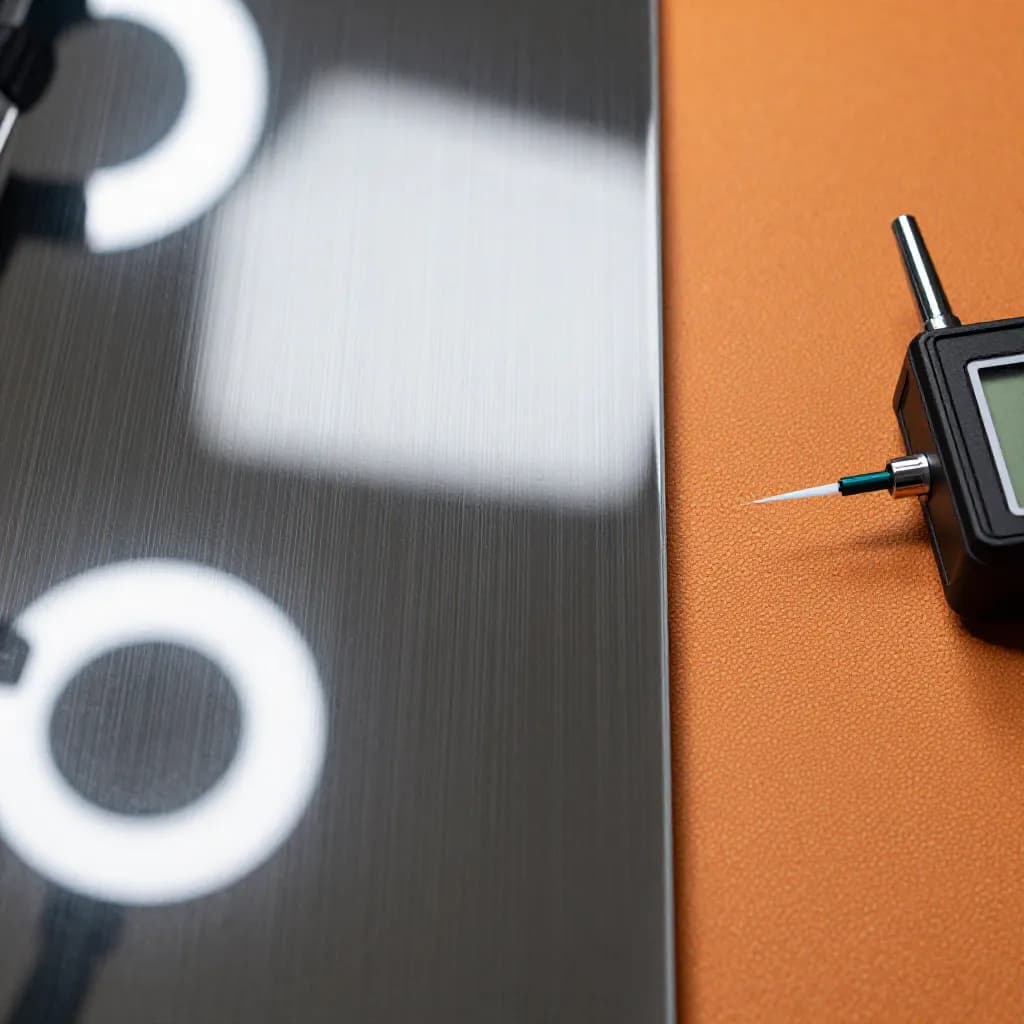
The smoothness of a cured powder coating is determined by how well the powder particles melt, flow together, and level before the cross-linking reaction locks the surface in place. During curing, the powder first melts into a liquid film, then the liquid flows and levels under the influence of surface tension, and finally the cross-linking reaction increases the viscosity until the film gels and can no longer flow. The smoothness of the final surface depends on how much leveling occurs during the window between melting and gelation.
Ready to Start Your Project?
From one-off customs to 15,000-part production runs — get precise pricing in 24 hours.
On This Page
What Determines Smoothness in Powder Coating
Several factors influence this leveling process. The powder particle size distribution determines how uniformly the powder melts and how quickly a continuous liquid film forms. The melt viscosity of the powder — controlled by the resin chemistry and formulation — determines how readily the liquid flows and levels. The film thickness affects leveling because thicker films have more material available to fill surface irregularities. The substrate surface profile affects the starting point for leveling — a rougher substrate requires more leveling to achieve a smooth surface. And the cure schedule affects the time available for leveling before gelation.
This guide addresses each of these factors with practical techniques for maximizing surface smoothness in production powder coating operations.
Particle Size Distribution and Its Effect on Smoothness
Powder particle size distribution is one of the most significant factors affecting surface smoothness, yet it is often overlooked because it is determined during powder manufacturing rather than during the coating application process. Understanding particle size effects helps in selecting the right powder grade and in managing reclaim powder to maintain surface quality.
Standard powder coatings have a median particle size (D50) of 30-45 microns, with a distribution ranging from approximately 10 to 100 microns. Finer powders — with D50 values of 20-30 microns — produce smoother finishes because the smaller particles melt more quickly and uniformly, forming a continuous liquid film faster and allowing more time for leveling before gelation. Coarser powders take longer to melt completely, and large particles may not fully melt and flow before the cross-linking reaction begins, leaving visible texture in the cured film.
The particle size distribution also matters. A narrow distribution — where most particles are close to the median size — produces a more uniform melt and smoother finish than a wide distribution with the same median. Powders with a significant fraction of very large particles (above 80 microns) will have visible texture regardless of the median size, because these large particles create localized thick spots that do not level completely.
Reclaim powder — overspray that is collected and reused — tends to have a different particle size distribution than virgin powder. The reclaim process preferentially collects finer particles (which are more easily captured by the reclaim system) and may also contain agglomerates formed by electrostatic attraction in the reclaim hopper. Blending reclaim powder with virgin powder at ratios above 30% can shift the overall particle size distribution enough to affect surface smoothness. Sieve reclaim powder through a 150-micron screen before blending to remove agglomerates, and monitor the blend ratio to maintain consistent surface quality.
If surface smoothness is a critical requirement, specify a fine-grind powder from the manufacturer. Fine-grind powders are milled to a tighter, finer particle size distribution specifically for applications requiring superior surface quality. They cost more than standard grind but produce noticeably smoother finishes.
Substrate Preparation for Maximum Smoothness
The substrate surface condition sets the baseline for the finished coating smoothness. A rough substrate requires the coating to fill the surface profile before it can begin to level, consuming leveling capacity that would otherwise contribute to a smoother final surface. For the smoothest possible finish, start with the smoothest practical substrate.
Blast profile depth should be minimized for smooth finish applications while still providing adequate adhesion. A profile of 25-40 microns is sufficient for most powder coating adhesion requirements and leaves more of the coating's leveling capacity available for surface smoothness. Deeper profiles of 50-75 microns, while excellent for adhesion, create a rougher starting surface that the coating must overcome.
The choice of blast media affects the profile shape as well as the depth. Angular media (steel grit, aluminum oxide) creates sharp peaks and deep valleys that are more difficult for the coating to level than the rounded dimples created by spherical media (glass bead, steel shot). For smooth finish applications, consider using glass bead or a blend of angular and spherical media to create a profile that provides adhesion without excessive roughness.
Substrate defects that are invisible on bare metal become visible under a smooth, glossy powder coating. Grinding marks, weld spatter, porosity in castings, and surface scratches all telegraph through the coating and are magnified by the gloss. For high-quality smooth finishes, inspect the substrate carefully before coating and address any surface defects by grinding, filling, or polishing. The time invested in substrate perfection pays dividends in coating appearance.
Chemical pretreatment can also affect surface smoothness. Some pretreatment chemistries — particularly zinc phosphate with its crystalline structure — add micro-roughness to the surface that can affect the smoothness of thin coatings. For the smoothest finishes, iron phosphate or zirconium-based pretreatments, which produce smoother conversion coatings, may be preferred.
Gun Settings and Application Technique for Smooth Finishes
Application technique affects smoothness primarily through its influence on film thickness uniformity. Uneven powder deposition creates thickness variations that manifest as texture in the cured film — thick areas flow differently than thin areas, and the transitions between them create visible surface irregularities.
Apply powder at a consistent, moderate film thickness within the manufacturer's recommended range. For most smooth-finish powders, the optimal thickness is 60-80 microns. Thinner films may not have enough material to level completely over the substrate profile. Thicker films provide more leveling capacity but increase the risk of runs, sags, and orange peel from excessive film build.
Use moderate voltage settings — 50-70 kV — for smooth finish applications. High voltage increases back-ionization risk, which creates surface texture that persists through the cure process. The micro-craters caused by back-ionization are one of the most common causes of texture on parts that should be smooth.
Maintain consistent gun distance and travel speed throughout each pass. Variations in distance create alternating bands of thick and thin coating that are visible as texture on smooth, glossy surfaces. Use a gun distance of 200-250 mm and a steady travel speed that deposits the target thickness in two to three passes with 50% overlap.
Powder flow rate should be moderate — high flow rates can overwhelm the charging capacity of the gun, resulting in poorly charged particles that deposit unevenly. A flow rate of 150-250 grams per minute is typical for manual application of smooth finishes. Ensure the powder is well-fluidized in the feed hopper — poorly fluidized powder feeds inconsistently, causing surges and starving that create thickness variations.
After application, inspect the uncured powder film under raking light (light at a low angle to the surface). Thickness variations and application defects are visible in the uncured powder as differences in density and texture. Correct any visible problems before the part enters the oven — once cured, these defects are permanent.
Flow Additives and Powder Formulation Factors
The powder formulation itself is the single largest determinant of surface smoothness. The resin chemistry, flow additives, and curing agent all influence the melt viscosity, leveling behavior, and gel time that control how smooth the cured surface will be.
Flow additives — typically acrylic polymers such as benzoin or polyacrylate leveling agents — are incorporated into the powder formulation during manufacturing to reduce surface tension and promote leveling of the molten film. Higher levels of flow additive produce smoother surfaces but can also cause inter-coat adhesion problems if the part will be recoated, because the flow additive migrates to the surface and creates a low-energy layer that resists bonding.
Benzoin is the most common degassing additive in powder coatings. It reduces the surface tension of the molten film and helps release trapped air and gases that would otherwise create pinholes and craters. Adequate benzoin levels are essential for smooth finishes, particularly on substrates that tend to outgas (castings, galvanized steel, and previously coated surfaces).
The gel time of the powder — the time between melting and the onset of cross-linking — determines the leveling window. Powders with longer gel times have more time to flow and level before the film gels, producing smoother surfaces. Powders formulated for fast cure or low-temperature cure may have shorter gel times and produce rougher surfaces as a trade-off for processing speed.
If the standard powder formulation does not achieve the required smoothness, discuss the requirement with the powder manufacturer. They may be able to adjust the formulation — increasing flow additive levels, modifying the resin blend, or adjusting the curing agent — to improve smoothness for your specific application. Custom formulation adjustments are common for demanding smooth-finish applications.
Cure Schedule Optimization for Surface Flow
The cure schedule affects smoothness by controlling the temperature ramp rate and the time available for leveling before gelation. Optimizing the cure schedule for smoothness requires balancing the need for adequate leveling time against the requirement for complete cure.
A slower temperature ramp rate during the initial heating phase gives the powder more time to melt, flow, and level before the cross-linking reaction accelerates. If the oven heats the part too quickly, the powder may reach the gel point before it has fully leveled, locking in surface texture. For smooth finishes, consider reducing the oven temperature by 5-10°C and extending the cure time to compensate. This slower approach provides a longer leveling window.
Conversely, an excessively slow ramp rate can cause problems. If the powder melts and begins to flow but the temperature rises too slowly to initiate cross-linking, the liquid film may develop runs and sags on vertical surfaces before it gels. The optimal ramp rate is fast enough to prevent sagging but slow enough to allow adequate leveling.
Oven air circulation affects the surface of the molten film. Strong air currents blowing directly on the part surface can create ripples and disturbances in the liquid film that freeze in place as the coating gels. For smooth finishes, ensure that the oven air circulation is uniform and not directed as concentrated jets at the part surface. Baffles or diffusers on the oven air outlets can help distribute airflow more evenly.
Part orientation in the oven affects smoothness on different surfaces. Horizontal surfaces level better than vertical surfaces because gravity assists the leveling process on horizontal surfaces but causes sagging on vertical surfaces. If the part has a critical smooth surface, orient it horizontally in the oven if possible. For parts that must be hung vertically, accept that the vertical surfaces may have slightly more texture than horizontal surfaces of the same part.
Troubleshooting Common Smoothness Problems
Orange peel — the most common smoothness complaint — has multiple potential causes, and effective troubleshooting requires systematic investigation rather than random adjustments.
If orange peel is consistent across all parts and all surfaces, the cause is likely related to the powder formulation or the cure schedule. Check the powder particle size distribution — has the reclaim ratio increased, shifting the distribution? Check the cure profile — has the oven temperature or ramp rate changed? Check the powder age — old powder may have partially reacted during storage, reducing its flow and leveling capability.
If orange peel is worse on some parts or some surfaces, the cause is likely related to application or substrate factors. Check film thickness — thin areas will have more texture than areas at the target thickness. Check the substrate profile — rougher areas will show more texture. Check for back-ionization — areas with excessive electrostatic charge buildup will have a characteristic rough texture.
If orange peel has suddenly worsened after a period of acceptable results, look for recent changes. New powder batch? Different substrate material or surface preparation? Oven maintenance that changed the temperature profile or air circulation? Gun maintenance that changed the charging or flow characteristics? Systematic comparison of current conditions against the conditions that produced acceptable results usually identifies the change responsible.
Seedsand inclusions — small bumps caused by contaminant particles in the coating — are a different problem from orange peel but are often confused with it. Seeds are caused by foreign particles in the powder (from contaminated reclaim, dirty equipment, or environmental contamination) or on the substrate surface. They appear as individual raised spots rather than the uniform waviness of orange peel. Sieve the powder, clean the equipment, and improve environmental controls to eliminate seeds.
For applications requiring the absolute smoothest finish achievable with powder coating, consider a clear coat over the color coat. The clear coat provides an additional leveling layer that can smooth out minor texture in the underlying color coat. This adds cost and complexity but can achieve surface quality approaching that of liquid automotive finishes.
Frequently Asked Questions
What causes orange peel in powder coating?
Orange peel results from insufficient leveling of the molten powder before it gels. Common causes include coarse particle size, excessive film thickness, high voltage causing back-ionization, fast cure schedules that shorten the leveling window, rough substrate profiles, and degraded or aged powder with reduced flow properties.
Does film thickness affect powder coating smoothness?
Yes. Within the recommended range, thicker films generally produce smoother surfaces because more material is available to fill surface irregularities. However, excessively thick films can develop orange peel, runs, and sags. The optimal thickness for most smooth-finish powders is 60-80 microns.
Can you make powder coating as smooth as liquid paint?
Standard powder coatings have slightly more texture than high-quality liquid paint due to the particle-based application process. However, fine-grind powders with optimized flow additives, applied at correct thickness on smooth substrates with optimized cure schedules, can approach liquid paint smoothness. A clear powder topcoat can further improve smoothness.
How does reclaim powder affect surface smoothness?
Reclaim powder often has a different particle size distribution than virgin powder, with more fines and potential agglomerates. High reclaim ratios (above 30%) can increase surface texture. Sieve reclaim through a 150-micron screen before blending, and monitor the blend ratio to maintain consistent surface quality.
What blast profile is best for smooth powder coating finishes?
A profile of 25-40 microns provides adequate adhesion while minimizing substrate roughness that the coating must overcome. Glass bead or blended media produces a smoother profile than angular grit alone. For the smoothest finishes, minimize blast profile depth while maintaining adhesion requirements.
Ready to Start Your Project?
From one-off customs to 15,000-part production runs — get precise pricing in 24 hours.