Powder coating is a dry finishing process that applies a durable, protective, and decorative layer to metal parts without using liquid solvents. Instead of wet paint sprayed from a can, powder coating uses finely ground particles of resin, pigment, and additives that are electrostatically charged and sprayed onto a grounded metal part. The charged powder particles cling to the metal surface, and the coated part is then placed in an oven where heat melts the powder, causes it to flow into a continuous film, and triggers a chemical crosslinking reaction that hardens the coating into a tough, permanent finish.
Guides
How Powder Coating Works: The Complete Process from Raw Part to Finished Product
Sundial Powder Coating·April 22, 2026·14 min
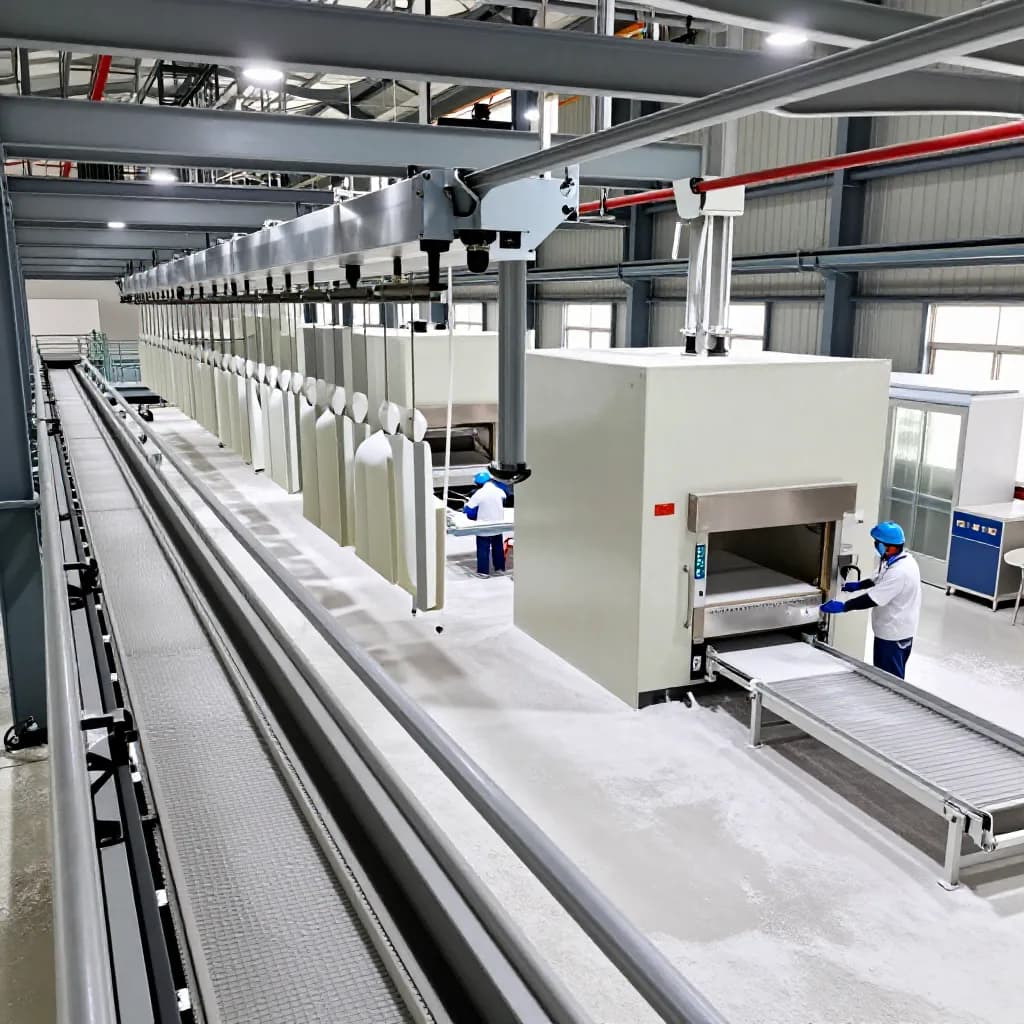
The complete powder coating process involves several distinct stages, each critical to the quality of the final product. These stages are: incoming inspection and part preparation, surface cleaning and pretreatment, drying, powder application, curing, cooling, final inspection, and packaging. Skipping or shortcutting any stage compromises the performance and appearance of the finished coating.
Ready to Start Your Project?
From one-off customs to 15,000-part production runs — get precise pricing in 24 hours.
On This Page
Overview: What Happens in a Powder Coating Operation
Understanding the full process helps buyers, designers, and engineers make better decisions about part design, material selection, and quality expectations. A part that is designed with powder coating in mind — with appropriate material choices, surface preparation allowances, and hanging point locations — will produce a better result than a part designed without consideration for the coating process. This article walks through each stage in detail, explaining what happens, why it matters, and what can go wrong.
Stage 1: Incoming Inspection and Part Preparation
The powder coating process begins before any powder is sprayed. When raw parts arrive at a coating facility, they undergo incoming inspection to identify any conditions that could affect coating quality. Inspectors look for surface contamination (oil, grease, cutting fluids, drawing compounds), surface defects (scratches, dents, porosity, weld spatter), dimensional issues, and material identification to confirm the substrate type and ensure the correct pretreatment and coating process is selected.
Part preparation may include mechanical operations to address surface defects. Weld spatter is ground smooth, sharp edges are broken or radiused (sharp edges attract excessive powder build-up and are prone to coating failure), and surface imperfections are filled or sanded as needed. For parts with threaded holes, precision-machined surfaces, or areas that must remain uncoated, masking is applied using high-temperature tapes, silicone plugs, or custom-fitted caps that will withstand the cure oven temperature without degrading.
Racking — hanging the parts on hooks, fixtures, or custom racks for processing — is planned at this stage. The rack design determines how the part moves through the pretreatment, spray booth, and oven, and it affects coating coverage, ground path quality, and the location of contact marks where the hook or fixture touches the part. Good racking is an underappreciated skill that directly impacts coating quality, and experienced coaters invest significant effort in designing racks that optimize coverage while minimizing visible contact marks.
Stage 2: Surface Cleaning and Pretreatment
Pretreatment is arguably the most critical stage in the powder coating process. The best powder coating applied over a poorly prepared surface will fail prematurely — peeling, blistering, or corroding — while even a modest coating over an excellent pretreatment will perform well for years. Pretreatment serves two purposes: it removes all surface contamination that would prevent the powder from bonding to the metal, and it creates a chemical conversion layer that enhances adhesion and corrosion resistance.
The cleaning phase typically involves multiple steps. An alkaline or acidic cleaner removes oils, greases, and organic contamination. A rinse removes cleaning chemical residues. For steel parts, an acid pickle may be used to remove mill scale and light rust. For aluminum, an alkaline etch or acid deoxidizer removes the natural oxide layer and any surface contaminants. Each cleaning step is followed by a rinse to prevent chemical carryover to the next stage.
After cleaning, a conversion coating is applied. For steel, this is typically iron phosphate or zinc phosphate. For aluminum, chromate conversion (increasingly replaced by chrome-free alternatives like zirconium or titanium-based treatments) or a proprietary non-chrome conversion coating is used. The conversion coating creates a thin, chemically bonded layer on the metal surface that dramatically improves paint adhesion and provides a barrier against under-film corrosion. The quality of this conversion layer — its weight, crystal structure, and uniformity — is monitored through regular testing and is one of the key quality control points in the process.
Stage 3: Drying and Powder Application
After pretreatment, parts pass through a dry-off oven that evaporates all residual moisture from the surface. Any water remaining on the part when powder is applied will cause adhesion failures, blistering, or pinholes in the cured coating. The dry-off oven typically operates at 100 to 150°C, and parts must reach a surface temperature sufficient to drive off all moisture, including water trapped in seams, joints, and recessed areas.
Once dry and cooled to a temperature suitable for powder application (typically ambient to slightly warm), parts enter the powder spray booth. The spray booth is an enclosed area designed to contain airborne powder, provide clean air to the application zone, and collect overspray powder for reclaim and reuse. Booths may be open-face manual booths for small-batch work or fully enclosed automatic booths with reciprocating or robotic spray guns for high-volume production.
Powder is applied using electrostatic spray guns that impart an electrical charge to the powder particles as they exit the gun nozzle. The most common charging method is corona charging, where the powder passes through a high-voltage electric field at the gun tip that deposits electrons onto the powder particles, giving them a negative charge. The grounded metal part attracts the charged particles, which cling to the surface through electrostatic attraction. The operator or automatic gun system moves the spray pattern across the part surface, building up a uniform layer of powder. Typical target film thickness is 60 to 80 microns for standard applications, though this varies by specification and finish type.
Stage 4: Curing — Where Powder Becomes Coating
Curing is the transformative stage where loose powder particles become a continuous, crosslinked coating film. The racked parts, now covered in electrostatically held powder, enter the cure oven where heat triggers a sequence of physical and chemical changes. Understanding this sequence explains why cure temperature and time are so critical to coating quality.
As the part temperature rises, the powder particles first soften and begin to melt, typically starting around 60 to 80°C. As the temperature continues to increase, the melted particles flow together, merging into a continuous liquid film that wets the metal surface. This melt-and-flow phase is when the coating levels out, and the smoothness of the final surface is largely determined by how well the powder flows before the crosslinking reaction begins to increase viscosity.
At the specified cure temperature — typically 180 to 200°C for standard polyester powders — the crosslinking reaction accelerates. The resin and hardener components react chemically, forming a three-dimensional polymer network that transforms the liquid film into a hard, insoluble, chemically resistant solid. This reaction requires both sufficient temperature and sufficient time. A typical cure schedule might specify 200°C for 10 minutes at metal temperature — meaning the part itself must reach 200°C and remain at that temperature for 10 minutes. The total time in the oven is longer because the part must first heat up to the target temperature. Under-curing (insufficient temperature or time) produces a soft, poorly crosslinked film with reduced hardness, chemical resistance, and adhesion. Over-curing can cause discoloration, embrittlement, and gloss reduction.
Stage 5: Cooling and Post-Cure Handling
After exiting the cure oven, coated parts must cool before handling, inspection, and packaging. The cooling method depends on the production setup and the parts being coated. In continuous conveyor systems, parts cool naturally as they travel through an ambient-temperature section of the conveyor line. In batch operations, racks of parts may be placed in a designated cooling area or passed through a forced-air cooling zone.
Cooling rate can affect the final properties of some powder coatings. Rapid cooling — such as exposure to cold air or water quenching — can induce thermal stress in the coating film, potentially causing cracking on rigid substrates or adhesion issues at the coating-metal interface. For most standard powder coatings, natural air cooling at ambient temperature is sufficient and produces no adverse effects. However, some specialty formulations — particularly thick-film coatings and certain textured finishes — may specify controlled cooling rates to achieve optimal properties.
Handling of freshly cured parts requires care. Although the coating is fully crosslinked and hard after proper curing, it can still be scratched or marred by rough handling, stacking, or contact with abrasive surfaces. Parts should be handled with clean gloves, placed on padded surfaces, and separated with protective interleaving material if stacked. The investment in careful post-cure handling protects the quality achieved through all the preceding process stages and prevents the frustrating situation of delivering parts with handling damage that occurred after a perfect coating application.
Stage 6: Inspection and Quality Control
Final inspection verifies that the coated parts meet the specified quality requirements before they are released for packaging and shipment. A comprehensive inspection program checks multiple attributes, each addressing a different aspect of coating quality.
Visual inspection is the first check. Trained inspectors examine each part — or a statistical sample from each batch — for surface defects including pinholes, craters, orange peel, runs, sags, dry spray, contamination, color variation, and incomplete coverage. Visual inspection is performed under standardized lighting conditions, typically a combination of fluorescent and natural daylight, to ensure consistent evaluation. Defective parts are segregated for rework (stripping and recoating) or rejection.
Instrumental measurements supplement visual inspection. Film thickness is measured using magnetic (for steel substrates) or eddy-current (for aluminum substrates) gauges at multiple points on each part to verify that the coating meets the specified thickness range. Gloss is measured with a gloss meter at the specified angle (typically 60°) and compared against the target value and tolerance. Adhesion is tested using a cross-cut test (scribing a grid pattern through the coating and applying adhesive tape to check for delamination) on sample parts from each batch. For applications requiring enhanced corrosion performance, salt spray testing, humidity testing, or other accelerated weathering tests may be performed on test panels coated alongside the production parts.
Stage 7: Packaging and Delivery
Packaging is the final stage of the powder coating process, and its importance is often underestimated. Parts that have been perfectly coated, inspected, and approved can be damaged during packaging, transport, and delivery if inadequate protection is provided. The packaging method should be appropriate for the part size, shape, fragility, and the expected handling conditions during transport.
Small parts are typically packed in boxes with individual wrapping or compartmentalized inserts to prevent part-to-part contact. Larger parts may be placed on pallets with foam padding, cardboard separators, or custom-formed protective packaging. High-value or appearance-critical parts — architectural panels, automotive components, premium consumer products — may require individual protective film wrapping, edge protectors, and rigid packaging to prevent any surface contact during transit.
Documentation accompanies the packaged parts, providing traceability and quality assurance records. A typical documentation package includes a certificate of conformance stating that the parts meet the specified coating requirements, batch identification linking the parts to specific pretreatment and coating records, film thickness measurements, gloss readings, adhesion test results, and any other test data required by the customer specification. This documentation provides an audit trail that connects the finished product back to every stage of the coating process, supporting quality management systems and customer confidence.
The complete powder coating process — from incoming inspection through packaging — typically takes 2 to 8 hours for a batch of parts, depending on part size, pretreatment requirements, and cure schedule. Continuous conveyor lines can process parts in as little as 45 to 90 minutes from loading to unloading. The efficiency and speed of the process, combined with its environmental advantages and coating performance, explain why powder coating has become the dominant industrial finishing technology.
Frequently Asked Questions
How does powder stick to metal parts?
Powder particles are given an electrical charge by the spray gun as they exit the nozzle. The metal part is grounded (connected to earth), creating an electrostatic attraction that causes the charged powder particles to cling to the metal surface. The powder stays in place until it is melted and cured in the oven.
What temperature is needed to cure powder coating?
Standard powder coatings cure at 180-200°C metal temperature for 10-20 minutes. The total oven time is longer because the part must first heat up to the target temperature. Low-temperature cure powders are available that cure at 130-150°C for heat-sensitive substrates.
Why is pretreatment so important in powder coating?
Pretreatment removes surface contamination and creates a chemical conversion layer that dramatically improves coating adhesion and corrosion resistance. Even the best powder coating will fail prematurely if applied over a poorly prepared surface. Pretreatment quality is the single biggest factor in long-term coating performance.
How thick is a typical powder coating?
Standard powder coatings are applied at 60-80 microns (2.4-3.2 mils) for most applications. Architectural coatings may be specified at 60-120 microns. Textured finishes and heavy-duty industrial coatings may require 80-150 microns or more. Film thickness is measured with calibrated gauges during quality inspection.
Can powder coating be applied to non-metal surfaces?
Standard powder coating requires a conductive substrate for electrostatic application and a substrate that can withstand cure temperatures of 160-200°C. This limits it primarily to metals. However, specialized low-temperature cure powders and UV-cure powders are expanding the range to include some plastics, wood, and composite materials.
What happens to overspray powder?
Overspray powder that does not land on the part is collected by the spray booth's recovery system — typically cyclone separators or cartridge filters — and returned to the powder feed hopper for reuse. This reclaim process achieves 95-98% material utilization, making powder coating one of the most efficient finishing technologies available.
Ready to Start Your Project?
From one-off customs to 15,000-part production runs — get precise pricing in 24 hours.