Liquid paint operations generate multiple hazardous waste streams that require careful management. Spent solvents from equipment cleaning are among the most significant, as thinners and gun wash solutions become contaminated with paint residues after use. These waste solvents typically retain their flammable and toxic characteristics, classifying them as hazardous waste under most regulatory frameworks.
Environmental
Hazardous Waste from Liquid Paint Operations: What You Need to Know
Sundial Powder Coating·April 20, 2026·9 min
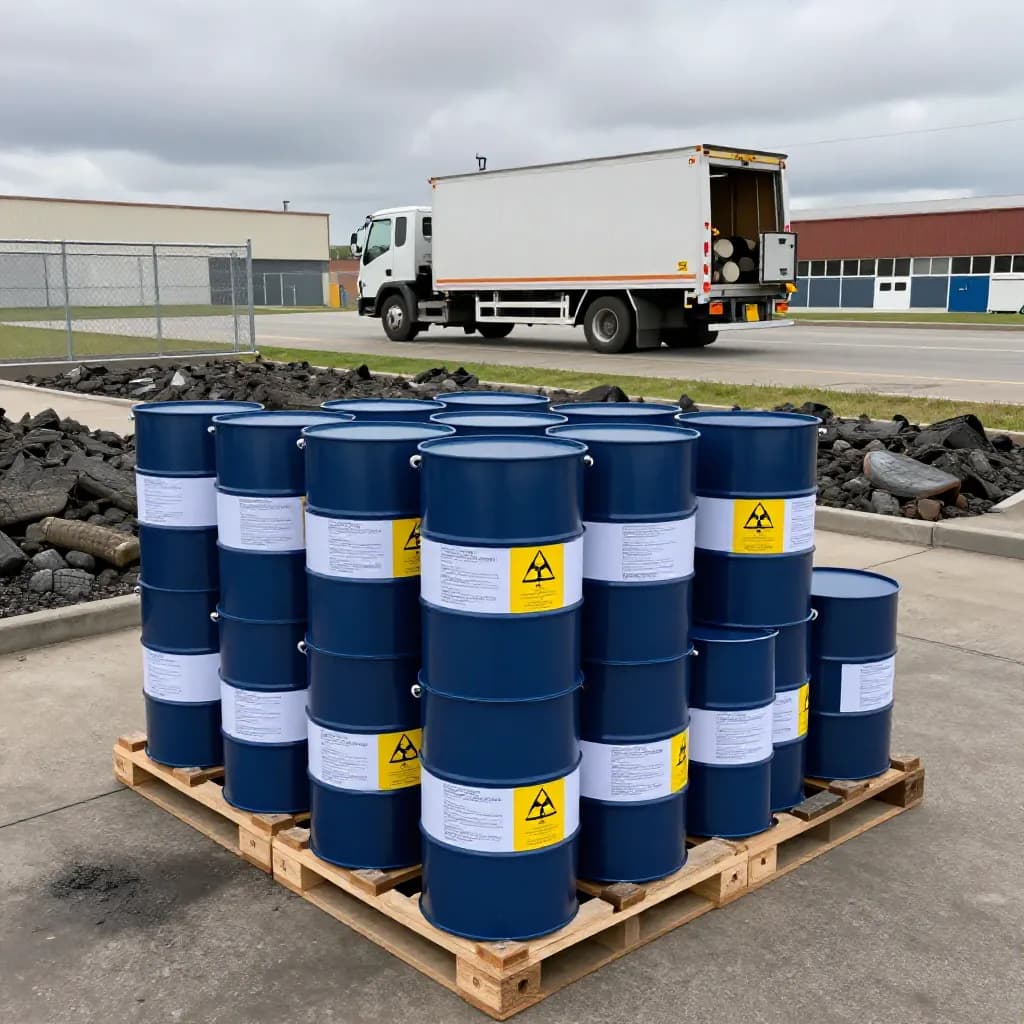
Paint sludge is another major waste stream, particularly in facilities using water-wash spray booths. Overspray captured in the booth water accumulates as a thick sludge containing paint solids, solvents, and heavy metals from pigments. This sludge must be periodically removed, dewatered, and disposed of as hazardous waste. Dry-filter booths generate contaminated filters laden with paint overspray that also require hazardous waste disposal.
Ready to Start Your Project?
From one-off customs to 15,000-part production runs — get precise pricing in 24 hours.
On This Page
Types of Hazardous Waste from Painting Operations
Additional waste streams include contaminated rags and wipes used for surface preparation and cleanup, expired or off-specification paint that cannot be used, empty paint containers with residual product, and contaminated personal protective equipment. Even seemingly minor waste streams such as masking tape contaminated with solvent-based paint may require special handling depending on local regulations.
Classification and Disposal Requirements
Hazardous waste classification varies by jurisdiction but follows similar principles globally. In the United States, the Resource Conservation and Recovery Act (RCRA) classifies waste as hazardous if it exhibits characteristics of ignitability, corrosivity, reactivity, or toxicity, or if it appears on specific EPA waste lists. Spent solvents from painting operations are typically listed wastes (F001-F005), while paint sludge may be characteristic hazardous waste due to ignitability or heavy metal content.
The European Union classifies hazardous waste under the European Waste Catalogue (EWC), with specific codes for waste paints and varnishes containing organic solvents (08 01 11*), paint sludge (08 01 13*), and aqueous sludges containing paint (08 01 15*). The asterisk denotes absolute hazardous entries that are always classified as hazardous regardless of concentration.
Disposal must be conducted through licensed hazardous waste contractors using approved treatment and disposal facilities. Options include high-temperature incineration, solvent recovery and recycling, stabilization and landfill for certain sludges, and fuel blending for waste solvents with sufficient calorific value. Generators must maintain cradle-to-grave documentation including waste manifests, certificates of disposal, and consignment notes to demonstrate proper handling throughout the waste chain.
Storage and Handling Regulations
Facilities generating hazardous waste from painting operations must comply with strict storage and handling requirements. In the US, RCRA regulations specify that hazardous waste must be stored in compatible, labeled containers in designated areas with secondary containment capable of holding 110% of the largest container's volume. Storage time limits apply — generators storing waste for more than 90 days (large quantity generators) or 180-270 days (small quantity generators) must obtain a storage permit.
Storage areas must be inspected regularly, with documented weekly inspections being a common requirement. Containers must be kept closed except when adding or removing waste, and incompatible wastes must be segregated to prevent dangerous reactions. Flammable waste solvents require storage in fire-rated cabinets or dedicated flammable storage buildings with appropriate ventilation and fire suppression.
Employee training is mandatory for all personnel who handle hazardous waste. Training must cover waste identification, proper handling procedures, emergency response, and spill containment. Facilities must maintain contingency plans and emergency procedures, and larger generators must have designated emergency coordinators available at all times during operations.
Environmental Liability and Cleanup Responsibilities
Generators of hazardous waste bear long-term environmental liability for the waste they produce, even after it leaves their facility. Under the US Comprehensive Environmental Response, Compensation, and Liability Act (CERCLA, or Superfund), generators can be held jointly and severally liable for cleanup costs if their waste contributes to contamination at a disposal site. This liability is retroactive and can result in cleanup obligations costing millions of dollars, regardless of whether the generator followed all applicable regulations at the time of disposal.
Similar polluter-pays principles apply in the EU under the Environmental Liability Directive (2004/35/CE) and national contaminated land legislation. Operators are responsible for preventing and remediating environmental damage, including soil and groundwater contamination from improper waste handling or accidental releases.
The financial implications extend beyond cleanup costs. Contaminated sites can trigger property devaluation, loss of operating permits, and reputational damage. Insurance coverage for environmental liability is increasingly expensive and may contain exclusions for gradual pollution. Many companies now recognize that reducing hazardous waste generation at the source is far more cost-effective than managing the long-term liability associated with waste disposal.
How Powder Coating Eliminates Hazardous Liquid Waste Streams
Powder coating eliminates the hazardous liquid waste streams inherent to solvent-based painting because the process uses no solvents, generates no paint sludge, and produces no contaminated cleaning solutions. The only waste from powder application is dry powder — booth sweepings and color-change waste — which is a non-hazardous solid waste that can often be recycled or disposed of through standard waste channels.
Overspray powder is captured by the booth recovery system and recycled directly back into the application process, achieving material utilization rates of 95-98%. This contrasts sharply with liquid paint operations where overspray becomes either contaminated booth water sludge or saturated filters, both requiring hazardous waste disposal. The elimination of solvent-based equipment cleaning further removes a major waste stream, as powder application guns and booths are cleaned with compressed air rather than chemical solvents.
The regulatory and financial benefits of eliminating hazardous waste are substantial. Facilities converting to powder coating can reduce or eliminate their hazardous waste generator status, simplifying compliance obligations and reducing disposal costs. The long-term environmental liability associated with hazardous waste disposal is removed, and the facility's environmental risk profile improves dramatically, with positive implications for insurance, property value, and community relations.
Frequently Asked Questions
What types of hazardous waste do liquid paint operations produce?
Liquid paint operations generate spent cleaning solvents, paint sludge from spray booth water, contaminated booth filters, waste paint, contaminated rags and wipes, and residual paint in empty containers. These wastes are typically classified as hazardous due to ignitability, toxicity, or listed waste status.
How long can hazardous waste be stored on-site?
In the US, large quantity generators can store hazardous waste for up to 90 days without a storage permit, while small quantity generators have 180-270 days depending on the quantity generated and distance to the disposal facility. Storage must comply with container, labeling, and secondary containment requirements.
Can generators be held liable for waste after it leaves their facility?
Yes. Under US CERCLA (Superfund) law, generators bear long-term liability for their hazardous waste even after proper disposal. If a disposal site becomes contaminated, generators can be held jointly and severally liable for cleanup costs. Similar polluter-pays principles apply in the EU and other jurisdictions.
Does powder coating generate any hazardous waste?
Powder coating generates minimal waste, and it is typically non-hazardous. Overspray powder is recovered and recycled at rates of 95-98%. The small amount of unrecoverable powder (booth sweepings, color-change waste) is a dry, non-hazardous solid. No solvent waste, paint sludge, or contaminated cleaning solutions are produced.
Ready to Start Your Project?
From one-off customs to 15,000-part production runs — get precise pricing in 24 hours.