GSB International (Gütegemeinschaft für die Stückbeschichtung von Bauteilen e.V.) is a German-origin quality association that certifies the coating of aluminum, steel, and galvanized steel components for architectural and industrial applications. Founded in 1976, GSB has grown from a regional German quality mark into an internationally recognized certification system with licensed applicators across Europe, the Middle East, and Asia.
Technical
GSB International Certification Guide: Standard, Master, and Premium Quality Marks
Sundial Powder Coating·April 22, 2026·13 min
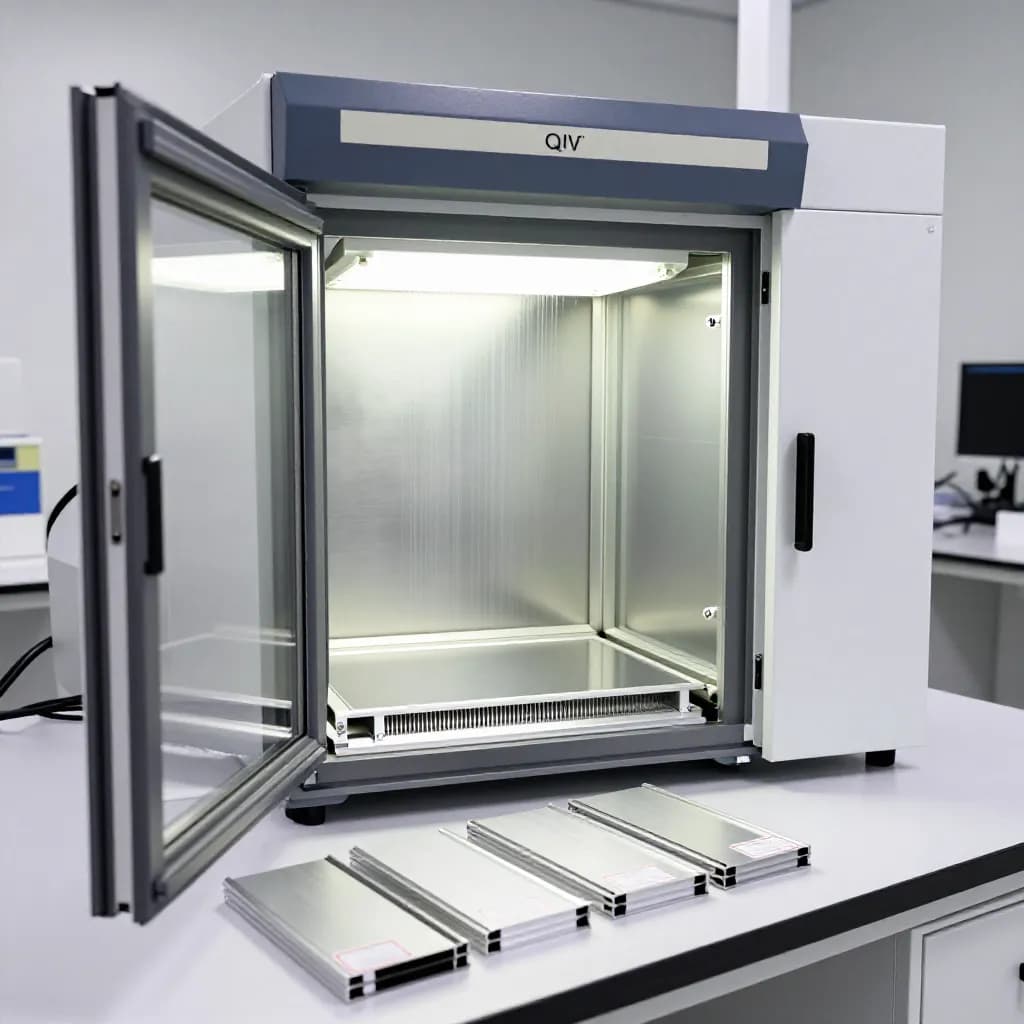
GSB's roots in the German market give it particular strength in Germany, Austria, Switzerland, and the broader DACH region, where it is the dominant quality certification for coated building components. In these markets, GSB certification is routinely specified for public buildings, commercial construction, and infrastructure projects, and it carries the same weight and recognition that Qualicoat holds in Southern and Western European markets.
Ready to Start Your Project?
From one-off customs to 15,000-part production runs — get precise pricing in 24 hours.
On This Page
GSB International: Origin and Market Position
The GSB quality system covers both powder and liquid coatings on aluminum, steel, and galvanized steel substrates — a broader substrate scope than Qualicoat, which focuses primarily on aluminum. This broader coverage makes GSB particularly relevant for projects involving steel facades, steel windows, and galvanized steel components where Qualicoat certification is not applicable.
GSB certification encompasses the entire coating process, from substrate preparation and pretreatment through coating application, curing, and quality control. Like Qualicoat, GSB audits and certifies the coating applicator's facilities, processes, and quality management systems, providing process-based quality assurance in addition to product performance verification. This comprehensive approach ensures that certified applicators maintain the conditions necessary for consistent, high-quality coating production.
The GSB quality mark is recognized by architects, specifiers, and building authorities across Europe as evidence of coating quality that meets defined, independently verified standards. For coating applicators, GSB certification provides market access, competitive differentiation, and a framework for continuous quality improvement.
GSB Quality Tiers: Standard, Master, and Premium
GSB defines three quality tiers — Standard, Master, and Premium — that correspond to increasing levels of coating performance and weathering durability. This tiered structure allows specifiers to match the coating quality level to the environmental demands and service life expectations of each project.
GSB Standard is the baseline quality tier, providing coating performance suitable for moderate exterior environments and interior applications. Standard-tier coatings must pass a defined set of mechanical, chemical, and weathering tests with acceptance criteria that ensure basic durability and appearance retention. The weathering requirement for GSB Standard corresponds approximately to Qualicoat Class 1 performance.
GSB Master represents the premium quality tier for standard coating chemistries (polyester, polyester-urethane). Master-tier coatings must pass significantly more demanding weathering tests, with longer accelerated weathering exposure and tighter acceptance criteria for color change and gloss retention. GSB Master corresponds approximately to Qualicoat Class 2 performance and is the standard specification for exterior architectural applications in the German-speaking markets. The Master designation signals to specifiers that the coating has been formulated and tested for reliable long-term exterior performance.
GSB Premium is the highest quality tier, reserved for coatings that demonstrate exceptional weathering durability — typically fluoropolymer or the most advanced superdurable polyester formulations. Premium-tier requirements include extended accelerated weathering exposure and natural weathering validation, with performance criteria that correspond approximately to Qualicoat Class 3 and AAMA 2605 levels. GSB Premium is specified for the most demanding applications: landmark buildings, coastal environments, and projects requiring 25-30+ year coating service life.
Each quality tier has specific requirements for the coating product (formulation and performance), the coating applicator (facilities, equipment, and processes), and the quality management system (testing, documentation, and traceability). Applicators can be certified at one or more quality tiers, and different coating products within an applicator's range may be certified at different tiers depending on their formulation and performance.
Test Matrix and Performance Requirements
The GSB test matrix defines the specific tests, test methods, and acceptance criteria for each quality tier. The tests cover mechanical properties, chemical resistance, corrosion resistance, and weathering durability, providing a comprehensive assessment of coating performance.
Film thickness requirements for powder coatings specify a minimum average of 60 microns on aluminum and 80 microns on steel, with defined minimum individual measurement values. These thickness requirements ensure adequate barrier protection for the intended substrate and environment.
Adhesion testing uses the cross-cut method (DIN EN ISO 2409) with a required classification of Gt 0 (no detachment) for all quality tiers. Adhesion is tested in the as-received condition and after aging exposures including boiling water immersion and condensation humidity testing. The adhesion-after-aging tests are particularly important because they verify that the coating-substrate bond is maintained under the hydrothermal conditions that challenge adhesion in real-world service.
Hardness testing uses the pencil hardness method (DIN EN ISO 15184) and the Buchholz indentation method (DIN EN ISO 2815). Minimum hardness values are specified for each coating chemistry type, reflecting the different hardness characteristics of polyester, polyurethane, and fluoropolymer systems.
Impact resistance is tested using the falling weight method (DIN EN ISO 6272-1) with minimum requirements that vary by coating chemistry and quality tier. The impact test evaluates the coating's ability to absorb mechanical energy without cracking or delaminating.
Corrosion resistance testing uses acetic acid salt spray (DIN EN ISO 9227 AASS) for aluminum substrates and neutral salt spray (DIN EN ISO 9227 NSS) for steel substrates. Exposure durations and maximum allowable corrosion creep values are specified for each quality tier, with more demanding requirements for higher tiers.
Weathering resistance is evaluated using accelerated weathering (xenon arc per DIN EN ISO 16474-2) with exposure durations of 1,000 hours for Standard, 2,000 hours for Master, and 3,000 hours for Premium. Color change (Delta E) must not exceed specified limits, and gloss retention must meet minimum percentages at each tier. Natural weathering exposure in Florida provides validation of the accelerated test results.
GSB Certification for Steel and Galvanized Steel
One of GSB's distinguishing features is its comprehensive coverage of steel and galvanized steel substrates, in addition to aluminum. This broader substrate scope reflects the German and Central European construction market, where steel facades, steel windows, and galvanized steel components are more common than in Southern European markets where aluminum dominates.
Coating steel substrates presents different challenges than coating aluminum. Steel is more susceptible to corrosion, requiring more robust pretreatment and coating systems to achieve adequate service life. The pretreatment process for steel typically involves abrasive blasting or chemical cleaning followed by iron phosphate or zinc phosphate conversion coating, rather than the chromate or chrome-free conversion coatings used for aluminum.
GSB specifies different pretreatment requirements, film thickness minimums, and corrosion resistance criteria for steel substrates compared to aluminum. Minimum film thickness for powder coatings on steel is 80 microns (compared to 60 microns on aluminum), reflecting the greater corrosion protection needs of steel. Salt spray exposure durations are also longer for steel substrates, and the acceptance criteria for corrosion creep are adjusted to account for the different corrosion behavior of steel versus aluminum.
Galvanized steel — steel coated with a zinc layer for corrosion protection — presents unique challenges for powder coating due to the outgassing behavior of the zinc layer. When heated during the cure process, zinc coatings can release gases (primarily zinc oxide fumes and moisture) that create pinholes and surface defects in the powder coating. GSB addresses this through specific pretreatment requirements for galvanized steel, including sweep blasting to roughen the zinc surface and remove loose zinc oxide, followed by appropriate conversion coating.
The GSB certification for steel and galvanized steel substrates fills a market need that Qualicoat does not directly address, making GSB the preferred quality standard for projects involving mixed substrate types (aluminum and steel) where a single, comprehensive quality certification is desired.
Comparison with Qualicoat: Similarities and Differences
GSB and Qualicoat are the two dominant quality certification systems for architectural coatings in Europe, and understanding their similarities and differences helps specifiers select the appropriate standard for their projects.
Both systems share the same fundamental approach: they certify both the coating product performance and the coating applicator's facilities and processes through regular audits. Both use similar test methods (largely based on ISO and EN standards) and similar performance criteria for mechanical properties, chemical resistance, and weathering durability. Both require ongoing surveillance audits to verify continued compliance.
The quality tier structures are broadly comparable: GSB Standard ≈ Qualicoat Class 1, GSB Master ≈ Qualicoat Class 2, and GSB Premium ≈ Qualicoat Class 3. However, the specific test requirements and acceptance criteria differ in detail, so the tiers are approximately equivalent rather than identical.
Key differences include substrate scope (GSB covers aluminum, steel, and galvanized steel; Qualicoat focuses on aluminum), geographic market strength (GSB is strongest in DACH and Northern Europe; Qualicoat is strongest in Southern and Western Europe), and specific technical requirements (different pretreatment specifications, different film thickness minimums for some applications, and different corrosion test protocols).
The pretreatment requirements differ in their approach to chrome-free alternatives. Both organizations have approved chrome-free pretreatment processes, but the specific approved products and qualification procedures differ. An applicator transitioning from chromate to chrome-free pretreatment may need to qualify the new process separately under each certification system.
Many coating applicators, particularly those serving international markets, hold both GSB and Qualicoat certifications. Dual certification provides the broadest market access and allows the applicator to respond to specifications referencing either standard. The additional cost and administrative burden of maintaining dual certification is justified by the expanded market opportunities it provides.
The GSB Audit and Certification Process
The GSB certification process follows a structured sequence of application, assessment, testing, and ongoing surveillance that ensures certified applicators maintain consistent quality standards.
The process begins with an application to GSB International, including documentation of the applicator's facilities, equipment, pretreatment processes, coating application capabilities, quality control procedures, and staff qualifications. GSB reviews the application and, if the documentation meets preliminary requirements, schedules an initial audit.
The initial audit is conducted by qualified GSB inspectors who assess every aspect of the coating operation against the GSB quality requirements. The audit covers pretreatment facilities (bath chemistry, process control, rinse water quality), coating application equipment (spray booths, electrostatic equipment, powder recovery systems), curing ovens (temperature calibration, uniformity, profiling), quality control laboratory (equipment, test methods, calibration), documentation and traceability systems, and staff training records.
During the audit, test panels are prepared using the applicator's production equipment and submitted to an accredited testing laboratory for the full GSB test battery. The test results must meet all acceptance criteria for the requested quality tier(s) before certification is granted.
Once certified, applicators undergo regular surveillance audits — typically two per year. These audits verify ongoing compliance with GSB requirements, review quality control records and corrective action documentation, and collect test panels for independent laboratory testing. Unannounced audits may also be conducted to verify that quality standards are maintained during normal production operations.
GSB also operates a complaint investigation process. If a building owner, architect, or other stakeholder reports a quality concern with a GSB-certified product, GSB can investigate the complaint, inspect the affected installation, and take corrective action if the certified applicator is found to be non-compliant. This complaint resolution mechanism provides an additional layer of quality assurance for specifiers and building owners.
Specifying GSB Certification: Guidance for Project Teams
Effective specification of GSB-certified coatings requires clear identification of the quality tier, substrate type, and any additional requirements specific to the project.
The specification should identify the required GSB quality tier (Standard, Master, or Premium) based on the project's environmental exposure and service life requirements. For standard exterior architectural applications in Central Europe, GSB Master is the typical specification. For coastal, tropical, or other aggressive environments, GSB Premium should be specified. For interior applications or sheltered exterior locations, GSB Standard may be sufficient.
The substrate type should be specified (aluminum, steel, or galvanized steel) because GSB has different requirements for each substrate. For projects involving multiple substrate types, the specification should address each substrate separately and may require the applicator to hold GSB certification for each substrate type used.
Pretreatment requirements should be specified, particularly regarding chrome-free pretreatment. If the project requires chrome-free pretreatment (increasingly common due to environmental regulations and green building certification requirements), the specification should state this explicitly and require that the applicator use a GSB-approved chrome-free pretreatment process.
The specification should require that the coating applicator provide a valid GSB certificate demonstrating current certification at the required quality tier for the specified substrate type. The certificate should be verified against the GSB online register of certified applicators, which is maintained on the GSB International website.
For international projects where both GSB and Qualicoat may be referenced, the specification should clearly state which standard applies and whether dual certification is required or whether either standard is acceptable. Ambiguous specifications that reference both standards without clarifying their relationship can create confusion and disputes during the procurement process.
Frequently Asked Questions
What is the difference between GSB Master and Qualicoat Class 2?
GSB Master and Qualicoat Class 2 are approximately equivalent in performance level, both requiring around 2,000 hours of accelerated weathering. However, they differ in specific test methods, acceptance criteria, pretreatment requirements, and audit procedures. GSB Master also covers steel substrates, while Qualicoat Class 2 focuses on aluminum.
Does GSB certify coatings on steel substrates?
Yes. GSB certifies coatings on aluminum, steel, and galvanized steel — a broader substrate scope than Qualicoat, which focuses primarily on aluminum. GSB has specific pretreatment requirements, film thickness minimums, and corrosion resistance criteria for each substrate type.
How does GSB Premium compare to AAMA 2605?
GSB Premium and AAMA 2605 both represent the highest performance tier for architectural coatings, requiring fluoropolymer or advanced superdurable polyester chemistry. GSB Premium uses accelerated weathering as the primary test with natural weathering validation, while AAMA 2605 requires 10 years of actual South Florida natural weathering exposure.
Can an applicator hold both GSB and Qualicoat certification?
Yes. Many applicators serving international markets hold both certifications to provide the broadest market access. Each certification requires separate audits, testing, and compliance documentation, but the facility and process requirements are broadly similar, making dual certification practical for well-equipped applicators.
How often are GSB-certified applicators audited?
GSB-certified applicators undergo regular surveillance audits, typically two per year. These audits verify ongoing compliance with quality requirements, review records, and collect test panels for independent laboratory testing. Unannounced audits may also be conducted to verify quality during normal production.
Ready to Start Your Project?
From one-off customs to 15,000-part production runs — get precise pricing in 24 hours.