Fluoropolymer coatings occupy the highest performance tier in the architectural and industrial coatings hierarchy. The carbon-fluorine bond — the strongest single bond in organic chemistry at approximately 485 kJ/mol — provides extraordinary resistance to ultraviolet radiation, chemical attack, thermal degradation, and environmental weathering. This fundamental chemical advantage translates into coatings that maintain their color, gloss, and protective properties for 30 years or more in the most demanding outdoor exposures, including tropical, desert, coastal, and high-altitude environments.
Technical
Fluoropolymer Powder Coatings: FEVE, PVDF, and Super-Weathering Architectural Finishes
Sundial Powder Coating·April 22, 2026·15 min
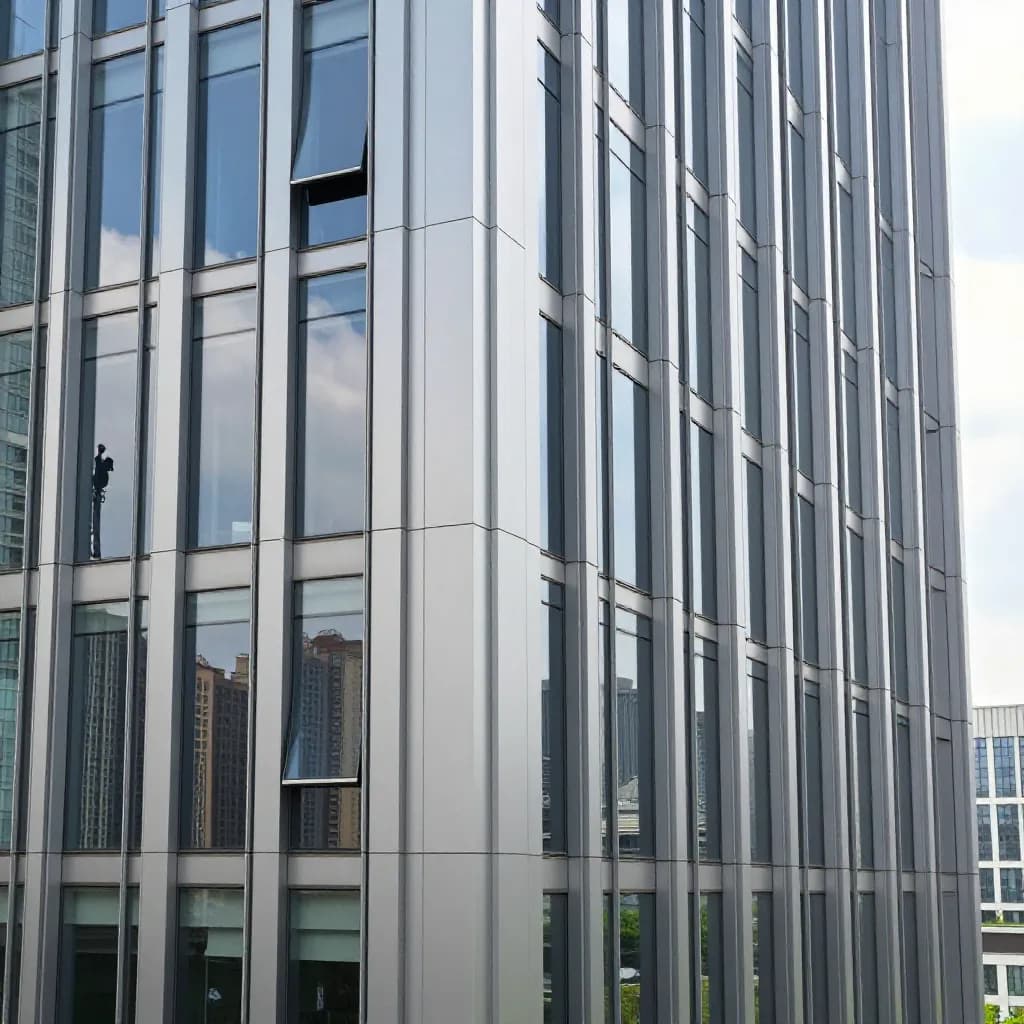
In the liquid coatings world, polyvinylidene fluoride (PVDF) coatings — commonly known by the Kynar trade name — have been the benchmark for premium architectural finishes since the 1960s. These 70/30 PVDF/acrylic systems (70% PVDF resin, 30% acrylic resin) are specified under AAMA 2605 and have accumulated decades of proven field performance on landmark buildings worldwide. However, PVDF technology has historically been limited to liquid application due to the high crystallinity and processing temperatures of PVDF resins.
Ready to Start Your Project?
From one-off customs to 15,000-part production runs — get precise pricing in 24 hours.
On This Page
Why Fluoropolymers Represent the Pinnacle of Coating Durability
The development of fluoroethylene vinyl ether (FEVE) resins — pioneered by Asahi Glass Company under the Lumiflon trade name — revolutionized the fluoropolymer landscape by creating a fluoropolymer chemistry fully compatible with powder coating technology. FEVE resins are amorphous rather than crystalline, allowing them to be processed at temperatures compatible with standard powder coating manufacturing and application equipment. This breakthrough brought fluoropolymer-level durability to the powder coating format for the first time, opening new possibilities for architects and specifiers seeking the ultimate in coating longevity.
FEVE Chemistry and the Lumiflon Technology Platform
Fluoroethylene vinyl ether (FEVE) resins are copolymers of fluoroethylene and vinyl ether monomers. The fluoroethylene units provide the UV resistance and chemical inertness characteristic of fluoropolymers, while the vinyl ether units introduce functional groups — typically hydroxyl groups — that enable crosslinking with standard isocyanate or melamine hardeners. This dual functionality is the key innovation: FEVE resins combine fluoropolymer durability with the processability and crosslinking versatility of conventional coating resins.
Lumiflon, the original and most widely recognized FEVE resin brand, was commercialized by Asahi Glass Company (now AGC Chemicals) in the 1980s. The Lumiflon product range includes both solvent-soluble grades for liquid coatings and solid grades specifically designed for powder coating formulation. The powder-grade FEVE resins have glass transition temperatures and melt viscosities optimized for extrusion compounding, electrostatic spraying, and thermal curing at 180-200°C.
In powder coating formulations, FEVE resins are typically crosslinked with blocked isocyanate hardeners, which deblock at curing temperature to react with the hydroxyl groups on the FEVE backbone. The resulting urethane crosslinks provide excellent flexibility, adhesion, and chemical resistance, complementing the inherent weathering resistance of the fluoropolymer backbone. Alternative crosslinking chemistries using glycoluril or amino resins are also used in specific formulations.
The fluorine content of FEVE resins is lower than that of PVDF — typically 20-30% fluorine by weight compared to 59% for pure PVDF. Despite this lower fluorine content, FEVE coatings demonstrate weathering performance comparable to or exceeding 70/30 PVDF systems in standardized exposure tests. This is attributed to the alternating copolymer structure of FEVE, which positions fluorine atoms to shield the polymer backbone effectively, and to the crosslinked network structure that prevents the chain mobility and surface erosion mechanisms that affect thermoplastic PVDF films.
PVDF Powder Coatings: Emerging Technology
While FEVE-based powder coatings are commercially established, true PVDF powder coatings represent an emerging technology that has been the subject of intensive development. The challenge with PVDF in powder form stems from its semi-crystalline nature and high melting point (approximately 170°C). In liquid 70/30 PVDF coatings, the PVDF resin is dissolved or dispersed in strong solvents and blended with acrylic resin to achieve film formation. Replicating this in a solvent-free powder format requires innovative approaches to resin blending and film formation.
Several manufacturers have developed PVDF-based powder coating systems using proprietary blending technologies. These typically involve melt-compounding PVDF with compatible acrylic or polyester resins to create a powder that can be applied and cured using conventional powder coating equipment. The resulting films contain PVDF domains that provide weathering resistance, while the co-resin provides adhesion, flexibility, and film-forming properties.
The performance of PVDF powder coatings in accelerated and natural weathering tests has been promising, with some systems demonstrating color and gloss retention comparable to liquid 70/30 PVDF coatings. However, the technology faces challenges in achieving the same level of film smoothness and appearance consistency as liquid PVDF, particularly in metallic and dark colors where the crystalline PVDF domains can affect optical properties.
Market adoption of PVDF powder coatings remains limited compared to FEVE systems, but interest is growing as sustainability pressures drive the architectural coatings market away from solvent-based technologies. The ability to offer PVDF-level performance in a zero-VOC powder format would represent a significant advancement for the architectural coatings industry, particularly for projects requiring AAMA 2605 compliance with environmental sustainability credentials.
30-Year Performance: Weathering Data and Field Evidence
The defining characteristic of fluoropolymer coatings is their extraordinary long-term weathering performance. AAMA 2605, the most demanding North American architectural coating specification, requires 10 years of South Florida exposure with strict limits on color change (Delta E less than 5), chalk rating (not less than 8 on a 10-point scale), gloss retention (minimum 50% of original), and no evidence of erosion, cracking, peeling, or blistering. Fluoropolymer coatings — both liquid PVDF and powder FEVE — routinely pass these requirements with substantial margins.
Real-world field performance data extends well beyond the 10-year AAMA 2605 test window. Buildings coated with liquid 70/30 PVDF systems in the 1970s and 1980s continue to perform acceptably after 40-50 years of service, providing compelling evidence for the 30-year-plus service life claims made for fluoropolymer technology. FEVE powder coatings, while having a shorter field history (commercial use since the early 2000s), have accumulated 20+ years of exposure data that confirms performance trajectories consistent with 30-year durability.
Accelerated weathering tests using xenon arc (ISO 16474-2) and fluorescent UV (ISO 16474-3) exposure provide additional confidence in long-term performance predictions. Fluoropolymer coatings consistently outperform superdurable polyester systems by factors of 2-3x in accelerated weathering hours to equivalent degradation endpoints. This performance margin provides a substantial safety factor for real-world applications where coatings face simultaneous UV, moisture, temperature cycling, and pollutant exposure.
It is important to note that the 30-year performance claim applies to properly formulated, applied, and cured fluoropolymer systems on appropriately pretreated substrates. Substrate preparation, pretreatment quality, film thickness, and cure schedule all influence long-term durability. A fluoropolymer topcoat applied over inadequate pretreatment or at insufficient film thickness will not achieve its full performance potential regardless of the resin chemistry.
Architectural Applications and Specification
Fluoropolymer powder coatings are specified for the most demanding architectural applications where coating longevity, appearance retention, and lifecycle value are paramount. Typical applications include high-rise curtain wall systems, monumental facades, transportation infrastructure (bridges, rail stations, airport terminals), and landmark buildings where recoating access is difficult or prohibitively expensive.
The specification process for fluoropolymer powder coatings typically references AAMA 2605 in North America or Qualicoat Class 3 in Europe. Both specifications require extended weathering performance that effectively mandates fluoropolymer or superdurable polyester chemistry. For projects requiring the absolute maximum in weathering durability, specifiers may reference the fluoropolymer resin type directly — requiring FEVE-based or PVDF-based formulations rather than simply specifying a performance tier.
Color availability in fluoropolymer powder coatings has expanded significantly as the technology has matured. Early FEVE powder coatings were limited to a relatively narrow color range, but current product lines from major manufacturers offer hundreds of standard colors plus custom color matching capability. Metallic, matte, textured, and special-effect finishes are available, though the range of decorative effects is somewhat narrower than in polyester powder coatings due to formulation constraints imposed by the fluoropolymer resin.
Dual-coat systems — a polyester primer with a fluoropolymer topcoat — are common in architectural applications. The primer provides corrosion protection and adhesion to the pretreated aluminum substrate, while the fluoropolymer topcoat delivers the weathering performance and aesthetic properties. This system architecture allows each layer to be optimized for its specific function and provides a redundant barrier against environmental degradation.
Comparison with Superdurable Polyester Coatings
The competitive landscape for premium architectural powder coatings positions fluoropolymer systems against superdurable polyester coatings. Superdurable polyesters — formulated with specially designed resin backbones, UV-stable pigments, and hindered amine light stabilizers — have made remarkable performance gains over the past two decades. Modern superdurable polyester systems meet Qualicoat Class 2 and AAMA 2604 requirements and approach the lower bounds of Qualicoat Class 3 and AAMA 2605 performance.
The performance gap between fluoropolymer and superdurable polyester coatings has narrowed but remains significant for the most demanding exposures. In standardized accelerated weathering tests, fluoropolymer coatings typically demonstrate 2-3 times the durability of superdurable polyesters before reaching equivalent degradation endpoints. In natural South Florida exposure, fluoropolymer coatings maintain color and gloss within tighter tolerances over longer periods, with the difference becoming more pronounced beyond 10-15 years of exposure.
The decision between fluoropolymer and superdurable polyester often comes down to lifecycle economics and project requirements. For buildings with a 30-50 year design life in aggressive environments — coastal, tropical, high-UV, or heavily polluted locations — fluoropolymer coatings offer the lowest total cost of ownership by eliminating or deferring recoating cycles. For buildings in moderate environments with 20-25 year recoating expectations, superdurable polyester may provide adequate performance at lower initial cost.
It is worth noting that the distinction between fluoropolymer and superdurable polyester is not always clear-cut in marketing materials. Some coating products marketed as 'hyper-durable' or 'ultra-durable' polyesters approach fluoropolymer performance levels without containing fluoropolymer resins. Specifiers should verify the actual resin chemistry and request specific weathering test data rather than relying on marketing terminology when fluoropolymer-level performance is required.
Future Developments in Fluoropolymer Powder Technology
The fluoropolymer powder coating sector continues to evolve, driven by sustainability pressures, performance demands, and manufacturing innovation. Several development trends are shaping the future of this technology segment.
Low-temperature cure fluoropolymer powder coatings are under active development, with target cure schedules of 150-160°C for 15-20 minutes compared to the current standard of 180-200°C. Lower cure temperatures would reduce energy consumption, expand the range of heat-sensitive substrates that can be coated, and improve production throughput. Achieving low-temperature cure without sacrificing crosslink density and long-term durability is the primary technical challenge.
PFAS (per- and polyfluoroalkyl substances) regulatory scrutiny represents both a challenge and an opportunity for fluoropolymer coatings. While architectural fluoropolymer coatings are polymeric materials with very different environmental behavior than the low-molecular-weight PFAS compounds targeted by current regulations, the broad scope of some proposed PFAS restrictions could potentially affect fluoropolymer coating availability. The industry is actively engaging with regulators to ensure that polymeric fluoropolymers used in durable architectural applications are appropriately differentiated from problematic PFAS substances.
Bio-based and partially renewable fluoropolymer resins are an emerging research area, with academic and industrial groups exploring routes to fluorinated monomers from renewable feedstocks. While commercial bio-based fluoropolymer coatings remain distant, the research direction reflects the broader coatings industry trend toward reduced fossil carbon dependence.
Digital color matching and rapid prototyping capabilities for fluoropolymer powder coatings are improving, reducing the lead time for custom colors from weeks to days. This development addresses one of the historical limitations of fluoropolymer powder coatings — the longer development cycle for custom colors compared to standard polyester systems.
Frequently Asked Questions
What is the difference between FEVE and PVDF fluoropolymer coatings?
FEVE (fluoroethylene vinyl ether) is an amorphous, crosslinkable fluoropolymer resin compatible with powder coating technology. PVDF (polyvinylidene fluoride) is a semi-crystalline thermoplastic traditionally used in liquid 70/30 PVDF/acrylic coatings. FEVE powder coatings are commercially established, while PVDF powder coatings are an emerging technology still gaining market adoption.
How long do fluoropolymer powder coatings actually last?
Fluoropolymer powder coatings are designed for 30+ year service life on properly pretreated substrates. Liquid PVDF coatings on buildings from the 1970s-1980s continue to perform after 40-50 years. FEVE powder coatings have 20+ years of field data confirming performance trajectories consistent with 30-year durability claims.
Do fluoropolymer powder coatings meet AAMA 2605?
Yes. FEVE-based fluoropolymer powder coatings meet AAMA 2605 requirements, which include 10 years of South Florida exposure with strict limits on color change, chalking, gloss loss, and film integrity. Fluoropolymer systems typically pass these requirements with substantial performance margins.
Are fluoropolymer coatings affected by PFAS regulations?
Architectural fluoropolymer coatings are high-molecular-weight polymeric materials with very different environmental behavior than the low-molecular-weight PFAS compounds targeted by current regulations. However, some broadly scoped PFAS proposals could potentially affect fluoropolymer availability. The industry is working with regulators to ensure appropriate differentiation.
When should I specify fluoropolymer over superdurable polyester?
Specify fluoropolymer coatings for buildings with 30-50 year design life in aggressive environments (coastal, tropical, high-UV, heavily polluted), where recoating access is difficult or expensive, or where AAMA 2605 or Qualicoat Class 3 performance is required. For moderate environments with 20-25 year recoating expectations, superdurable polyester may be more cost-effective.
Ready to Start Your Project?
From one-off customs to 15,000-part production runs — get precise pricing in 24 hours.