Epoxy powder coatings are built on epoxy resin chemistry and have been a cornerstone of the powder coating industry since its earliest days. They are prized for their outstanding adhesion to metal substrates, excellent chemical resistance, and superior hardness. Epoxy coatings form a dense, tightly cross-linked film that resists attack from acids, alkalis, solvents, and many industrial chemicals, making them the go-to choice for pipelines, chemical storage tanks, rebar, and laboratory equipment.
Technical
Epoxy vs Polyester Powder Coating: Which Should You Choose?
Sundial Powder Coating·April 20, 2026·9 min
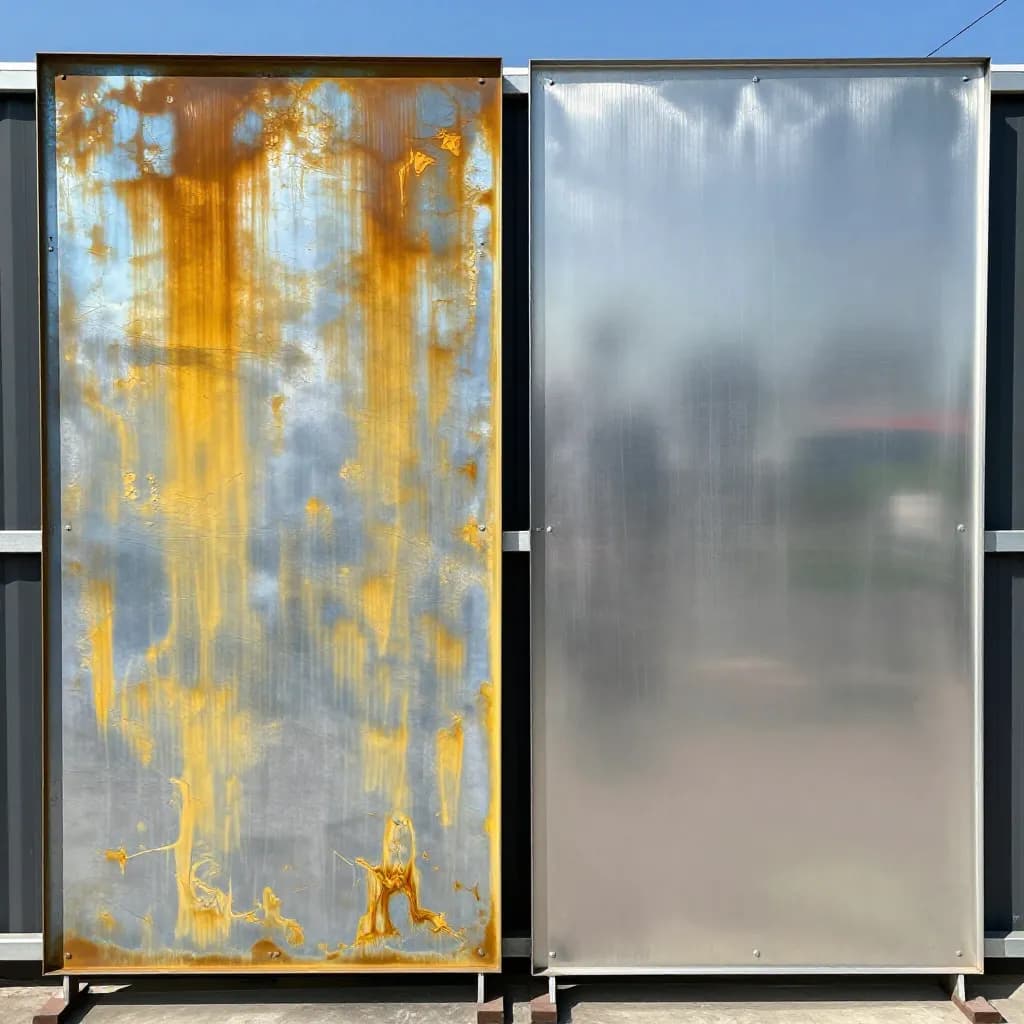
Beyond chemical resistance, epoxy powder coatings offer exceptional corrosion protection. Their strong adhesion to properly pretreated steel and aluminum creates a barrier that prevents moisture and corrosive agents from reaching the substrate. This is why epoxy-based primers and single-coat systems dominate in applications such as automotive underbody components, electrical enclosures, and industrial machinery where parts are sheltered from direct sunlight.
Ready to Start Your Project?
From one-off customs to 15,000-part production runs — get precise pricing in 24 hours.
On This Page
Epoxy Powder Coating: The Interior Workhorse
The critical limitation of epoxy powder coatings is their poor UV resistance. When exposed to sunlight, epoxy films undergo a process called chalking — the surface degrades into a powdery residue, and the color fades significantly within months. This photodegradation makes pure epoxy coatings unsuitable for any exterior application where appearance matters. For this reason, epoxy powder coatings are classified strictly as interior-use products in architectural and industrial specifications.
Polyester Powder Coating: The Exterior Standard
Polyester powder coatings are formulated using saturated polyester resins cross-linked with either TGIC (triglycidylisocyanurate) or HAA (hydroxyalkylamide) hardeners. Their defining characteristic is excellent UV resistance and weathering performance, which makes them the default choice for any exterior application. Polyester coatings maintain their color and gloss for years under direct sunlight, rain, humidity, and temperature cycling — properties that have made them the backbone of architectural powder coating worldwide.
Standard polyester powder coatings are certified to quality standards such as Qualicoat Class 1 and GSB Master, which require the coating to pass 1,000 hours of accelerated weathering in a QUV chamber. For more demanding environments, superdurable polyester formulations extend this to 2,000+ hours (Qualicoat Class 2, GSB Florida) and hyperdurable grades push performance even further, rivaling fluoropolymer coatings at a fraction of the cost. These advanced polyester chemistries have transformed the architectural market by offering long-term exterior durability without the premium price of PVDF.
Polyester powder coatings also offer good mechanical properties including flexibility, impact resistance, and edge coverage. They are available in virtually unlimited colors across the RAL, NCS, and custom color ranges, and can be formulated in gloss levels from high gloss to deep matte, as well as textured, metallic, and special-effect finishes. Their versatility, combined with exterior durability, makes polyester the most widely used powder coating chemistry globally.
Hybrid Powder Coatings: The Best of Both Worlds
Hybrid powder coatings, sometimes called polyester-epoxy blends, combine polyester and epoxy resins in ratios that typically range from 50:50 to 70:30 (polyester to epoxy). The goal is to capture the chemical resistance and adhesion benefits of epoxy while gaining some of the overbake resistance and decorative properties of polyester. Hybrids produce smooth, attractive finishes with good hardness and are less prone to yellowing during cure than pure epoxy formulations.
Hybrid coatings are widely used for indoor applications where appearance and durability both matter — think office furniture, shelving, retail fixtures, appliances, lighting fixtures, and indoor architectural metalwork. They offer better decorative properties than pure epoxy, including improved flow, leveling, and color consistency, while maintaining strong adhesion and reasonable chemical resistance for interior environments.
However, hybrid coatings share the UV sensitivity of their epoxy component and are not suitable for exterior use. Their weathering performance falls between pure epoxy and pure polyester, meaning they will chalk and fade if exposed to sustained sunlight. For specifiers, the rule of thumb is straightforward: if the part will ever see outdoor exposure, choose polyester; if it stays indoors and needs a premium finish with good chemical resistance, hybrid is an excellent and cost-effective choice.
Head-to-Head Comparison: Epoxy vs Polyester vs Hybrid
When comparing the three main powder coating chemistries side by side, the differences become clear across several key performance dimensions. For UV resistance, polyester leads decisively — rated excellent for exterior exposure — while epoxy is rated poor and hybrid is rated poor to fair. Chemical resistance follows the opposite pattern: epoxy is excellent, polyester is moderate, and hybrid falls in between. Adhesion to metal substrates is excellent for epoxy, good for polyester, and very good for hybrid formulations.
Flexibility and impact resistance favor polyester, which can be formulated to pass mandrel bend and reverse impact tests that would crack a brittle epoxy film. Hardness, on the other hand, is highest for epoxy coatings, making them more resistant to abrasion and scratching in industrial environments. Overbake resistance — the ability to maintain color and appearance if the oven temperature or dwell time exceeds the specification — is best for polyester, acceptable for hybrid, and poorest for epoxy, which tends to yellow when overbaked.
From a cost perspective, epoxy powder coatings are generally the least expensive per kilogram, followed by hybrids, with polyester coatings carrying a modest premium due to the higher cost of polyester resins and UV-stable pigments. However, the cost difference between chemistries is typically small compared to the total cost of the coating operation, and choosing the wrong chemistry for the application can result in premature failure that far exceeds any material savings.
How to Choose the Right Powder Coating Chemistry
Selecting the right powder coating chemistry starts with one fundamental question: will the coated part be exposed to sunlight? If the answer is yes — even occasionally — polyester is the only appropriate choice among the three standard chemistries. This applies to architectural facades, window frames, outdoor furniture, signage, fencing, agricultural equipment, and any component installed outdoors. For projects requiring extended exterior durability, specify superdurable or hyperdurable polyester grades certified to Qualicoat Class 2 or higher.
For interior applications, the decision depends on the performance priorities. If chemical resistance is the primary concern — as in laboratory furniture, chemical processing equipment, or industrial racking exposed to cleaning agents — epoxy is the strongest performer. If the priority is a decorative finish with good all-around properties for furniture, appliances, or interior architectural elements, hybrid coatings offer the best balance of appearance, hardness, and chemical resistance at a competitive price point.
It is also worth considering dual-coat systems for demanding applications. An epoxy primer can be applied first for maximum adhesion and corrosion protection, followed by a polyester topcoat for UV resistance and decorative appeal. This approach is common in architectural aluminum where both long-term corrosion protection and exterior weathering performance are critical. Always consult with your powder coating supplier to match the chemistry to your specific substrate, pretreatment, performance requirements, and quality standard.
Frequently Asked Questions
Can epoxy powder coating be used outdoors?
Epoxy powder coating is not recommended for outdoor use. It has poor UV resistance and will chalk and fade rapidly when exposed to sunlight, often within a few months. For any exterior application, polyester or superdurable polyester powder coatings should be specified instead.
What is a hybrid powder coating?
A hybrid powder coating is a blend of polyester and epoxy resins, typically in a 50:50 to 70:30 ratio. It combines the chemical resistance and adhesion of epoxy with the better decorative properties and overbake resistance of polyester. Hybrids are ideal for indoor applications like furniture and appliances but are not suitable for exterior use.
Is polyester powder coating more expensive than epoxy?
Polyester powder coating carries a modest price premium over epoxy, typically 5-15% more per kilogram, due to the higher cost of polyester resins and UV-stable pigments. However, the cost difference is small relative to the total coating operation cost, and using the correct chemistry avoids costly premature failures.
Which powder coating chemistry has the best chemical resistance?
Epoxy powder coating offers the best chemical resistance among standard powder coating chemistries. It resists acids, alkalis, solvents, and many industrial chemicals, making it the preferred choice for pipelines, chemical storage, laboratory equipment, and industrial applications where chemical exposure is a primary concern.
Ready to Start Your Project?
From one-off customs to 15,000-part production runs — get precise pricing in 24 hours.