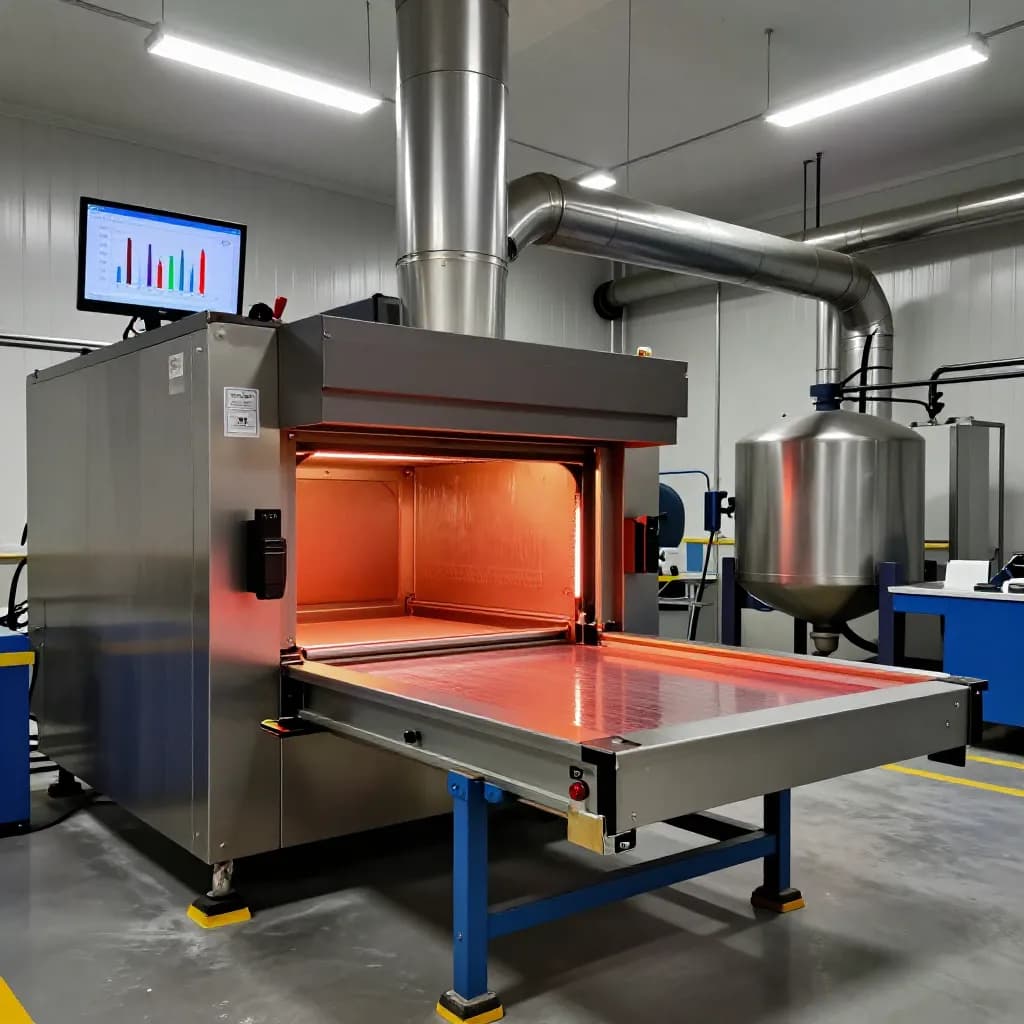
Understanding the energy profile of a powder coating operation is the first step toward reducing consumption. The curing oven is by far the largest energy consumer, typically accounting for 60-70% of the total energy used by the coating line. Ovens must heat the coated workpieces and the air within the oven chamber to the required cure temperature — typically 180-200°C for standard powder formulations — and maintain that temperature for the specified cure time, usually 10-20 minutes at metal temperature.
Environmental
Energy Efficiency in Powder Coating Operations: Reducing Consumption
Sundial Powder Coating·April 20, 2026·8 min
Pretreatment consumes the second-largest share of energy, primarily for heating wash solutions and rinse water. Multi-stage spray pretreatment systems with heated degreasing, conversion coating, and passivation stages can consume 15-25% of total line energy. The temperature requirements vary by chemistry — alkaline degreasers typically operate at 50-65°C, while some conversion coating stages run at ambient temperature.
Ready to Start Your Project?
From one-off customs to 15,000-part production runs — get precise pricing in 24 hours.
On This Page
Where Energy Is Consumed in Powder Coating
The remaining energy is distributed across booth ventilation fans, compressed air for powder application equipment, conveyor drives, lighting, and climate control for the facility. While individually smaller than oven and pretreatment energy, these auxiliary systems collectively represent 10-20% of total consumption and offer optimization opportunities. Compressed air, in particular, is one of the most expensive forms of energy in industrial facilities, and leaks or inefficient use can add significantly to operating costs.
Low-Temperature Cure Powders
Low-temperature cure powder coatings represent one of the most impactful energy reduction strategies available to powder coating operations. These formulations are engineered to achieve full crosslinking at temperatures 30-50°C below standard cure schedules — typically curing at 150°C instead of 180-200°C. The lower cure temperature directly reduces oven energy consumption by approximately 20%, as less energy is required to heat the workpieces and oven atmosphere to the target temperature.
The energy savings from low-cure powders extend beyond the reduced temperature differential. Lower oven temperatures mean less heat loss through oven walls and openings, reduced thermal stress on oven components (extending maintenance intervals), and faster heat-up from cold starts. Some low-cure formulations also achieve full cure in shorter times, enabling increased line speed or reduced oven length, both of which improve energy efficiency per unit of production.
Modern low-cure powder coatings are available across a wide range of chemistries, colors, and performance levels, including superdurable formulations suitable for exterior architectural applications. The performance of well-formulated low-cure powders is equivalent to standard-cure products in terms of film properties, weathering resistance, and chemical resistance. For operations seeking to reduce energy consumption without compromising coating quality, low-cure powders offer an immediate, proven solution that requires no capital investment in equipment.
Oven Design and Insulation Optimization
Oven design has a profound impact on energy efficiency. Convection ovens, which heat workpieces by circulating hot air, are the most common type in powder coating. Key design parameters affecting efficiency include insulation thickness and quality, air circulation patterns, oven volume relative to workpiece size, and the design of entry and exit openings that allow heat to escape.
Insulation upgrades offer significant energy savings for older ovens. Modern mineral wool or ceramic fiber insulation panels with thicknesses of 150-200 mm can reduce heat loss through oven walls by 30-50% compared to older installations with thinner or degraded insulation. Sealing gaps around doors, conveyor openings, and panel joints prevents hot air leakage that wastes energy and creates temperature inconsistencies within the oven.
Oven sizing and air management are equally important. An oversized oven heating a large air volume to cure a small workpiece load wastes energy on heating air rather than product. Variable-speed drives on circulation fans allow airflow to be matched to the actual load, reducing fan energy consumption during partial loads. Zoned heating, where different sections of the oven can be independently controlled, enables temperature optimization for different product sizes and cure requirements, avoiding the energy waste of heating the entire oven to the highest required temperature.
Heat Recovery and Process Integration
Heat recovery systems capture waste heat from the curing oven exhaust and repurpose it for other process needs, improving overall energy efficiency. The most common approach uses air-to-air heat exchangers to preheat incoming fresh air using the heat from exhaust air, reducing the energy needed to bring fresh air up to oven temperature. Depending on the temperature differential and heat exchanger efficiency, this can recover 40-60% of the exhaust heat energy.
Process integration takes heat recovery further by directing recovered heat to other energy-consuming stages of the coating line. Pretreatment wash solutions can be heated using waste heat from the oven exhaust, reducing or eliminating the need for dedicated pretreatment heating. Building heating during winter months can be supplemented with recovered oven heat, reducing facility heating costs. Some operations use oven exhaust heat to preheat workpieces before they enter the oven, reducing the energy required to bring them to cure temperature.
Advanced heat recovery technologies including heat pumps and thermal storage systems are emerging in the powder coating industry. Industrial heat pumps can upgrade low-grade waste heat to higher temperatures suitable for process use, improving the utilization of recovered energy. Thermal storage systems can capture excess heat during production and release it during start-up or low-production periods, smoothing energy demand and reducing peak consumption.
Renewable Energy for Coating Operations
Powder coating operations are well-positioned to transition to renewable energy because their energy demand is primarily thermal (oven heating) and electrical (fans, compressors, conveyors), both of which can be supplied from renewable sources. Rooftop and ground-mounted solar photovoltaic systems can offset a significant portion of electrical consumption, particularly in regions with good solar resources. Several large powder coating facilities have installed solar arrays that cover 30-50% of their annual electricity demand.
Electrification of curing ovens — replacing gas-fired burners with electric infrared elements or resistance heating — enables the use of renewable electricity for the largest single energy consumer in the operation. While electricity is typically more expensive per unit of energy than natural gas, the combination of renewable electricity, higher heating efficiency (no combustion losses), and potential carbon pricing on fossil fuels is making electric ovens increasingly competitive. Infrared curing also offers faster response times and more precise temperature control.
Some forward-thinking powder coating operations have achieved carbon-neutral or near-carbon-neutral status by combining energy efficiency measures (low-cure powders, optimized ovens, heat recovery) with renewable energy procurement (on-site solar, green electricity tariffs, renewable energy certificates). These operations demonstrate that high-quality powder coating can be delivered with minimal carbon footprint, providing a compelling sustainability story for environmentally conscious customers and supporting green building certification requirements.
Frequently Asked Questions
What is the biggest energy consumer in a powder coating line?
The curing oven accounts for 60-70% of total energy consumption in a typical powder coating operation. It must heat workpieces and the oven atmosphere to 150-200°C and maintain that temperature for the required cure time. Pretreatment heating is the second-largest consumer at 15-25%.
How much energy do low-cure powder coatings save?
Low-cure powder coatings that cure at 150°C instead of 180-200°C typically reduce oven energy consumption by approximately 20%. Additional savings come from reduced heat loss, faster heat-up times, and potentially shorter cure cycles that enable increased throughput.
Can powder coating ovens run on renewable energy?
Yes. Electric ovens using infrared elements or resistance heating can be powered by renewable electricity from solar panels, wind, or green electricity tariffs. Gas-fired ovens can use biogas or renewable natural gas. Several facilities have achieved carbon-neutral coating operations through a combination of efficiency measures and renewable energy.
What is heat recovery in powder coating?
Heat recovery captures waste heat from the curing oven exhaust and repurposes it — typically to preheat incoming fresh air, heat pretreatment solutions, or supplement building heating. Air-to-air heat exchangers can recover 40-60% of exhaust heat energy, significantly reducing overall energy consumption.
Ready to Start Your Project?
From one-off customs to 15,000-part production runs — get precise pricing in 24 hours.