Standard powder coating does not conduct electricity. It is an effective electrical insulator that blocks current flow between the coated metal substrate and anything contacting the coating surface. This insulating property is fundamental to the organic polymer chemistry of powder coatings — the cured resin matrix contains no free electrons or mobile charge carriers, making it inherently non-conductive.
Technical
Does Powder Coating Conduct Electricity? Insulation and Conductive Alternatives
Sundial Powder Coating·April 22, 2026·11 min
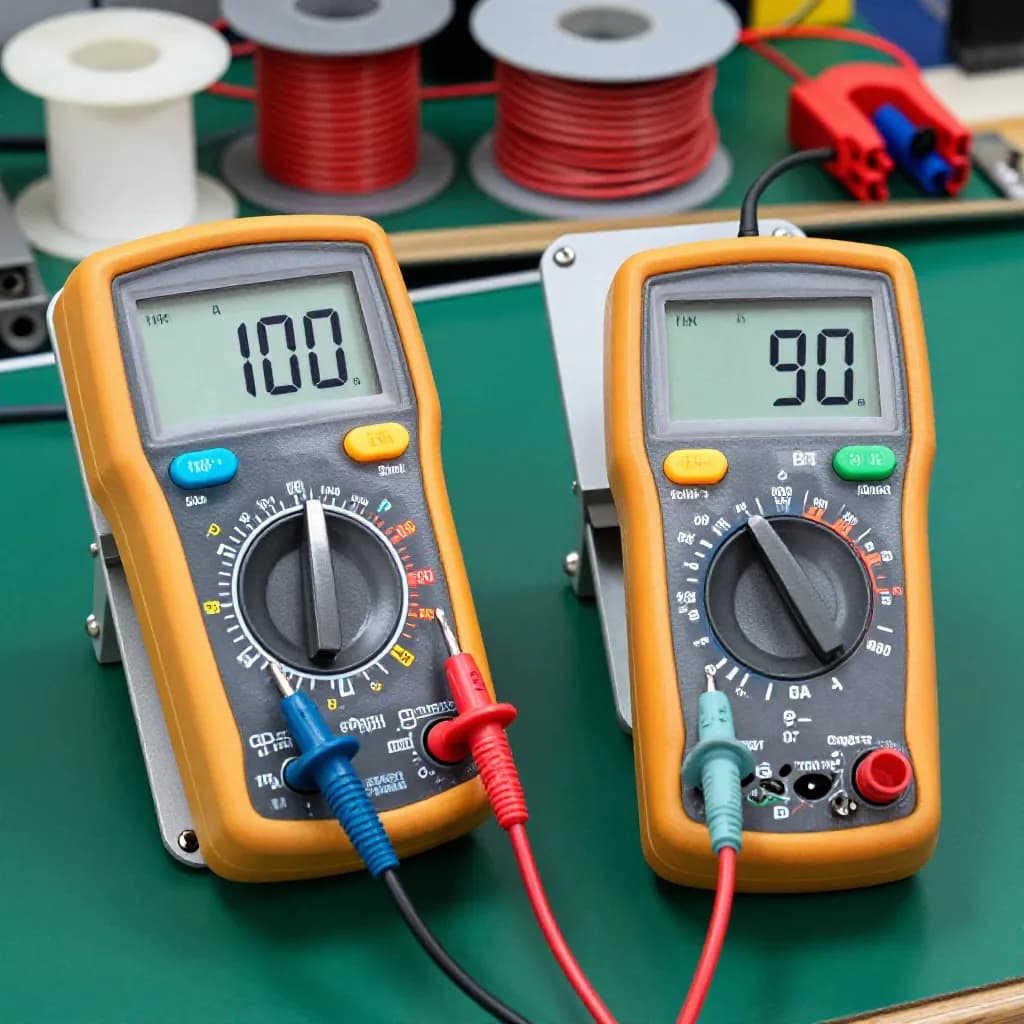
The electrical resistivity of cured powder coatings is extremely high, typically ranging from 10^12 to 10^16 ohm-centimeters. To put this in perspective, this is comparable to the resistivity of glass or ceramic materials. A standard powder coating film of 60 to 80 microns can withstand electrical potentials of 1,200 to 2,400 volts before dielectric breakdown occurs.
Ready to Start Your Project?
From one-off customs to 15,000-part production runs — get precise pricing in 24 hours.
On This Page
No, Standard Powder Coating Does Not Conduct Electricity
This insulating behavior is both an advantage and a challenge depending on the application. For electrical components that require surface insulation — busbars, motor windings, transformer cores, and electrical enclosure interiors — the insulating property of powder coating is a functional benefit. For applications requiring electrical continuity through the coating — grounding connections, EMI shielding, and static dissipation — the insulating nature of standard powder coating is a problem that must be addressed.
Conductive powder coating formulations exist for applications where electrical conductivity through the coating is required, and various design strategies can accommodate the insulating nature of standard coatings when grounding or electrical continuity is needed.
The Science Behind Powder Coating's Insulating Properties
The electrical insulation provided by powder coating is a direct consequence of the molecular structure of organic polymers. The resin systems used in powder coatings — polyester, epoxy, acrylic, and their combinations — consist of long-chain molecules held together by covalent bonds. In covalent bonding, electrons are shared between atoms and are tightly bound in their molecular orbitals, leaving no free electrons available to carry electrical current.
When the powder coating cures, these polymer chains cross-link to form a dense three-dimensional network. This cross-linked structure further restricts electron mobility and creates a continuous dielectric barrier across the entire coated surface. The density of the cross-linked network determines the dielectric strength — more tightly cross-linked coatings generally provide higher dielectric strength per unit thickness.
The pigments and fillers in standard powder coatings are also non-conductive. Titanium dioxide, calcium carbonate, barium sulfate, and organic color pigments are all electrical insulators that do not contribute any conductivity to the cured film. Even metallic-appearance powder coatings that contain aluminum flake pigments are typically non-conductive because the flakes are encapsulated in the insulating resin matrix and do not form continuous conductive pathways.
Temperature affects the insulating properties of powder coatings. As temperature increases, the polymer chains gain molecular mobility, and the resistivity of the coating decreases. At temperatures approaching the glass transition temperature of the resin, the resistivity may drop by several orders of magnitude. However, even at elevated temperatures within the normal service range, powder coatings remain effective insulators for most practical purposes.
Moisture absorption can also reduce the insulating properties of powder coatings by providing ionic conduction pathways through the film. Coatings exposed to high humidity or water immersion may show reduced dielectric strength compared to dry conditions. For critical electrical insulation applications, moisture-resistant formulations and adequate coating thickness are specified to maintain insulation performance under wet conditions.
When Insulation Is the Goal: Electrical Applications
In many applications, the insulating property of powder coating is not a limitation but a desired functional characteristic. Powder coating is widely used as an electrical insulation material in applications where it provides both environmental protection and electrical isolation in a single coating step.
Electrical busbar coating is one of the most established insulation applications for powder coating. Busbars — the copper or aluminum conductors that distribute electrical power in switchgear, panel boards, and distribution systems — are powder coated to provide insulation against accidental contact and phase-to-phase short circuits. Epoxy powder coatings are preferred for busbar insulation due to their excellent dielectric properties, adhesion to copper and aluminum, and resistance to the elevated temperatures generated by current flow.
Motor stator and rotor insulation uses powder coating to provide turn-to-turn and phase-to-phase insulation in electric motors. The coating is applied to the lamination stack before winding, providing a thin, uniform insulation layer that withstands the operating temperatures and electrical stresses of the motor. Epoxy and polyester-imide powder coatings are formulated specifically for this application.
Transformer core coating insulates the laminations of transformer cores, reducing eddy current losses and providing corrosion protection. The coating must be thin enough to minimize the stacking factor impact while providing adequate inter-lamination insulation.
Electronic component coating protects and insulates resistors, capacitors, inductors, and other components. The coating provides environmental protection against moisture, chemicals, and mechanical damage while maintaining electrical isolation between the component and its surroundings.
For these insulation applications, powder coating offers advantages over traditional insulation methods including varnish dipping, tape wrapping, and sleeve insulation. The uniform thickness, excellent adhesion, environmental resistance, and single-step application of powder coating make it an efficient and reliable insulation solution.
Grounding Solutions for Powder-Coated Assemblies
When powder-coated parts must maintain electrical grounding connections, several proven solutions ensure reliable earth continuity without compromising the coating's protective function on non-critical surfaces.
Masking before coating is the most straightforward approach. Grounding points, bonding pads, and electrical contact areas are masked with silicone plugs, caps, or tape before powder coating application. After coating and curing, the masking is removed to reveal bare metal at the designated grounding locations. This method provides the most reliable grounding connections because the contact surfaces are never coated.
Self-piercing hardware provides grounding through the coating without pre-masking. Star washers, serrated flange nuts, and self-tapping screws cut through the powder coating during assembly, creating metal-to-metal contact at the fastener location. This approach is widely used in electrical enclosure manufacturing and automotive assembly where pre-masking every grounding point would be impractical.
Post-coating removal at grounding points uses grinding, scraping, or chemical stripping to remove the coating at specific locations after the coating process. While effective, this method is labor-intensive and can damage the substrate if not performed carefully. It is typically used for field modifications or when grounding requirements are identified after coating.
Conductive adhesives and compounds can establish electrical connections through or over powder-coated surfaces. Silver-filled epoxy adhesives, conductive greases, and conductive gaskets provide electrical continuity at joints and contact points without requiring coating removal. These solutions are particularly useful for retrofit applications where coating removal is difficult or undesirable.
For safety-critical grounding applications, the chosen method must be verified by measuring the resistance of the grounding path. Standards such as IEC 61439 specify maximum allowable grounding resistance values, and the grounding method must reliably achieve these values throughout the service life of the equipment.
Conductive Powder Coating Alternatives
When the application requires electrical conductivity across the entire coated surface rather than at discrete grounding points, conductive powder coating formulations provide a solution. These specialty products incorporate conductive fillers that create electrical pathways through the otherwise insulating polymer matrix.
Carbon-based conductive fillers including carbon black, carbon nanotubes, and graphite are the most commonly used additives for conductive powder coatings. Carbon black at loadings of 15 to 30 percent by weight can reduce surface resistivity to 10^3 to 10^6 ohms per square, providing effective static dissipation and moderate electrical conductivity. The trade-off is that carbon-filled coatings are limited to dark colors — typically black or dark gray.
Metallic fillers including silver flakes, nickel particles, and stainless steel fibers provide higher conductivity than carbon-based fillers and can achieve surface resistivity below 10^2 ohms per square. These formulations approach the conductivity needed for effective EMI shielding. However, metallic fillers are more expensive than carbon-based alternatives and can affect the mechanical properties and appearance of the coating.
Intrinsically conductive polymers represent an emerging technology for conductive powder coatings. These specialized polymers have conjugated molecular structures that allow electron transport along the polymer backbone, providing conductivity without the need for conductive fillers. While still in development for powder coating applications, intrinsically conductive polymers offer the potential for conductive coatings in a wider range of colors and with better mechanical properties than filler-based systems.
The selection of conductive powder coating formulation depends on the required conductivity level, color requirements, mechanical property needs, and budget. Static dissipation applications can typically be met with carbon-filled formulations, while EMI shielding may require metallic-filled or multi-layer approaches. Consulting with specialty powder coating manufacturers helps identify the optimal formulation for specific conductivity requirements.
ESD Protection in Electronics and Clean Room Environments
Electrostatic discharge protection is a critical application for conductive and static-dissipative powder coatings in electronics manufacturing and clean room environments. Uncontrolled static discharge can destroy sensitive semiconductor devices, corrupt data on storage media, and attract contaminating particles to clean surfaces. Powder coatings with controlled electrical properties help manage these risks.
Static-dissipative powder coatings with surface resistivity in the 10^6 to 10^9 ohms per square range are specified for equipment housings, workstation surfaces, storage containers, and flooring in ESD-sensitive environments. These coatings allow static charges to dissipate to ground at a controlled rate — fast enough to prevent charge accumulation but slow enough to avoid the rapid discharge that could itself damage sensitive components.
The ESD protection performance of powder coatings must be verified through testing according to standards such as ANSI/ESD S20.20 and IEC 61340. These standards define test methods for surface resistance, charge decay time, and charge generation, providing objective criteria for evaluating coating performance in ESD-critical applications.
Consistency of electrical properties across the coated surface and over time is essential for ESD protection applications. The conductive filler must be uniformly distributed throughout the coating to avoid hot spots of high or low resistivity. Environmental factors including humidity, temperature, and contamination can affect surface resistivity, and the coating formulation must maintain its electrical properties within the specified range under the expected service conditions.
Clean room compatibility adds additional requirements beyond electrical properties. The coating must not generate particles through chalking, flaking, or abrasion, as these particles would contaminate the clean room environment. Low-outgassing formulations are required to prevent volatile contamination of sensitive processes. The coating surface must be smooth and easy to clean to facilitate the regular cleaning protocols required in clean room operations.
For the most demanding ESD and clean room applications, powder coating competes with specialized conductive flooring, static-dissipative laminates, and conductive paints. Powder coating's advantages of durability, chemical resistance, and environmental friendliness make it an attractive option when formulations meeting the required electrical specifications are available.
Testing and Verifying Electrical Properties
Verifying the electrical properties of powder coatings — whether insulating or conductive — requires appropriate test methods and equipment. The specific tests depend on whether the coating is intended to insulate, dissipate static, or conduct electricity.
For insulating coatings, dielectric strength testing according to ASTM D149 measures the voltage at which the coating breaks down and allows current to flow. The test applies an increasing voltage across the coating until breakdown occurs, and the result is reported in kilovolts per millimeter. This test is essential for electrical insulation applications where the coating must withstand specific voltage levels.
Surface resistivity testing according to ASTM D257 or IEC 61340 measures the resistance of the coating surface to current flow along the surface plane. This test is critical for static-dissipative and conductive coatings, where the surface resistivity must fall within a specified range. A concentric ring electrode or parallel bar electrode is placed on the coating surface, a known voltage is applied, and the resulting current is measured to calculate surface resistivity.
Volume resistivity testing measures the resistance of the coating to current flow through its thickness, from the surface to the substrate. This test is relevant for both insulating and conductive coatings and provides information about the bulk electrical properties of the cured film.
Charge decay testing measures how quickly a static charge dissipates from the coating surface. A known charge is deposited on the surface, and the time required for the charge to decay to a specified percentage of its initial value is measured. This test is particularly relevant for ESD protection applications where rapid charge dissipation is required.
For production quality control, simplified test methods such as surface resistance measurement with a handheld megohmmeter provide quick verification that the coating's electrical properties are within specification. More detailed testing using laboratory instruments is performed during formulation development and periodic qualification testing.
All electrical property testing should be performed under controlled temperature and humidity conditions, as both factors significantly affect the results. Test reports should document the environmental conditions along with the measured values to enable meaningful comparison between tests.
Frequently Asked Questions
Will powder coating prevent electrical grounding?
Yes, standard powder coating insulates the surface and blocks grounding connections. Solutions include masking grounding points before coating, using self-piercing hardware that cuts through the coating, or removing coating at grounding locations after application.
Can powder coating be used as electrical insulation?
Yes. Powder coating is widely used as functional electrical insulation on busbars, motor stators, transformer cores, and electronic components. Epoxy formulations are preferred for their excellent dielectric properties, with typical dielectric strength of 20-30 kV/mm.
Is there a powder coating that conducts electricity?
Yes. Conductive powder coatings use fillers like carbon black, graphite, or metallic particles to create electrical pathways through the coating. Surface resistivity can be tailored from static-dissipative (10^6-10^9 ohms/square) to highly conductive (below 10^2 ohms/square) depending on the filler type and loading.
Does powder coating protect against static discharge?
Standard insulating powder coating can actually increase static discharge risk by accumulating charges. Static-dissipative powder coatings with controlled resistivity (10^6-10^9 ohms/square) are specifically designed to safely dissipate static charges and are used in electronics manufacturing and explosive atmosphere environments.
How do you test if powder coating is conductive?
Surface resistivity is measured using a megohmmeter with concentric ring or parallel bar electrodes according to ASTM D257 or IEC 61340. For quick checks, a standard multimeter can indicate whether the coating is insulating (infinite resistance) or conductive (measurable resistance).
Ready to Start Your Project?
From one-off customs to 15,000-part production runs — get precise pricing in 24 hours.