Powder coating wheels is one of the most popular and rewarding DIY projects in the home coating community. A fresh set of powder-coated wheels transforms the look of any vehicle, and the durability of powder coating means your wheels will resist brake dust, road salt, curb rash, and UV exposure far better than spray paint or even professional wet paint.
DIY
DIY Powder Coating Wheels at Home: Complete Guide to Preparation, Application, and Cure
Sundial Powder Coating·April 22, 2026·13 min
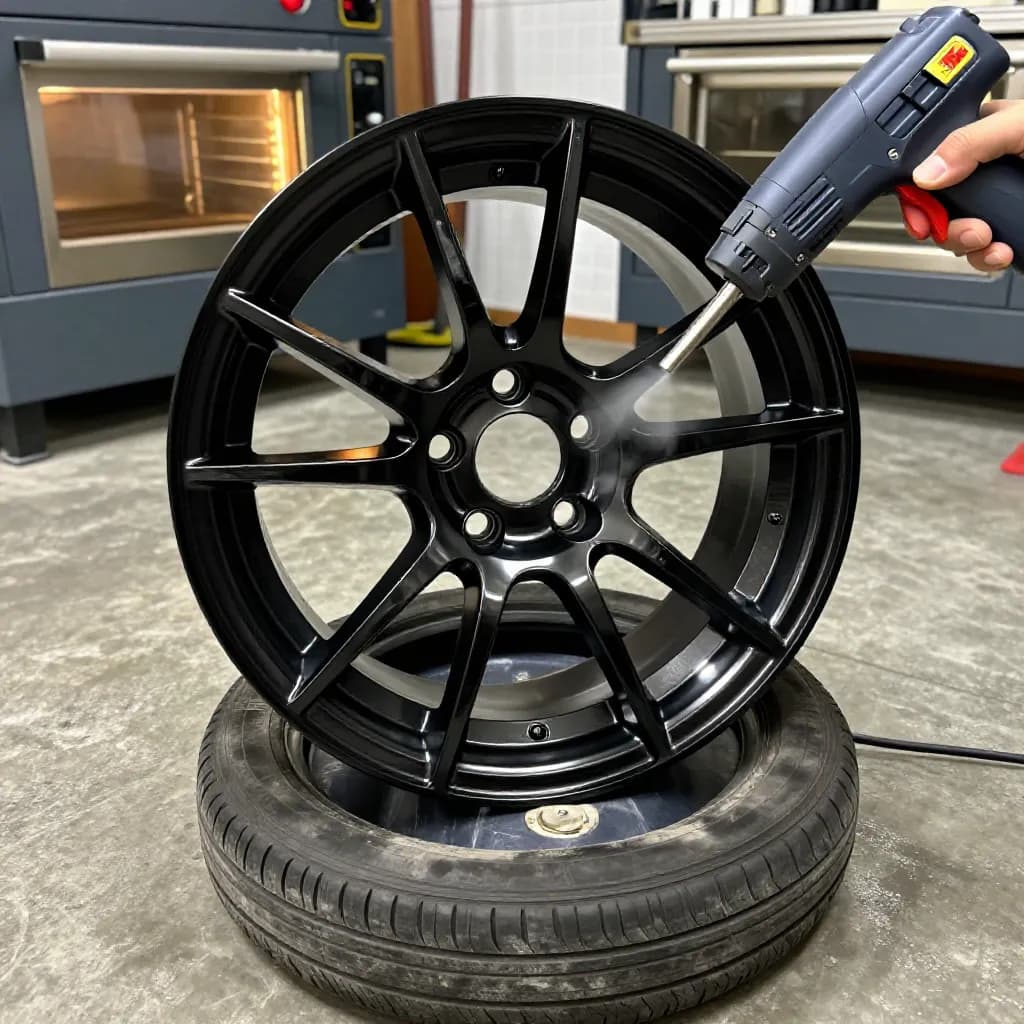
That said, wheels are not a beginner project. They combine several challenges that require solid technique: large surface area, complex spoke geometries with Faraday cage areas, the need for uniform coverage across curved surfaces, and high expectations for the finished appearance. Wheels are also visible and expensive, so mistakes are both noticeable and costly. Make sure you have several successful projects under your belt before tackling a set of wheels.
Ready to Start Your Project?
From one-off customs to 15,000-part production runs — get precise pricing in 24 hours.
On This Page
Why Wheels Are the Ultimate DIY Powder Coating Project
The process for powder coating wheels follows the same fundamental steps as any powder coating project — preparation, application, and curing — but each step has wheel-specific considerations that affect the final result. Wheel preparation is more involved because of the multiple layers of old finish, brake dust contamination, and the need for thorough cleaning of every spoke and barrel surface. Application requires managing coverage across complex geometries. Curing requires an oven large enough to accommodate the wheel.
This guide walks you through the complete process from dismounting tires to the final clear coat, with specific attention to the challenges and techniques that make wheel coating different from simpler projects.
Wheel Preparation: Stripping and Cleaning
Proper preparation is even more critical for wheels than for most parts because wheels are exposed to extreme conditions in service — heat from braking, chemical exposure from brake dust and road treatments, and mechanical stress from road impacts. Any preparation shortcut will eventually show up as a coating failure.
Start by removing the tires from the wheels. While it is possible to mask tires and coat wheels with tires mounted, the results are always compromised. You cannot properly clean, blast, or coat the bead seat area with tires in place, and this area is where corrosion and coating failure often start. Have a tire shop dismount the tires, or invest in a manual tire changing tool if you plan to coat wheels regularly.
Strip all existing finish from the wheels. Chemical strippers designed for powder coating removal work well on previously powder-coated wheels. For painted wheels, aircraft-grade paint stripper is effective. For stubborn coatings, media blasting is the most thorough approach. Whichever method you use, the goal is bare metal across every surface — front face, spoke backs, barrel interior, bead seats, and hub mounting surface.
After stripping, degrease the wheels thoroughly. Brake dust contains metallic particles and binding resins that embed in the wheel surface and can cause adhesion problems or discoloration if not removed. Use a dedicated wheel cleaner or strong degreaser, scrubbing all surfaces including the barrel interior and spoke intersections where contamination accumulates. Rinse thoroughly and inspect under good lighting for any remaining contamination.
Blasting and Surface Profiling Wheels
Media blasting is the preferred preparation method for wheels because it simultaneously removes old finish, cleans the surface, and creates the ideal profile for powder adhesion. For aluminum wheels, use aluminum oxide at 60 to 80 grit with moderate pressure (40-60 PSI) to avoid warping thin sections. For steel wheels, you can use higher pressure and more aggressive media.
Blast every surface of the wheel systematically. Start with the front face and spokes, working from the center hub area outward. Pay special attention to the spoke intersections and the transition between the face and barrel — these areas collect contamination and old finish that is easy to miss. Blast the barrel interior, bead seats, and back face with equal thoroughness.
After blasting, inspect the wheel carefully for any remaining old finish, corrosion pitting, or surface defects. Curb rash and minor damage should be addressed before coating — fill small nicks with a high-temperature body filler or aluminum-filled epoxy, sand smooth, and re-blast the repaired area to create a uniform surface profile. Deep curb damage may require professional wheel repair before coating.
Aluminum wheels are susceptible to outgassing, which causes tiny bubbles or pinholes in the cured coating. Outgassing occurs when gases trapped in the porous aluminum substrate expand during the cure cycle and push through the molten powder. To minimize outgassing, many coaters do a pre-bake — heating the bare wheel to cure temperature for 20 to 30 minutes before applying powder. This drives out trapped gases so they do not disrupt the coating during the actual cure cycle. Pre-baking is strongly recommended for cast aluminum wheels.
Masking Critical Areas on Wheels
Certain areas of the wheel must be masked to prevent powder from interfering with proper fitment and function. The hub mounting surface where the wheel contacts the hub must remain bare metal for proper seating and torque retention. The lug nut seats must also be kept clear — powder coating in the lug holes can affect torque readings and cause the lug nuts to loosen over time.
Use high-temperature masking tape and silicone plugs designed for powder coating. Standard masking tape will burn and leave residue in the oven. High-temp tape rated for at least 400°F is essential. Silicone plugs are available in sizes that fit standard lug holes and valve stem holes — they are reusable and provide a clean, consistent mask.
Mask the hub bore (center hole) if your vehicle uses a hub-centric mounting system. Powder buildup in the hub bore can prevent the wheel from seating properly on the hub, causing vibration. A silicone plug or high-temp tape wrapped around a dowel inserted in the bore works well.
Mask the tire bead seat area if you want to ensure a proper tire seal. Some coaters leave the bead seats unmasked and coat them along with the rest of the wheel, which works fine with most modern tires. Others prefer to mask the bead seats for a guaranteed seal. If you do coat the bead seats, make sure the coating is smooth and uniform — thick or rough coating in this area can cause slow air leaks.
Apply all masking before you begin spraying and double-check every masked area. Removing masking and reapplying after powder is on the wheel risks disturbing the uncured coating. Take your time with masking — it is tedious but essential for a professional result.
Applying Powder to Wheels: Technique and Settings
Wheels present unique application challenges because of their complex geometry. The front face, spoke sides, spoke backs, barrel interior, and lip all need coverage, and the transitions between these surfaces create Faraday cage areas where powder tends to be thin. A systematic approach and willingness to adjust your gun settings for different areas of the wheel will produce the best results.
Start by coating the most difficult areas first — spoke backs, barrel interior, and the recesses between spokes. Reduce your gun voltage to 40-60 percent of maximum for these areas to minimize Faraday cage effects. Use a narrow spray pattern and direct the gun into the recesses at an angle rather than straight on. Build light coverage in these areas before moving to the easier exterior surfaces.
Once the recessed areas have a base layer of powder, switch to a wider spray pattern and increase voltage to 70-80 percent for the front face and barrel exterior. Use smooth, overlapping passes to build even coverage across the flat and gently curved surfaces. Pay attention to the spoke edges, which tend to get heavy buildup on the leading edge and thin coverage on the trailing edge.
Rotate the wheel on its hanging fixture to access all surfaces. Many coaters build a simple rotating fixture that allows the wheel to spin freely, making it easy to coat all spoke faces and the entire barrel without repositioning. A lazy-susan bearing mounted on a hanging bracket works well for this purpose.
Check coverage from multiple angles before moving the wheel to the oven. Look for thin spots in the recesses, heavy buildup on edges, and any bare metal showing through. The uncured powder should appear uniform across all surfaces. If you see problems, address them now — it is much easier to add powder or blow off excess before curing than to fix issues afterward.
Curing Wheels and Applying Clear Coat
Curing wheels requires an oven large enough to accommodate them with clearance on all sides. For standard 17 to 19-inch wheels, you need an oven interior of at least 24 by 24 inches, and preferably larger. Most converted kitchen ovens are too small for wheels — this is where a custom-built oven pays for itself.
Hang or support the wheel in the oven so air can circulate around it freely. Some coaters hang wheels from a hook through the center bore, while others support them on a fixture that contacts only the masked hub surface. Ensure the wheel is stable and will not shift during the cure cycle.
Follow the powder manufacturer's cure schedule precisely. Wheels are relatively heavy and take longer to reach cure temperature than small parts — a cast aluminum wheel may need 15 to 20 minutes to come up to temperature after being placed in a preheated oven. Use a contact thermometer to verify that the wheel has reached full cure temperature before starting your cure timer.
After the base color coat is cured and cooled, many coaters apply a clear powder coat for additional protection and depth. Clear coat is especially recommended for metallic colors, which can oxidize and dull without a protective clear layer. Apply the clear coat using the same technique as the base coat, with particular attention to uniform coverage. Cure the clear coat according to its specific cure schedule, which may differ from the base coat.
Allow the wheel to cool completely before handling or mounting tires. Rapid cooling can stress the coating and cause adhesion issues. Once cool, remove all masking materials and inspect the finished wheel under good lighting.
Common Wheel Coating Problems and Solutions
Outgassing is the most common problem when powder coating aluminum wheels. It appears as tiny bubbles, pinholes, or craters in the cured coating surface. The solution is pre-baking the bare wheel at cure temperature for 20 to 30 minutes before applying powder. If outgassing still occurs, try a second pre-bake cycle or switch to a powder formulated for outgassing substrates — these powders have a longer gel time that allows gases to escape before the coating skins over.
Orange peel texture on wheels is usually caused by excessive film thickness or voltage set too high. Wheels have a lot of surface area, and it is easy to over-apply powder, especially on the flat face areas. Aim for 2 to 3 mils of base coat and 1.5 to 2 mils of clear coat. Use a mil gauge to check thickness on test pieces with similar geometry.
Thin coverage in spoke recesses and barrel interiors is a Faraday cage issue. Address it by coating these areas first at reduced voltage with a narrow spray pattern directed into the recesses. Some coaters use a small extension nozzle to reach deep into barrel interiors and between closely spaced spokes.
Color inconsistency between the face and barrel of the wheel can occur if the powder application thickness varies significantly across the wheel. Thicker areas appear darker or more saturated, while thinner areas look lighter. Consistent application technique and checking coverage from multiple angles before curing helps prevent this issue.
Brake dust staining after installation is not a coating defect but a maintenance issue. Powder-coated wheels resist brake dust better than painted wheels, but they still benefit from regular cleaning. A pH-neutral wheel cleaner used weekly prevents brake dust from bonding to the coating surface.
Mounting Tires and Final Inspection
Before mounting tires, do a thorough final inspection of each wheel. Check for any coating defects, thin spots, or damage that occurred during handling. Verify that all masked areas are clean and free of powder — the hub mounting surface, lug seats, and valve stem hole should be bare metal or have only a very thin, smooth coating that will not interfere with fitment.
Have tires mounted by a professional tire shop, and let them know the wheels are freshly powder coated. Ask them to use plastic tire mounting protectors to prevent the mounting machine from scratching the coating on the lip and bead area. Most tire shops are familiar with this request and have the appropriate protectors available.
After mounting, check the tire bead seal by inflating to the recommended pressure and listening for leaks. If you coated the bead seat area, a thin, smooth coating should seal fine. If you hear a slow leak, the bead may need to be broken and reseated with a bead sealer.
When installing the wheels on the vehicle, torque the lug nuts to the manufacturer's specification using a torque wrench. Do not over-torque — the smooth powder-coated surface in the lug area (if not masked) can affect the friction coefficient and torque readings. Re-check the torque after 50 to 100 miles of driving, as is recommended practice whenever wheels are removed and reinstalled.
Your freshly powder-coated wheels will look stunning and provide years of durable service. Maintain them with regular washing using a pH-neutral cleaner, and address any chips or damage promptly to prevent corrosion from starting underneath the coating. With proper care, a quality powder coat on wheels can last five to ten years or more.
Frequently Asked Questions
Do I need to remove tires before powder coating wheels?
Yes, removing tires is strongly recommended. You cannot properly clean, blast, or coat the bead seat area with tires mounted, and this area is where corrosion and coating failure often start. Have a tire shop dismount the tires before you begin preparation.
What causes pinholes when powder coating aluminum wheels?
Pinholes are caused by outgassing — trapped gases in the porous aluminum expand during curing and push through the molten powder. Pre-bake bare wheels at cure temperature for 20-30 minutes before applying powder to drive out trapped gases. For persistent outgassing, use powder formulated for outgassing substrates.
Should I clear coat powder coated wheels?
Clear coat is recommended, especially for metallic colors that can oxidize without protection. Clear coat adds UV resistance, chemical resistance, and depth to the finish. Apply it as a separate coat after the base color is cured and cooled, then cure according to the clear coat's specific schedule.
What areas of the wheel should I mask before powder coating?
Mask the hub mounting surface, lug nut seats, valve stem hole, and hub bore (center hole) on hub-centric vehicles. Use high-temperature masking tape and silicone plugs rated for at least 400°F. These areas need bare metal contact for proper fitment, torque retention, and tire inflation.
How long does powder coating last on wheels?
A properly applied and cured powder coating on wheels typically lasts 5-10 years or more with regular maintenance. Powder coating resists brake dust, road salt, and UV exposure far better than spray paint. Regular cleaning with a pH-neutral wheel cleaner and prompt repair of any chips extends the coating's service life.
Ready to Start Your Project?
From one-off customs to 15,000-part production runs — get precise pricing in 24 hours.