Powder-coated brake calipers are one of the most visually striking upgrades you can make to a vehicle. Brightly colored calipers visible through the wheel spokes give any car a performance-oriented, custom look. Powder coating is far superior to caliper paint for this application — it is thicker, more durable, and resistant to the extreme heat, brake dust, and chemical exposure that calipers endure in service.
DIY
DIY Powder Coating Brake Calipers: Safety, High-Temp Powder, and Masking
Sundial Powder Coating·April 22, 2026·12 min
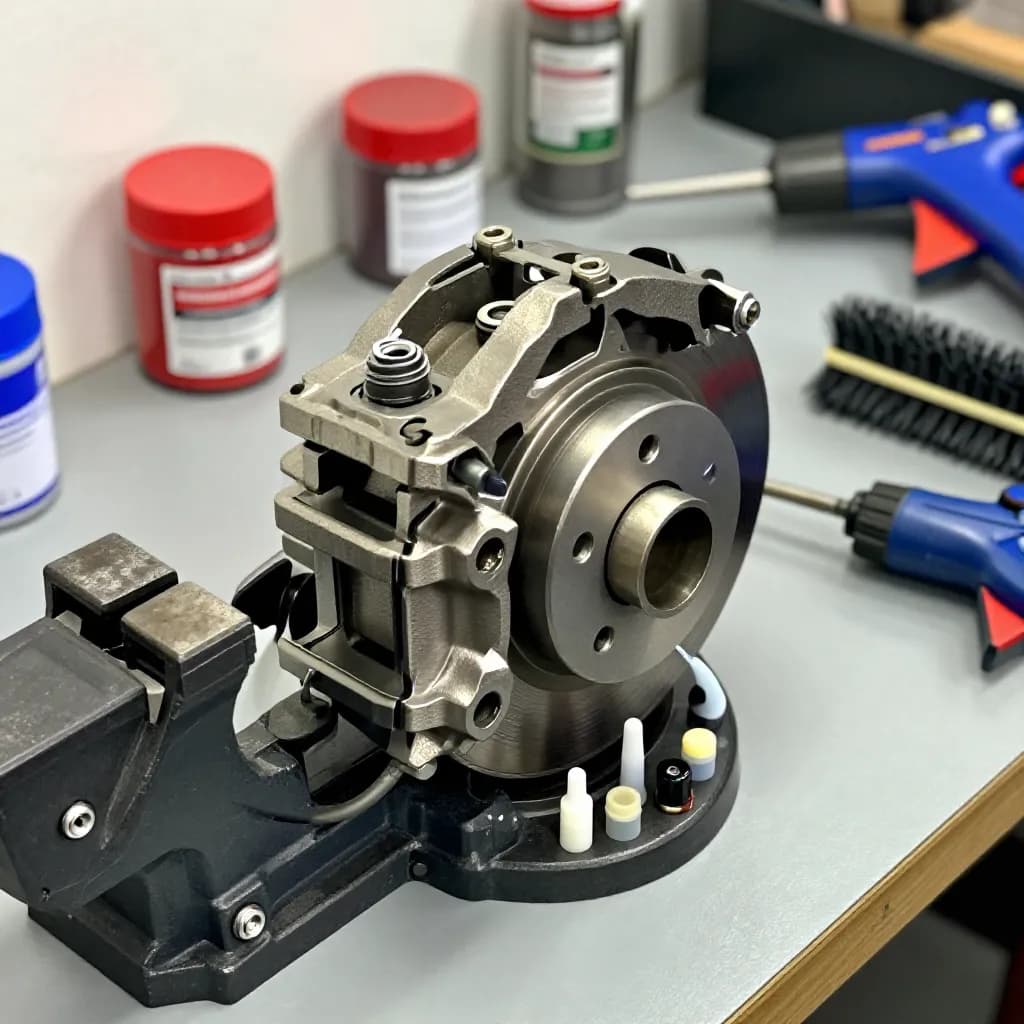
However, brake calipers are safety-critical components. Unlike valve covers or decorative brackets, a failure in the brake system can have life-threatening consequences. This means every step of the caliper coating process must be executed with safety as the primary concern. Coating must not interfere with caliper function, piston movement, brake fluid sealing, or pad fitment. Masking must be thorough and precise. Reinstallation must follow proper procedures with correct torque specifications.
Ready to Start Your Project?
From one-off customs to 15,000-part production runs — get precise pricing in 24 hours.
On This Page
Powder Coating Brake Calipers: A Safety-First Approach
This guide takes a safety-first approach to caliper coating. We will cover which caliper types are suitable for DIY coating, how to properly remove and prepare calipers, which areas must be masked, what powder to use for the extreme temperatures calipers experience, and how to reinstall calipers correctly. If at any point you are unsure about a step in this process, consult a qualified brake technician before proceeding.
A word of caution: if your calipers show signs of damage, corrosion pitting on sealing surfaces, cracked housings, or stuck pistons, do not coat them. Replace them with new or properly rebuilt units. Powder coating is a cosmetic enhancement for functional calipers, not a repair for damaged ones.
Removing and Inspecting Brake Calipers
Start by safely raising and supporting the vehicle on jack stands — never work under a vehicle supported only by a jack. Remove the wheels to access the calipers. Before disconnecting anything, take photos of the caliper installation, brake line routing, and any clips or hardware for reference during reinstallation.
Remove the caliper from the bracket by extracting the slide pins or mounting bolts. On floating calipers (the most common type on passenger vehicles), the caliper slides on pins that must be removed. On fixed calipers (common on performance vehicles), the caliper is bolted directly to the knuckle. Keep all hardware organized and labeled.
Disconnect the brake line from the caliper. This will release brake fluid, so have a drain pan ready and cap the open brake line immediately to prevent contamination and further fluid loss. You will need to bleed the brakes during reinstallation, so have fresh brake fluid on hand.
With the caliper removed, inspect it thoroughly. Check for cracks in the housing, corrosion on the piston bore and sealing surfaces, damaged bleeder screws, and worn slide pin bores. Push the piston back into the bore — it should move smoothly with moderate pressure. If the piston is stuck, seized, or the bore is corroded, the caliper needs rebuilding or replacement, not coating.
Remove the piston, seals, bleeder screw, and any rubber boots or dust covers. These components cannot survive the cure oven temperatures and must be removed before coating. Keep all internal components organized and note their orientation for reassembly. New seal kits are inexpensive and should be installed during reassembly regardless of the condition of the old seals.
Surface Preparation for Brake Calipers
Brake calipers accumulate layers of brake dust, road grime, and baked-on contamination that must be completely removed before coating. Start with a thorough degreasing using a brake cleaner or strong degreaser. Scrub all surfaces, paying attention to the areas around the bleeder screw, brake line port, and pad contact surfaces where contamination is heaviest.
Media blast the caliper exterior to remove old paint, corrosion, and surface contamination while creating a profile for powder adhesion. Use aluminum oxide at moderate pressure for cast iron calipers, or glass bead at reduced pressure for aluminum calipers. Blast all exterior surfaces that will be coated, including the areas around mounting ears and between any cooling fins.
Do not blast the piston bore, seal grooves, or brake line port threads. These are precision-machined surfaces that must not be altered. If these areas need cleaning, use fine scotch-brite pads and brake cleaner, working carefully to avoid removing material or changing dimensions.
After blasting, clean the caliper thoroughly to remove all blast media residue. Blow out every passage, hole, and cavity with compressed air. Wash with brake cleaner and blow dry again. Any blast media left inside the caliper can contaminate the brake fluid and damage seals and pistons when the caliper is reassembled.
Cast iron calipers are susceptible to flash rust after blasting, especially in humid conditions. Move quickly from blasting to coating, or apply a light coat of brake cleaner to the blasted surfaces to displace moisture temporarily. If flash rust does appear, a quick re-blast of the affected areas will restore the surface.
Masking Critical Caliper Surfaces
Masking brake calipers requires more precision than most powder coating projects because the consequences of coating the wrong surfaces are functional, not just cosmetic. Powder coating on sealing surfaces, piston bores, or fluid passages can cause brake failure.
The piston bore is the most critical area to mask. Insert a silicone plug or wrap the bore opening with high-temperature tape to prevent any powder from entering. Even a small amount of powder in the piston bore can prevent the piston from moving freely or damage the new seals during reassembly.
Mask the brake line port and bleeder screw hole with appropriately sized silicone plugs or high-temp tape. Powder in these threaded ports can prevent proper sealing of the brake line fitting and bleeder screw, leading to brake fluid leaks.
Mask the pad contact surfaces — the areas where the brake pads slide against the caliper or bracket. Powder coating on these surfaces changes the clearance and can cause the pads to bind or drag. On floating calipers, also mask the slide pin bores where the caliper slides on its mounting pins.
The mounting bolt holes should be masked to maintain proper thread engagement and torque specifications. Powder buildup in bolt holes reduces the effective thread depth and can affect the clamping force of the mounting bolts.
Double-check every masked area before spraying. Make a checklist of all areas that must be masked and verify each one. It is much easier to add a missed piece of masking before spraying than to deal with the consequences of powder in a critical area after curing.
Choosing and Applying High-Temperature Powder
Brake calipers experience significant heat during braking. Under normal driving, caliper temperatures can reach 300°F to 400°F, and during aggressive driving or repeated hard braking, temperatures can exceed 500°F or more. Standard polyester powder coatings are not rated for these temperatures and will discolor, blister, or fail in service.
Use a high-temperature powder coating specifically rated for brake caliper applications. These powders are typically ceramic or silicone-based and are rated for continuous temperatures of 500°F to 900°F depending on the formulation. They are available in a range of colors including red, yellow, blue, black, and silver — the most popular caliper colors.
High-temperature powders apply and cure differently than standard polyester powders. Read the manufacturer's instructions carefully, as cure temperatures and times may differ from what you are accustomed to. Some high-temp powders require a higher cure temperature (450°F or above), while others cure at standard temperatures but achieve their heat resistance through different chemistry.
Apply the powder using standard technique — moderate voltage, 8-12 inch spray distance, smooth overlapping passes. High-temp powders can be slightly more difficult to apply than standard polyester because they may not charge as efficiently. If you have trouble getting the powder to stick, check your ground connection and try reducing voltage slightly.
Build a uniform coat of 2 to 3 mils. Avoid excessive thickness, which can crack under thermal cycling as the caliper heats and cools repeatedly in service. A moderate, even coat provides the best combination of appearance and durability for the demanding caliper environment.
Curing and Post-Cure Inspection
Cure the coated calipers according to the high-temperature powder manufacturer's specifications. This is typically 15 to 20 minutes at 400°F to 450°F, but verify with your specific powder's data sheet. Cast iron calipers have significant thermal mass and may take 10 to 15 minutes to reach cure temperature in the oven.
Aluminum calipers heat up faster but are more susceptible to outgassing. If you are coating aluminum calipers, pre-bake them at cure temperature for 20 minutes before applying powder, just as you would with valve covers or other cast aluminum parts.
After curing and cooling, inspect the coating thoroughly. Check for uniform coverage, consistent color and gloss, and any defects. More importantly, inspect all masked areas to ensure no powder migrated past the masking. Remove all masking materials and verify that the piston bore, seal grooves, fluid passages, and mounting surfaces are completely clean and free of powder.
Run a finger around the inside of the piston bore to feel for any powder contamination. Even a thin film of powder in the bore can cause problems. If you find any contamination in critical areas, clean it out completely with brake cleaner and a lint-free cloth before proceeding with reassembly.
Test-fit the piston in the bore without seals to verify it moves freely. If the piston binds or feels tight, investigate the cause before proceeding. The coating process should not have affected the bore dimensions, but it is worth verifying before you reassemble and install the caliper on the vehicle.
Reassembly and Reinstallation
Reassemble the caliper with new seals, dust boots, and bleeder screws if the originals showed any wear. Lubricate all seals with clean brake fluid during installation — never use petroleum-based lubricants on brake components, as they will damage rubber seals. Install the piston carefully, ensuring it enters the bore straight and does not damage the new seal.
Install the bleeder screw and brake line fitting, tightening to the manufacturer's torque specification. Over-tightening bleeder screws is a common mistake that strips the threads in the caliper housing — use a torque wrench or at minimum a careful hand feel.
Reinstall the caliper on the vehicle, following the reverse of your removal procedure. Torque all mounting bolts to specification. On floating calipers, lubricate the slide pins with the manufacturer-recommended caliper grease and verify they move freely. Reconnect the brake line and tighten the fitting to specification.
Bleed the brakes thoroughly to remove all air from the system. Start with the caliper farthest from the master cylinder and work toward the closest. Pump the brake pedal and check for a firm, consistent feel. If the pedal feels spongy or sinks, there is still air in the system — continue bleeding until the pedal is firm.
Before driving, pump the brake pedal several times to seat the pads against the rotors. The first few pedal applications may feel soft as the pistons extend to take up the clearance. Once the pedal feels firm and consistent, test the brakes at low speed in a safe area before driving normally. Verify that the vehicle stops straight, the pedal feel is normal, and there are no fluid leaks at any connection point.
Bed in the brakes according to the pad manufacturer's recommendations before subjecting them to hard use. The initial bedding process also serves as a heat cycle for the new powder coating, allowing it to fully stabilize before experiencing the extreme temperatures of aggressive braking.
Frequently Asked Questions
Can I use regular powder coating on brake calipers?
No. Standard polyester powder coatings are not rated for the temperatures brake calipers experience, which can exceed 500°F during aggressive driving. Use high-temperature powder specifically rated for brake caliper applications, typically ceramic or silicone-based formulations rated for 500°F-900°F.
What areas of the brake caliper must be masked?
Mask the piston bore, seal grooves, brake line port, bleeder screw hole, pad contact surfaces, slide pin bores (on floating calipers), and mounting bolt holes. Powder in any of these areas can cause brake malfunction. Double-check every masked area before spraying.
Do I need to rebuild the caliper after powder coating?
Yes, install new seals, dust boots, and potentially bleeder screws during reassembly. The internal rubber components must be removed before the cure oven (they cannot survive 400°F+), so new seals are required. This is also an opportunity to inspect and clean the piston bore and other internal surfaces.
Is it safe to powder coat brake calipers at home?
Yes, if you follow proper procedures. Use high-temperature powder, mask all critical surfaces precisely, inspect thoroughly after curing, reassemble with new seals, bleed the brakes completely, and test at low speed before normal driving. If you are unsure about any step, consult a qualified brake technician.
How long does powder coating last on brake calipers?
High-temperature powder coating on properly prepared brake calipers typically lasts 3-5 years or more depending on driving conditions. The coating resists brake dust, road salt, and heat far better than caliper paint. Regular cleaning with a pH-neutral wheel cleaner helps maintain the appearance.
Ready to Start Your Project?
From one-off customs to 15,000-part production runs — get precise pricing in 24 hours.