Valve covers are one of the most popular DIY powder coating projects, and for good reason. They are small enough to fit in a standard kitchen oven, they are highly visible in the engine bay, and a freshly powder-coated set of valve covers instantly elevates the appearance of any engine. Whether you are building a show car, restoring a classic, or just want your daily driver to look sharper under the hood, powder-coated valve covers deliver a dramatic visual impact for relatively modest effort.
DIY
DIY Powder Coating Valve Covers: Aluminum Prep, Outgassing, and High-Temp Options
Sundial Powder Coating·April 22, 2026·11 min
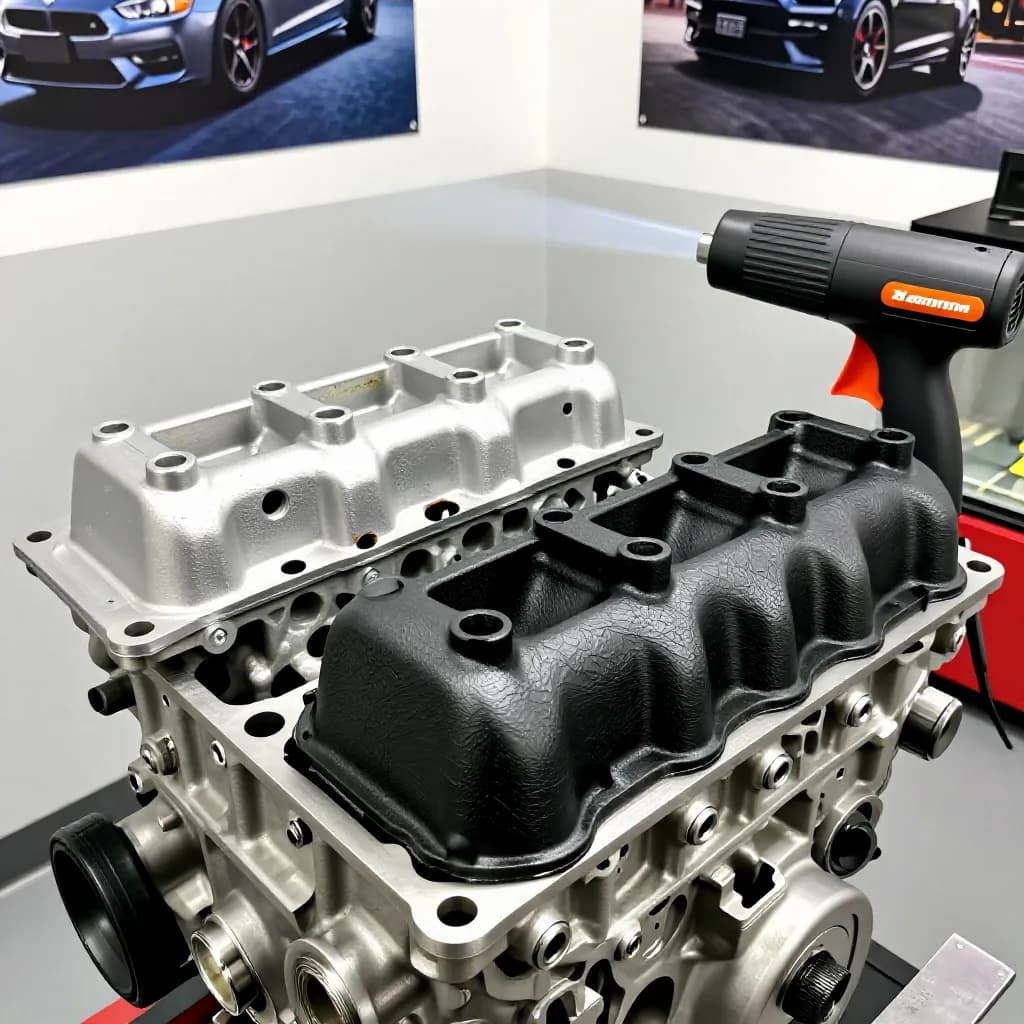
Valve covers also make an excellent intermediate project for coaters who have completed a few simple practice pieces and are ready to step up. They introduce aluminum-specific challenges like outgassing and the need for careful surface preparation, but their manageable size and simple geometry keep the project approachable. The skills you develop coating valve covers transfer directly to other aluminum engine components like intake manifolds, throttle bodies, and timing covers.
Ready to Start Your Project?
From one-off customs to 15,000-part production runs — get precise pricing in 24 hours.
On This Page
Valve Covers: The Perfect Engine Bay Powder Coating Project
The key considerations for valve cover coating are aluminum preparation, outgassing prevention, powder selection for the engine bay environment, and achieving a clean, professional finish that complements your engine build. Each of these topics has nuances that differ from coating simple steel parts, and understanding them before you start will save you from the frustration of pinholes, adhesion failures, and premature coating degradation.
This guide covers the complete process from stripping old finish through final installation, with specific attention to the challenges that make aluminum valve covers different from the steel brackets and hardware you may have coated previously.
Stripping and Preparing Aluminum Valve Covers
Aluminum valve covers typically arrive with some combination of factory paint, aftermarket coatings, gasket sealant residue, oil contamination, and oxidation. All of this must be removed completely before powder coating. The preparation process for aluminum is more involved than for steel because aluminum is softer, more reactive, and more porous.
Start by stripping any existing finish. Chemical strippers formulated for aluminum are the safest option — they remove paint and powder without attacking the aluminum substrate. Avoid harsh caustic strippers that can etch or pit aluminum surfaces. For stubborn coatings, media blasting with glass bead or fine aluminum oxide at reduced pressure (40-50 PSI) is effective without damaging the aluminum.
After stripping, address gasket sealant residue on the mating surfaces. Old gasket material and sealant can be removed with a plastic scraper and a gasket remover solvent. Do not use a metal scraper on aluminum gasket surfaces — gouges in the mating surface will cause oil leaks when the valve cover is reinstalled. Take your time and get the surface clean and flat.
Degrease the valve covers thoroughly, paying special attention to the interior surfaces where decades of oil and sludge may have accumulated. Even though you are only coating the exterior, oil contamination can migrate through the porous aluminum during the cure cycle and cause adhesion failures or discoloration on the exterior surface. Clean the interior with a strong degreaser, scrub with a brush, and rinse thoroughly.
After degreasing, blast the exterior surfaces to create a uniform surface profile. Use glass bead or 100-120 grit aluminum oxide at moderate pressure. Blast evenly across all surfaces, including the fins or ribs if your valve covers have them. The blasted surface should have a consistent matte appearance with no shiny spots or remnants of old finish.
Solving the Outgassing Problem on Cast Aluminum
Outgassing is the most common problem when powder coating cast aluminum parts like valve covers. Cast aluminum is porous — it contains microscopic voids and trapped gases from the casting process. When the part is heated during powder curing, these trapped gases expand and try to escape through the surface. If the powder has already melted and begun to flow, the escaping gases create tiny bubbles, pinholes, or craters in the coating surface.
The standard solution is pre-baking. Heat the bare, prepared valve cover to cure temperature (typically 400°F) and hold it there for 20 to 30 minutes before applying any powder. This drives out the trapped gases while the surface is bare, so they do not disrupt the coating during the actual cure cycle. You may see visible outgassing during the pre-bake — small wisps of smoke or vapor escaping from the surface — which confirms that the process is working.
Some coaters do multiple pre-bake cycles for heavily porous castings. After the first pre-bake, let the part cool, inspect for any residue that emerged from the pores, wipe it clean, and pre-bake again. Two or three cycles are usually sufficient to eliminate outgassing on even the most porous castings.
Another approach is to use powder specifically formulated for outgassing substrates. These powders have a longer gel time, meaning they stay in a liquid state longer during the cure cycle. This extended flow period allows gases to escape through the molten powder and the surface to heal over before the coating begins to crosslink and harden. These specialty powders are available from most powder suppliers and are worth keeping on hand for any aluminum work.
You can also combine both approaches — pre-bake the part and use an outgassing-formulated powder — for maximum insurance against pinholes. This belt-and-suspenders approach is recommended for show-quality work where any surface defect is unacceptable.
Choosing Powder for Engine Bay Applications
The engine bay environment subjects coatings to heat, oil exposure, fuel splashes, and chemical contact from cleaners and fluids. Standard polyester powder coatings handle this environment well for most valve cover applications, as the valve cover itself does not reach extreme temperatures — it is separated from the combustion chamber by the cylinder head and typically stays below 250°F even under hard driving.
However, if your valve covers are on a high-performance or turbocharged engine, or if they are located near exhaust components, temperatures can be higher. In these cases, consider a high-temperature powder coating rated for 500°F or above. High-temp powders are typically silicone-based and are available in a limited but useful range of colors including black, silver, and several metallics. They sacrifice some of the color variety of standard polyester powders in exchange for superior heat resistance.
For most street and show applications, standard polyester or polyester-TGIC powder in your chosen color works perfectly. These powders are available in virtually any color, finish, and texture you can imagine — gloss black, wrinkle red, metallic blue, satin bronze, and hundreds of other options. The color and finish you choose should complement your overall engine bay theme.
Consider the practical aspects of your color choice. Light colors show oil drips and dirt more readily than dark colors. Textured finishes like wrinkle and hammertone hide minor surface imperfections better than smooth gloss finishes. Metallic powders look stunning but require a clear coat for long-term protection against oxidation. Gloss black is the most popular choice for valve covers because it looks clean, hides minor imperfections, and complements virtually any engine bay color scheme.
Masking and Application Technique for Valve Covers
Valve covers have several areas that must be masked before coating. The gasket mating surface is the most critical — powder coating on this surface will prevent the gasket from sealing properly and cause oil leaks. Use high-temperature masking tape applied carefully along the gasket rail, ensuring complete coverage of the flat mating surface while leaving the exterior surfaces exposed for coating.
Mask any threaded holes for bolts, filler caps, or breather fittings. Silicone plugs sized to fit your specific bolt holes provide the cleanest mask. If you do not have the right size plugs, wrap high-temp tape around a bolt and thread it into the hole to protect the threads.
If your valve covers have oil filler caps or breather grommets that mount in the top surface, mask those openings as well. Powder inside the valve cover is not harmful to the engine, but it looks unprofessional and can flake off over time, potentially contaminating the oil.
For application, hang the valve cover from a wire through one of the bolt holes or from a custom fixture. Apply powder using your standard technique — moderate voltage, 8-12 inch spray distance, smooth overlapping passes. Valve covers with fins or ribs require attention to the recesses between fins, which are mild Faraday cage areas. Reduce voltage slightly and direct the gun at an angle into the fin valleys to ensure coverage.
Build a uniform coat of 2 to 3 mils across all exterior surfaces. Check coverage carefully before curing, paying attention to the fin valleys, the edges of the gasket rail, and any raised lettering or logos on the cover. These areas are where thin spots most commonly occur.
Curing and Achieving a Flawless Finish
If you pre-baked the valve covers, let them cool completely before applying powder. Applying powder to a warm part can cause the powder to melt on contact and create an uneven, textured surface. The part should be at room temperature when you spray.
Place the coated valve cover in your preheated oven and cure according to the powder manufacturer's schedule. Aluminum valve covers are relatively thin and light, so they reach cure temperature quickly — typically within 5 to 10 minutes in a properly preheated oven. Start your cure timer when the part reaches full temperature, not when you close the oven door.
Watch the curing process through the oven window if possible. You will see the powder melt and flow into a smooth, glossy surface. If you chose a wrinkle or textured finish, the texture will develop during the cure cycle — wrinkle finishes typically start smooth and develop their characteristic texture as the coating crosslinks. Do not open the oven door during this process, as the temperature drop can affect texture development.
After the cure time is complete, allow the valve cover to cool slowly. For wrinkle and textured finishes, slow cooling helps the texture develop fully. For gloss finishes, cooling rate is less critical, but avoid thermal shock that could stress the coating.
Once cool, inspect the finish under good lighting. The coating should be uniform in color, gloss, and texture across all surfaces. Check for pinholes (outgassing), orange peel (too much powder or voltage), thin spots (inadequate coverage), and contamination specks (dirty booth or gun). A properly prepared and coated valve cover should have a flawless, show-quality finish that looks as good as or better than factory.
Installation and Engine Bay Aesthetics
Before installing the coated valve covers, remove all masking materials and inspect the gasket mating surface. It should be clean, flat, and free of any powder overspray. If any powder crept under the masking onto the gasket surface, carefully scrape it away with a plastic scraper. Even a thin film of powder on the gasket surface can prevent a proper seal.
Install a new gasket — never reuse old gaskets on freshly coated valve covers. Apply gasket sealant only where specified by the engine manufacturer, typically at the corners where the gasket meets the cylinder head. Over-applying sealant creates a mess that detracts from your clean new finish.
Torque the valve cover bolts to the manufacturer's specification in the correct sequence. Over-torquing can crack cast aluminum valve covers and will definitely damage the powder coating around the bolt holes. Use a torque wrench and follow the specified tightening pattern.
With the valve covers installed, take the opportunity to clean and detail the rest of the engine bay. A beautifully powder-coated set of valve covers looks out of place on a dirty, neglected engine. Clean the surrounding components, dress hoses and wires, and consider coating other visible engine accessories to match — thermostat housings, alternator brackets, and accessory brackets are all easy candidates for powder coating.
Maintain your coated valve covers by wiping them down during regular engine bay cleaning. A quick wipe with a damp cloth removes dust and light oil film. For heavier contamination, use a mild all-purpose cleaner. Avoid harsh engine degreasers directly on the powder coating — while the coating is chemical-resistant, aggressive solvents can dull the finish over time.
Frequently Asked Questions
Do I need to pre-bake aluminum valve covers before powder coating?
Yes, pre-baking is strongly recommended for cast aluminum valve covers. Heat the bare part to cure temperature (400°F) for 20-30 minutes to drive out trapped gases that cause pinholes. Some heavily porous castings benefit from two or three pre-bake cycles for complete outgassing elimination.
Do I need high-temperature powder for valve covers?
For most applications, standard polyester powder works well because valve covers typically stay below 250°F in service. High-temperature powder (rated 500°F+) is recommended only for high-performance, turbocharged, or engines where the valve covers are near exhaust components and experience elevated temperatures.
What areas of the valve cover should I mask?
Mask the gasket mating surface (critical for oil sealing), all threaded bolt holes, and any openings for filler caps or breather fittings. Use high-temperature masking tape for flat surfaces and silicone plugs for threaded holes. Powder on the gasket surface will prevent proper sealing and cause oil leaks.
What is the best color for powder coated valve covers?
Gloss black is the most popular choice because it looks clean, hides minor imperfections, and complements any engine bay. Wrinkle black and wrinkle red are also popular for a classic hot-rod look. Metallic finishes look stunning but require a clear coat for long-term protection. Choose a color that complements your overall engine bay theme.
Will powder coating on valve covers cause oil leaks?
Not if the gasket mating surface is properly masked during coating. Powder on the gasket surface will prevent a proper seal and cause leaks. Always mask the gasket rail carefully, use a new gasket during installation, and torque bolts to the manufacturer's specification in the correct sequence.
Ready to Start Your Project?
From one-off customs to 15,000-part production runs — get precise pricing in 24 hours.