A motorcycle frame is the backbone of the bike, and its finish sets the tone for the entire build. Whether you are restoring a vintage bike, customizing a project, or simply refreshing a daily rider, powder coating the frame provides a finish that is dramatically more durable than spray paint or rattle-can enamel. Powder coating resists chips, scratches, fuel spills, and UV degradation in ways that liquid paint simply cannot match.
DIY
DIY Powder Coating a Motorcycle Frame: Disassembly to Reassembly
Sundial Powder Coating·April 22, 2026·13 min
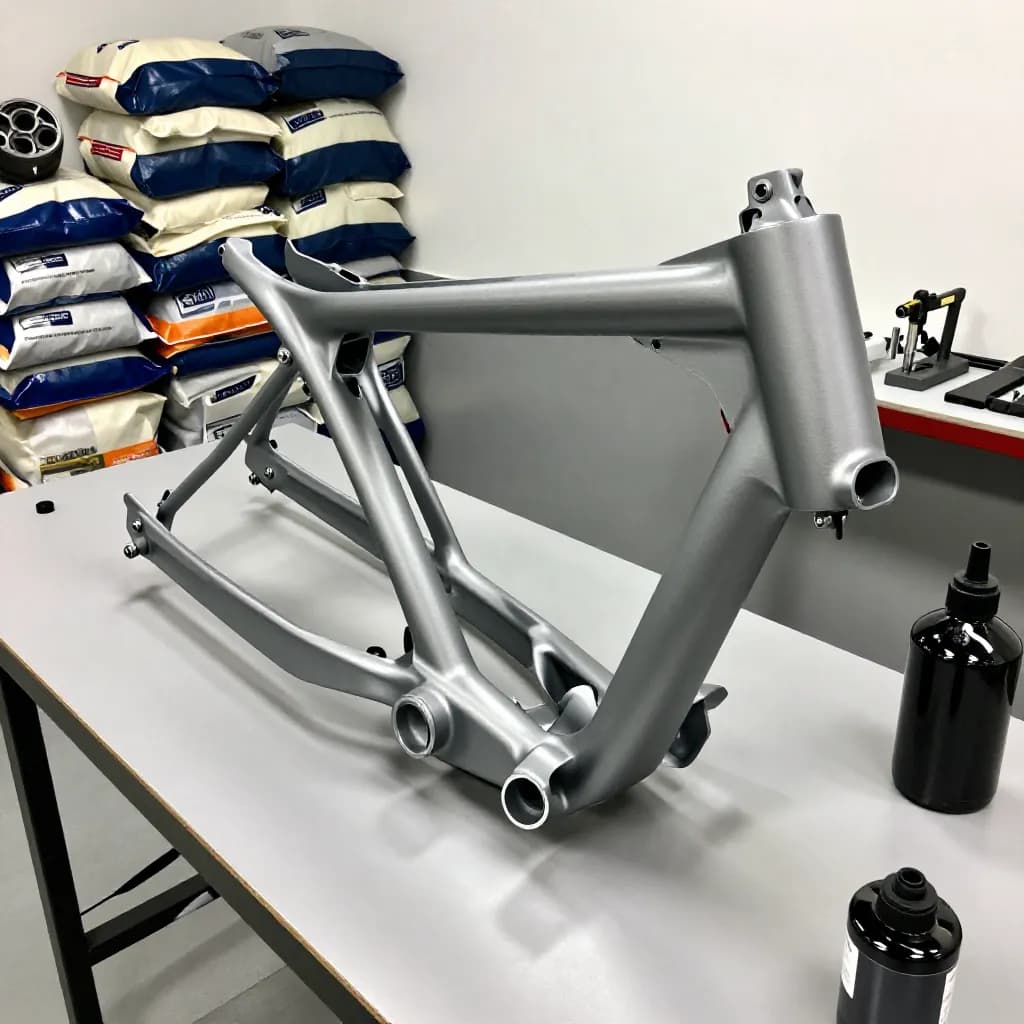
Powder coating a motorcycle frame is one of the most ambitious DIY projects you can take on, but it is absolutely achievable with the right preparation and equipment. The frame's size requires a large oven, its complex geometry demands careful application technique, and the disassembly and reassembly process requires organization and patience. But the result — a flawless, factory-quality finish on the most visible structural component of your motorcycle — makes the effort worthwhile.
Ready to Start Your Project?
From one-off customs to 15,000-part production runs — get precise pricing in 24 hours.
On This Page
Why Powder Coat a Motorcycle Frame
This guide covers the entire process from planning the disassembly through final reassembly. We will address the practical challenges that make frame coating different from smaller projects: managing the size and weight of the frame, preparing welded and hard-to-reach areas, hanging the frame for coating and curing, and protecting critical mounting surfaces during the process.
Before you start, make sure your oven is large enough to accommodate the frame. Measure the frame's overall dimensions and verify that it fits inside your oven with at least 4 to 6 inches of clearance on all sides. If your current oven is too small, this project may be the motivation to build a larger one.
Planning the Disassembly and Documentation
Thorough disassembly is essential for a quality frame coating job. Every component attached to the frame — engine, suspension, electrical, controls, and hardware — must be removed to allow complete surface preparation and coating access. This is a significant undertaking, especially if you have not disassembled a motorcycle before, so plan carefully and document everything.
Before removing a single bolt, photograph the entire motorcycle from every angle. Take close-up photos of wiring routing, cable paths, hose connections, and hardware placement. These photos will be invaluable during reassembly when you are trying to remember where that one bracket goes or how the wiring harness was routed. Label wires and connectors with masking tape and a marker as you disconnect them.
Organize hardware as you remove it. Use labeled zip-lock bags for each subassembly — one bag for the front end hardware, one for the rear suspension, one for the engine mounts, and so on. Include a note in each bag describing what the hardware attaches and any torque specifications. This level of organization seems excessive during disassembly but saves enormous time and frustration during reassembly.
Keep a written log of the disassembly sequence. Note any components that were difficult to remove, any damaged or worn parts that should be replaced, and any modifications or non-standard hardware you discover. This log serves as your reassembly guide in reverse and helps you order replacement parts before you need them.
Inspect the bare frame carefully once everything is removed. Look for cracks, especially around weld joints, steering head, and suspension mounting points. Check for rust-through, collision damage, or previous repairs. Address any structural issues before coating — powder coating is a finish, not a structural repair.
Surface Preparation for Motorcycle Frames
Motorcycle frames present unique preparation challenges. They have welded joints with spatter and undercut areas, internal tubes that trap moisture and contaminants, threaded bosses and mounting points that must be protected, and a mix of tube diameters and intersections that create hard-to-reach areas.
Start by stripping all old finish from the frame. Chemical stripping works well for paint and previous powder coating. For frames with heavy rust or multiple layers of old finish, media blasting is more efficient. If you are blasting, use aluminum oxide at moderate pressure and work systematically around each tube and joint. Pay special attention to weld beads and the areas immediately adjacent to welds, where old finish tends to be thickest and most tenacious.
After stripping, address any surface defects. Grind down weld spatter and rough weld beads with a flap disc or die grinder. Fill any pits or low spots with a high-temperature body filler, sand smooth, and re-blast the repaired areas. The goal is a smooth, uniform surface across the entire frame — defects in the bare metal will telegraph through the powder coating and be visible in the finished surface.
Clean the frame thoroughly after blasting. Blow out all internal tubes and cavities with compressed air to remove trapped media and dust. Degrease the entire frame with a solvent wipe, paying attention to areas where oil and grease may have penetrated during years of service. Engine mounting areas, swing arm pivot areas, and steering head bearings are common contamination zones.
Mask all threaded holes, bearing surfaces, and mounting faces that must remain bare metal. Use high-temperature silicone plugs for threaded holes and high-temp tape for flat mounting surfaces. The steering head bearing races, swing arm pivot bore, and engine mounting surfaces are critical — powder coating on these surfaces will interfere with proper fitment and can cause serious problems.
Hanging the Frame for Coating and Curing
Hanging a motorcycle frame for powder coating requires a fixture that supports the frame securely, provides good ground contact, allows access to all surfaces during spraying, and fits inside your oven. This is one of the most challenging aspects of frame coating, and it is worth spending time on a good hanging solution before you start spraying.
The most common approach is to hang the frame from the steering head using a steel rod or pipe inserted through the head tube. The rod extends beyond the frame on both sides and rests on supports or hooks attached to your booth and oven hanging system. This orientation positions the frame vertically with the rear end hanging down, providing good access to most surfaces.
Alternatively, you can hang the frame from the rear shock mounting points or swing arm pivot using heavy-gauge wire or chain. This positions the frame with the steering head hanging down, which may provide better access to the engine mounting area and lower frame rails. Choose the orientation that gives you the best access to the surfaces that matter most for your particular frame design.
Whatever hanging method you use, ensure the contact points are clean bare metal for good grounding. The hanging fixture must be strong enough to support the frame's weight — a typical motorcycle frame weighs 25 to 40 pounds — through the entire process including oven curing at 400°F. Test your hanging setup with the frame before applying any powder.
Consider building a rolling cart or stand that holds the hanging fixture. This allows you to move the frame from the prep area to the spray booth to the oven without removing it from the fixture. Handling a freshly powdered frame is risky — any contact will disturb the uncured coating — so minimizing handling between spraying and curing is important.
Applying Powder to the Frame
Coating a motorcycle frame requires a systematic approach because of the many surfaces, angles, and hard-to-reach areas involved. Plan your spraying sequence before you start, and work from the most difficult areas to the easiest.
Begin with the interior surfaces and hard-to-reach areas: the inside of frame tubes where they intersect, the underside of the frame rails, the area around the steering head gussets, and any recessed mounting bosses. Use reduced voltage (40-60 percent) and a narrow spray pattern for these areas to minimize Faraday cage effects. Direct the gun into recesses at an angle and build light coverage gradually.
Next, coat the weld joints and tube intersections. These areas have complex geometry that creates both Faraday cage zones and areas prone to heavy buildup. Work at moderate voltage with a medium spray pattern, keeping the gun moving to avoid building too much thickness on the high points while ensuring the recesses get adequate coverage.
Finally, coat the main tube surfaces — the down tubes, top tube, seat rails, and swing arm area. These are the easiest surfaces to coat because they are relatively smooth and accessible. Use your normal voltage setting (70-80 percent) and a wide spray pattern with smooth, overlapping passes. Rotate the frame on its hanging fixture to access all sides of each tube.
Check coverage thoroughly before moving to the oven. Walk around the frame and inspect every surface from multiple angles. Use a flashlight to illuminate recessed areas and check for thin spots. The uncured powder should appear uniform across the entire frame. Any bare metal or thin areas should be touched up now — once the frame is in the oven, you cannot add more powder.
For frames that will be exposed to stone chips and road debris, consider applying a slightly thicker coat on the lower frame rails and engine area. An extra mil or two of thickness in these high-wear areas provides additional protection without significantly affecting appearance.
Curing a Large Frame and Managing Heat
Curing a motorcycle frame requires careful attention to temperature management because of the frame's size and thermal mass. A steel frame is a significant heat sink — it takes time to absorb enough heat to reach cure temperature throughout, and different sections of the frame may reach temperature at different rates depending on their mass and position in the oven.
Preheat your oven to the specified cure temperature before loading the frame. When you open the door to load the frame, the oven temperature will drop significantly — a large frame at room temperature absorbs a lot of heat. Close the door promptly and allow the oven to recover. Monitor the oven temperature and the frame temperature separately if possible.
The cure clock starts when the entire frame reaches cure temperature, not when the oven recovers to its setpoint. Use a contact thermometer or infrared thermometer to check the frame temperature at several points — the steering head (thickest section), the main tubes, and the thinnest sections like seat rail ends. The thickest sections take the longest to reach temperature and determine when your cure timer should start.
For a typical steel motorcycle frame in a well-insulated oven at 400°F, expect 15 to 25 minutes for the frame to reach full cure temperature, followed by the powder manufacturer's specified cure time (typically 10 to 20 minutes at temperature). The total time in the oven may be 30 to 45 minutes or more.
Watch for any signs of problems during curing. If you can see the frame through an oven window, observe the powder as it melts and flows. It should transition smoothly from a matte powder appearance to a glossy, liquid-like surface as it melts, then gradually develop its final texture as it crosslinks. Bubbling, smoking, or discoloration indicate problems — usually contamination or excessive temperature.
Cooling, Inspection, and Touch-Up
Allow the frame to cool slowly in the oven with the door closed, or remove it and let it air cool on a clean rack. Do not quench the frame with water or place it on a cold concrete floor — thermal shock can crack the coating or cause adhesion failures, especially at weld joints where thermal expansion rates differ.
Once the frame is cool enough to handle, inspect every surface under good lighting. Check for uniform color and gloss, consistent film thickness, and any defects like orange peel, thin spots, runs, or contamination. Pay special attention to weld joints and recessed areas where coating problems are most likely to occur.
Test adhesion at several points by pressing masking tape firmly onto the coating and pulling it off sharply. The coating should remain firmly bonded to the frame. If any coating lifts with the tape, you have a preparation or curing issue at that location.
Minor defects can sometimes be addressed with a touch-up and re-cure. If you find a small thin spot or bare area, you can apply powder to just that area and re-cure the entire frame. The previously cured coating will not be damaged by a second cure cycle at the same temperature. However, if the touch-up area is visible, the boundary between the original coat and the touch-up may be detectable as a slight texture difference.
For significant defects or adhesion failures, the affected area must be stripped back to bare metal, re-prepared, and recoated. If the problem is localized, you may be able to strip and recoat just that section. If the problem is widespread, a complete strip and recoat is the only reliable solution. This is disappointing but better than installing a frame with a coating that will fail in service.
Reassembly Tips for Powder Coated Frames
Reassembly requires care to avoid damaging your fresh powder coating. Use soft jaw covers on vises and clamps, wrap tools with tape where they contact coated surfaces, and work methodically to avoid dropping hardware onto the frame. A single dropped wrench can chip the coating and require a touch-up.
Remove all masking materials before reassembly. Pull silicone plugs from threaded holes and peel high-temp tape from mounting surfaces. Inspect each masked area to ensure it is clean and free of powder overspray. If any powder crept under the masking, carefully scrape it away with a plastic scraper to avoid scratching the surrounding coating.
When installing components, apply anti-seize compound to threaded fasteners to prevent galling and make future disassembly easier. Torque all critical fasteners to manufacturer specifications using a torque wrench. The smooth powder-coated surface around bolt heads and mounting points may affect friction coefficients, so proper torque measurement is important.
Refer to your disassembly photos and notes throughout the reassembly process. Route wiring and cables exactly as they were before disassembly, securing them with new zip ties or clips as needed. Reconnect all electrical connectors, checking each one for corrosion or damage before plugging it in.
Once reassembly is complete, do a thorough safety check before riding. Verify all fastener torques, check brake function, confirm steering head bearing adjustment, verify suspension pivot tightness, and test all electrical systems. A freshly coated frame looks beautiful, but the bike must be mechanically sound before it goes back on the road.
Protect your investment by applying a quality wax or sealant to the coated frame surfaces. This adds a sacrificial layer that protects against minor scratches and makes cleaning easier. Reapply the wax periodically, especially before winter riding or storage.
Frequently Asked Questions
How big of an oven do I need to powder coat a motorcycle frame?
Measure your specific frame and add 4-6 inches of clearance on all sides. Most motorcycle frames require an oven interior of at least 48 inches in one dimension. A common DIY oven size for frames is 48x30x30 inches or larger, depending on the frame style.
Do I need to completely disassemble the motorcycle to coat the frame?
Yes. Every component must be removed for proper surface preparation and complete coating coverage. This includes the engine, suspension, electrical system, controls, and all hardware. Thorough documentation with photos and labeled hardware bags makes reassembly much easier.
What areas of the frame should I mask before powder coating?
Mask all threaded holes, bearing surfaces (steering head races, swing arm pivot bore), and engine mounting surfaces. These areas need bare metal for proper fitment and function. Use high-temperature silicone plugs for threaded holes and high-temp tape for flat surfaces.
How long does it take to cure a motorcycle frame?
A typical steel motorcycle frame needs 15-25 minutes to reach cure temperature in a preheated 400°F oven, plus the powder manufacturer's specified cure time (usually 10-20 minutes at temperature). Total oven time is typically 30-45 minutes. Verify with a contact thermometer that the thickest sections have reached full temperature.
Can I touch up small defects on a powder coated frame?
Yes, minor thin spots or bare areas can be touched up by applying powder to just that area and re-curing the entire frame. The previously cured coating will not be damaged by a second cure cycle. However, the boundary between original and touch-up coats may be slightly visible on close inspection.
Ready to Start Your Project?
From one-off customs to 15,000-part production runs — get precise pricing in 24 hours.