The powder coating gun is your primary application tool, and choosing the right one will directly affect the quality of your finishes, the range of projects you can tackle, and your overall satisfaction with the hobby. For DIY coaters, the market offers a wide range of options from basic entry-level guns to semi-professional units that rival commercial equipment in performance.
DIY
DIY Powder Coating Gun Selection Guide: Corona vs Tribo and Budget Options
Sundial Powder Coating·April 22, 2026·11 min
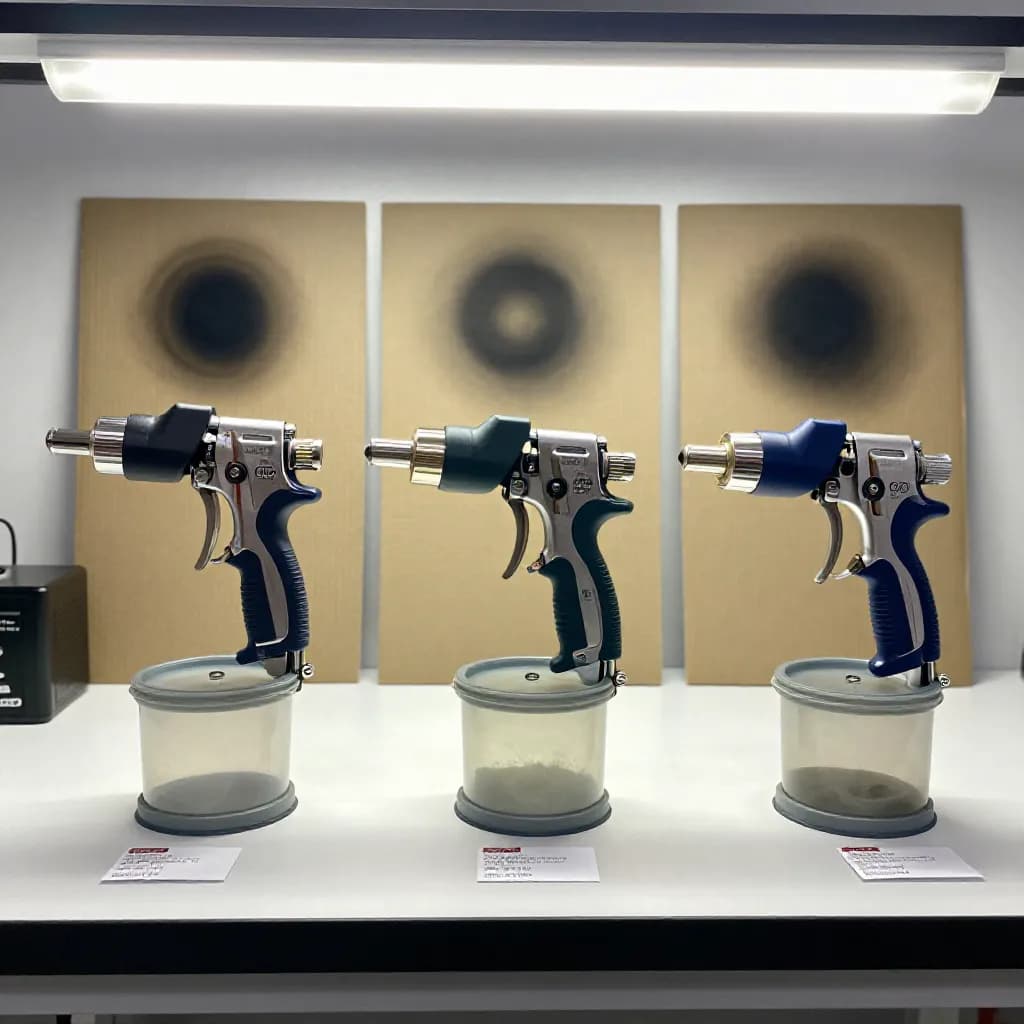
The two fundamental charging technologies used in powder coating guns are corona (electrostatic) and tribo (triboelectric). Each works differently to charge the powder particles so they adhere to the grounded workpiece, and each has distinct strengths and weaknesses that matter for home use. Understanding these differences will help you make an informed purchase rather than simply buying the cheapest option available.
Ready to Start Your Project?
From one-off customs to 15,000-part production runs — get precise pricing in 24 hours.
On This Page
Choosing the Right Powder Coating Gun for Home Use
Beyond the charging method, you should consider factors like adjustability, powder feed consistency, ease of cleaning, spare parts availability, and the types of powder the gun handles well. A gun that works beautifully with standard polyester powder may struggle with metallic or textured formulations. Similarly, a gun with limited voltage adjustment may give you trouble on recessed areas or Faraday cage geometries that are common on real-world parts.
The good news is that the DIY powder coating market has matured significantly. Several manufacturers now offer guns specifically designed for home workshops, with features and build quality that would have been unthinkable at hobbyist-level pricing just a decade ago. Whether you are coating your first set of valve covers or running a small side business, there is a gun that fits your needs and budget.
How Corona Charging Works and Why It Dominates DIY
Corona charging is the most common technology in both commercial and DIY powder coating guns. A corona gun uses a high-voltage electrode at the tip of the gun — typically a needle or ring — to create an electrostatic field that charges powder particles as they pass through it. The charged particles are then attracted to the grounded workpiece and cling to its surface until they are cured in the oven.
The primary advantage of corona charging is its simplicity and effectiveness across a wide range of powder types. Corona guns work well with polyester, epoxy, hybrid, and most specialty powders right out of the box. They provide strong electrostatic attraction, which means good first-pass transfer efficiency and the ability to build film thickness quickly. For the DIY coater working with standard powders on typical parts, a corona gun is the straightforward choice.
Corona guns do have some limitations. The strong electrostatic field can cause issues with Faraday cage areas — recessed corners, channels, and interior angles where the electric field lines concentrate on the edges and leave the recesses undercoated. This is a physics problem inherent to the technology, though it can be managed by reducing voltage, increasing distance, or adjusting powder flow.
Another consideration is back-ionization, which occurs when excessive ion bombardment on the part surface creates a reverse charge that repels incoming powder. This typically happens when you try to build too much thickness in one pass or hold the gun too close to the part. Learning to recognize and manage back-ionization is part of developing your technique with a corona gun.
Tribo Charging: When It Makes Sense for Home Coaters
Triboelectric (tribo) guns charge powder through friction rather than a high-voltage electrode. As powder particles travel through a specially designed PTFE-lined barrel, they pick up a positive charge through contact and friction with the barrel walls. This friction-based charging produces a softer, more uniform charge on the particles compared to the intense field charging of a corona gun.
The main advantage of tribo charging for DIY coaters is its superior performance in Faraday cage areas. Because tribo guns do not generate a strong external electrostatic field, they do not suffer from the edge-concentration effect that causes corona guns to undercoat recesses. If you frequently coat parts with complex geometries — deep channels, tight corners, or intricate shapes — a tribo gun can deliver more uniform coverage with less effort.
Tribo guns also eliminate back-ionization entirely, since there is no ion bombardment of the part surface. This makes it easier to build consistent film thickness without the orange peel or texture problems that can result from back-ionization with a corona gun. For beginners who are still developing their technique, this forgiveness can be a significant advantage.
However, tribo guns have their own limitations. They work best with powders specifically formulated for tribo charging, and not all powders charge well tribologically. Transfer efficiency is generally lower than corona guns, meaning you will use more powder per part. The PTFE barrel lining wears over time and must be replaced periodically. For most DIY coaters, a corona gun remains the better all-around choice, but a tribo gun is worth considering if your projects involve complex part geometries.
Eastwood Powder Coating Guns: The DIY Standard
Eastwood has established itself as the go-to brand for DIY powder coating equipment, and their gun lineup reflects years of refinement based on hobbyist feedback. Their entry-level gun is one of the most popular starting points for new coaters, offering basic corona charging with enough adjustability to handle a wide range of small to medium projects.
Eastwood's more advanced models add features like adjustable voltage control, improved powder feed mechanisms, and better ergonomics for extended use. The voltage adjustment is particularly valuable — being able to dial down the kilovolts when coating recessed areas or Faraday cage geometries gives you much more control over coverage uniformity. Their guns typically come with multiple deflector tips that change the spray pattern from a flat fan to a cone, allowing you to match the pattern to the part geometry.
One of Eastwood's strengths is their ecosystem. They sell powder, guns, ovens, and accessories that are designed to work together, and their customer support understands DIY applications. Replacement parts like electrodes, deflectors, and pickup tubes are readily available. They also provide extensive how-to content and tutorials that help beginners get started.
The main criticism of Eastwood guns is that they are not built to commercial-grade standards. The powder feed can be inconsistent at very low flow rates, and the guns may struggle with some specialty powders like heavy metallics or ultra-fine textures. For the typical DIY coater working with standard powders on automotive and household parts, these limitations rarely matter. Eastwood guns deliver solid performance at an accessible level and remain the benchmark against which other DIY options are measured.
Wagner and HiCoat: Alternative Options Worth Considering
Wagner is a well-known name in spray equipment, and their powder coating guns bring professional-grade engineering to the hobbyist market. Wagner guns tend to feature more sophisticated powder delivery systems with better fluidization and more consistent flow rates than budget alternatives. Their electrostatic charging systems are efficient, and the build quality reflects Wagner's decades of experience in coating technology.
Wagner guns often include features like digital voltage readouts, precise flow control knobs, and quick-change nozzle systems that make switching between spray patterns fast and easy. The ergonomics are generally excellent, with comfortable grips and balanced weight distribution that reduce fatigue during longer coating sessions. For the DIY coater who plans to do a lot of work or wants to step up from a basic starter gun, Wagner offers a meaningful upgrade in usability and consistency.
HiCoat has carved out a niche in the DIY market by offering guns with features typically found on commercial equipment at prices accessible to hobbyists. Their guns often include adjustable voltage and current controls, high-quality powder pumps, and durable construction. HiCoat guns are particularly popular among coaters who have outgrown entry-level equipment but are not ready to invest in full commercial systems.
When evaluating any gun, pay attention to the details that affect daily use: How easy is it to disassemble for cleaning? Are replacement parts available and affordable? Does the gun handle color changes without excessive contamination? Can you adjust the voltage and flow independently? These practical considerations matter more than brand names or specifications on paper. Read reviews from actual DIY coaters who use the gun regularly, not just initial impressions from first-time buyers.
Key Features to Look for in a DIY Powder Coating Gun
Adjustable voltage is the single most important feature to look for in a powder coating gun. The ability to reduce voltage when coating Faraday cage areas, thin substrates, or recoat situations gives you dramatically more control over your results. A gun locked at maximum voltage will fight you on complex parts and make it nearly impossible to achieve uniform coverage in recessed areas. Look for guns that allow you to adjust from roughly 15kV to 100kV.
Powder flow control is the second critical adjustment. You need to be able to dial the flow rate up for large flat surfaces and down for small parts or detailed areas. A gun that only operates at one flow rate forces you to compensate with distance and speed, which is less precise and more tiring. Independent flow control — separate from the air pressure — is ideal.
The powder feed mechanism matters more than most beginners realize. Fluidized hopper systems provide the most consistent powder delivery, keeping the powder in a suspended, cloud-like state that feeds smoothly to the gun. Vibrating hopper systems are simpler but can produce pulsing or surging in the powder stream. Siphon-feed systems that draw powder directly from the container are the simplest but least consistent.
Finally, consider the gun's compatibility with different powder types. Some guns handle metallics, textures, and specialty powders better than others. If you plan to experiment with a variety of finishes, choose a gun known for versatility. Check whether the gun comes with multiple nozzle tips or deflectors, as different spray patterns are useful for different part geometries and powder types.
Setting Up and Maintaining Your Powder Coating Gun
Proper setup starts with your air supply. Powder coating guns require clean, dry, oil-free compressed air. Moisture or oil in the air line will contaminate your powder, cause adhesion failures, and create defects in the cured finish. At minimum, install a water separator and oil filter on your air line between the compressor and the gun. A desiccant dryer is even better, especially in humid climates where moisture is a persistent problem.
Set your air pressure according to the gun manufacturer's recommendations, typically between 5 and 15 PSI at the gun. Too much pressure blows powder off the part and creates excessive overspray. Too little pressure results in poor fluidization and inconsistent flow. Start at the low end and increase gradually until you get a smooth, consistent cloud of powder from the gun tip.
Ground your workpiece properly. The electrostatic charge on the powder particles is only useful if the part provides a path to ground. Use a dedicated grounding wire or clip connected to a known earth ground — not just the metal frame of your booth. Clean the contact point on the part to bare metal to ensure a good electrical connection. Poor grounding is one of the most common causes of adhesion problems in DIY setups.
Clean your gun thoroughly between color changes and at the end of each session. Disassemble the gun according to the manufacturer's instructions and blow out all powder residue with compressed air. Pay special attention to the electrode area, the powder path, and the nozzle. Even small amounts of residual powder from a previous color will contaminate your next job. Develop a consistent cleaning routine and stick to it — contamination is much easier to prevent than to fix after the fact.
Frequently Asked Questions
Should I buy a corona or tribo gun for DIY powder coating?
For most DIY coaters, a corona gun is the better choice. Corona guns work well with virtually all powder types, offer strong transfer efficiency, and are widely available at hobbyist price points. Tribo guns excel on complex geometries but are more limited in powder compatibility and generally less versatile for general-purpose use.
What is the most important feature in a DIY powder coating gun?
Adjustable voltage control is the most important feature. Being able to reduce voltage for Faraday cage areas, thin parts, and recoat situations gives you dramatically better control over coverage uniformity. A gun locked at maximum voltage will struggle on complex part geometries.
Why does my powder coating gun leave orange peel texture?
Orange peel is often caused by back-ionization from excessive voltage or holding the gun too close to the part. Try reducing voltage, increasing your spray distance to 8-12 inches, and applying thinner coats. Also check that your powder is not clumped or moisture-contaminated, as this affects flow and charging.
How do I prevent moisture problems with my powder coating gun?
Install a water separator and oil filter on your air line between the compressor and the gun. In humid climates, add a desiccant dryer. Drain your compressor tank regularly and run the air line for a few seconds before connecting the gun to purge any accumulated moisture.
Can I use any powder with any gun?
Corona guns work with virtually all powder types including polyester, epoxy, hybrid, and most specialty formulations. Tribo guns are more selective and work best with powders specifically formulated for triboelectric charging. Always check the powder manufacturer's recommendations for charging compatibility.
Ready to Start Your Project?
From one-off customs to 15,000-part production runs — get precise pricing in 24 hours.