Powder coating looks deceptively simple. Spray powder on a part, put it in an oven, and out comes a beautiful, durable finish. The reality is that every step in the process has variables that can derail your results, and beginners typically discover these variables the hard way — through failed coatings, wasted powder, and frustrating do-overs.
DIY
15 Common DIY Powder Coating Mistakes and How to Avoid Them
Sundial Powder Coating·April 22, 2026·13 min
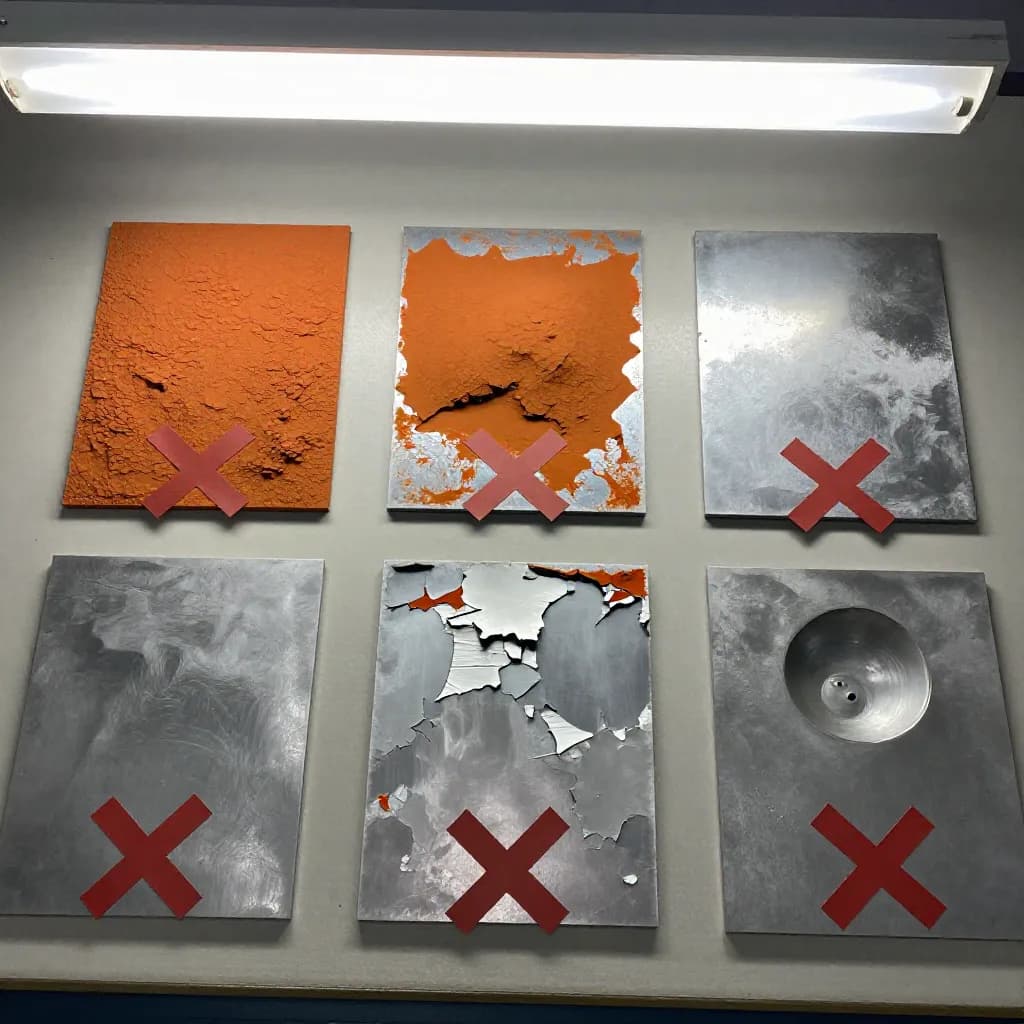
The good news is that most powder coating failures trace back to a relatively small number of common mistakes. These are not obscure technical problems — they are predictable errors that nearly every DIY coater makes at some point. Understanding them before you start will save you time, materials, and the discouragement that comes from repeated failures.
Ready to Start Your Project?
From one-off customs to 15,000-part production runs — get precise pricing in 24 hours.
On This Page
Why Beginners Struggle with Powder Coating
This article covers the 15 most common mistakes that DIY powder coaters make, organized roughly in the order you will encounter them in the coating process: preparation, application, curing, and finishing. For each mistake, we explain what goes wrong, why it happens, and how to avoid it. Some of these will seem obvious in hindsight, but they trip up beginners with surprising regularity.
The underlying theme across nearly all of these mistakes is rushing. Powder coating rewards patience and attention to detail at every stage. Cutting corners on preparation, application, or curing will always show up in the final result. Take your time, follow the process, and you will produce finishes that rival professional work.
Mistakes 1-3: Surface Preparation Failures
Mistake 1: Inadequate surface cleaning. This is the single most common cause of powder coating failure. Oils, grease, silicone, wax, and other contaminants prevent the powder from bonding to the metal surface. Even fingerprints from handling a part after cleaning can cause adhesion failures that show up as fish eyes, craters, or peeling after curing. Always degrease parts thoroughly with a dedicated pre-treatment cleaner or acetone, and handle cleaned parts with clean gloves from that point forward.
Mistake 2: Skipping abrasive blasting. Many beginners try to powder coat over sanded or wire-brushed surfaces to save time. While these methods remove loose material, they do not create the consistent surface profile that blasting provides. The microscopic anchor pattern from proper blasting dramatically improves mechanical adhesion. If you cannot blast, at minimum use a chemical etch primer designed for powder coating adhesion, but understand that blasting remains the gold standard.
Mistake 3: Not removing all old coating. Powder coating over remnants of old paint, powder, or plating is a recipe for failure. The new powder bonds to the old coating rather than the metal, and if the old coating has poor adhesion, your new finish will fail with it. Strip parts completely to bare metal before coating. Chemical strippers, blasting, or a burn-off oven can remove old coatings, but the key is getting down to clean, bare metal across the entire surface. Pay special attention to edges, corners, and recessed areas where old coating loves to hide.
Mistakes 4-6: Grounding and Electrical Issues
Mistake 4: Poor grounding. Electrostatic powder coating only works when the part is properly grounded. If the ground connection is weak or intermittent, powder will not adhere consistently, and you will see thin spots, bare areas, and powder that falls off when you move the part. Ensure clean metal-to-metal contact at the grounding point, use a dedicated ground wire to a known earth ground, and verify continuity with a multimeter. Clean or replace hanging hooks regularly — powder buildup on hooks insulates them over time.
Mistake 5: Voltage set too high. Many beginners crank their gun to maximum voltage thinking more is better. High voltage causes back-ionization, where excessive ion bombardment on the part surface creates a reverse charge that actually repels incoming powder. The result is orange peel texture, starring patterns, or powder that looks like it is being pushed away from the surface. Start at a moderate voltage setting and increase only if needed. For Faraday cage areas and recoat situations, reduce voltage significantly.
Mistake 6: Ignoring Faraday cage effects. Recessed areas, inside corners, channels, and complex geometries create Faraday cage zones where the electrostatic field concentrates on the edges and leaves the recesses undercoated. Beginners often try to fix this by spraying more powder at the problem area, which only makes the edge buildup worse. Instead, reduce voltage, increase spray distance, and direct the gun into the recess at an angle. Some coaters apply powder to Faraday cage areas first at low voltage before coating the rest of the part at normal settings.
Mistakes 7-10: Application Technique Problems
Mistake 7: Spraying too close. Holding the gun too close to the part concentrates the powder stream and electrostatic field in a small area, causing heavy buildup, orange peel, and back-ionization. Maintain a spray distance of 8 to 12 inches for most applications. This gives the powder cloud time to spread and the particles time to charge properly before reaching the surface.
Mistake 8: Applying too much powder. More powder does not mean a better finish. Excessive film thickness leads to orange peel, runs during curing, poor edge coverage as thick powder pulls away from edges, and wasted material. Most powder coatings are designed to be applied at 2 to 4 mils (50 to 100 microns). Learn to judge proper coverage by the appearance of the uncured powder — it should look like a uniform, slightly fuzzy coating with the metal surface just barely obscured.
Mistake 9: Inconsistent spray technique. Waving the gun randomly at the part produces uneven coverage with thick and thin spots. Use systematic, overlapping passes with consistent speed and distance, similar to spray painting technique. Start at one edge of the part and work across in parallel passes, overlapping each pass by about 50 percent. Maintain the same speed and distance throughout.
Mistake 10: Not accounting for powder in recesses. Parts with holes, slots, and interior surfaces accumulate powder differently than flat exterior surfaces. Powder builds up heavily on edges facing the gun and thinly in recesses. Coat recessed and interior areas first at reduced voltage and flow, then coat the exterior surfaces. This approach gives you much more uniform coverage than trying to coat everything at once with the same settings.
Mistakes 11-13: Curing Errors
Mistake 11: Undercuring. This is extremely common among beginners who do not understand that cure time starts when the part reaches full cure temperature, not when the oven reaches temperature. A heavy steel part placed in a 400°F oven may take 15 to 20 minutes just to reach 400°F throughout its mass. The cure clock starts only after the entire part is at temperature. Use a contact thermometer or infrared thermometer to verify part temperature, not just oven air temperature.
Mistake 12: Overcuring. While less common than undercuring, overcuring causes its own problems. Excessive time or temperature causes the powder to yellow, brown, or become brittle. Colors shift noticeably when overcured — whites turn yellow, light colors darken, and metallics can lose their sparkle. Follow the powder manufacturer's cure schedule precisely. If you are unsure whether a part is fully cured, it is better to pull it and test adhesion than to leave it in the oven for extra insurance.
Mistake 13: Inaccurate oven temperature. Many DIY coaters trust their oven's built-in thermostat without verifying it with an independent thermometer. Kitchen ovens can be off by 25°F or more, and even PID-controlled custom ovens can have calibration drift or thermocouple placement issues. Always verify your oven temperature with a separate thermometer placed near where your parts hang. Check multiple locations to identify hot and cold spots. Calibrate your controller if the readings do not match.
These three curing mistakes are interconnected. An inaccurate oven temperature leads to either undercuring or overcuring, and not understanding the difference between oven temperature and part temperature compounds the problem. Invest in a good thermometer and learn to measure part temperature directly.
Mistakes 14-15: Post-Cure and Process Errors
Mistake 14: Contamination between colors. Switching colors without thoroughly cleaning your gun, booth, and hanging hardware introduces contamination that shows up as specks of the wrong color in your finish. This is especially visible when switching from dark to light colors. Develop a rigorous cleaning protocol: disassemble and blow out the gun, vacuum or wipe down the booth interior, and use clean hooks or thoroughly cleaned hooks for each color. Some coaters keep separate sets of hooks for light and dark colors.
Mistake 15: Rushing the process. This is the meta-mistake that underlies many of the others. Rushing through preparation leaves contaminants on the surface. Rushing application leads to uneven coverage. Rushing cure times produces undercured finishes. Rushing between colors causes contamination. Powder coating is a process that rewards patience and methodical execution. Build a checklist for each step and follow it every time, even when you are eager to see the finished result.
Beyond these fifteen specific mistakes, there are broader process errors that affect overall results. Not keeping records is a common one — when a job turns out perfectly, you want to know exactly what you did so you can repeat it. Note the powder type, gun settings, spray distance, cure temperature, and cure time for every job. When something goes wrong, these records help you identify what changed.
Another process error is not practicing on scrap parts before tackling important projects. Every new powder color, every unfamiliar part geometry, and every equipment change deserves a test run on scrap metal. The cost of a piece of scrap steel and a pinch of powder is trivial compared to the cost of stripping and recoating a part you care about.
Building Good Habits from the Start
The best way to avoid these mistakes is to build good habits before they become problems. Start every project with a mental walkthrough of the entire process: preparation, hanging, application, curing, and cooling. Identify potential issues before you start — is the part clean enough? Is the ground connection solid? Do you have the right cure schedule for this powder? Is the oven calibrated?
Create a pre-coating checklist and use it every time. Your checklist should include: part degreased and clean, surface blasted or properly prepared, ground connection verified, gun cleaned and set to correct voltage and flow, oven preheated and temperature verified, cure timer ready, and hanging hardware clean and making good contact. This takes two minutes and prevents the majority of common failures.
Invest in a few basic quality-checking tools. A mil gauge (coating thickness gauge) tells you whether your film build is in the correct range. An adhesion test kit (cross-hatch cutter and tape) verifies that the coating is properly bonded. A gloss meter confirms that your cure is correct — undercured and overcured coatings both show gloss deviations from the powder manufacturer's specifications. These tools turn guesswork into measurement.
Finally, join the DIY powder coating community. Online forums, social media groups, and video channels are full of experienced coaters who have made every mistake on this list and are happy to help beginners avoid them. When you encounter a problem, chances are someone else has already solved it. Share your own experiences too — the community grows stronger when everyone contributes what they have learned.
Frequently Asked Questions
What is the most common DIY powder coating mistake?
Inadequate surface preparation is the most common mistake. Oils, grease, fingerprints, and other contaminants prevent proper adhesion. Always degrease thoroughly and handle cleaned parts with clean gloves. Skipping abrasive blasting is a close second — proper blasting creates the surface profile needed for strong mechanical adhesion.
Why does my powder coating have orange peel texture?
Orange peel is usually caused by applying too much powder, spraying too close, or having the voltage set too high (causing back-ionization). Reduce your film thickness to 2-4 mils, maintain 8-12 inches of spray distance, and try lowering the voltage on your gun. Also verify that your cure temperature is accurate.
How do I know when a powder coated part is fully cured?
Cure time starts when the part itself reaches full cure temperature, not when the oven reaches temperature. Use a contact or infrared thermometer to verify part temperature. A properly cured coating will be hard, scratch-resistant, and match the manufacturer's specified gloss level. Undercured coatings feel soft or scratch easily.
Why does powder coating peel off my parts?
Peeling is almost always caused by poor surface preparation — contamination, inadequate blasting, or coating over old paint or plating. It can also result from poor grounding during application or severe undercuring. Strip the part completely to bare metal, blast it properly, verify your ground connection, and follow the correct cure schedule.
How do I prevent color contamination between powder coating jobs?
Thoroughly clean your gun by disassembling and blowing out all residual powder. Vacuum or wipe down the booth interior. Use clean hanging hooks or thoroughly cleaned hooks for each color. Some coaters keep separate hook sets for light and dark colors to prevent cross-contamination.
Should I practice on scrap before coating important parts?
Absolutely. Every new powder color, unfamiliar part geometry, and equipment change deserves a test run on scrap metal. This lets you dial in your settings, verify your cure schedule, and identify potential problems before they affect a part you care about. The cost of scrap practice is trivial compared to stripping and recoating.
Ready to Start Your Project?
From one-off customs to 15,000-part production runs — get precise pricing in 24 hours.