Corrosion is the natural electrochemical process by which metals deteriorate through reaction with their environment. When iron or steel is exposed to moisture and oxygen, it forms iron oxide — commonly known as rust — which is weaker, more porous, and more voluminous than the original metal. Unlike the protective oxide layers that form on aluminum or stainless steel, iron oxide does not adhere tightly to the surface and continues to flake away, exposing fresh metal to further attack. Left unchecked, corrosion progressively weakens the metal until structural integrity is compromised.
Technical
Corrosion Protection for Metal: How Coatings Prevent Rust and Degradation
Sundial Powder Coating·April 20, 2026·10 min
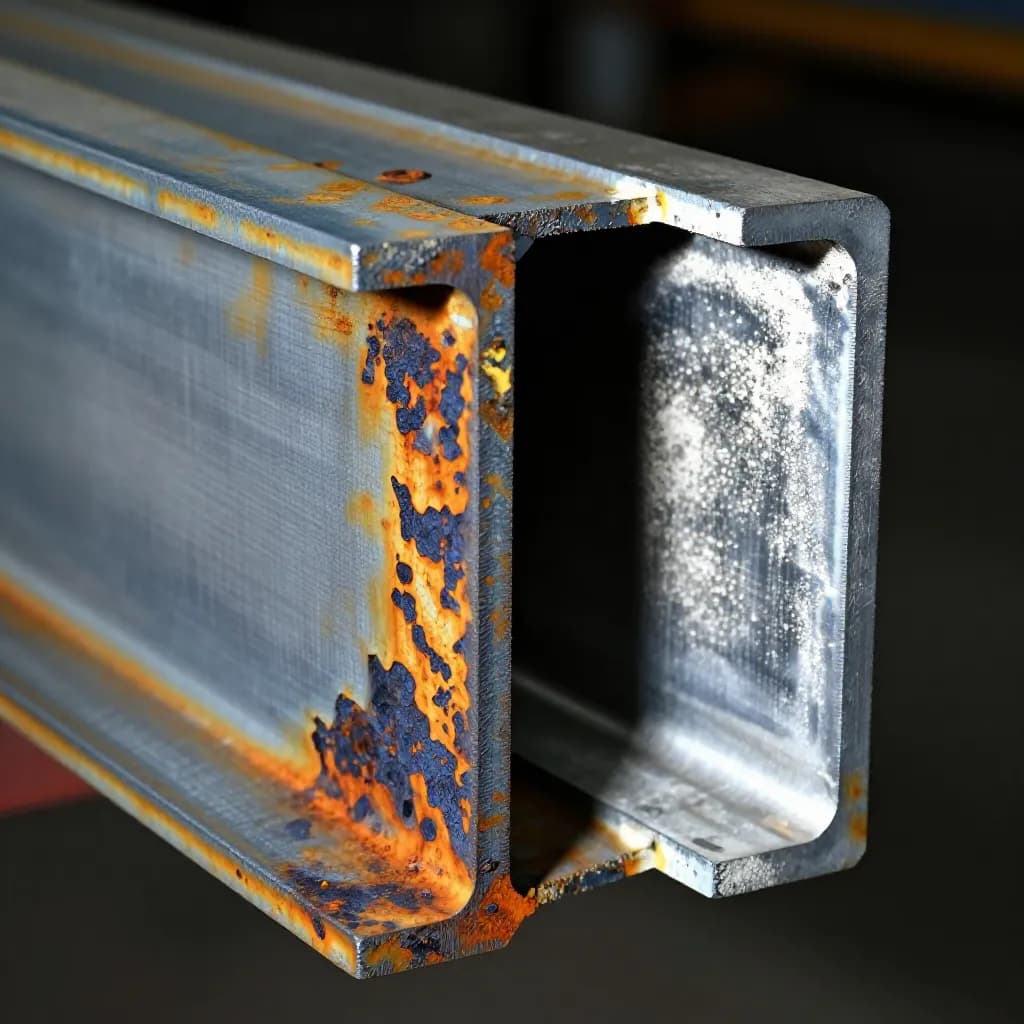
The economic impact of corrosion is staggering. Studies estimate that corrosion costs the global economy approximately 3.4 percent of GDP annually, amounting to trillions of dollars in infrastructure damage, maintenance, replacement, and lost productivity. In the construction industry alone, corrosion of structural steel, reinforcing bars, pipelines, and metal cladding represents one of the largest ongoing maintenance challenges. Bridges, buildings, industrial plants, and transportation infrastructure all require corrosion management strategies to ensure safety and longevity.
Ready to Start Your Project?
From one-off customs to 15,000-part production runs — get precise pricing in 24 hours.
On This Page
What Is Corrosion and Why It Matters
Beyond direct economic costs, corrosion poses significant safety risks. Structural failures caused by undetected corrosion can have catastrophic consequences, as demonstrated by numerous bridge collapses, pipeline ruptures, and building failures throughout history. Environmental damage from corroded pipelines and storage tanks, contamination of water supplies by corroded plumbing, and the aesthetic degradation of buildings and infrastructure all underscore the importance of effective corrosion protection. Protective coatings are the most widely used and cost-effective method of corrosion prevention, accounting for the majority of global corrosion protection expenditure.
How Coatings Protect Against Corrosion
Protective coatings prevent corrosion through three fundamental mechanisms: barrier protection, inhibitive protection, and sacrificial (cathodic) protection. Most high-performance coating systems combine two or more of these mechanisms to provide comprehensive, long-lasting corrosion resistance.
Barrier protection is the most straightforward mechanism. The coating forms a continuous, impermeable film over the metal surface that physically separates it from the corrosive environment — moisture, oxygen, salts, and chemical pollutants. The effectiveness of barrier protection depends on the coating's thickness, continuity, adhesion, and resistance to permeation by water and ions. Powder coatings are particularly effective barrier coatings because they are applied in relatively thick films (60-120 microns) that are free of the pinholes and solvent-escape channels that can compromise liquid paint films.
Inhibitive protection works by incorporating corrosion-inhibiting pigments into the coating formulation. These pigments, such as zinc phosphate, zinc molybdate, or calcium-exchanged silica, slowly release ions that passivate the metal surface and suppress the electrochemical reactions that drive corrosion. Inhibitive primers are particularly valuable because they provide active protection at the coating-metal interface where corrosion initiates. Sacrificial or cathodic protection is provided by coatings containing metallic zinc particles. Because zinc is more electrochemically active than steel, it preferentially corrodes in place of the steel substrate, effectively sacrificing itself to protect the underlying metal. Zinc-rich primers can provide cathodic protection even at areas of coating damage where the steel is exposed.
Primer Systems for Corrosion Protection
The primer is the foundation of any high-performance corrosion protection coating system. Applied directly to the prepared metal surface, the primer must provide excellent adhesion to the substrate, corrosion inhibition at the metal interface, and a suitable surface for the topcoat to bond to. The choice of primer chemistry depends on the substrate metal, the severity of the corrosive environment, and the overall coating system design.
Zinc-rich primers are the gold standard for corrosion protection on steel substrates. These primers contain high loadings of metallic zinc dust — typically 65 to 95 percent zinc in the dry film — which provides both barrier and cathodic protection. Organic zinc-rich primers use epoxy or polyurethane binders, while inorganic zinc-rich primers use ethyl silicate or alkali silicate binders. Inorganic zinc primers offer superior heat resistance and cathodic protection but require more careful surface preparation and application. Zinc-rich primers are widely used in heavy industrial, marine, and infrastructure applications where maximum corrosion protection is required.
Epoxy primers offer excellent adhesion, chemical resistance, and barrier properties, making them versatile choices for a wide range of substrates and environments. Epoxy primers can be formulated with various corrosion-inhibiting pigments to provide both barrier and inhibitive protection. In powder coating systems, epoxy primers are commonly used beneath polyester topcoats to create dual-coat systems for demanding exterior applications. Polyester primers are also available and offer better UV resistance than epoxies, though their chemical resistance is generally lower. For aluminum substrates, chromate-free wash primers and conversion coatings provide the adhesion promotion and corrosion inhibition needed for long-term performance.
Testing Corrosion Resistance
The corrosion resistance of coating systems is evaluated through a range of standardized accelerated testing methods that simulate years of real-world exposure in a compressed timeframe. These tests provide comparative data that helps specifiers select appropriate coating systems for their application environment, though it is important to understand that accelerated test results do not directly translate to years of field service.
The neutral salt spray test, conducted according to ASTM B117 or ISO 9227, is the most widely recognized corrosion test. Test panels are placed in a sealed chamber and continuously exposed to a fine mist of 5 percent sodium chloride solution at 35 degrees Celsius. The panels are periodically evaluated for blistering, rusting, and creep from a scribed line. While salt spray testing has limitations — it does not replicate the wet-dry cycling, UV exposure, and temperature fluctuations of real-world conditions — it remains a standard benchmark for comparing coating systems. Architectural powder coating standards typically require 480 to 1,000 hours of salt spray resistance depending on the performance tier.
The Machu test (also known as the acetic acid salt spray test) is a more aggressive variant that adds acetic acid to the salt solution, lowering the pH and accelerating corrosion. It is particularly useful for evaluating pretreatment quality on aluminum substrates. Cyclic corrosion tests, such as those defined in ISO 16151 and various automotive standards, alternate between salt spray, humidity, drying, and UV exposure phases to more closely simulate real-world weathering conditions. These cyclic tests generally provide better correlation with field performance than continuous salt spray testing. Electrochemical impedance spectroscopy (EIS) is an advanced technique that measures the barrier properties of a coating non-destructively, providing early detection of coating degradation before visible corrosion appears.
Coating Systems for Harsh Environments
Different environments present different corrosion challenges, and the coating system must be tailored to the specific exposure conditions. ISO 12944 classifies atmospheric corrosivity into categories from C1 (very low, heated interiors) through C5 (very high, industrial and coastal) to CX (extreme, offshore and chemical plants). Each category requires progressively more robust coating systems to achieve the desired service life.
Coastal environments are among the most demanding for protective coatings due to the combination of salt spray, high humidity, UV radiation, and wind-driven abrasion. Coating systems for coastal applications typically consist of a zinc-rich or epoxy primer, an intermediate epoxy coat, and a polyurethane or polyester topcoat, with total dry film thicknesses of 200 to 320 microns or more. For powder-coated architectural aluminum in coastal locations, quality standards like Qualicoat recommend or require a primer coat beneath the topcoat for installations within five kilometers of the coastline.
Industrial environments may expose coatings to chemical fumes, acid rain, solvent splash, and elevated temperatures. Epoxy and epoxy-phenolic coatings offer excellent chemical resistance for immersion and chemical exposure applications. For combined chemical and UV exposure, epoxy primers with polyurethane or fluoropolymer topcoats provide the best balance of chemical resistance and weathering performance. Extreme environments such as offshore platforms, chemical processing plants, and wastewater treatment facilities may require specialized coating systems including thermal spray zinc or aluminum metallizing, high-build epoxy systems, or glass-flake reinforced coatings that can provide 20 to 30 years of protection in the most aggressive conditions.
Choosing the Right Corrosion Protection System
Selecting the appropriate corrosion protection system requires a systematic assessment of several key factors. The first consideration is the corrosive environment — its severity, the specific corrosive agents present (salt, chemicals, UV, humidity), and the expected service conditions including temperature range and mechanical stresses. ISO 12944 provides a useful framework for classifying the environment and matching it to appropriate coating system specifications.
The substrate material is the second critical factor. Steel, galvanized steel, aluminum, and stainless steel each have different corrosion characteristics and pretreatment requirements. Steel requires the most robust protection systems, while aluminum's natural oxide layer provides a degree of inherent resistance that can be enhanced with appropriate pretreatment and coating. The desired service life — whether 5, 15, 25, or more years — directly influences the coating system complexity and cost. Longer service life requirements generally demand more thorough surface preparation, multi-coat systems, and higher-performance coating chemistries.
Cost-benefit analysis should consider not just the initial coating cost but the total lifecycle cost including maintenance, inspection, and eventual recoating. A higher-specification coating system that costs more upfront but lasts 25 years with minimal maintenance will often be more economical over the building's life than a cheaper system that requires recoating every 10 years. Accessibility is another important consideration — coating systems on structures that are difficult or expensive to access for maintenance should be specified for maximum durability to minimize the frequency of recoating interventions. Consulting with coating manufacturers and corrosion engineers during the design phase ensures that the selected system is optimally matched to the project's specific requirements.
Frequently Asked Questions
Does powder coating prevent rust?
Yes, powder coating provides excellent rust prevention by forming a thick, continuous barrier that isolates the metal surface from moisture and oxygen. When combined with proper surface preparation and pretreatment, powder coating can protect steel from rust for 15-25 years or more. For maximum corrosion protection, a primer coat can be applied beneath the powder coating topcoat, creating a dual-layer system.
What is the best coating for coastal environments?
For coastal environments, a multi-coat system is recommended: a zinc-rich or epoxy primer for corrosion inhibition, followed by a durable topcoat such as superdurable polyester, polyurethane, or fluoropolymer. For powder-coated aluminum in coastal locations, quality standards recommend an epoxy primer beneath the polyester topcoat. The total system should be designed to resist salt spray, UV radiation, and high humidity simultaneously.
How long does salt spray testing take?
Salt spray test durations vary depending on the coating system and specification requirements. Architectural powder coating standards typically require 480-1,000 hours of neutral salt spray resistance. Industrial coating specifications may require 1,500-3,000 hours or more for heavy-duty applications. Marine and offshore coatings may be tested for 4,000-10,000 hours. The test runs continuously until the specified duration is reached or the coating fails.
Can you powder coat over galvanized steel?
Yes, galvanized steel can be powder coated to combine the cathodic protection of the zinc galvanizing layer with the barrier protection and aesthetic options of powder coating. However, proper preparation is essential — the galvanized surface must be cleaned, and outgassing from the zinc layer during curing must be managed to prevent pinholes and blistering. Specialized pretreatments and outgassing-resistant powder formulations are available for this purpose.
What is the difference between C3 and C5 corrosivity categories?
ISO 12944 category C3 represents medium corrosivity, typical of urban and mild industrial environments with moderate humidity. Category C5 represents very high corrosivity, found in aggressive industrial environments with high humidity and coastal areas with high salt spray exposure. C5 environments require significantly more robust coating systems — typically multi-coat systems with total film thicknesses of 200-320 microns — compared to C3 environments where simpler systems of 120-200 microns may suffice.
Ready to Start Your Project?
From one-off customs to 15,000-part production runs — get precise pricing in 24 hours.