The circular economy model aims to eliminate waste and keep materials in productive use for as long as possible, moving away from the traditional linear take-make-dispose approach. Applied to coatings, circular economy thinking challenges the industry to minimize raw material consumption, maximize material utilization during application, extend the service life of applied coatings, and recover or recycle materials at end of life.
Environmental
Circular Economy in Coatings: Recycling, Reuse, and Waste Reduction
Sundial Powder Coating·April 20, 2026·8 min
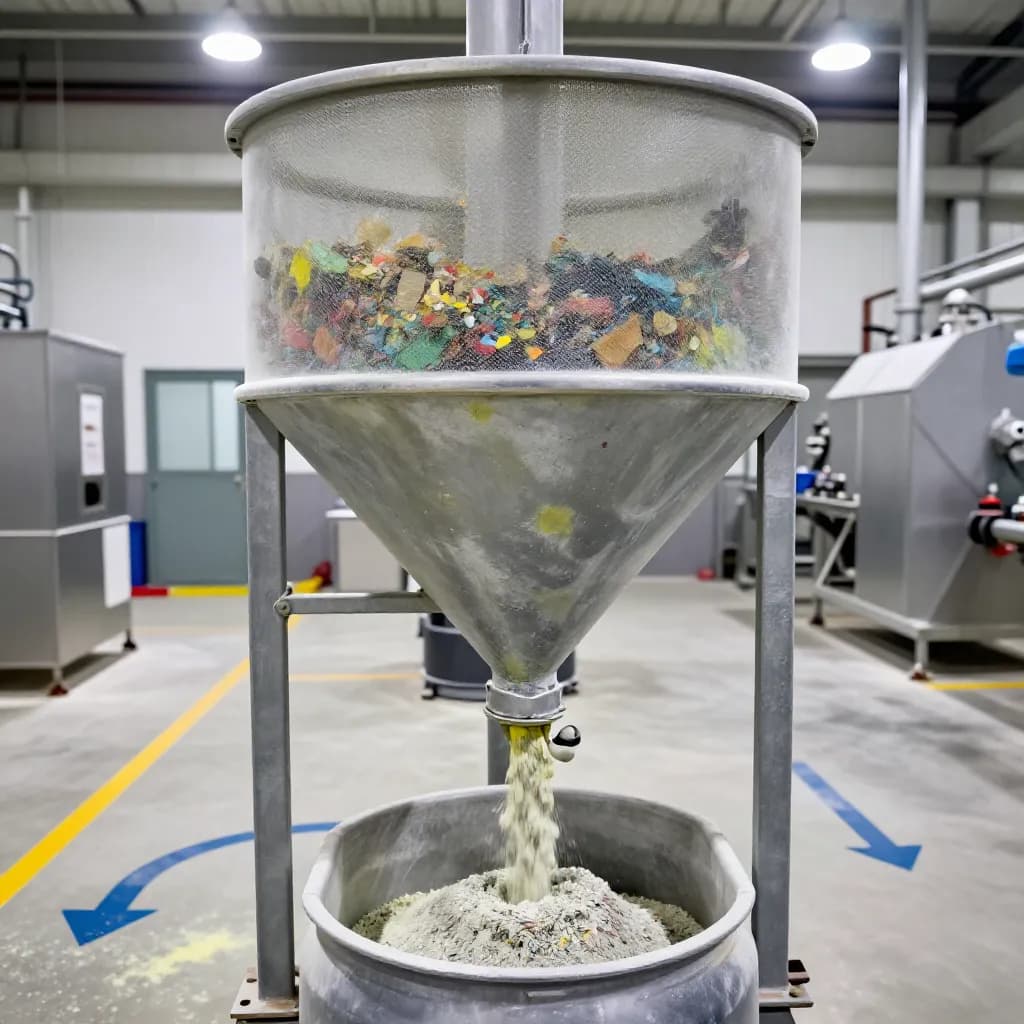
In a linear coating model, raw materials are extracted, processed into coating products, applied to substrates (with significant overspray waste), and eventually the coated product reaches end of life where the coating is either landfilled with the substrate or stripped and disposed of. Each stage generates waste and consumes virgin resources. A circular approach seeks to close these loops at every stage.
Ready to Start Your Project?
From one-off customs to 15,000-part production runs — get precise pricing in 24 hours.
On This Page
Circular Economy Principles Applied to Coatings
The coatings industry faces unique circularity challenges because coatings are designed to bond permanently to substrates, making separation and recovery at end of life difficult. However, significant circular economy gains are achievable at the application stage through material recovery, at the use stage through extended durability, and at the formulation stage through the use of recycled and bio-based raw materials.
Powder Coating's Built-In Circularity: 95-98% Overspray Reclaim
Powder coating has a fundamental circular economy advantage built into its application process: overspray recovery and reuse. When powder is sprayed onto a workpiece, particles that miss the target are captured by the booth recovery system — typically cyclone separators followed by cartridge or bag filters — and returned directly to the feed hopper for reapplication. This closed-loop recovery achieves material utilization rates of 95-98%, meaning that virtually all powder purchased is converted into functional coating film.
The reclaim process is straightforward because powder coating overspray remains in its original dry, unfused state. Unlike liquid paint overspray, which becomes contaminated with booth water or irreversibly adheres to filters, powder overspray retains its original properties and can be blended with virgin powder and reapplied without quality degradation, provided the reclaim system is properly maintained and contamination is controlled.
This built-in circularity delivers both environmental and economic benefits. Raw material waste is minimized to the small fraction that cannot be recovered (typically 2-5%, consisting of ultra-fine particles that pass through filters and material lost during color changes). The volume of waste requiring disposal is a fraction of that generated by liquid paint operations, and the waste itself is a non-hazardous dry powder rather than contaminated sludge or spent solvent.
Liquid Paint Waste Challenges
Liquid paint operations face fundamental circularity barriers that are inherent to the technology. Overspray from liquid spray application cannot be recovered and reused. In water-wash booths, overspray is captured in circulating water and accumulates as paint sludge — a mixture of paint solids, water, and chemical additives that must be disposed of as waste. In dry-filter booths, overspray is captured on disposable filters that become saturated and require replacement and disposal.
Transfer efficiency for liquid spray application typically ranges from 30-70% depending on the application method, part geometry, and operator skill. This means that 30-70% of the coating material applied becomes waste rather than functional film. For solvent-based systems, the solvents in this wasted material evaporate as VOC emissions, compounding the environmental impact. The paint solids become non-recoverable waste.
Additional liquid paint waste streams include spent cleaning solvents, expired or off-specification material, contaminated mixing equipment, and residual paint in containers. Each of these waste streams represents lost material value and disposal cost. While some waste reduction is possible through improved application techniques, better inventory management, and solvent recycling, the fundamental inability to recover and reuse liquid paint overspray limits the circularity achievable with this technology.
End-of-Life Considerations: Stripping and Recoating vs Disposal
At the end of a coated product's service life, circular economy principles favor refurbishment and recoating over disposal. For powder-coated metal products such as architectural aluminum, steel furniture, or automotive components, the substrate has significant residual value and can be recoated to extend its useful life. Chemical or thermal stripping removes the old coating, and the cleaned substrate can be retreated and recoated with fresh powder.
The environmental calculus of stripping and recoating versus replacement depends on the substrate value, the energy and chemicals required for stripping, and the environmental impact of manufacturing a replacement. For high-value substrates like architectural aluminum extrusions, recoating is almost always the more sustainable option, as the embodied energy and carbon in the aluminum far exceeds the impact of the recoating process.
When coated products do reach final disposal, the coating's impact depends on its composition and the disposal method. Powder coatings are thermoset materials that do not melt or release significant emissions during metal recycling processes. When aluminum or steel is recycled, the coating is burned off or removed during the melting process, and the metal is recovered. The coating itself is not recyclable in the traditional sense, but its minimal volume relative to the substrate means its contribution to waste is small.
Future Directions: Bio-Based Resins, Take-Back Programs, and Closed-Loop Systems
The coatings industry is exploring several pathways to enhance circularity further. Bio-based resins derived from renewable feedstocks such as plant oils, sugars, and lignin reduce dependence on petrochemical raw materials and can lower the carbon footprint of coating production. Several powder coating manufacturers have introduced products with 25-40% bio-based content, with research targeting higher levels of renewable content.
Take-back and recycling programs for unused or waste powder coating material are emerging in some markets. These programs collect clean, uncontaminated powder waste from applicators and either reprocess it for lower-specification applications or use it as feedstock for other products. While still limited in scale, these initiatives demonstrate the potential for extending material circularity beyond the individual application facility.
Closed-loop systems that integrate coating application with substrate manufacturing and end-of-life recovery represent the ultimate circular vision. In such systems, coated products would be designed for disassembly, substrates would be recovered and recoated at end of life, and coating waste would be minimized through optimized application and recovery. Achieving this vision requires collaboration across the value chain — from raw material suppliers through coating manufacturers, applicators, and end users to recyclers and waste managers.
Frequently Asked Questions
What percentage of powder coating overspray can be recycled?
Powder coating recovery systems typically reclaim 95-98% of overspray material, which is returned directly to the application process for reuse. This is possible because overspray powder remains in its original dry, unfused state and retains its properties for reapplication when properly managed.
Can liquid paint overspray be recovered and reused?
No. Liquid paint overspray cannot be practically recovered for reuse. In water-wash booths it becomes contaminated sludge, and in dry-filter booths it is captured on disposable filters. Both waste streams require disposal rather than recycling, which is a fundamental circularity limitation of liquid paint technology.
Can powder-coated products be recoated at end of life?
Yes. Powder-coated metal products can be stripped using chemical or thermal methods, then retreated and recoated with fresh powder. This extends the substrate's useful life and is typically more sustainable than manufacturing a replacement, particularly for high-value substrates like architectural aluminum.
Are bio-based powder coatings commercially available?
Yes, several manufacturers offer powder coatings with 25-40% bio-based content derived from renewable feedstocks such as plant oils and sugars. Research is ongoing to increase bio-based content further while maintaining the performance standards required for demanding applications.
Ready to Start Your Project?
From one-off customs to 15,000-part production runs — get precise pricing in 24 hours.