Traditional decorative chrome plating has been a staple of industrial finishing for over a century, prized for its brilliant, mirror-like reflectivity and hard, wear-resistant surface. However, the conventional chrome plating process relies on hexavalent chromium compounds — specifically chromic acid — which are among the most hazardous substances used in manufacturing. Hexavalent chromium is a known human carcinogen, causes severe respiratory damage, and poses significant environmental contamination risks through wastewater discharge and air emissions.
Guides
Chrome Alternative Powder Coatings: Mirror-Effect Finishes Without Hexavalent Chromium
Sundial Powder Coating·April 22, 2026·13 min
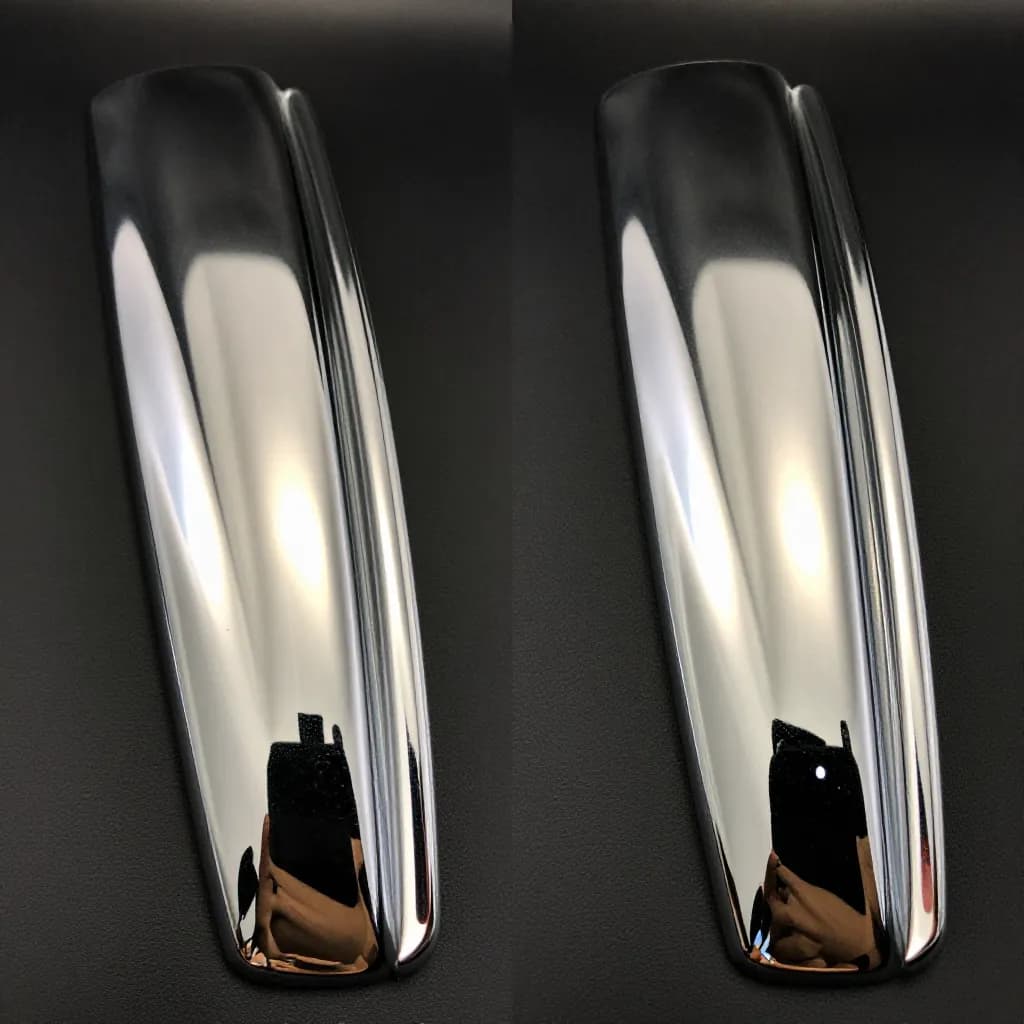
Regulatory pressure on hexavalent chromium has intensified dramatically in recent years. The European Union's REACH regulation has placed hexavalent chromium on the Authorization List, requiring companies to obtain specific authorization to continue using it — a process that is expensive, time-limited, and increasingly difficult to justify. The RoHS Directive restricts hexavalent chromium in electrical and electronic equipment. Similar regulations are tightening in North America, Asia, and other markets, creating a global trend toward elimination of hexavalent chromium from manufacturing processes.
Ready to Start Your Project?
From one-off customs to 15,000-part production runs — get precise pricing in 24 hours.
On This Page
Why the Industry Is Moving Away from Chrome Plating
This regulatory landscape has created strong demand for chrome-look finishes that achieve the visual appeal of traditional chrome without the health, environmental, and compliance risks. Powder coating technology, combined with complementary processes like vacuum metallization, offers several viable pathways to chrome-like appearances. While none of these alternatives perfectly replicate the mirror reflectivity of electroplated chrome, the best options come remarkably close and offer advantages in cost, environmental impact, and substrate versatility that chrome plating cannot match.
High-Reflectivity Metallic Powder Coatings
The simplest approach to a chrome-like appearance in powder coating is a high-reflectivity silver metallic formulation. These powders contain high concentrations of fine, leafing-grade aluminum flake pigments in a clear resin base. Leafing aluminum flakes float to the surface of the coating during the melt phase, orienting parallel to the substrate and creating a continuous reflective layer at the top of the film. The result is a bright, silvery surface with significant reflectivity — not a true mirror finish, but a convincing chrome-like appearance at normal viewing distances.
The quality of the chrome effect depends on the aluminum flake size, shape, and concentration. Vacuum-metallized aluminum flakes — produced by depositing aluminum onto a carrier film in a vacuum chamber, then breaking the film into flakes — offer superior reflectivity compared to conventional ball-milled flakes because they are flatter, smoother, and more uniformly shaped. Powders formulated with vacuum-metallized aluminum (sometimes called PVD aluminum or silver dollar flakes) produce the closest approximation to chrome achievable in a single-coat powder system.
These high-reflectivity metallic powders are applied using standard electrostatic spray equipment and cured in conventional ovens, making them accessible to any powder coating operation. They are available in polyester, super-durable polyester, and hybrid resin systems, offering flexibility for both interior and exterior applications. The finish is typically specified at 80 to 100 microns and can be topcoated with a clear powder for additional protection and gloss enhancement. While the result is not a true mirror — it has a slight grain or sparkle visible at close inspection — it is an effective and economical chrome alternative for many applications.
Vacuum Metallization with Powder Coating
For applications requiring the closest possible approximation to true chrome reflectivity, vacuum metallization combined with powder coating offers the most convincing results. This hybrid process uses physical vapor deposition (PVD) to apply an ultra-thin layer of aluminum directly onto a powder-coated base coat, then protects the metallized layer with a clear powder topcoat. The result is a mirror-like finish with reflectivity approaching that of electroplated chrome.
The process works in four stages. First, a smooth, high-gloss powder base coat is applied and cured on the substrate. This base coat serves as the foundation for the metallized layer and must be exceptionally smooth — any orange peel, texture, or contamination will be amplified by the mirror-like metallized surface. Second, the base-coated part is placed in a vacuum chamber where aluminum is evaporated and deposited as a thin film — typically 50 to 100 nanometers thick — onto the powder-coated surface. Third, a clear powder topcoat is applied over the metallized layer and cured to protect the delicate aluminum film from oxidation, scratching, and environmental degradation.
The vacuum metallization step is the key differentiator. The PVD aluminum layer is so thin and uniform that it acts as a near-perfect mirror, reflecting light with minimal scattering. Unlike aluminum flake pigments in a powder coating, which are discrete particles with gaps between them, the PVD layer is a continuous metallic film that provides true specular reflection. The clear powder topcoat adds depth and protection without significantly reducing the reflectivity, producing a finish that is virtually indistinguishable from chrome plating at normal viewing distances.
Comparing Chrome Alternatives: Performance and Limitations
Each chrome alternative technology has distinct strengths and limitations that make it suitable for different applications. High-reflectivity metallic powders offer the simplest process — standard powder coating equipment, single or double coat, no special chambers — but produce the least mirror-like result. They are best suited for applications where a bright, silvery appearance is desired but true mirror reflectivity is not required: furniture hardware, lighting fixtures, decorative trim, and consumer products viewed at arm's length or greater.
Vacuum metallization with powder coating produces the most chrome-like result but requires specialized PVD equipment that most powder coating shops do not have. The process is more expensive and time-consuming than standard powder coating, and the thin metallized layer is sensitive to handling damage between the PVD step and the clear topcoat application. This technology is best suited for high-value applications where the chrome appearance is a critical design requirement: automotive trim, premium consumer electronics, luxury goods, and architectural feature elements.
All chrome alternative powder coating systems share certain limitations compared to electroplated chrome. They are softer and less scratch-resistant than hard chrome plating, making them unsuitable for functional chrome applications like hydraulic cylinder rods or wear surfaces. They do not provide the same level of corrosion protection as thick industrial chrome plating on steel substrates. And while the best vacuum-metallized finishes are very close to chrome in appearance, a trained eye can still distinguish them from electroplated chrome under close inspection. For decorative applications, however, these differences are rarely significant enough to matter.
RoHS Compliance and Environmental Benefits
The environmental and regulatory advantages of chrome alternative powder coatings are substantial and increasingly important for manufacturers operating in global markets. The complete elimination of hexavalent chromium from the finishing process removes the most significant health and environmental hazard associated with decorative chrome plating. Workers are no longer exposed to carcinogenic chromium mist, wastewater treatment systems do not need to handle chromium-laden effluent, and the finished product contains no restricted substances that could trigger RoHS, REACH, or other regulatory compliance issues.
RoHS compliance is particularly important for products sold in the European Union, where the Restriction of Hazardous Substances Directive limits hexavalent chromium to 0.1% by weight in homogeneous materials within electrical and electronic equipment. Chrome alternative powder coatings easily meet this requirement because they contain zero hexavalent chromium — the reflective effect comes from metallic aluminum, which is not a restricted substance under any major regulatory framework.
Beyond regulatory compliance, chrome alternative powder coatings offer the standard environmental benefits of powder coating technology: zero VOC emissions, high material utilization through overspray reclaim, no hazardous waste generation during application, and energy-efficient curing. The contrast with traditional chrome plating — which generates hazardous wastewater, requires extensive air pollution controls, consumes large quantities of water and electricity, and produces hazardous sludge requiring special disposal — is stark. For manufacturers seeking to reduce their environmental footprint while maintaining a chrome-like aesthetic, powder-based alternatives represent a clear path forward.
Substrate Versatility and Design Freedom
One often-overlooked advantage of chrome alternative powder coatings is their substrate versatility. Traditional chrome plating is essentially limited to metals — primarily steel, copper, brass, and zinc die-cast — because the electroplating process requires an electrically conductive substrate. Plating onto aluminum requires special pretreatment steps, and plating onto non-metallic substrates like plastic requires an initial metallization step that adds cost and complexity.
Powder coating-based chrome alternatives can be applied to any substrate that can withstand the cure temperature — typically 160 to 200°C for standard powders. This includes aluminum, steel, stainless steel, brass, copper, zinc die-cast, and even some heat-resistant engineered plastics and composites. The vacuum metallization process further extends the range because the PVD step operates at relatively low temperatures and can metallize virtually any smooth surface, including plastics that have been primed with a UV-cured base coat rather than a heat-cured powder.
This substrate versatility opens design possibilities that chrome plating cannot offer. Lightweight aluminum parts can receive a chrome-look finish without the weight penalty of copper and nickel underplating required for chrome plating. Large architectural panels that would be impractical to chrome plate due to tank size limitations can be powder coated with high-reflectivity metallics. Complex assemblies combining different materials can receive a uniform chrome-like appearance in a single coating process. The design freedom extends to color as well — while traditional chrome is limited to its characteristic blue-white silver, chrome alternative powders can be tinted to produce warm chrome, gold chrome, black chrome, and other variations.
Application Best Practices for Chrome-Look Finishes
Achieving the best possible chrome-like appearance with powder coating requires attention to substrate preparation, application technique, and process control that goes beyond standard powder coating practice. The reflective nature of chrome-look finishes amplifies every surface imperfection, making substrate quality the single most important factor in the final result.
Substrate preparation should aim for the smoothest possible surface. For metal substrates, this means thorough cleaning, degreasing, and — for the best results — mechanical polishing or buffing before coating. Weld spatter, grinding marks, scratches, and surface porosity that would be invisible under an opaque matte coating will be glaringly obvious under a chrome-look finish. Cast and forged parts may require filling and sanding to achieve an acceptable surface profile. The investment in substrate preparation pays dividends in the quality of the finished chrome effect.
Application technique should prioritize smooth, uniform film build. Use fine powder particle sizes (if available from the manufacturer) to minimize orange peel. Optimize electrostatic voltage and powder flow rate to achieve even deposition without excessive build-up on edges or thin spots in recesses. For vacuum metallization systems, the base coat must be cured to a high-gloss, defect-free surface before the PVD step — any imperfection in the base coat will be faithfully reproduced and amplified in the metallized layer.
Clear topcoat application over metallized surfaces requires care to avoid disturbing the delicate aluminum film. Use low-impact application settings — reduced air pressure, moderate electrostatic voltage — and avoid excessive powder velocity that could abrade the metallized surface before the topcoat melts and flows during cure.
Future Developments in Chrome Alternative Technology
Chrome alternative powder coating technology continues to advance rapidly, driven by both regulatory pressure and market demand for high-performance decorative finishes. Several emerging technologies promise to narrow the remaining gap between powder-based chrome alternatives and traditional electroplated chrome.
Advanced PVD techniques, including magnetron sputtering and high-power impulse magnetron sputtering (HiPIMS), can deposit denser, more reflective metal films than conventional thermal evaporation. These techniques are being adapted for use with powder-coated substrates, promising even more mirror-like results. Some systems can deposit chrome metal directly — rather than aluminum — producing a color match to traditional chrome that is virtually perfect.
On the powder coating side, new effect pigment technologies are improving the reflectivity achievable in single-coat metallic powders. Pigments based on aluminum flakes with ultra-smooth surfaces, produced by advanced PVD flake manufacturing processes, are closing the gap between pigment-based metallics and vacuum-metallized finishes. These next-generation pigments offer higher reflectivity in a standard powder coating process, potentially eliminating the need for a separate vacuum metallization step for many applications.
Low-temperature cure powder coatings are expanding the substrate range for chrome-look finishes. Powders that cure at 130 to 150°C — compared to the standard 180 to 200°C — allow chrome-look finishes to be applied to heat-sensitive substrates including certain plastics, wood-plastic composites, and thin-gauge metals that would distort at higher temperatures. As these technologies mature and become more widely available, the practical and aesthetic gap between chrome plating and powder-based alternatives will continue to shrink.
Frequently Asked Questions
Can powder coating look exactly like chrome plating?
Vacuum metallization combined with powder coating comes very close to the mirror reflectivity of chrome plating and is virtually indistinguishable at normal viewing distances. Standard high-reflectivity metallic powders produce a bright, silvery appearance but with visible sparkle rather than true mirror reflection. Neither perfectly replicates electroplated chrome under close inspection.
Is chrome alternative powder coating RoHS compliant?
Yes. Chrome alternative powder coatings contain zero hexavalent chromium — the reflective effect comes from metallic aluminum or PVD-deposited metal, neither of which is restricted under RoHS, REACH, or other major regulatory frameworks. This makes them fully compliant for use in electrical, electronic, and consumer products.
How durable is a chrome-look powder coating compared to real chrome?
Chrome-look powder coatings offer good scratch resistance and excellent corrosion protection for decorative applications, but they are softer than hard electroplated chrome. They are not suitable for functional chrome applications like wear surfaces or hydraulic cylinders. For decorative use on automotive trim, furniture, and architectural elements, durability is more than adequate.
Can chrome-look powder coating be applied to aluminum?
Yes, and this is one of its key advantages over chrome plating. Powder coating-based chrome alternatives can be applied directly to aluminum without the complex pretreatment steps required for chrome plating aluminum. This makes them ideal for lightweight automotive parts, architectural panels, and consumer products.
What is vacuum metallization in powder coating?
Vacuum metallization is a process where a thin layer of aluminum (50-100 nanometers) is deposited onto a cured powder base coat inside a vacuum chamber using physical vapor deposition. The metallized layer is then protected with a clear powder topcoat. This produces the most mirror-like chrome alternative finish available.
Ready to Start Your Project?
From one-off customs to 15,000-part production runs — get precise pricing in 24 hours.