Color is one of the most powerful tools in an architect's palette, and nowhere is its impact more visible than on the facades of commercial buildings. The color of a building communicates identity, establishes presence, influences perception, and shapes the experience of everyone who encounters it — from employees and customers to passersby and the broader community. A well-chosen color scheme can make a building iconic, while a poor choice can render it forgettable or, worse, visually jarring in its context.
Design
Choosing Colors for Commercial Buildings: A Specifier's Guide
Sundial Powder Coating·April 20, 2026·9 min
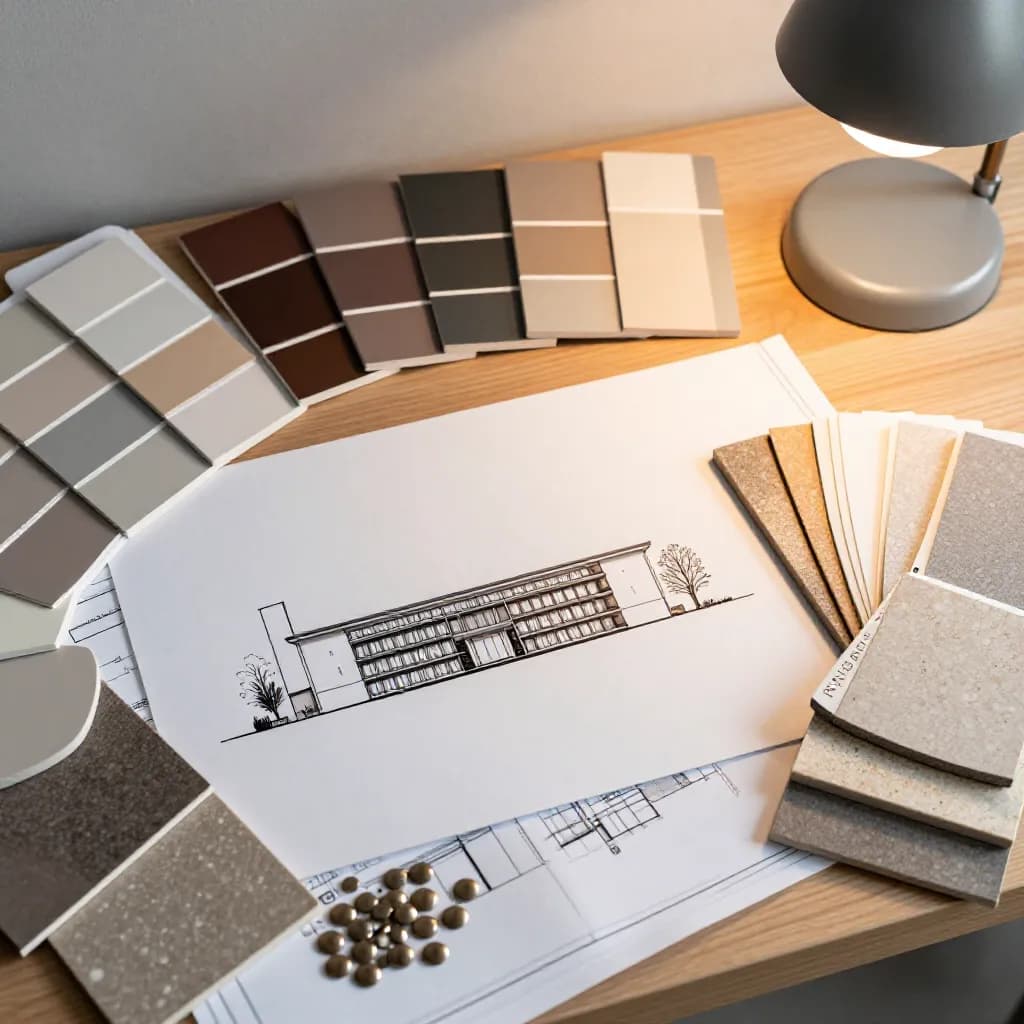
In commercial architecture, color serves multiple simultaneous functions. It defines the building's visual identity and differentiates it from its neighbors. It communicates the character of the business within — a technology company might favor sleek grays and whites, while a children's hospital might embrace warm, welcoming tones. Color also influences the perceived scale and proportions of a building: lighter colors make surfaces appear larger and more open, while darker tones create a sense of solidity and weight.
Ready to Start Your Project?
From one-off customs to 15,000-part production runs — get precise pricing in 24 hours.
On This Page
The Role of Color in Commercial Architecture
The permanence of facade color decisions adds weight to the selection process. Unlike interior paint that can be refreshed every few years, exterior cladding and powder coated facades are designed to last 20-30 years or more. The colors chosen today will define the building's appearance for decades, through changing trends, evolving brand identities, and shifting neighborhood contexts. This long-term commitment demands a thoughtful, systematic approach to color selection.
Understanding the Building Context
Every building exists within a context that should inform its color palette. The surrounding built environment — neighboring buildings, streetscape character, and urban or rural setting — provides the visual framework within which the new building must work. A commercial building in a historic town center faces different contextual pressures than one in a modern business park or an industrial estate. Analyzing the predominant colors, materials, and architectural styles of the surrounding area helps identify whether the design intent is to harmonize with the context or to create deliberate contrast.
The natural landscape and climate also influence color perception and appropriateness. Colors appear differently under the cool, overcast light of northern Europe compared to the intense, warm sunlight of the Mediterranean or Middle East. A color that looks sophisticated under gray skies may appear washed out in bright sunlight, while a bold color that works in a sun-drenched environment may feel oppressive under cloudy conditions. Viewing color samples under the actual lighting conditions of the site — at different times of day and in different weather — is essential for accurate color assessment.
Planning and regulatory requirements may also constrain color choices. Many local authorities have design guidelines or planning conditions that specify acceptable color ranges for commercial buildings, particularly in conservation areas, heritage zones, or areas of outstanding natural beauty. Engaging with planning authorities early in the design process helps identify any restrictions and avoids costly redesigns later. Some jurisdictions also have requirements related to solar reflectance, which can limit the use of very dark colors on large facade areas.
Color for Brand Identity
For many commercial buildings, the facade is the largest and most visible expression of the occupant's brand. Integrating corporate brand colors into the building design creates a powerful visual connection between the physical structure and the organization it houses. Retail stores, hospitality venues, automotive showrooms, and corporate headquarters all benefit from facade colors that reinforce brand recognition and communicate brand values.
Translating brand colors from print and digital media to architectural scale requires careful consideration. A brand color that works beautifully on a logo or website may be overwhelming when applied to a 500-square-meter facade. The solution is often to use the primary brand color as an accent — on entrance features, signage zones, or architectural details — while selecting complementary neutral tones for the larger facade areas. This approach maintains brand presence without creating visual fatigue.
Powder coating technology makes brand color integration straightforward because virtually any color can be matched and reproduced consistently. Powder coating manufacturers can match colors to Pantone, RAL, NCS, or custom references, and the consistency of the powder coating process ensures uniform color across all components. For multi-site brands — retail chains, hotel groups, or franchise operations — powder coating provides the color consistency needed to maintain brand identity across buildings in different locations, coated by different applicators, over extended project timelines.
Balancing Timelessness with Contemporary Appeal
One of the central tensions in commercial building color selection is the balance between contemporary relevance and long-term timelessness. Trend-driven colors can make a building feel current and dynamic at the time of construction, but they risk looking dated within a few years as trends evolve. Conversely, overly conservative color choices may result in a building that feels generic and fails to make the visual impact that commercial architecture demands.
The most successful commercial building color schemes typically anchor the palette in timeless neutral tones — grays, whites, blacks, and earth tones — and introduce contemporary color through carefully considered accent elements. This approach ensures that the building's overall appearance remains relevant over its 20-30 year facade lifespan, while the accent colors provide visual interest and can potentially be refreshed at lower cost if trends shift significantly.
Studying buildings that have aged well provides valuable guidance. Mid-century modern buildings in muted earth tones, contemporary towers in sophisticated grays, and industrial conversions in raw material palettes all demonstrate how restrained color choices can maintain their appeal across decades. The key is to select colors that have inherent visual quality — depth, subtlety, and relationship to natural materials — rather than colors that derive their appeal solely from being fashionable at a particular moment.
Practical Considerations for Facade Color
Beyond aesthetics, several practical factors influence facade color selection. Heat absorption is a significant consideration, particularly for buildings in warm climates or with large south-facing and west-facing facades. Dark colors absorb more solar radiation than light colors, which can increase cooling loads, cause thermal stress on cladding panels, and accelerate coating degradation. The Total Solar Reflectance (TSR) value of a coating indicates how much solar energy it reflects — higher TSR values mean less heat absorption. Some powder coating manufacturers offer cool-roof and cool-wall formulations with enhanced infrared reflectance that allow darker colors to be used with reduced heat absorption.
Maintenance and dirt visibility vary significantly with color choice. Very light colors — particularly white and near-white — show dirt, staining, and weathering marks more readily than mid-tones, requiring more frequent cleaning to maintain their appearance. Very dark colors can show dust, water spots, and chalking more visibly than mid-range tones. Medium grays, bronzes, and earth tones tend to be the most forgiving in terms of maintenance appearance.
Color consistency across different suppliers, production batches, and material types is a practical challenge on large projects. Aluminum extrusions, sheet panels, and cast components may be coated by different applicators at different times, and achieving a perfect color match across all components requires careful specification and quality control. Specifying a recognized color standard (RAL, NCS) with defined tolerances (Delta E less than 1.0 for critical matches), requiring approval samples from each applicator, and conducting on-site mock-ups are all essential steps for ensuring color consistency.
Working with Powder Coating Manufacturers on Color Specification
Engaging with powder coating manufacturers early in the design process unlocks expertise and resources that can significantly improve color outcomes. Major powder coating manufacturers maintain extensive color libraries, employ color specialists, and offer design support services that go beyond simply matching a color reference. They can advise on color trends, provide large-format samples for evaluation, and help navigate the practical considerations of color selection for specific substrates and environments.
The color specification process typically begins with the architect or designer selecting initial color concepts, which may be inspired by material samples, color fan decks, digital renderings, or reference buildings. The powder coating manufacturer then produces sample panels — ideally on the actual substrate material and in the specified finish (gloss, matte, texture) — for evaluation under real-world conditions. Viewing samples at the building site, at full scale where possible, and at different times of day is critical for making confident color decisions.
For custom colors, the manufacturer will develop a formulation to match the provided reference and produce approval samples for sign-off before production begins. This process typically takes 2-4 weeks and may involve several iterations to achieve an exact match, particularly for complex colors with metallic or pearlescent effects. Once approved, the manufacturer assigns a unique color code and retains the formulation for consistent reproduction throughout the project and for future maintenance or extensions. Establishing this color specification workflow early — and building adequate lead time into the project schedule — ensures that color decisions are made thoughtfully and that production proceeds smoothly.
Frequently Asked Questions
How do I ensure color consistency across a large building project?
Specify colors using a recognized standard (RAL, NCS) with defined Delta E tolerances (less than 1.0 for critical matches). Require approval samples from each coating applicator, conduct on-site mock-ups, and ensure all applicators use powder from the same manufacturer and batch where possible. Regular quality audits during production help maintain consistency.
Do dark facade colors cause problems?
Dark colors absorb more solar radiation, which can increase cooling loads, cause thermal stress on cladding, and accelerate coating degradation. However, modern cool-wall powder coatings with enhanced infrared reflectance allow darker colors to be used with reduced heat absorption. Dark colors also show dust and chalking more visibly, requiring more frequent cleaning.
Can any color be produced in powder coating?
Virtually any color can be produced in powder coating, including matches to RAL, NCS, Pantone, and custom references. Metallic, pearlescent, matte, textured, and wood grain effects are also available. Custom color development typically takes 2-4 weeks and may have minimum order quantities, so plan ahead for non-standard colors.
Should I follow color trends for a commercial building?
Use trends as inspiration but anchor your palette in timeless tones. Commercial building facades last 20-30 years, so trend-driven colors risk looking dated. A proven approach is to use neutral tones for the main facade and introduce contemporary color through accent elements that can potentially be refreshed at lower cost if needed.
Ready to Start Your Project?
From one-off customs to 15,000-part production runs — get precise pricing in 24 hours.