A coating's carbon footprint encompasses all greenhouse gas emissions generated across its entire lifecycle, from raw material extraction through end-of-life. The raw material stage includes the carbon intensity of producing resins, pigments, additives, and — for liquid coatings — organic solvents. Solvent production is particularly carbon-intensive, as it involves petrochemical refining and distillation processes that consume significant energy and release process emissions.
Environmental
Carbon Footprint of Powder Coating vs Liquid Paint
Sundial Powder Coating·April 20, 2026·9 min
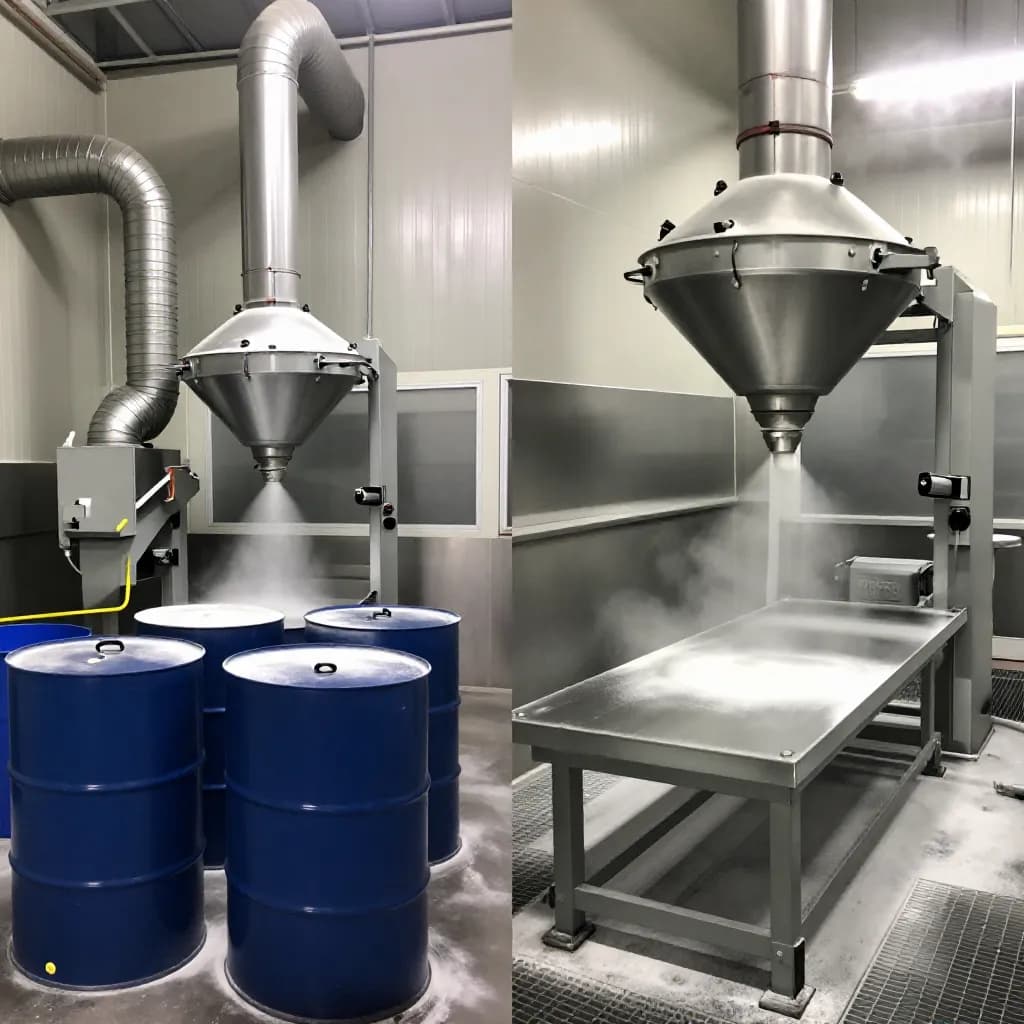
Manufacturing the coating product itself contributes through energy consumption for mixing, grinding, dispersion, and quality control. Transportation emissions arise from moving raw materials to the coating manufacturer, finished coatings to the applicator, and coated products to their final destination. The application stage generates emissions through energy consumed by spray equipment, booth ventilation, curing ovens, and — critically for solvent-based systems — thermal oxidizers used to destroy VOC emissions.
Ready to Start Your Project?
From one-off customs to 15,000-part production runs — get precise pricing in 24 hours.
On This Page
What Contributes to a Coating's Carbon Footprint
Waste-related emissions complete the picture. Material that does not end up on the finished product — overspray, sludge, spent solvents, contaminated consumables — represents embodied carbon that was emitted during production but delivered no functional value. The disposal of this waste through incineration or landfill generates additional emissions. A comprehensive carbon footprint assessment must account for all these stages to provide a meaningful comparison between coating technologies.
Powder Coating's Lower Carbon Footprint
Powder coating demonstrates a lower carbon footprint than solvent-based liquid paint across several key lifecycle stages. The most fundamental advantage is the absence of solvents. Organic solvents in a typical solvent-based coating represent 40-60% of the product by weight, and the carbon emissions associated with producing these solvents — which are entirely lost to evaporation during application — are eliminated in powder coating formulations.
Material efficiency provides another significant carbon advantage. Powder coating systems recover and recycle 95-98% of overspray, meaning that nearly all the material produced is converted into functional coating film. Liquid spray operations typically achieve transfer efficiencies of 30-70%, with the remainder becoming waste that carries its full embodied carbon burden without delivering any protective function.
The elimination of solvent-related infrastructure further reduces the carbon footprint. Powder coating facilities do not require thermal oxidizers (which consume natural gas to destroy VOCs), high-volume booth exhaust ventilation (which must be heated or cooled), or solvent storage and handling systems. While powder coating does require curing oven energy, this is a single, well-defined energy input that can be optimized and increasingly sourced from renewable energy.
Energy Consumption Comparison: Cure Ovens vs Solvent Abatement
A common misconception is that powder coating's oven curing requirement makes it more energy-intensive than liquid painting. While cure ovens do consume significant energy — typically representing 60-70% of a powder coating line's total energy use — this must be compared against the total energy consumption of a liquid paint operation, which includes not only any force-dry or bake ovens but also the substantial energy demands of VOC abatement equipment.
A regenerative thermal oxidizer (RTO) operating on a liquid paint line consumes natural gas to maintain combustion chamber temperatures of 760-870°C and electricity to drive large exhaust fans. For a medium-sized operation, RTO energy consumption can equal or exceed the energy used by a powder coating cure oven processing the same throughput. When booth ventilation energy, flash-off zone heating, and solvent storage ventilation are added, the total energy profile of a liquid paint operation often exceeds that of an equivalent powder coating line.
Advances in powder coating technology are further improving the energy comparison. Low-temperature cure powders that cure at 150°C instead of the traditional 180-200°C reduce oven energy consumption by approximately 20%. Infrared and combination IR/convection ovens offer faster heat-up and more efficient energy transfer. These innovations continue to widen the energy advantage of powder coating over solvent-based liquid systems.
Lifecycle Carbon Analysis: Durability Reduces Lifetime Emissions
The most significant carbon advantage of powder coating often emerges in the use phase of the lifecycle, where superior durability translates directly into lower lifetime carbon emissions. A high-quality superdurable polyester powder coating on architectural aluminum can deliver a service life of 25 years or more, while a comparable liquid paint system may require recoating every 8-12 years. Over a 60-year building reference life, this means two powder coating applications versus five or six liquid paint cycles.
Each recoating cycle carries its own carbon footprint: manufacturing new coating material, transporting it to site, surface preparation (which may involve chemical stripping or abrasive blasting), application, waste disposal, and the logistical carbon of scaffolding, access equipment, and project management. When these recoating emissions are summed over the building's life, the cumulative carbon footprint of the shorter-lived liquid system can be several times that of the longer-lived powder coating.
Lifecycle carbon analysis also accounts for the avoided emissions from not recoating. Every recoating cycle that is eliminated represents not only saved material and energy but also avoided disruption to building occupants and operations. For specifiers focused on whole-life carbon reduction, coating durability is one of the most effective levers available, and powder coating's proven long-term performance makes it a strong choice for minimizing lifecycle carbon impact.
Industry Initiatives for Carbon Reduction
The powder coating industry is actively pursuing further carbon reductions through multiple initiatives. Low-cure powder formulations that cure at temperatures 30-50°C below standard are now commercially available across a wide range of chemistries and colors, delivering energy savings of 15-25% at the cure oven. Some manufacturers have introduced ultra-low-bake powders that cure at temperatures as low as 130°C, opening possibilities for coating heat-sensitive substrates while further reducing energy consumption.
Renewable energy adoption is accelerating across the coating industry. Powder coating facilities are well-suited to electrification because their primary energy demand — oven heating — can be provided by electric infrared elements or heat pumps powered by renewable electricity. Several major powder coating applicators have transitioned to 100% renewable electricity, dramatically reducing the carbon intensity of their operations.
Bio-based raw materials represent the next frontier in carbon reduction. Research into resins derived from plant oils, sugars, and lignin is progressing toward commercial viability, with some powder coating formulations already achieving 25-40% bio-based content. Combined with continued improvements in material efficiency, cure temperature reduction, and renewable energy adoption, these initiatives are driving the powder coating industry toward an increasingly low-carbon future.
Frequently Asked Questions
Is powder coating more energy-intensive than liquid paint due to oven curing?
Not when the full system is considered. While powder coating cure ovens consume significant energy, liquid paint operations require energy for thermal oxidizers, booth ventilation, flash-off heating, and solvent handling. The total energy consumption of a liquid paint line often equals or exceeds that of an equivalent powder coating operation.
How does coating durability affect carbon footprint?
Longer-lasting coatings require fewer recoating cycles over a building's life, and each avoided recoating eliminates the carbon emissions from manufacturing, transporting, and applying new coating material. A powder coating lasting 25 years versus a liquid system lasting 10 years can reduce lifetime carbon emissions by more than half.
What are low-cure powder coatings?
Low-cure powder coatings are formulated to crosslink at temperatures 30-50°C below standard cure schedules, typically curing at 150°C instead of 180-200°C. This reduces oven energy consumption by 15-25% and enables faster throughput, directly lowering the carbon footprint of the curing process.
Can powder coating facilities run on renewable energy?
Yes. Powder coating operations are well-suited to electrification because their main energy demand — oven heating — can be provided by electric infrared elements or heat pumps. Facilities powered by renewable electricity can achieve very low operational carbon footprints, and several major applicators have already made this transition.
Ready to Start Your Project?
From one-off customs to 15,000-part production runs — get precise pricing in 24 hours.