Transparent and translucent powder coatings are formulated to allow light to pass through the cured film rather than being fully absorbed or reflected at the surface. Unlike opaque powder coatings that completely hide the substrate beneath them, transparent powders let the underlying surface — whether it is bare metal, a metallic base coat, or a chrome-plated surface — show through and contribute to the final visual effect. This light-transmitting property is what makes candy coat finishes possible and opens up a range of custom color effects that opaque coatings simply cannot achieve.
Guides
Candy Coat and Transparent Powder Coating: Layering Techniques for Stunning Custom Finishes
Sundial Powder Coating·April 22, 2026·13 min
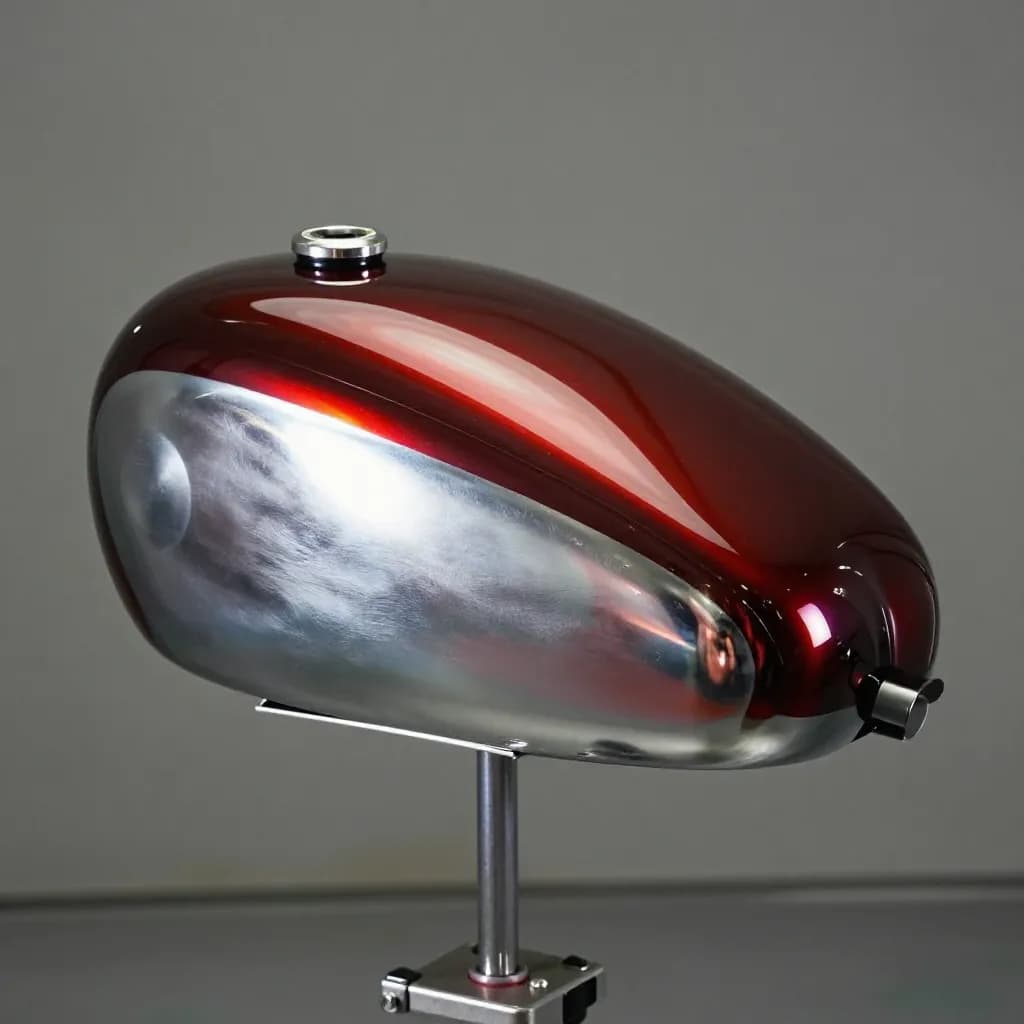
The distinction between transparent and translucent is one of degree. Fully transparent powder coatings contain no pigment or only trace amounts of dye, producing a clear or very lightly tinted film similar to a tinted glass window. Translucent powders contain enough colorant to impart a definite hue — red, blue, gold, green — but not enough to block the view of the surface beneath. The result is a colored film with depth and luminosity, where the base layer's reflectivity shines through the tinted topcoat.
Ready to Start Your Project?
From one-off customs to 15,000-part production runs — get precise pricing in 24 hours.
On This Page
What Are Transparent and Translucent Powder Coatings?
These coatings are formulated using dyes or transparent pigments rather than the opaque pigments used in standard powder coatings. Opaque pigments — titanium dioxide, iron oxides, carbon black — work by scattering and absorbing light within the film. Transparent colorants — typically organic dyes or specially processed transparent iron oxides — absorb specific wavelengths while allowing others to pass through, creating color without opacity. The resin system is typically a clear polyester or polyester-urethane base that cures to a smooth, optically clear film.
The Candy Coat Effect Explained
A candy coat finish — named for its resemblance to the glossy, deep-colored surface of hard candy — is created by applying a transparent or translucent colored powder coat over a highly reflective base layer. The reflective base bounces light back through the colored topcoat, and the viewer sees the color illuminated from behind, creating an extraordinary sense of depth, richness, and luminosity that no single-layer opaque coating can match. The effect is similar to looking at a colored object through tinted glass — the color appears to glow from within.
The base layer is critical to the candy coat effect. The more reflective the base, the more dramatic the candy effect. Chrome plating provides the highest reflectivity and produces the most intense candy colors, but it requires a metal substrate and adds significant process complexity. Bright silver or aluminum metallic powder coatings offer a practical alternative base that can be applied to any substrate that accepts powder coating. Gold, copper, and bronze metallic bases shift the candy color toward warmer tones — a candy red over a gold base produces a deeper, more amber-toned red than the same candy red over a silver base.
The thickness of the transparent topcoat controls the color intensity. A thin application produces a lighter, more transparent effect where the metallic base is clearly visible. A heavier application deepens the color and reduces the visibility of the base layer's metallic sparkle. This thickness sensitivity is both an opportunity and a challenge — it allows the coater to fine-tune the color intensity, but it also means that any variation in film thickness across the part will produce visible color variation. Achieving uniform candy coat color requires exceptional application skill and process control.
Base Coat Options and Preparation
The choice of base coat fundamentally shapes the character of a candy coat finish, and understanding the options helps specifiers and custom coaters achieve their desired results. The most common base coat options are chrome plating, bright metallic powder coatings, and specialized reflective base coats designed specifically for candy coat systems.
Chrome plating — either traditional hexavalent chrome or the newer trivalent chrome processes — provides the highest reflectivity and produces the most vivid candy colors. However, chrome plating is a separate process that must be completed before powder coating, adding cost and lead time. The chrome surface must be properly prepared to accept the powder topcoat — light scuffing or the application of an adhesion-promoting primer may be necessary to ensure the powder bonds reliably to the smooth chrome surface.
Bright silver metallic powder coatings are the most popular base for candy coat work in the custom coating community. These powders contain high concentrations of fine aluminum flake pigment in a clear or near-clear resin base, producing a highly reflective silver surface when cured. The advantage is that the entire system — base coat and candy topcoat — can be applied using the same powder coating equipment, simplifying the process. The base coat is applied and cured first, then the transparent candy topcoat is applied over the cured base and cured again in a second oven cycle.
Specialized candy base coats are offered by several powder manufacturers as part of matched candy coat systems. These bases are formulated to maximize reflectivity and to cure at temperatures compatible with the transparent topcoat, ensuring that the base coat is not damaged or discolored during the second cure cycle. Using a matched system from a single manufacturer reduces the risk of inter-coat compatibility issues.
Application Technique for Candy Coats
Applying candy coat finishes demands a higher level of skill and process control than standard single-coat powder application. The transparent nature of the topcoat means that every application imperfection — thickness variation, orange peel, dry spots, runs — will be visible in the finished product as color inconsistency or surface defects. There is no opaque pigment to hide behind.
The base coat should be applied to achieve a smooth, uniform, highly reflective surface. Any texture, orange peel, or contamination in the base coat will telegraph through the transparent topcoat and degrade the candy effect. After curing the base coat, inspect it carefully and address any defects before proceeding. Light sanding with fine-grit sandpaper (800 to 1200 grit) can improve the smoothness of the base coat surface, but be careful not to sand through the coating or create visible scratch patterns that will show through the topcoat.
The transparent topcoat should be applied in a controlled, methodical manner to achieve uniform film thickness across the entire part. Use consistent gun-to-part distance, travel speed, and overlap pattern. Electrostatic application settings may need adjustment — transparent powders can be more sensitive to Faraday cage effects in recessed areas, leading to thin spots that appear lighter in color. Multiple light passes are often preferable to a single heavy pass, as they allow the coater to build thickness gradually and monitor uniformity.
Film thickness measurement is essential but challenging with transparent coatings. Standard magnetic or eddy-current thickness gauges measure total film build including the base coat, so the coater must subtract the known base coat thickness to determine the topcoat thickness. Target topcoat thickness varies by product and desired color intensity but typically falls in the 40 to 80 micron range.
Color Range and Custom Possibilities
The candy coat palette is virtually unlimited because the final color is a combination of the base coat reflectivity, the transparent topcoat hue, and the topcoat thickness. By varying these three parameters, a skilled coater can produce an enormous range of colors and effects that would be impossible with opaque coatings alone.
Classic candy colors include candy apple red, candy tangerine, candy gold, candy blue, candy emerald green, and candy violet. These are the staples of custom automotive and motorcycle finishing, producing rich, jewel-like colors with extraordinary depth. But the possibilities extend far beyond these standards. A candy red over a gold base produces a warm, amber-toned red. The same candy red over a copper base shifts toward a deep burgundy. Over a blue-tinted metallic base, it creates an unusual purple-red. Each base-topcoat combination produces a unique result.
Multi-layer candy systems push the effect even further. Some custom finishers apply a metallic base, a first candy layer in one color, and a second candy layer in a different color, creating complex color interactions that shift with viewing angle and lighting. A gold metallic base with a candy blue first layer and a candy red second layer might appear bronze from one angle and violet from another. These multi-layer systems require exceptional skill and multiple cure cycles, but they produce truly one-of-a-kind finishes.
Transparent powder coatings are also used as tinted clear coats over graphic elements, decals, or custom artwork applied to the base coat. The transparent powder protects the underlying graphics while adding a colored tint that unifies the overall appearance. This technique is popular in motorcycle tank finishing and custom automotive work.
Challenges and Troubleshooting
Candy coat finishes present several challenges that do not arise with standard opaque powder coatings. The most significant is color consistency. Because the color is determined by topcoat thickness, even small variations in application — as little as 10 to 15 microns — can produce visible color differences across the part. Areas with thicker topcoat appear darker and more saturated, while thinner areas appear lighter and more metallic. On large, flat surfaces like automotive panels or motorcycle tanks, these variations are immediately apparent.
Inter-coat adhesion is another critical concern. The transparent topcoat must bond reliably to the cured base coat through two cure cycles without delamination, peeling, or bubbling. Adhesion failures in candy coat systems are often caused by contamination of the base coat surface between application steps, incompatible cure temperatures between base and topcoat, or insufficient surface profile on very smooth base coats. Using matched base and topcoat products from the same manufacturer and following the manufacturer's recommended cure schedules minimizes these risks.
Outgassing can be particularly problematic in candy coat systems. If the substrate releases trapped gases during the topcoat cure cycle — common with cast aluminum, galvanized steel, and some zinc-plated parts — the gas bubbles will be clearly visible through the transparent topcoat as pinholes or craters. Thorough pretreatment and a degassing bake before applying the base coat are essential for substrates prone to outgassing. Some coaters apply a dedicated outgassing primer as the first layer, followed by the metallic base and candy topcoat, adding a third cure cycle but virtually eliminating outgassing defects.
Automotive and Custom Applications
The automotive and custom finishing world is where candy coat powder coatings truly shine. Custom car builders, motorcycle restorers, and hot rod enthusiasts have embraced candy powder coatings as a way to achieve the deep, luminous finishes traditionally associated with multi-stage liquid candy paint systems, but with the durability, chip resistance, and environmental advantages of powder coating.
Motorcycle parts are among the most popular candidates for candy coat powder finishing. Frames, swingarms, engine covers, and wheel hubs are frequently finished in candy colors to create a cohesive custom look. The durability of powder coating is a significant advantage over liquid candy paint on motorcycle parts, which are exposed to road debris, chain lube, brake fluid, and frequent cleaning. A properly applied candy powder coat system resists chipping and chemical attack far better than a liquid equivalent.
Custom automotive wheels are another high-volume application for candy coat powder. A candy-coated wheel combines the visual drama of a deep, luminous color with the practical toughness needed to withstand curb contact, brake dust, and road salt. The powder coating process also provides more uniform coverage on the complex geometry of wheel spokes and barrel surfaces than liquid spray painting, reducing the risk of runs, sags, and thin spots that plague liquid candy applications on wheels.
Beyond vehicles, candy coat powder coatings are used on custom furniture, musical instruments, sporting goods, and decorative architectural elements where a unique, eye-catching finish adds value. The technique is limited only by the coater's skill and the client's imagination.
Durability and Maintenance of Candy Coat Finishes
A well-applied candy coat powder system offers excellent durability, but it does require some understanding of its structure to maintain properly. The transparent topcoat is the primary wear surface, and its longevity depends on the resin chemistry, UV stabilizer package, and film thickness. Polyester-based transparent powders offer good outdoor durability with UV resistance suitable for several years of direct sun exposure. For maximum outdoor longevity, specify transparent topcoats formulated with UV absorbers and hindered amine light stabilizers (HALS).
The transparent topcoat is more susceptible to UV degradation than an opaque coating because UV radiation passes through the film and can attack both the topcoat resin and the base coat beneath it. Over time, UV exposure can cause the transparent layer to yellow, haze, or lose clarity, diminishing the candy effect. For parts that will see significant outdoor exposure, an additional clear coat layer with enhanced UV protection can extend the life of the candy finish. Some manufacturers offer UV-blocking clear powders specifically designed as protective topcoats for candy and metallic systems.
Maintenance of candy coat finishes is straightforward. Regular washing with mild automotive soap and water removes surface contamination. Avoid abrasive cleaners, aggressive solvents, or polishing compounds that could scratch or dull the transparent topcoat. If the topcoat does develop fine scratches over time, a light machine polish with a non-abrasive finishing compound can restore clarity. Wax or ceramic coating products designed for automotive clear coats provide additional protection and enhance the depth and gloss of the candy finish. Treat a candy powder coat with the same care you would give a high-end automotive clear coat, and it will reward you with years of stunning appearance.
Frequently Asked Questions
What is a candy coat powder coating?
A candy coat is a two-layer powder coating system where a transparent or translucent colored topcoat is applied over a highly reflective metallic or chrome base coat. Light passes through the colored topcoat, reflects off the base, and returns through the color layer, creating an extraordinarily deep, luminous finish that appears to glow from within.
What base coat works best for candy powder coating?
Chrome plating provides the highest reflectivity and most vivid candy colors, but bright silver metallic powder coatings are the most practical and popular base option. Gold, copper, and bronze metallic bases shift the candy color toward warmer tones. Using a matched base and topcoat system from the same manufacturer ensures compatibility.
Why does my candy coat look uneven in color?
Color variation in candy coats is almost always caused by uneven topcoat thickness. Because the topcoat is transparent, even small thickness differences of 10-15 microns produce visible color changes — thicker areas appear darker, thinner areas appear lighter and more metallic. Achieving uniform film thickness through careful application technique is essential.
Can candy coat powder coatings be used outdoors?
Yes, but UV protection is important. The transparent topcoat allows UV radiation to penetrate the film, which can cause yellowing or hazing over time. Specify transparent topcoats with UV absorbers and HALS stabilizers, and consider an additional UV-blocking clear coat for parts with significant sun exposure.
How many cure cycles does a candy coat system require?
A standard candy coat system requires two cure cycles — one for the metallic base coat and one for the transparent topcoat. If an outgassing primer or additional clear topcoat is used, three or four cure cycles may be needed. Each layer must be fully cured before the next is applied.
Ready to Start Your Project?
From one-off customs to 15,000-part production runs — get precise pricing in 24 hours.