Titanium can be powder coated, but it is one of the more challenging substrates to work with in the powder coating world. The difficulty stems from titanium's exceptionally stable and tenacious oxide layer, which forms almost instantly when the metal is exposed to air. While this oxide layer is what gives titanium its legendary corrosion resistance, it also creates a surface that resists adhesion from coatings, paints, and adhesives unless specifically treated.
Consumer
Can You Powder Coat Titanium? What to Expect
Sundial Powder Coating·April 22, 2026·9 min
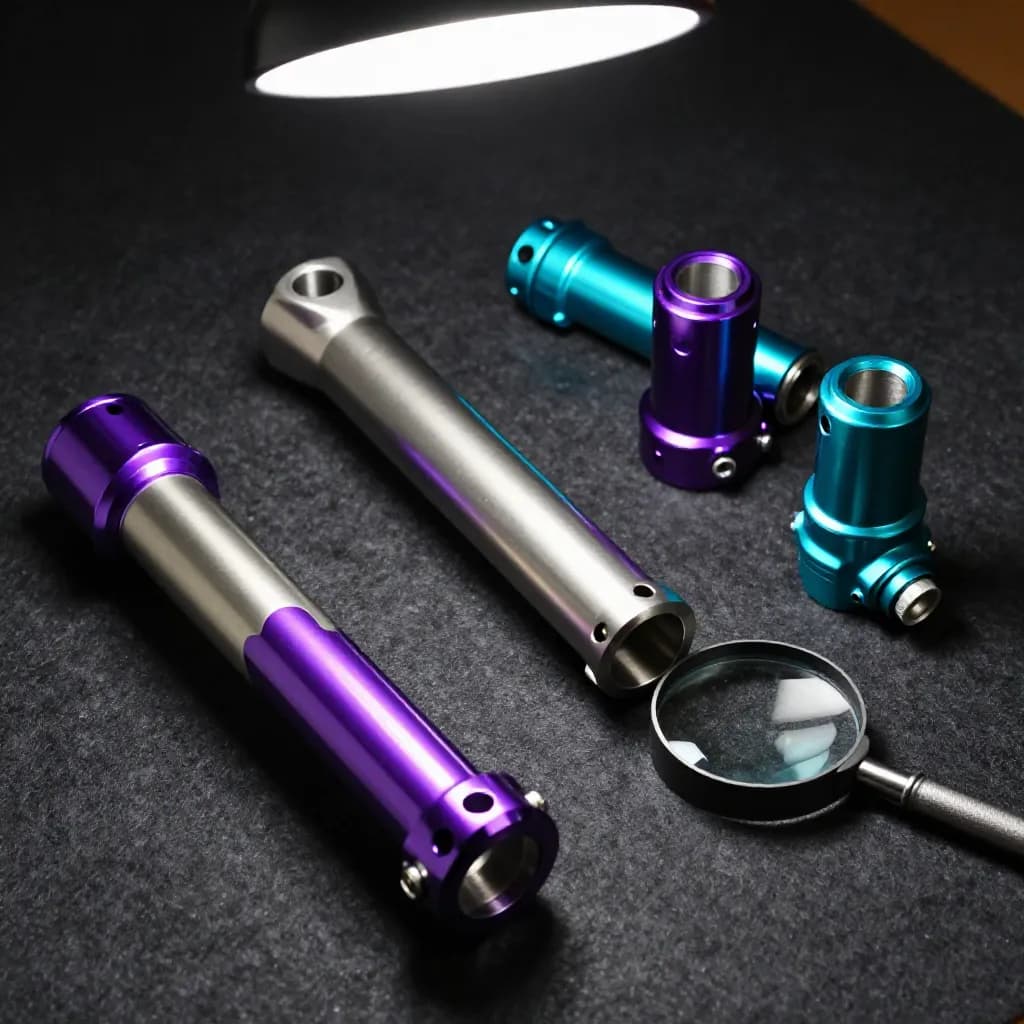
The electrostatic application process itself works on titanium because the metal is electrically conductive, allowing charged powder particles to be attracted to and deposited on the surface. Titanium also handles the curing temperatures of powder coating without any concern — its melting point exceeds 1,600 degrees Celsius, so oven temperatures of 180 to 200 degrees Celsius are trivial. The challenge is entirely about achieving reliable, long-term adhesion between the powder coating and the titanium surface.
Ready to Start Your Project?
From one-off customs to 15,000-part production runs — get precise pricing in 24 hours.
On This Page
Yes, Titanium Can Be Powder Coated — But It Is Challenging
Despite the challenges, powder coating titanium is done successfully in various industries. Aerospace components, medical device housings, sporting goods, automotive aftermarket parts, and custom motorcycle components are all examples of titanium items that have been powder coated. The key is understanding that titanium requires a more specialized preparation process than common metals like steel or aluminum, and working with a coater who has experience with this demanding substrate.
Understanding Titanium's Oxide Layer
Titanium's oxide layer is fundamentally different from the oxide layers found on other metals, and this difference is central to the powder coating challenge. When titanium is exposed to air, it instantly forms a thin but extremely dense and chemically stable layer of titanium dioxide on its surface. This oxide layer is only a few nanometers thick, but it is remarkably hard, chemically inert, and strongly bonded to the underlying metal. It is this oxide layer that makes titanium so resistant to corrosion — and so difficult to coat.
Unlike iron oxide (rust), which is porous and loosely adherent, titanium dioxide is a continuous, non-porous barrier that does not provide the mechanical anchor points that coatings need for adhesion. Standard abrasive blasting can roughen the surface to some degree, but the oxide reforms almost immediately on the freshly exposed metal, recreating the adhesion barrier within seconds. This rapid re-oxidation means that conventional preparation methods used for steel or aluminum are insufficient for titanium.
The stability of titanium's oxide layer also means that standard conversion coatings — such as iron phosphate, zinc phosphate, or chromate treatments — do not react with titanium in the same way they react with steel or aluminum. These treatments rely on a chemical reaction with the metal surface to form a conversion layer, but titanium's oxide resists this reaction. Specialized pretreatment chemistries designed specifically for titanium are required to achieve the surface condition needed for reliable coating adhesion.
Preparation Methods for Titanium
Successful powder coating of titanium requires a preparation process specifically designed to address the oxide layer challenge. The most effective approach combines mechanical surface roughening with chemical activation to create a surface that the powder coating can bond to reliably. Several methods have proven effective, and the best choice depends on the specific part geometry, the required coating performance, and the available equipment.
Grit blasting with aluminum oxide media at moderate pressure is the most common mechanical preparation method. This creates a roughened surface profile that provides mechanical anchor points for the coating. However, because the oxide reforms immediately after blasting, the blasted surface must be chemically treated before coating. Alkaline etching solutions or proprietary titanium surface activators can modify the oxide layer to improve its receptivity to coatings.
Anodizing is another effective preparation method for titanium. Unlike aluminum anodizing, which creates a thick porous oxide layer, titanium anodizing produces a controlled oxide layer with specific properties that can enhance coating adhesion. The anodized surface provides both a chemical bond site and a micro-roughened texture that improves mechanical adhesion. Some aerospace and medical device manufacturers use anodizing as a standard pretreatment step before applying powder or liquid coatings to titanium components. Regardless of the method chosen, the time between surface preparation and powder application must be minimized to prevent the untreated oxide from reforming.
Best Powder Coating Types for Titanium
When powder coating titanium, the choice of powder chemistry can significantly affect adhesion performance and long-term durability. Epoxy powder coatings generally provide the best adhesion to titanium surfaces because of their strong chemical bonding characteristics. The epoxide groups in the resin can form bonds with the treated titanium surface that are more resistant to delamination than those formed by polyester or hybrid powders. For applications where UV resistance is not critical — such as internal components, under-body parts, or items used indoors — epoxy is often the first choice.
For applications requiring UV resistance and outdoor durability, polyester powders can be used on titanium, but adhesion testing should be performed to verify that the specific powder and preparation combination delivers acceptable results. Using an epoxy primer coat followed by a polyester topcoat is a common strategy that combines the superior adhesion of epoxy at the metal interface with the weathering resistance of polyester on the exposed surface.
High-temperature powder coatings are worth considering for titanium parts used in aerospace, motorsport, or industrial applications where elevated operating temperatures are expected. Silicone-modified polyester and fluoropolymer-based powders can withstand higher continuous service temperatures than standard formulations. Given that titanium is often chosen specifically for high-temperature applications, matching the coating's thermal capability to the operating environment is an important specification consideration.
Common Applications for Powder-Coated Titanium
Aerospace is one of the primary industries where powder-coated titanium is encountered. Aircraft components, engine housings, structural brackets, and landing gear parts made from titanium are sometimes powder coated for corrosion protection in specific environments, identification marking, or to meet specific surface property requirements. The aerospace industry has developed rigorous specifications and processes for coating titanium, and these standards inform best practices for other industries as well.
The sporting goods and outdoor recreation industry is another significant market. Titanium bicycle frames, golf club heads, camping cookware, and knife handles are all items that consumers may want powder coated for personalization or additional protection. Titanium bicycle frames are a particularly popular application, as riders seek custom colors and finishes that distinguish their bikes while protecting the frame from scratches and minor impacts during riding and transport.
Automotive and motorcycle aftermarket parts represent a growing application area. Titanium exhaust components, fasteners, suspension parts, and decorative trim pieces are powder coated for both aesthetic and protective purposes. In the custom motorcycle community, titanium parts are valued for their light weight and strength, and powder coating allows builders to integrate these parts into cohesive color schemes. Medical device housings and industrial equipment components round out the application landscape, though these typically require specialized coating specifications and quality controls.
Alternatives to Powder Coating Titanium
Given the challenges of powder coating titanium, it is worth considering alternative finishing methods that may be more suitable depending on the application. Anodizing is the most common alternative finish for titanium and produces a range of vivid colors — including blues, purples, greens, and golds — by controlling the thickness of the oxide layer through voltage adjustment. Titanium anodizing does not use dyes; the colors are produced by light interference in the oxide layer, similar to the colors seen in a soap bubble.
Anodizing has the advantage of being an integral part of the titanium surface rather than an applied coating, so there is no risk of peeling or delamination. However, anodized titanium colors can fade with prolonged UV exposure and abrasion, and the color range is limited to the interference colors that the oxide layer can produce. Anodizing also does not provide the thick protective barrier that powder coating offers.
Cerakote and other thin-film ceramic coatings are increasingly popular alternatives for titanium, particularly in the firearms, automotive, and sporting goods industries. These coatings are applied in very thin films and cured at relatively low temperatures, and they offer excellent adhesion to titanium when properly applied. Physical vapor deposition (PVD) coatings provide another option, depositing thin metallic or ceramic films on the titanium surface through a vacuum process. PVD coatings are extremely hard and wear-resistant but are limited in color range and require specialized equipment.
Cost and Practical Considerations
Powder coating titanium typically involves higher costs than coating common metals like steel or aluminum, and understanding these cost factors helps set appropriate expectations. The specialized surface preparation required for titanium — including specific blasting media, chemical treatments, and potentially anodizing — adds time and material costs to the process. Many general-purpose powder coating shops may not stock the chemicals or have the experience needed for titanium, which can limit your options and increase lead times.
The value of the titanium parts themselves also affects the risk calculation. Titanium is an expensive material, and the consequences of a coating failure — whether it requires stripping and recoating or, in the worst case, damages the part — are more significant than with a steel or aluminum component. This is why working with an experienced coater and investing in proper preparation is particularly important for titanium. Cutting corners on preparation to save costs almost always results in higher total costs when the coating fails prematurely.
For one-off or small-batch projects, it may be worth requesting a test piece or sample coating before committing to the full production run. This allows both you and the coater to verify that the preparation process and powder selection produce acceptable adhesion and appearance before the actual parts are processed. Adhesion testing — using cross-hatch or pull-off methods — on the test piece provides objective evidence that the coating system will perform as expected.
Summary: Is Powder Coating Titanium Worth It?
Powder coating titanium is technically feasible and can produce excellent results, but it requires more specialized knowledge, preparation, and care than coating common metals. The decision to powder coat titanium should be based on a clear understanding of the benefits it provides for your specific application and whether those benefits justify the additional complexity and cost compared to alternative finishing methods.
Powder coating makes the most sense for titanium parts that need a specific color or finish that cannot be achieved through anodizing, that require a thick protective barrier against mechanical damage or chemical exposure, or that must match other powder-coated components in a larger assembly. For these applications, the durability and versatility of powder coating justify the investment in proper preparation and experienced application.
For applications where the primary goal is corrosion protection, titanium's natural oxide layer already provides outstanding resistance, and additional coating may not be necessary. For decorative color applications, anodizing may provide a simpler and more cost-effective solution. The best approach is to evaluate the specific requirements of your project — including environment, aesthetics, durability, and budget — and choose the finishing method that best meets those requirements. Consulting with both a powder coater experienced in titanium and a titanium anodizer can help you make an informed decision.
Frequently Asked Questions
Does titanium need to be powder coated for corrosion protection?
In most environments, no. Titanium's natural oxide layer provides exceptional corrosion resistance without any coating. Powder coating titanium is typically done for aesthetic purposes, color matching, mechanical protection against scratching, or to meet specific application requirements rather than for corrosion prevention.
Can any powder coating shop handle titanium?
Not all shops have the experience or chemicals needed for titanium. The specialized surface preparation requirements — including specific blasting media, chemical activators, and tight timing between preparation and coating — mean you should seek out a coater with documented experience in titanium or other challenging non-ferrous substrates.
Will powder coating a titanium bike frame add significant weight?
Powder coating adds approximately 50 to 100 grams to a typical bicycle frame, depending on the frame size and coating thickness. While this is more than the weight added by anodizing, it is a small fraction of the total frame weight and is generally not a concern for most riders outside of competitive weight-sensitive applications.
Can you powder coat titanium exhaust parts?
Standard powder coatings are rated for continuous temperatures up to about 200 degrees Celsius, which may not be sufficient for exhaust components that can reach much higher temperatures. High-temperature powder coatings or ceramic-based coatings rated for 500 degrees Celsius or more are better suited for titanium exhaust applications.
How does powder coating titanium compare to Cerakote?
Cerakote is a thin-film ceramic coating that generally adheres more easily to titanium than standard powder coatings and cures at lower temperatures. However, powder coating provides a thicker protective film and is available in a wider range of colors and textures. Cerakote is often preferred for firearms and precision parts, while powder coating is better for larger components needing robust protection.
Ready to Start Your Project?
From one-off customs to 15,000-part production runs — get precise pricing in 24 hours.