AAMA 2605 — Voluntary Specification, Performance Requirements and Test Procedures for Superior Performing Organic Coatings on Aluminum Extrusions and Panels — represents the highest performance tier in the American Architectural Manufacturers Association's three-level coating specification system. Alongside AAMA 2603 (basic performance) and AAMA 2604 (high performance), AAMA 2605 defines the testing protocols and acceptance criteria that coatings must meet to be classified as superior performing for architectural applications.
Technical
AAMA 2605 Specification Explained: 10-Year Florida Exposure and High-Performance Coatings
Sundial Powder Coating·April 22, 2026·14 min
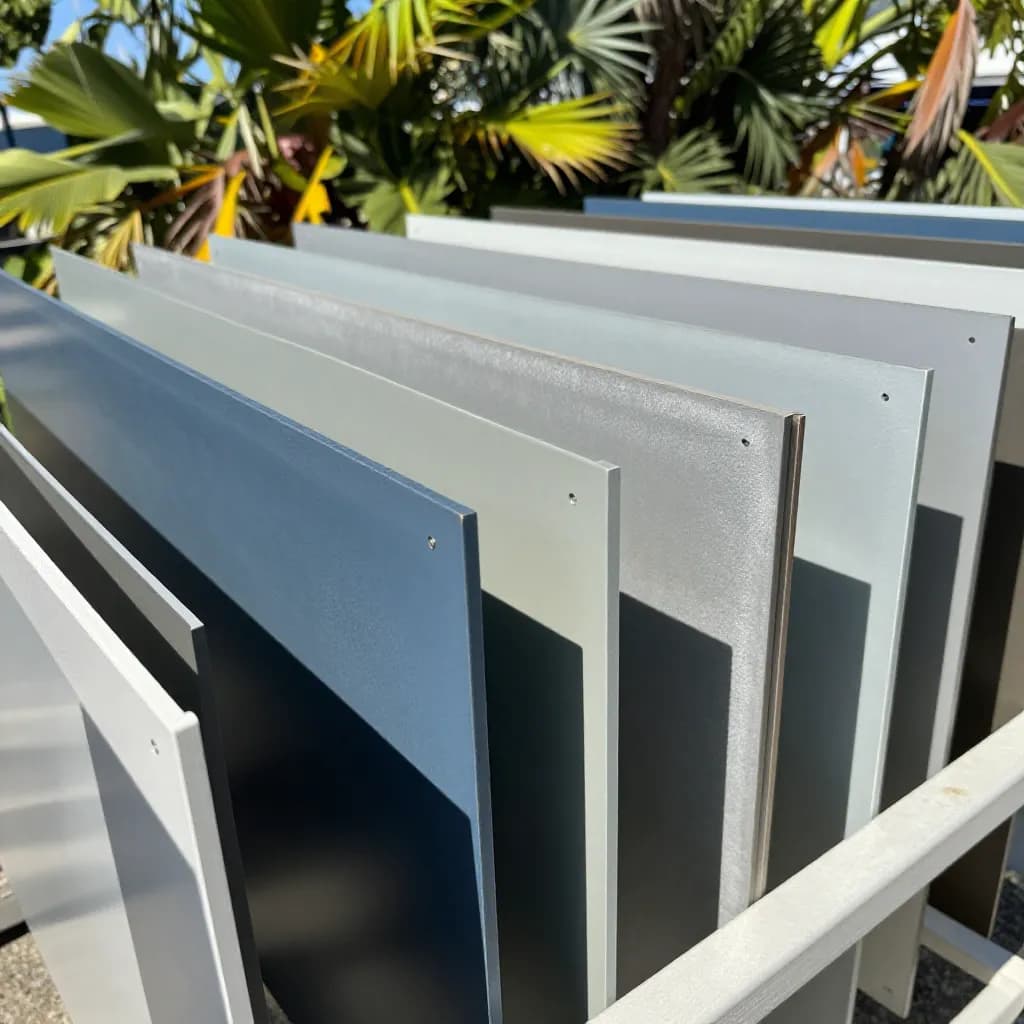
The defining feature of AAMA 2605 is its requirement for 10 years of natural weathering exposure in South Florida — the most demanding real-world weathering validation in any architectural coating specification worldwide. South Florida's combination of intense UV radiation, high humidity, salt air, frequent rain, and elevated temperatures creates an accelerated natural weathering environment that challenges coatings more aggressively than virtually any other location on Earth. Coatings that survive 10 years of South Florida exposure with acceptable color, gloss, and film integrity have demonstrated durability that translates to 20-30+ years of service life in most other climates.
Ready to Start Your Project?
From one-off customs to 15,000-part production runs — get precise pricing in 24 hours.
On This Page
AAMA 2605: The Gold Standard for North American Architectural Coatings
AAMA 2605 is specified for the most demanding architectural applications: high-rise curtain walls, monumental facades, transportation infrastructure, and landmark buildings where coating longevity and appearance retention are paramount. The specification is referenced in architectural project specifications across North America and increasingly in international projects where North American performance standards are applied.
Unlike Qualicoat and GSB, which certify both the coating product and the coating applicator's facilities and processes, AAMA specifications focus on the performance of the finished coating. AAMA does not audit or certify coating applicators — it defines what the coating must achieve, not how it must be produced. This performance-based approach provides flexibility for coating manufacturers and applicators while setting clear, measurable performance benchmarks.
The Three-Tier AAMA Specification System
Understanding AAMA 2605 requires context within the broader AAMA specification hierarchy. The three specifications — 2603, 2604, and 2605 — define progressively more demanding performance requirements that correspond to different application environments and service life expectations.
AAMA 2603 (Voluntary Specification for Pigmented Organic Coatings on Aluminum Extrusions and Panels) is the basic performance tier. It requires 1 year of South Florida exposure with color change (Delta E) not exceeding 5 units, chalk rating not less than 8, and no evidence of erosion, checking, cracking, peeling, or blistering. AAMA 2603 is appropriate for interior applications and exterior applications in mild environments where moderate coating longevity is acceptable.
AAMA 2604 (Voluntary Specification for High Performance Organic Coatings on Aluminum Extrusions and Panels) is the intermediate tier. It requires 5 years of South Florida exposure with the same performance criteria as AAMA 2603. AAMA 2604 is the standard specification for most exterior architectural applications in moderate climates and corresponds approximately to Qualicoat Class 2 in performance level.
AAMA 2605 doubles the exposure requirement of AAMA 2604, demanding 10 years of South Florida exposure with color change not exceeding 5 Delta E units, chalk rating not less than 8, gloss retention of at least 50% of original, and no erosion, checking, cracking, peeling, or blistering. This 10-year requirement effectively mandates fluoropolymer chemistry (FEVE or 70/30 PVDF) or the most advanced superdurable polyester formulations, as standard polyester coatings cannot reliably meet these criteria.
The AAMA system also includes AAMA 2604-22 and AAMA 2605-22 (the current editions as of this writing), which incorporate updated test methods, clarified performance criteria, and additional requirements for specific coating types. Specifiers should reference the current edition to ensure they are applying the most up-to-date requirements.
Performance Requirements and Acceptance Criteria
AAMA 2605 specifies performance requirements across multiple property categories, each with defined test methods and acceptance criteria. These requirements apply to the coating as received (initial properties) and after various aging and exposure tests (retained properties).
Color and appearance requirements include initial color uniformity (visual assessment against an approved standard), specular gloss measurement at 60° (ASTM D523), and distinctness of image where applicable. The specification does not mandate specific gloss levels but requires that the measured gloss be consistent with the approved standard and that gloss retention after 10 years of Florida exposure be at least 50% of the initial value.
Film thickness requirements specify a minimum of 1.2 mils (30 microns) for liquid coatings. For powder coatings, the minimum is typically 2.0-3.0 mils (50-75 microns) depending on the coating system. Film thickness is measured per ASTM D7091 using calibrated magnetic or eddy current gauges.
Adhesion is tested using the cross-hatch tape pull method (ASTM D3359, Method B) with a minimum rating of 4B required. Dry adhesion is tested on as-received panels, and wet adhesion is tested after immersion in boiling water for 20 minutes followed by immediate tape pull. The boiling water adhesion test is particularly demanding and verifies that the coating-substrate bond is maintained under hydrothermal stress.
Hardness is measured by pencil hardness (ASTM D3363) with a minimum of F required, and by Knoop hardness (ASTM D1474) with minimum values specified for different coating types. The hardness requirements verify adequate cure and crosslink density.
Chemical resistance testing includes exposure to muriatic acid (10% HCl), mortar (wet cement), and household detergent, with no visible effect (color change, softening, blistering, or loss of adhesion) after the specified exposure periods. These tests simulate real-world chemical exposures that architectural coatings may encounter during construction and in service.
Humidity resistance is tested per ASTM D2247 (3,000 hours at 100% RH, 38°C) with no blistering greater than size 8 (ASTM D714) and adhesion retention of at least 4B after exposure.
South Florida Exposure Testing Protocol
The South Florida natural weathering exposure that defines AAMA 2605 is conducted at certified outdoor exposure testing facilities in the Miami-Dade County area of South Florida. This location was selected because it provides one of the most aggressive natural weathering environments in the continental United States, combining high UV radiation intensity (annual UV dose approximately 280 MJ/m²), high humidity (annual average 75% RH), frequent rainfall (annual average 1,500 mm), salt air influence from the Atlantic Ocean and Gulf of Mexico, and elevated temperatures (annual average 24°C).
Test panels are mounted on outdoor exposure racks at a 45° angle facing south, following ASTM G7 procedures. This orientation maximizes UV exposure while allowing natural rain washing of the panel surfaces. Panels are exposed continuously for the required duration — 10 years for AAMA 2605 — with periodic inspections and measurements at defined intervals (typically annually or semi-annually).
At each inspection interval, the exposed panels are evaluated for color change (Delta E per ASTM D2244, using CIE Lab* color space), gloss retention (60° specular gloss per ASTM D523), chalk rating (ASTM D4214, tape method), and visual assessment for erosion, checking, cracking, peeling, blistering, and other film defects. The results at each interval are recorded and compared against the acceptance criteria.
The 10-year exposure requirement creates a significant practical challenge for coating manufacturers: new coating formulations cannot be qualified to AAMA 2605 until they have completed 10 years of Florida exposure. This means that the coatings being specified today for AAMA 2605 compliance were formulated and placed on exposure a decade ago. Manufacturers maintain ongoing exposure programs with multiple formulations at various stages of the 10-year cycle to ensure a pipeline of qualified products.
Accelerated weathering tests (xenon arc per ASTM G155 or fluorescent UV per ASTM G154) are used for screening and development purposes but are not accepted as substitutes for natural Florida exposure under AAMA 2605. The specification explicitly requires natural weathering data, reflecting the industry consensus that accelerated tests, while useful for comparative evaluation, do not perfectly replicate the complex degradation mechanisms of natural outdoor exposure.
Specification vs Certification: Understanding the AAMA Framework
A critical distinction in the AAMA system is the difference between specification compliance and certification. AAMA 2605 is a voluntary specification — it defines performance requirements and test methods but does not itself certify products or applicators. Compliance with AAMA 2605 is typically verified through testing by the coating manufacturer or an independent testing laboratory, with the results documented in test reports that can be provided to specifiers upon request.
AAMA does not maintain a list of certified or approved coatings in the same way that Qualicoat maintains its approved products register. Instead, coating manufacturers self-declare compliance with AAMA 2605 based on their testing data, and specifiers rely on the manufacturer's test reports and reputation to verify compliance. This self-declaration model places the burden of verification on the specifier, who must evaluate the manufacturer's test data and assess its credibility.
Some coating manufacturers participate in third-party verification programs that provide additional assurance of AAMA compliance. These programs involve independent testing of the manufacturer's products by accredited laboratories, with the results reviewed and certified by the program administrator. While not required by the AAMA specification, third-party verification provides specifiers with greater confidence in compliance claims.
The AAMA specification system also differs from Qualicoat in its treatment of the coating applicator. AAMA does not audit or certify the facilities, equipment, or quality systems of the company that applies the coating to the aluminum substrate. This means that an AAMA 2605-compliant coating material could theoretically be applied by an applicator with inadequate equipment or quality controls, potentially compromising the performance of the finished product. Specifiers who want both coating performance assurance and applicator quality assurance may combine AAMA 2605 with a separate applicator qualification requirement.
For projects requiring the most comprehensive quality assurance, specifiers may reference both AAMA 2605 (for coating performance) and a process-based standard such as Qualicoat or AAMA's own Quality Certification Program for coating applicators. This dual approach provides both performance validation and process assurance.
Coating Chemistries That Meet AAMA 2605
The demanding 10-year Florida exposure requirement of AAMA 2605 effectively limits the field of qualifying coating chemistries to fluoropolymers and the most advanced superdurable polyester formulations.
70/30 PVDF/acrylic liquid coatings (Kynar-based systems) have been the traditional chemistry for AAMA 2605 compliance, with decades of proven Florida exposure data demonstrating reliable 10-year performance. These solvent-based coatings contain 70% polyvinylidene fluoride resin and 30% acrylic resin, applied in a multi-coat system (primer plus topcoat) at a total film thickness of 30-40 microns. The PVDF component provides exceptional UV resistance and weathering durability, while the acrylic component provides adhesion and film-forming properties.
FEVE fluoropolymer powder coatings have emerged as a powder-format alternative to liquid PVDF for AAMA 2605 compliance. Based on fluoroethylene vinyl ether resins (Lumiflon technology), these powder coatings provide fluoropolymer-level weathering performance in a zero-VOC application format. FEVE powder coatings have accumulated sufficient Florida exposure data to demonstrate AAMA 2605 compliance, and they are increasingly specified for projects that require both superior weathering performance and environmental sustainability.
Superdurable polyester powder coatings represent the most recent chemistry to achieve AAMA 2605 compliance. These formulations use specially engineered polyester resins with enhanced UV stability, combined with high-performance pigments and optimized UV stabilizer packages. While not all superdurable polyester products meet AAMA 2605, selected formulations from leading manufacturers have demonstrated 10-year Florida performance within the specification limits. The availability of AAMA 2605-compliant polyester powder coatings provides specifiers with a non-fluoropolymer option that may be preferred for cost or regulatory reasons.
The choice between these chemistries for AAMA 2605 applications depends on the specific project requirements, including environmental sustainability goals (favoring powder over liquid), performance margin (fluoropolymers typically exceed the minimum requirements by wider margins), color availability, and the applicator's equipment and capabilities.
Specifying AAMA 2605: Practical Guidance for Architects
Effective specification of AAMA 2605 coatings requires attention to several practical considerations beyond simply referencing the specification number in the project documents.
The specification reference should include the current edition year (e.g., AAMA 2605-22) to ensure that the most up-to-date requirements are applied. Older editions may have different test methods or acceptance criteria, and referencing a specific edition eliminates ambiguity.
Color selection for AAMA 2605 projects should consider the weathering behavior of different pigment types. Dark colors and bright organic pigment colors may show more visible color change over 10 years than light colors and inorganic pigment colors, even if both remain within the Delta E 5 specification limit. Specifiers should request color-specific Florida exposure data from the coating manufacturer to understand the expected weathering trajectory for their selected colors.
Submittal requirements should specify that the coating manufacturer provide Florida exposure test data for the specific coating product and color family being proposed. Generic compliance statements without supporting test data should not be accepted. The test data should include the exposure duration completed, the test facility location, the panel orientation, and the measured color change, gloss retention, and chalk rating at each inspection interval.
Mockup and pre-production testing requirements should be included in the specification to verify that the coating applicator can achieve the required film thickness, adhesion, and appearance quality on the actual project substrates and profiles. A pre-production mockup panel, coated using the production equipment and processes, should be submitted for approval before full production begins.
Warranty requirements for AAMA 2605 coatings typically specify 10-20 year finish warranties covering color change, chalking, cracking, peeling, and blistering. The warranty terms should define the acceptable limits for each degradation mode, the measurement methods for verification, and the remediation obligations of the coating manufacturer and applicator. Warranty requirements should be coordinated with the coating manufacturer during the specification phase to ensure that the proposed warranty terms are achievable and insurable.
Frequently Asked Questions
What makes AAMA 2605 different from AAMA 2604?
AAMA 2605 requires 10 years of South Florida natural weathering exposure, compared to 5 years for AAMA 2604. Both have similar acceptance criteria (Delta E ≤ 5, chalk ≥ 8, gloss retention ≥ 50%), but the doubled exposure duration effectively mandates fluoropolymer or advanced superdurable polyester chemistry for AAMA 2605 compliance.
Can powder coatings meet AAMA 2605?
Yes. FEVE fluoropolymer powder coatings and selected superdurable polyester powder coatings have demonstrated AAMA 2605 compliance through 10 years of South Florida exposure. These powder coatings provide the same performance level as traditional liquid 70/30 PVDF coatings in a zero-VOC application format.
Why is South Florida used for weathering exposure?
South Florida provides one of the most aggressive natural weathering environments in the continental US, combining high UV radiation (280 MJ/m² annually), high humidity (75% average RH), frequent rainfall (1,500 mm annually), salt air, and elevated temperatures. This combination accelerates coating degradation, making 10 years of Florida exposure equivalent to 20-30+ years in most other climates.
Does AAMA certify coating applicators?
No. AAMA 2605 is a performance specification that defines what the coating must achieve, not how it must be produced. AAMA does not audit or certify coating applicators' facilities or quality systems. For applicator quality assurance, specifiers may combine AAMA 2605 with a process-based standard such as Qualicoat or a separate applicator qualification requirement.
How long does it take to qualify a new coating for AAMA 2605?
A minimum of 10 years, because the specification requires 10 years of actual South Florida natural weathering exposure. Accelerated weathering tests are not accepted as substitutes. Manufacturers maintain ongoing exposure programs with multiple formulations to ensure a pipeline of qualified products.
Ready to Start Your Project?
From one-off customs to 15,000-part production runs — get precise pricing in 24 hours.