The standard cure temperature for most powder coatings is 180 to 200 degrees Celsius (356 to 392 degrees Fahrenheit), measured at the metal surface of the part being coated. This temperature must be maintained for a specific duration — typically 10 to 20 minutes — to achieve complete cross-linking of the coating film. Both the temperature and the time at temperature are critical; achieving the correct temperature for an insufficient time, or maintaining a lower temperature for a longer time, may not produce a fully cured coating.
Consumer
What Temperature Does Powder Coating Cure? Complete Cure Schedule Guide
Sundial Powder Coating·April 22, 2026·12 min
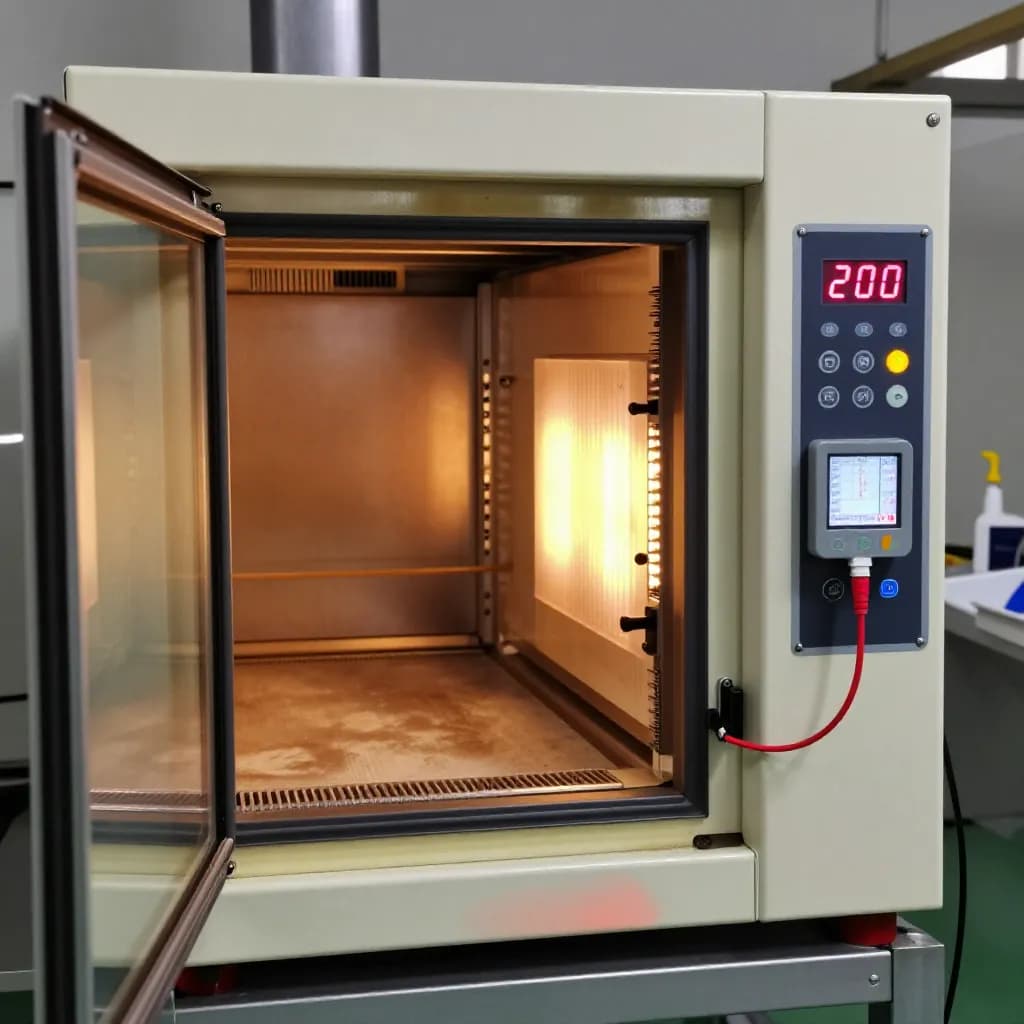
The cure temperature specified by powder manufacturers refers to the metal temperature of the part, not the air temperature of the oven. This distinction is crucial because the metal temperature lags behind the oven air temperature, particularly for heavy or thick-walled parts that take longer to heat through. A part may be in an oven set to 200 degrees Celsius for 20 minutes, but if the metal temperature only reaches 170 degrees during that time, the coating is not properly cured.
Ready to Start Your Project?
From one-off customs to 15,000-part production runs — get precise pricing in 24 hours.
On This Page
Standard Powder Coating Cures at 180-200°C Metal Temperature
Different powder coating chemistries have different cure requirements. Standard polyester and hybrid coatings typically cure at 180 to 200 degrees Celsius for 10 to 15 minutes at metal temperature. Epoxy coatings may cure at slightly lower temperatures of 150 to 180 degrees Celsius. Some specialty formulations require higher temperatures up to 220 degrees Celsius.
Understanding cure temperature requirements is essential for anyone involved in powder coating, from professional applicators managing production ovens to hobbyists using home ovens. Proper curing ensures that the coating achieves its full performance potential for hardness, adhesion, chemical resistance, and durability.
Metal Temperature vs Air Temperature: A Critical Distinction
The difference between metal temperature and oven air temperature is one of the most important concepts in powder coating curing, and misunderstanding it is one of the most common causes of under-cured coatings. The oven thermostat controls the air temperature inside the oven, but it is the metal temperature of the part that determines whether the coating cures properly.
When a room-temperature part enters a hot oven, the air temperature immediately begins transferring heat to the part. However, the metal temperature rises gradually as heat conducts from the surface into the interior of the part. The rate of temperature rise depends on the part's mass, thickness, thermal conductivity, and surface area. A thin sheet metal bracket may reach oven temperature in 3 to 5 minutes, while a heavy cast iron component may take 20 to 30 minutes or more.
The cure clock starts only when the metal temperature reaches the specified cure temperature, not when the part enters the oven. If the powder manufacturer specifies 200 degrees Celsius for 10 minutes, the part must be at 200 degrees metal temperature for a full 10 minutes. The time spent heating up to 200 degrees does not count toward the cure time, even though the coating is partially curing during this ramp-up period.
For production operations, oven temperature profiling using thermocouples attached directly to representative parts is the standard method for verifying that parts reach the required metal temperature for the required duration. Thermocouples are attached to the thickest section of the part — the last area to reach temperature — and connected to a data logger that records the temperature profile throughout the cure cycle.
The temperature profile reveals the actual metal temperature at every point during the cure cycle, including the ramp-up time, the time at cure temperature, and any temperature variations across the part. This data enables precise optimization of oven settings, conveyor speed, and load density to ensure consistent cure quality.
Low-Temperature Cure Options
Low-temperature cure powder coatings have been developed to address applications where standard cure temperatures are problematic. These formulations achieve full cross-linking at metal temperatures of 120 to 150 degrees Celsius (248 to 302 degrees Fahrenheit), significantly below the 180 to 200 degrees required by standard products.
The primary motivation for low-temperature cure is energy savings. Reducing the cure temperature by 40 to 60 degrees Celsius reduces oven energy consumption by approximately 20 to 30 percent, a significant cost saving for high-volume coating operations. The lower oven temperature also reduces heat loss to the factory environment, improving worker comfort and reducing cooling costs in warm climates.
Low-temperature cure also enables powder coating of heat-sensitive substrates and assemblies. Components containing plastic parts, rubber seals, electronic modules, or adhesive bonds that would be damaged at 200 degrees Celsius can potentially be powder coated using low-temperature formulations. This expands the range of products that can benefit from powder coating's durability and environmental advantages.
Pre-assembled products that cannot be disassembled for coating benefit from low-temperature cure when the assembly contains components with limited heat tolerance. Automotive sub-assemblies, electronic enclosures with installed components, and multi-material products are examples where low-temperature cure enables powder coating that would otherwise be impossible.
The performance of low-temperature cure powder coatings has improved significantly in recent years. Modern formulations achieve mechanical properties, chemical resistance, and weathering performance comparable to standard-cure products, though some trade-offs in specific properties may exist depending on the formulation. Specifiers should evaluate the complete property profile of low-temperature products against their application requirements.
UV-curable powder coatings represent the extreme end of low-temperature cure technology. These formulations melt and flow at temperatures as low as 100 to 120 degrees Celsius, then are cured by ultraviolet light exposure rather than thermal cross-linking. UV cure enables powder coating of MDF, wood, and plastics that cannot withstand even low-temperature thermal cure.
The Cure Window: Time and Temperature Combinations
Powder coating cure is not a single fixed point of temperature and time but a window of acceptable combinations. Within this window, higher temperatures require shorter times and lower temperatures require longer times to achieve equivalent cure. Understanding the cure window enables flexibility in production scheduling and helps troubleshoot cure quality issues.
Powder manufacturers publish cure schedules that define the recommended cure window for each product. A typical cure schedule might specify: 200 degrees Celsius for 10 minutes, 190 degrees for 15 minutes, or 180 degrees for 20 minutes at metal temperature. All three combinations produce equivalent cure quality because the total thermal energy delivered to the coating is similar.
The cure window has limits in both directions. Below the minimum cure temperature — typically 10 to 20 degrees below the standard cure temperature — the cross-linking reaction proceeds too slowly to achieve full cure within practical time frames. Above the maximum cure temperature — typically 20 to 30 degrees above standard — the coating may over-cure, degrade, or develop appearance defects.
The concept of equivalent cure can be quantified using the Arrhenius equation, which describes the relationship between reaction rate and temperature. Some powder manufacturers provide cure equivalency charts or calculators that allow applicators to determine the required cure time for any temperature within the cure window. This is particularly useful when oven temperature varies across the load or when parts of different mass are cured together.
For quality control purposes, the cure window defines the acceptable range of temperature profiles. Parts with temperature profiles that fall within the cure window are considered properly cured. Parts with profiles that fall outside the window — either below the minimum temperature-time combination or above the maximum — are suspect and should be evaluated for cure quality using methods such as solvent rub testing or differential scanning calorimetry.
It is important to note that the cure window applies to metal temperature, not oven air temperature. An oven set to 200 degrees Celsius may produce metal temperatures ranging from 180 to 210 degrees depending on part mass, position in the oven, and load density. Temperature profiling ensures that all parts fall within the acceptable cure window.
Home Oven Powder Coating: Limitations and Tips
Home powder coating using domestic kitchen ovens or dedicated workshop ovens has become increasingly popular among hobbyists, custom fabricators, and small businesses. While home oven curing can produce excellent results, understanding the limitations and following best practices is essential for success.
Domestic kitchen ovens can reach the temperatures required for powder coating cure — most standard ovens achieve 250 degrees Celsius or higher, well above the 180 to 200 degrees needed for standard powder coatings. However, kitchen ovens have several limitations that affect cure quality.
Temperature accuracy is a common issue. Many domestic ovens have temperature variations of 10 to 20 degrees Celsius from the set point, and the actual temperature may differ significantly from the dial setting. Using an independent oven thermometer — preferably a thermocouple-based unit — to verify the actual oven temperature is essential. Place the thermometer near the parts being cured, not at the oven's built-in sensor location.
Temperature uniformity within the oven can vary significantly, with hot spots near heating elements and cool spots near the door or in corners. Rotating parts during the cure cycle or positioning them in the center of the oven helps ensure uniform heating. Avoid overloading the oven, as crowded parts block airflow and create temperature shadows.
Oven size limits the parts that can be cured at home. Standard kitchen ovens accommodate parts up to approximately 50 by 40 by 30 centimeters, which covers many hobby and small-part applications but excludes larger items. Dedicated workshop ovens, including converted commercial ovens and purpose-built powder coating ovens, offer larger capacity for serious hobbyists.
Ventilation is important during home oven curing. The mild fumes produced during powder coating cure should be vented outside rather than allowed to accumulate in the living space. Open windows, use exhaust fans, and ideally locate the curing oven in a garage or workshop with adequate ventilation.
Food safety is a critical consideration. Once an oven has been used for powder coating, it should not be used for food preparation. The residues from powder coating cure, while minimal, may contaminate food. Dedicate a separate oven for powder coating use.
Verifying Proper Cure: Testing Methods
Verifying that powder coating has achieved proper cure is essential for ensuring that the coating delivers its full performance potential. Several testing methods are available, ranging from simple field tests to sophisticated laboratory analysis.
The solvent rub test (MEK rub test) is the most widely used field method for cure verification. A cloth or cotton swab soaked in methyl ethyl ketone is rubbed back and forth across the coating surface with firm, consistent pressure. The number of double rubs before the coating shows softening, color transfer, or breakthrough is counted. Fully cured coatings typically withstand 30 to 100 or more MEK double rubs depending on the resin type, while under-cured coatings show effects at lower rub counts.
The solvent rub test is quick, inexpensive, and can be performed on production parts. However, it is somewhat subjective and destructive — the test area is damaged and must be touched up. Establishing clear pass-fail criteria and training inspectors on consistent technique improves the reliability of this test.
Differential scanning calorimetry provides the most precise and objective measurement of cure completion. DSC measures the heat flow into a small sample of the coating as it is heated at a controlled rate. An under-cured coating shows a residual exothermic peak corresponding to the uncompleted cross-linking reaction. A fully cured coating shows no residual exotherm. The ratio of residual to total reaction enthalpy quantifies the degree of cure as a percentage.
DSC requires laboratory equipment and trained operators, making it impractical for routine production testing. It is typically used for process development, troubleshooting, and periodic verification of cure quality rather than for testing every production batch.
Hardness testing using pencil hardness (ASTM D3363) or Buchholz indentation (ISO 2815) provides an indirect indication of cure quality. Under-cured coatings are typically softer than fully cured coatings of the same formulation. However, hardness alone is not a definitive cure indicator because it is also affected by formulation variables and coating thickness.
For home powder coaters without access to laboratory testing, the combination of accurate temperature measurement during curing and a simple solvent rub test provides reasonable assurance of proper cure. Using an oven thermometer to verify temperature and performing a MEK rub test on a test piece cured alongside the production parts catches most cure problems.
Troubleshooting Cure Problems
Cure problems manifest as coatings that are softer, less chemically resistant, less durable, or less well-adhered than expected. Identifying and correcting cure problems requires systematic investigation of the curing process.
Under-cure is the most common cure problem and results in coatings that are softer than specified, show poor solvent resistance in MEK rub testing, and may have reduced adhesion and mechanical properties. The root causes of under-cure include oven temperature set too low, insufficient time at temperature, heavy parts that do not reach cure temperature within the scheduled oven time, and oven temperature variations that leave some parts below the cure window.
Corrective actions for under-cure include verifying oven temperature with independent thermocouples, increasing oven time or temperature to ensure all parts reach the cure window, reducing load density to improve heat transfer, and separating heavy and light parts into different cure cycles with appropriate schedules for each.
Over-cure results in coatings that are excessively hard and brittle, may show color shift or gloss change, and are prone to cracking under mechanical stress or thermal cycling. Over-cure occurs when parts exceed the upper limit of the cure window due to oven temperature set too high, excessive time in the oven, or thin parts that heat up much faster than the oven schedule assumes.
Corrective actions for over-cure include reducing oven temperature or time, separating thin and thick parts into different cure cycles, and installing oven temperature alarms that alert operators to temperature excursions above the maximum cure temperature.
Inconsistent cure across a batch — where some parts are properly cured while others are under-cured or over-cured — indicates temperature uniformity problems in the oven. Causes include blocked airflow from overloading, failed heating elements or fans, and poor oven insulation. Temperature profiling at multiple locations within the oven identifies the extent and pattern of temperature variation, guiding corrective maintenance.
For home powder coaters, the most common cure problems are inaccurate oven temperature (solved by using an independent thermometer), insufficient time at temperature (solved by timing from when the part reaches cure temperature, not from when it enters the oven), and temperature drops when the oven door is opened to check progress (solved by minimizing door openings and allowing recovery time).
Frequently Asked Questions
What temperature do you need to cure powder coating?
Standard powder coatings cure at 180-200°C (356-392°F) metal temperature for 10-20 minutes. Low-temperature formulations cure at 120-150°C, and UV-curable powders can cure at temperatures as low as 100-120°C. The temperature refers to the metal surface, not the oven air temperature.
Can you cure powder coating in a home oven?
Yes. Most home ovens reach 250°C, well above the 180-200°C needed for standard powder coating. Use an independent thermometer to verify temperature, ensure adequate ventilation, and never use the same oven for food after powder coating. Part size is limited by oven dimensions.
What happens if powder coating is under-cured?
Under-cured powder coating is softer, less chemically resistant, and less durable than properly cured coating. It may show poor adhesion, reduced impact resistance, and premature failure in service. Under-cure is detected through solvent rub testing or differential scanning calorimetry.
How do you know when powder coating is fully cured?
The most common verification method is the MEK solvent rub test — fully cured coatings withstand 30-100+ double rubs without softening. Temperature profiling during curing confirms that parts reached the required metal temperature for the required time. DSC testing provides the most precise cure measurement.
Does the cure time start when the part enters the oven?
No. The cure time starts when the metal temperature of the part reaches the specified cure temperature, not when it enters the oven. Heavy parts may take 10-30 minutes to reach cure temperature after entering the oven. Only the time at or above cure temperature counts toward the cure schedule.
Are there low-temperature powder coating options?
Yes. Low-temperature cure formulations cure at 120-150°C, saving 20-30% on energy costs and enabling coating of heat-sensitive assemblies. UV-curable powder coatings cure at even lower temperatures using ultraviolet light, enabling powder coating of wood, MDF, and some plastics.
Ready to Start Your Project?
From one-off customs to 15,000-part production runs — get precise pricing in 24 hours.