The fundamental difference between powder and liquid coatings is not incremental - it is categorical. While liquid coatings rely on volatile organic compounds to achieve application viscosity, powder coatings are formulated as 100% solids systems in which every component becomes part of the final cured film. This structural difference eliminates the VOC emission mechanism entirely.
powder-coating-benefits
How Powder Coating Achieves True Zero VOC Emissions
Sundial Research Team·January 21, 2025·6 min
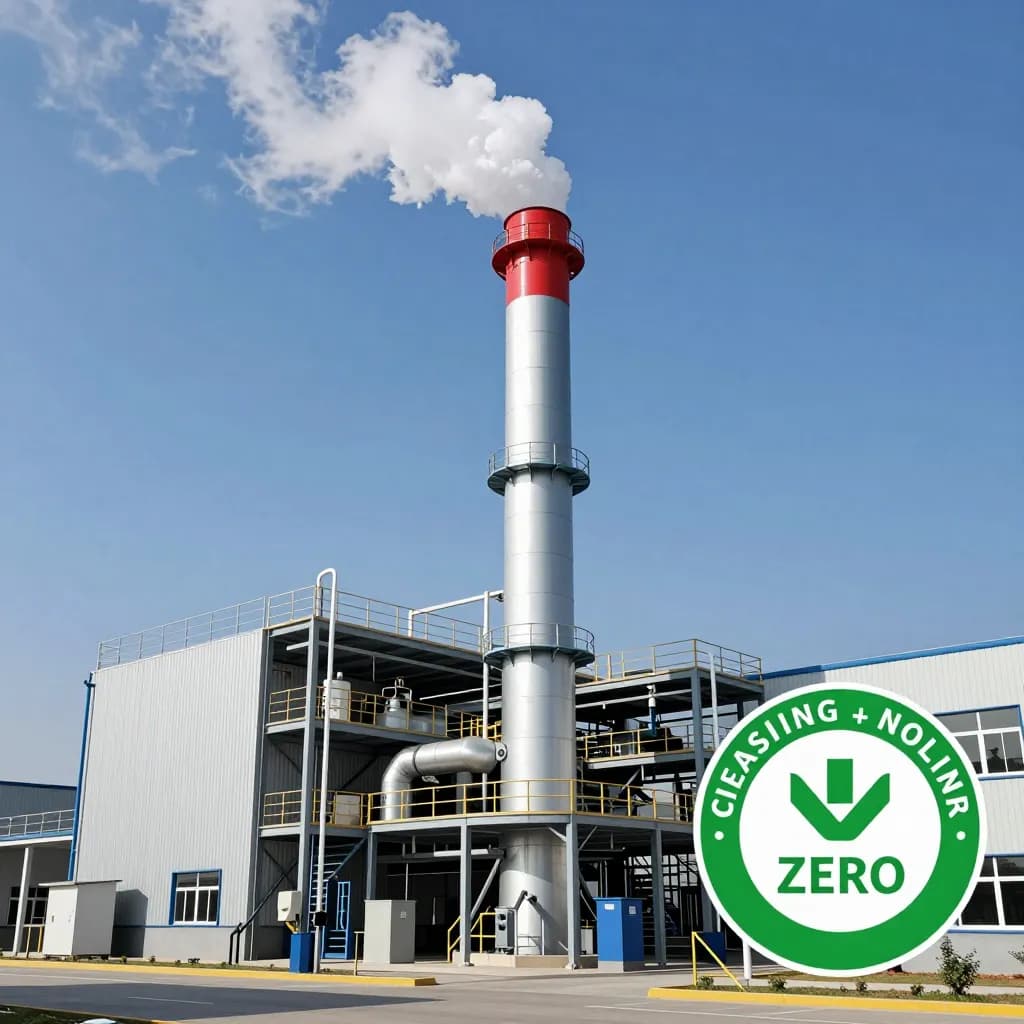
Conventional liquid coatings contain 30-70% solids by volume. The remaining 30-70% consists of solvents and volatile carriers that evaporate during application and curing. For solvent-borne architectural coatings, VOC content typically ranges from 300 to 700 grams per liter. Even water-based systems, marketed as low-emission alternatives, contain 50-150 g/L of VOCs from coalescing aids, glycol ethers, and functional additives.
Ready to Start Your Project?
From one-off customs to 15,000-part production runs — get precise pricing in 24 hours.
On This Page
How Powder Coating Achieves True Zero VOC Emissions
What 100% Solids Means
Powder coatings contain no liquid carriers whatsoever. The primary constituents are:
- Resin (epoxy, polyester, acrylic, or polyurethane chemistry)
- Curing agents (crosslinkers)
- Pigments and fillers
- Functional additives (flow agents, degassing agents)
All of these components are dry particulates that become incorporated into the cured coating film. There is nothing to evaporate.
The Electrostatic Application Process
Powder coating application employs electrostatic spray deposition: dry powder particles are fluidized, conveyed through a spray gun, and electrostatically charged for attraction to the grounded substrate.
This process achieves several advantages simultaneously:
- High transfer efficiency: 60-70% first-pass, with overall utilization of 95-98% when combined with overspray recovery and reclamation
- Wraparound coating: Charged particles follow field lines to coat complex geometries and back sides
- No drips, runs, or sags: Dry particles do not flow under gravity before curing
- Immediate recoating possible: No flash-off period required
Heat Curing: Chemical Crosslinking Without Byproducts
Following application, coated parts enter a curing oven where the powder melts, flows, and chemically crosslinks to form the final coating film. Common curing systems include:
- Epoxy-polyester hybrids - durable, general-purpose
- Pure polyesters with TGIC or HAA crosslinkers - excellent weatherability
- Polyurethane systems based on blocked isocyanate chemistry - premium finish
- Acrylic systems - high-performance applications
The crosslinking reaction forms a continuous polymer network. In properly formulated systems, no volatile byproducts are released during curing. The only emission from the process is the minimal combustion products from the curing oven - not coating-related VOCs.
EPA Documentation
The U.S. Environmental Protection Agency has documented that powder coating systems achieve effective zero VOC emissions. Any trace volatiles associated with the process are minor formulation impurities rather than intentional constituents. This emission elimination extends to:
- All regulated VOCs
- Exempt compounds (acetone, PCBTF, etc.)
- Hazardous Air Pollutants (HAPs)
California's Inherently Non-Emitting Classification
The California Department of Public Health (CDPH) emissions testing protocol evaluates 35 individual VOCs against Chronic Reference Exposure Levels. The CDPH identifies powder-coated metals as inherently non-emitting sources that are considered fully compliant without VOC emissions testing, provided they do not include integral organic-based surface coatings, binders, or sealants.
This regulatory classification reflects the fundamental absence of volatile components in properly cured powder coatings and provides direct incentive for specification preference in California's stringent regulatory environment.
Comparative Emission Data
| Parameter | Powder Coating | Liquid Coating (Solvent) | Liquid Coating (Water) |
|---|---|---|---|
| Annual VOC emissions (tons/facility) | 0.6 | 38 | 26 |
| Transfer efficiency | 95-98% | 30-40% | 40-50% |
| Material utilization | >95% | 30-50% | 40-55% |
| Hazardous waste | Minimal | Substantial | Moderate |
| Fire/explosion risk | Low | High | Moderate |
Indoor Air Quality Impact
For government buildings, the zero-VOC characteristic has immediate practical benefits:
- No post-installation off-gassing period - spaces can be occupied immediately after curing
- No ventilation requirements for emission clearance
- No air quality testing delays for occupancy certification
- No Sick Building Syndrome contributions from coating emissions
In sensitive environments - schools, healthcare facilities, senior centers - the elimination of coating-related VOC emissions represents a direct public health intervention.
Regulatory Certainty
Powder coating's zero-VOC formulation satisfies all current and anticipated VOC regulations without reformulation or compliance demonstration. For federal projects operating across multiple states with varying regulatory stringency, powder coating offers uniform compliance regardless of jurisdiction - eliminating the administrative burden of jurisdiction-specific product selection and compliance verification.
Ready to Start Your Project?
From one-off customs to 15,000-part production runs — get precise pricing in 24 hours.