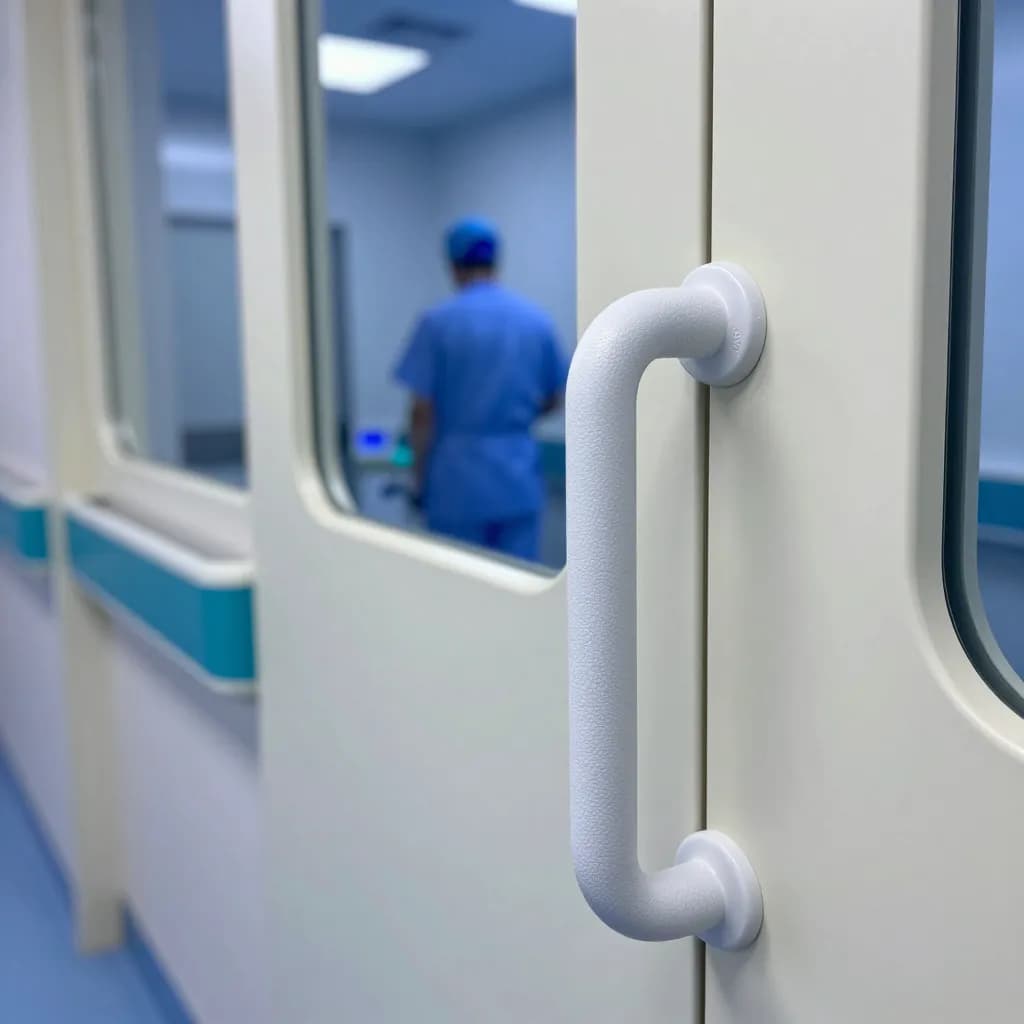
In an era of heightened awareness about surface transmission of pathogens, the coatings applied to high-touch surfaces in healthcare facilities, schools, public buildings, and transportation systems have taken on new significance. Antimicrobial powder coatings - which incorporate silver ions, copper, or other antimicrobial agents into the coating matrix - offer a passive, continuous infection control measure that works between cleanings. For government facilities where occupant health is paramount, antimicrobial powder coatings represent an advanced application of zero-emission technology that adds infection control to the existing benefits of durability, corrosion resistance, and chemical safety.
powder-coating-benefits
Antimicrobial Powder Coatings: Infection Control for Healthcare and Public Facilities
Sundial Research Team·February 19, 2025·5 min
| Antimicrobial Agent | Mechanism | Spectrum | Durability |
|---|---|---|---|
| Silver ions (Ag+) | Disrupts bacterial cell membranes, interferes with DNA replication | Broad (bacteria, some viruses, fungi) | Excellent |
| Copper (Cu2+) | Generates reactive oxygen species, disrupts cell membranes | Broad (bacteria, viruses, fungi) | Excellent |
| Zinc pyrithione | Inhibits fungal and bacterial metabolism | Bacteria, fungi, algae | Good |
| Quaternary ammonium compounds | Disrupts cell membranes | Bacteria, some viruses | Moderate |
| Triclosan | Inhibits fatty acid synthesis | Bacteria | Limited (regulatory concerns) |
Ready to Start Your Project?
From one-off customs to 15,000-part production runs — get precise pricing in 24 hours.
On This Page
Antimicrobial Powder Coatings: Infection Control for Healthcare and Public Facilities
How Antimicrobial Powder Coatings Work
Mechanisms of Action
Silver Ion Technology
The most common antimicrobial additive in powder coatings:
- Silver ions embedded in the coating matrix during manufacturing
- Controlled release at the surface over time
- Contact kill: Microorganisms landing on the surface are inactivated
- Continuous action: Works 24/7 between cleanings
- Long-lasting: Antimicrobial effect persists for the coating lifetime
Copper Additive Technology
Copper is increasingly used as an antimicrobial:
- EPA-registered: Copper alloys registered as antimicrobial materials
- Rapid kill: Copper surfaces kill bacteria within hours
- Broad spectrum: Effective against bacteria, viruses, fungi
- Durability: Copper ions release steadily from coating matrix
Efficacy Data
Bacterial Reduction
| Organism | Reduction on Antimicrobial Powder Coating | Test Method |
|---|---|---|
| Staphylococcus aureus | >99.9% | ISO 22196 / JIS Z 2801 |
| MRSA | >99.9% | ISO 22196 |
| E. coli | >99.9% | ISO 22196 |
| Pseudomonas aeruginosa | >99% | ISO 22196 |
| Klebsiella pneumoniae | >99% | ISO 22196 |
| Listeria monocytogenes | >99.9% | ISO 22196 |
Viral Reduction
| Virus | Reduction | Notes |
|---|---|---|
| Influenza A | >99% | Enveloped virus |
| SARS-CoV-2 | Significant reduction | Emerging data |
| Norovirus | Variable | Non-enveloped; more resistant |
| Adenovirus | Moderate | Non-enveloped |
Note: Viral data is less extensive than bacterial data; efficacy varies by virus type
Fungal Reduction
| Organism | Reduction | Application Relevance |
|---|---|---|
| Aspergillus niger | >99% | HVAC, moisture-prone areas |
| Candida albicans | >99% | Healthcare settings |
| Penicillium | >99% | General building interiors |
Applications in Government Facilities
Healthcare
| Surface | Infection Control Benefit | Durability Benefit |
|---|---|---|
| Bed frames and rails | Continuous bacterial suppression | Scratch resistance, chemical disinfection compatibility |
| IV poles and stands | Reduced hand-contact transmission | Corrosion resistance |
| Wheelchairs and walkers | Patient-to-patient transmission reduction | Abrasion resistance |
| Handrails | High-touch surface protection | Wear resistance |
| Door push plates | Entry/exit transmission reduction | Scratch resistance |
| HVAC grilles | Air handler biofilm prevention | Corrosion resistance |
| Medical equipment housings | Equipment surface decontamination | Chemical resistance |
Schools and Childcare
| Application | Benefit |
|---|---|
| Locker surfaces | Reduced bacterial transmission among students |
| Desk and table frames | Continuous antimicrobial action |
| Door hardware | High-touch surface protection |
| Playground equipment | Outdoor durability + antimicrobial |
| Cafeteria tables/chairs | Food contact area protection |
Public Buildings
| Application | Benefit |
|---|---|
| Elevator buttons and panels | High-touch surface protection |
| Handrails and grab bars | Accessibility feature + antimicrobial |
| Restroom fixtures | Moisture + antimicrobial protection |
| Public seating | High-traffic surface protection |
| Transit vehicle interiors | Passenger health protection |
Corrections Facilities
| Application | Benefit |
|---|---|
| Cell furniture | Reduced disease transmission in congregate settings |
| Communal area fixtures | High-density population protection |
| Kitchen equipment | Food safety + durability |
Performance Considerations
Durability of Antimicrobial Effect
| Factor | Impact on Longevity |
|---|---|
| Coating integrity | Antimicrobial effect persists as long as coating is intact |
| Wear and abrasion | High-wear areas may lose surface antimicrobial concentration |
| Cleaning chemicals | Most disinfectants compatible; some aggressive chemicals may affect release |
| UV exposure | Silver ions stable; some organic additives may degrade |
| Expected service life | 10-15+ years with proper application |
Testing and Standards
| Standard | Description | Relevance |
|---|---|---|
| ISO 22196 | Antibacterial activity on plastics | Primary test method |
| JIS Z 2801 | Antimicrobial products test | Japanese standard, widely used |
| ASTM E2180 | Antimicrobial activity in polymers | US standard |
| EPA registration | Required for antimicrobial claims | Regulatory compliance |
Regulatory Considerations
- EPA FIFRA: Antimicrobial claims require EPA registration
- FDA: Medical device coatings may require FDA clearance
- State regulations: Some states have additional requirements
- Claim limitations: Cannot claim prevention of disease without EPA approval
Integration with Cleaning Protocols
Antimicrobial Coating Is Not a Substitute for Cleaning
Important limitations:
- Does not remove dirt or organic matter: Physical cleaning still required
- Does not kill all pathogens instantly: Works over hours, not seconds
- Does not replace disinfection for outbreak control: Active disinfection still needed
- Surface must be intact: Damaged coating loses antimicrobial effect
Synergistic Effect
Antimicrobial coatings complement cleaning by:
- Extending protection between cleanings
- Reducing biofilm formation on surfaces
- Lowering bacterial load on high-touch surfaces
- Reducing cross-contamination from incompletely cleaned surfaces
The Health-Safety Synergy
Antimicrobial powder coatings combine multiple health benefits:
| Benefit Category | Mechanism |
|---|---|
| Eliminates solvent exposure | Zero-VOC powder formulation |
| Eliminates isocyanate exposure | No polyurethane hardeners |
| Reduces pathogen transmission | Antimicrobial surface properties |
| Supports infection control | Continuous antimicrobial action |
| Enables aggressive cleaning | Chemical resistance |
| Long service life | Durability reduces re-coating frequency |
Specification Considerations
When to Specify Antimicrobial Powder Coating
| Priority Level | Applications | Rationale |
|---|---|---|
| High | Healthcare patient contact surfaces | Infection control critical |
| High | Food service equipment | Food safety |
| Moderate | Public high-touch surfaces | Population health |
| Moderate | Schools and childcare | Children's health |
| Lower | General architectural metal | Cost-benefit consideration |
Specification Language
"Powder coating shall contain antimicrobial additives providing >=99% reduction of Staphylococcus aureus and E. coli per ISO 22196. Coating shall be EPA-registered for antimicrobial claims. Performance shall be maintained for the service life of the coating."
Conclusion
Antimicrobial powder coatings represent an evolution of powder coating technology that adds infection control to the existing benefits of zero-emission formulation, superior durability, and worker safety. For government facilities where infection prevention is critical - hospitals, schools, corrections, public buildings - antimicrobial powder coatings offer a passive, continuous intervention that works between cleanings to reduce pathogen transmission.
While antimicrobial coatings are not a substitute for proper cleaning and disinfection protocols, they provide an additional layer of protection that is particularly valuable in high-touch, high-traffic environments. Combined with the elimination of solvent and isocyanate hazards, antimicrobial powder coatings deliver a comprehensive health protection profile that addresses both chemical safety and infection control in a single specification choice.
For healthcare administrators, facility managers, and specification writers, antimicrobial powder coatings offer a rare convergence of technologies: zero-emission chemistry that protects workers from carcinogens and neurotoxicants, combined with surface properties that protect occupants from infectious pathogens. This dual protection is the future of health-focused coating specification.
Ready to Start Your Project?
From one-off customs to 15,000-part production runs — get precise pricing in 24 hours.