If you have ever watched a freshly painted wheel start chipping after a few months of daily driving, you already understand the problem powder coating solves. Powder coating creates a finish that is significantly harder and more durable than conventional wet paint. It bonds electrostatically to the metal and is cured in an oven at around 200°C, forming a dense, cross-linked film that resists chips, scratches, and peeling far better than spray paint or even professional automotive lacquer.
Consumer
Powder Coating Wheels and Rims: Colors, Cost, and What to Expect
Sundial Powder Coating·April 20, 2026·9 min
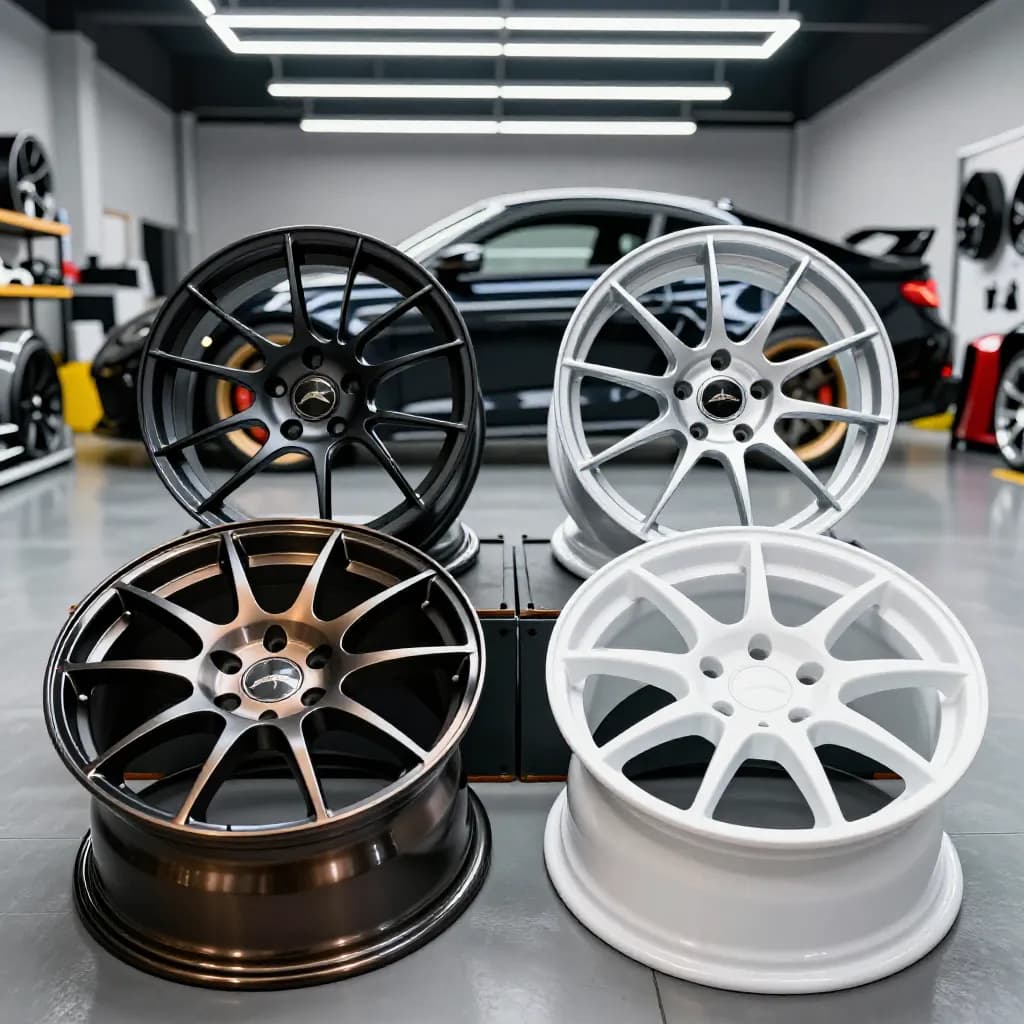
Wheels take a beating that most other car parts never experience. Brake dust, road salt, tar, curb rash, and harsh wheel cleaners all attack the finish constantly. Powder coating stands up to these challenges because the cured film is chemically resistant and mechanically tough. Brake dust that would etch through a thin paint layer wipes off a powder-coated wheel with a simple wash.
Ready to Start Your Project?
From one-off customs to 15,000-part production runs — get precise pricing in 24 hours.
On This Page
Why Powder Coat Your Wheels?
Beyond protection, powder coating gives your wheels a factory-quality finish with a depth and consistency that rattle-can paint simply cannot match. Whether you want a subtle OEM-style refresh or a bold custom color, powder coating delivers a professional result that holds up to real-world driving conditions.
Popular Wheel Colors and Finishes
Gloss black remains the single most popular choice for powder-coated wheels, and for good reason. It gives any vehicle a clean, aggressive look and pairs well with virtually every car color. Satin black is a close second, offering a more understated, modern aesthetic that hides brake dust better than gloss finishes.
Gunmetal grey and anthracite are excellent choices for drivers who want something more refined than black without straying too far from a factory look. Bronze and copper tones have surged in popularity in recent years, particularly on sports cars, trucks, and modified vehicles. These warmer metallic shades add visual interest without looking overdone.
For those who want something truly unique, powder coating opens up a world of custom colors. Candy coats, chameleon effects, metallic flakes, and two-tone combinations are all possible. Many shops can match any RAL color code or work from a physical sample. If you can imagine it, there is almost certainly a powder that can achieve it.
The Powder Coating Process for Wheels
The process begins with stripping the old finish. Whether your wheels have paint, clear coat, or a previous powder coat, everything must come off to ensure proper adhesion. Most shops use chemical stripping, media blasting, or a combination of both. This step also reveals any hidden damage like cracks or corrosion that should be repaired before coating.
After stripping, the bare wheel is pretreated to promote adhesion and corrosion resistance. This typically involves a chemical conversion coating or phosphate wash. The wheel is then hung on a rack, and the powder is applied using an electrostatic spray gun. The charged powder particles cling evenly to the grounded metal surface, building up a uniform layer across the entire wheel.
Once coated, the wheel goes into a curing oven at approximately 190-210°C for 10-20 minutes. The heat melts the powder, which flows into a smooth, continuous film and then chemically cross-links into a hard, durable finish. After cooling, the wheel is inspected for coverage and quality. The entire process typically takes one to three days per set of wheels.
Cost Guide: What to Budget
For a standard set of four alloy wheels, expect to pay between $100 and $250 per wheel for a single-color powder coat. The final price depends on wheel size, condition, and the complexity of the finish. A straightforward 17-inch wheel in good condition will be at the lower end, while a large 22-inch wheel requiring significant prep work or a multi-stage finish will cost more.
Additional services can affect the total. If your wheels need curb rash repair, crack welding, or extensive corrosion removal, expect to add $30-75 per wheel for prep work. Two-tone finishes, candy coats, or clear-over-base applications involve multiple coating and curing cycles, which increases both labor and material costs.
While powder coating costs more upfront than a DIY spray paint job, the value becomes clear over time. A quality powder coat will outlast spray paint by years, meaning you avoid the cycle of repainting every season or two. For most car owners, a single powder coating job is the last finish their wheels will ever need.
How Long Does Powder Coating Last on Wheels?
A professionally applied powder coat on wheels typically lasts five to ten years, even under daily driving conditions. This lifespan assumes normal road use, regular washing, and no major impact damage. In milder climates without heavy road salt use, powder-coated wheels can look great for even longer.
The main enemies of longevity are curb impacts, aggressive wheel cleaners, and neglect. A hard curb strike can chip through any finish, including powder coating, and once the bare metal is exposed, corrosion can begin to creep underneath. Acidic or highly alkaline wheel cleaners can also degrade the finish over time if used repeatedly.
Compared to alternatives, powder coating offers the best durability-to-cost ratio for wheel finishing. Factory paint typically lasts three to five years before showing wear, and aftermarket spray paint often begins chipping within months. Ceramic coatings can extend the life of any finish, but they supplement rather than replace the base coating.
Care and Maintenance Tips
Keeping your powder-coated wheels looking their best is straightforward. Use a pH-neutral wheel cleaner and a soft brush or microfiber mitt for regular washing. Avoid acidic iron removers and harsh alkaline degreasers unless absolutely necessary, and always rinse them off quickly rather than letting them dwell on the surface.
Wash your wheels regularly, ideally every one to two weeks if you drive daily. Brake dust is mildly corrosive, and allowing it to bake onto the surface in hot weather can eventually stain or etch even a powder-coated finish. A quick rinse after spirited driving or a track day goes a long way toward preserving the coating.
Consider applying a ceramic coating or quality wheel sealant over the powder coat for added protection. These products create a hydrophobic layer that makes brake dust and road grime easier to wash off, reducing the effort needed to keep your wheels clean. Reapply the sealant every few months for best results.
Frequently Asked Questions
Can you powder coat chrome wheels?
Yes, but the chrome plating must be completely stripped first, which adds cost and time. Chrome is very smooth and powder coating will not adhere to it directly. Once stripped back to bare metal, the wheel can be powder coated like any other alloy wheel. Expect to pay an additional $50-100 per wheel for chrome removal.
Is powder coating wheels better than painting them?
For durability, yes. Powder coating is significantly harder and more resistant to chips, chemicals, and brake dust than conventional paint. It also provides a more consistent finish. Paint is cheaper upfront but typically needs to be redone much sooner, making powder coating the better long-term investment for most drivers.
How long does it take to powder coat a set of wheels?
Most shops complete a set of four wheels in one to three business days. The timeline depends on the condition of the wheels, whether repairs are needed, and the complexity of the finish. Multi-stage finishes like two-tone or candy coats take longer because each layer must be cured separately.
Will powder coating add weight to my wheels?
Technically yes, but the amount is negligible. A powder coat film is typically 60-100 microns thick and adds roughly 30-60 grams per wheel. This is far less than the weight variation caused by tire balancing weights and has no measurable effect on performance or handling.
Can damaged powder-coated wheels be repaired?
Minor chips can be touched up with color-matched touch-up paint, though it will not be as durable as the original powder coat. For significant damage like deep curb rash or large chips, the best approach is to strip and recoat the affected wheel. Many shops offer single-wheel recoating services.
Ready to Start Your Project?
From one-off customs to 15,000-part production runs — get precise pricing in 24 hours.