Trailers live a hard life. They sit outside in rain, snow, and sun. They get pelted with road salt in winter and gravel year-round. Every puddle, every splash from the tow vehicle, and every load of wet cargo adds to the moisture exposure that drives corrosion. A trailer frame without adequate protection will develop rust surprisingly quickly, even if it looked fine when new.
Consumer
Powder Coating Trailer Frames and Utility Equipment
Sundial Powder Coating·April 20, 2026·8 min
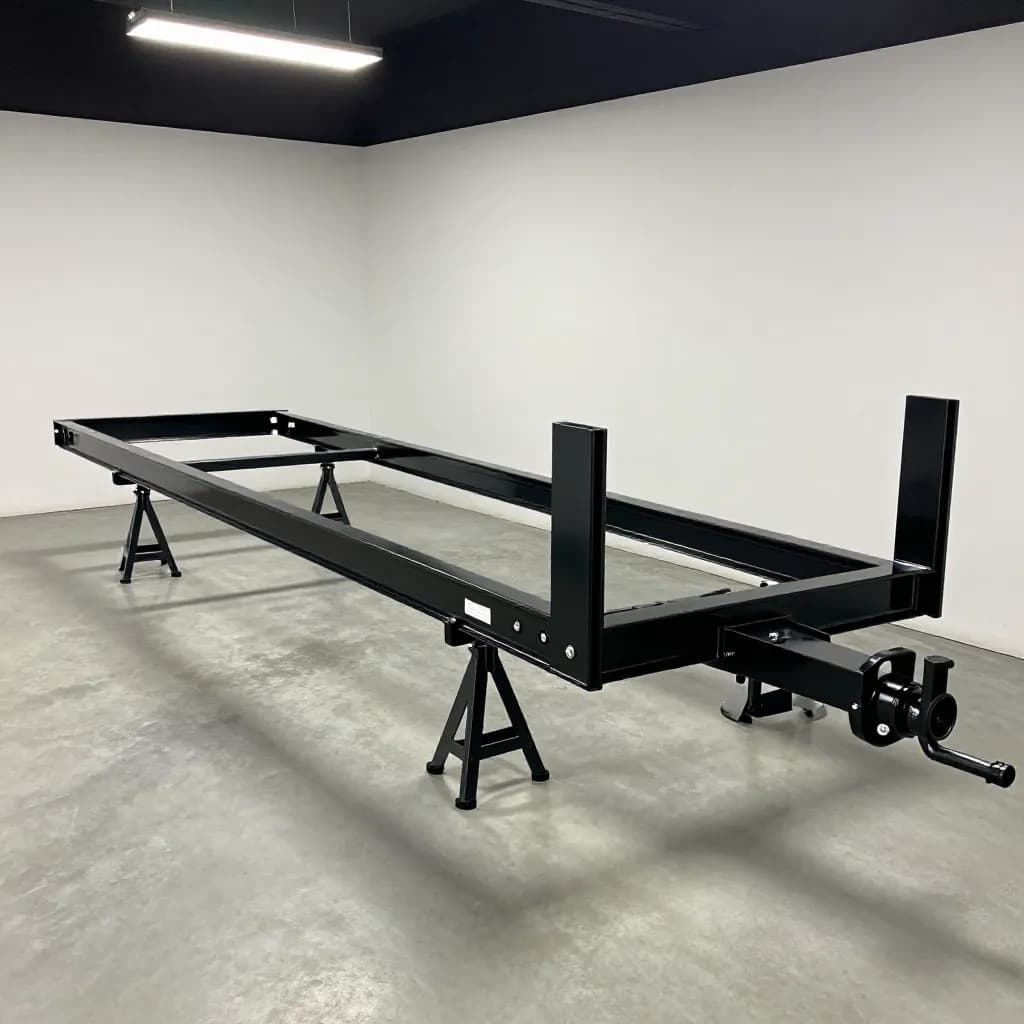
Unlike a car that spends time in a garage, most utility trailers are stored outdoors and used in the harshest conditions. Landscaping trailers haul wet mulch and soil. Boat trailers get submerged in lake and ocean water. Flatbed trailers carry equipment through construction sites. Each of these environments accelerates corrosion in ways that basic paint simply cannot withstand.
Ready to Start Your Project?
From one-off customs to 15,000-part production runs — get precise pricing in 24 hours.
On This Page
Why Trailers Need Tough Coatings
Rust on a trailer frame is not just cosmetic. It weakens the structural steel, compromises weld joints, and can eventually make the trailer unsafe to tow. Investing in a durable coating from the start, or recoating a frame before rust gets out of hand, is a safety decision as much as an aesthetic one.
Powder Coating vs Paint for Trailers
Traditional brush-on or spray paint has been the default trailer finish for decades, but it has significant limitations. Paint films are typically 25 to 50 microns thick, which provides only a thin barrier against the constant mechanical and chemical abuse trailers endure. Chips from gravel, scratches from loading, and abrasion from straps all breach the paint layer quickly, allowing rust to start.
Powder coating applies a much thicker film, typically 60 to 120 microns, in a single coat. This thicker barrier provides substantially better corrosion protection and impact resistance. Because the powder is cured at high temperature, it forms a cross-linked molecular structure that is far harder and more chemically resistant than air-dried paint.
Another advantage of powder coating for trailers is the single-coat application. Unlike paint systems that may require a primer, base coat, and clear coat with drying time between each layer, powder coating can achieve excellent protection in one application and one cure cycle. This simplifies the process and reduces the chance of adhesion failures between layers.
Preparation for Trailer Frames
Proper preparation is the foundation of a long-lasting trailer coating. The frame must be blasted to bare steel, removing all mill scale, existing paint, and rust. Abrasive blasting with steel grit or aluminum oxide creates a clean surface with the right profile for powder adhesion. Skipping or shortcutting this step is the most common reason trailer coatings fail prematurely.
After blasting, a zinc phosphate pretreatment is applied to the bare steel. This chemical conversion coating creates a microscopic crystalline layer that dramatically improves adhesion and adds a secondary corrosion barrier beneath the powder. For trailers that will see severe exposure, such as boat trailers or salt-belt utility trailers, this pretreatment step is especially important.
For maximum protection on heavily exposed trailers, a two-coat system of epoxy primer plus polyester topcoat provides the best results. The epoxy primer delivers outstanding adhesion and corrosion resistance, while the polyester topcoat adds UV stability and abrasion resistance. This dual-layer approach is the gold standard for trailer frames that need to last.
Color Options for Trailers
Black is the most common color for powder-coated trailer frames, and for practical reasons. It hides dirt, grease, and minor scuffs well, and it gives any trailer a clean, professional appearance. Satin and semi-gloss black finishes are the most popular sheens, offering a good balance between appearance and practicality.
Grey and charcoal are popular alternatives that offer a slightly different look while still being practical for work equipment. Medium grey shows less dust than black and gives trailers a modern, industrial aesthetic. Dark charcoal splits the difference and works well for trailers that need to look presentable for commercial use.
Custom colors are available for those who want their trailer to match their tow vehicle or business branding. Commercial fleet operators often coat trailers in company colors for a professional, unified appearance. Any RAL or custom color can be matched, though specialty colors may add a small premium to the coating cost.
Cost Expectations
A standard single-axle utility trailer frame typically costs between $300 and $800 to powder coat, depending on size, condition, and the coating system used. A small 4x6-foot trailer frame in good condition will be at the lower end, while a larger 6x12-foot frame requiring extensive rust removal and a two-coat system will be at the higher end.
Tandem-axle and larger trailers cost more due to the increased surface area and the larger oven space required. Expect $600 to $1,500 for a full-size tandem-axle trailer frame. If the trailer needs to be partially disassembled to fit in the oven or to access all surfaces properly, labor costs for disassembly and reassembly will add to the total.
While these costs may seem significant compared to a few cans of spray paint, the math favors powder coating over the life of the trailer. A quality powder coat lasts 10 to 15 years on a trailer frame, while spray paint typically needs to be redone every two to four years. Factor in the time and effort of repeated repainting, and powder coating is the more economical choice long-term.
Frequently Asked Questions
Can a trailer frame be powder coated without full disassembly?
It depends on the trailer design. Simple open frames can often be coated as a single unit. However, trailers with attached wiring, lights, fenders, and decking will need those components removed to ensure full coverage and to protect non-metal parts from oven heat. Discuss the scope of disassembly with your coater before delivery.
Is powder coating a boat trailer worth the extra cost?
Absolutely. Boat trailers face some of the harshest conditions of any trailer type, including submersion in fresh or salt water. Powder coating with a zinc-rich primer and polyester topcoat provides far superior corrosion protection compared to paint. Many boat trailer owners find that powder coating pays for itself by extending the frame life significantly.
How long does powder coating last on a trailer frame?
A properly prepared and coated trailer frame will typically last 10 to 15 years before needing recoating. Trailers stored outdoors in harsh climates or used in corrosive environments like salt water may see shorter lifespans. Regular washing to remove salt and debris helps maximize the coating life.
Can I powder coat just the rusted areas of my trailer?
Spot coating is not recommended. For the best results and longest life, the entire frame should be stripped and coated as a unit. Spot repairs create boundaries between old and new coatings where moisture can penetrate and corrosion can begin. A full recoat ensures uniform protection across the entire frame.
Ready to Start Your Project?
From one-off customs to 15,000-part production runs — get precise pricing in 24 hours.