Film thickness refers to the depth of the cured powder coating layer on the metal surface, measured in microns (one micron equals one thousandth of a millimeter). It is one of the most important quality parameters in powder coating because it directly affects the performance, appearance, and longevity of the finish. Getting the thickness right is a balancing act between protection and practicality.
Consumer
Powder Coating Thickness: Why It Matters and How It's Measured
Sundial Powder Coating·April 20, 2026·8 min
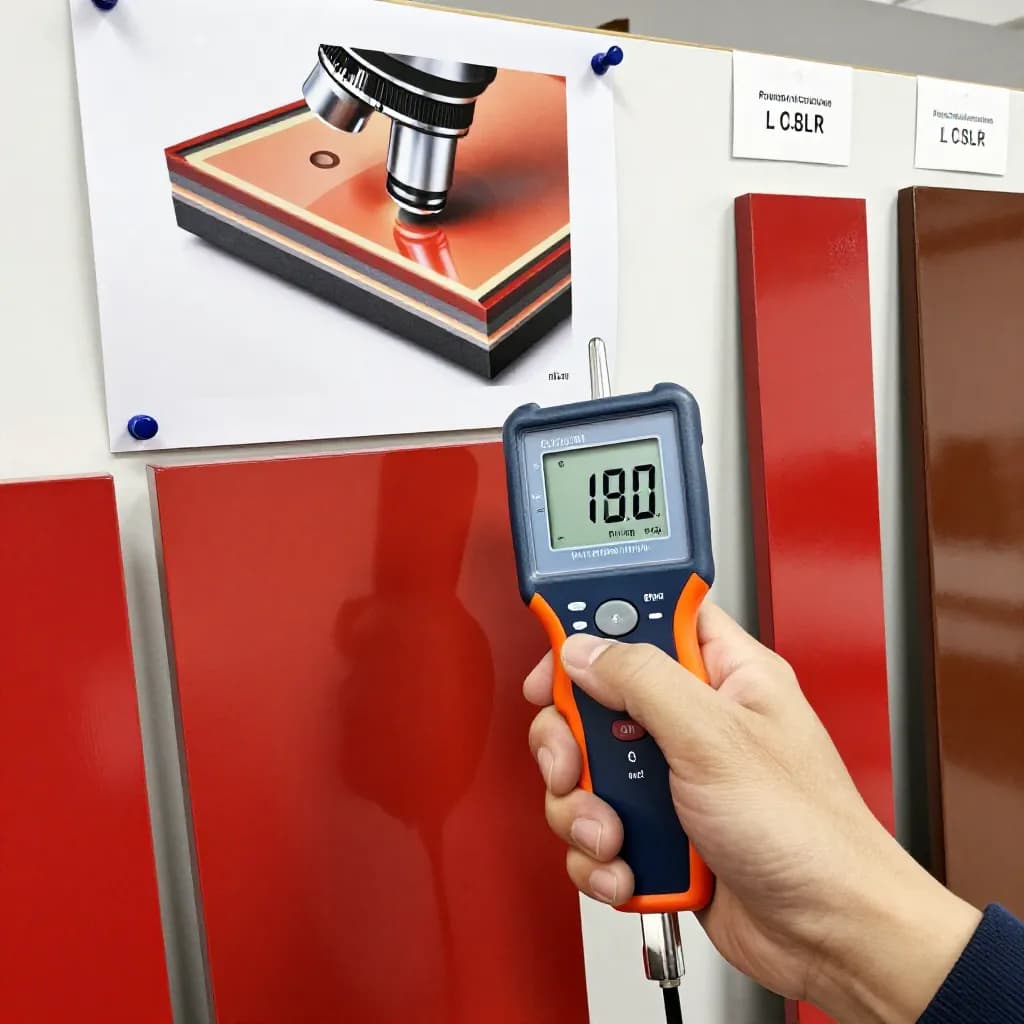
A thicker coating generally provides more protection against corrosion, UV degradation, and mechanical damage. The additional material creates a more robust barrier between the environment and the metal substrate. However, thickness is not a case of more is always better. Beyond a certain point, adding more powder creates problems rather than solving them.
Ready to Start Your Project?
From one-off customs to 15,000-part production runs — get precise pricing in 24 hours.
On This Page
What Is Film Thickness and Why It Matters
Every powder product has a recommended film thickness range specified by the manufacturer. This range represents the sweet spot where the coating delivers its intended performance characteristics, including the correct color, gloss, texture, and mechanical properties. Staying within this range is essential for achieving the results the powder was designed to deliver.
Standard Thickness Ranges
For most general-purpose powder coatings, the standard film thickness falls between 60 and 80 microns (roughly 2.4 to 3.2 mils). This range is suitable for the majority of indoor and light outdoor applications, including furniture, fixtures, shelving, and decorative metalwork. It provides a good balance of protection, appearance, and material efficiency.
Heavy-duty applications call for thicker films, typically in the 80 to 120 micron range. Outdoor architectural elements, agricultural equipment, automotive chassis components, and industrial machinery often require this extra thickness to withstand harsher conditions including UV exposure, chemical contact, and physical abrasion. Some functional coatings designed for extreme corrosion protection can go even thicker.
Decorative and precision applications sometimes call for thinner films in the 40 to 60 micron range. Thin-film powders are used when tight dimensional tolerances must be maintained, such as on threaded fasteners, electrical components, or parts that need to fit together precisely after coating. These thinner coatings still provide good protection but prioritize dimensional accuracy over maximum barrier thickness.
How Thickness Is Measured
Film thickness is measured using non-destructive gauges that can read the coating depth without damaging the finish. The two most common technologies are magnetic induction and eddy current measurement. Magnetic gauges work on ferrous (steel and iron) substrates by measuring the distance between a magnetic probe and the magnetic substrate through the non-magnetic coating layer.
Eddy current gauges are used for non-ferrous substrates like aluminum, copper, and brass. They work by generating a small electromagnetic field and measuring how the coating thickness affects the eddy currents induced in the metal below. Many modern gauges combine both technologies in a single instrument, automatically detecting the substrate type and selecting the correct measurement mode.
Measurements should be taken at multiple points across the coated surface to verify consistency. A single reading tells you the thickness at one spot, but coating thickness can vary across a part due to geometry, electrostatic effects, and application technique. Recessed areas and inside corners tend to build up more powder, while edges and sharp corners tend to have thinner coverage. A thorough inspection includes readings from flat areas, edges, recesses, and any critical surfaces.
What Happens When Coating Is Too Thick
Excessive film thickness is one of the most common quality issues in powder coating, and it creates several problems. The most visible is orange peel, a bumpy texture that resembles the skin of an orange. When too much powder is applied, the molten coating during cure becomes too viscous to flow out into a smooth film, leaving a textured surface that was not intended.
Thick coatings are also more prone to cracking and chipping. As the film gets thicker, internal stresses increase. These stresses can cause the coating to crack when the part flexes, expands with heat, or receives an impact. A coating that would have been flexible and resilient at the correct thickness becomes brittle and fragile when applied too heavily.
There are practical consequences as well. Excessive thickness wastes powder material, increases curing energy requirements because the thicker film takes longer to reach full cure temperature throughout, and can interfere with part fit and assembly. Threaded holes, mating surfaces, and precision dimensions can all be compromised by a coating that is significantly thicker than specified.
What Happens When Coating Is Too Thin
Insufficient film thickness creates its own set of problems, starting with poor coverage. Thin areas may allow the substrate color or texture to show through, creating a patchy or translucent appearance. This is especially noticeable with lighter colors over dark substrates, where even slightly thin spots become visible as darker patches or shadows.
From a performance standpoint, thin coatings provide reduced protection against corrosion and environmental exposure. The barrier between the metal and the environment is simply not thick enough to resist moisture penetration, chemical attack, or UV degradation over the expected service life. Parts with thin coatings will show signs of failure much sooner than properly coated parts.
Thin coatings can also indicate application problems that affect adhesion. If the powder was not attracted to the surface evenly, it may suggest issues with grounding, electrostatic charge, or surface preparation. These underlying problems can lead to premature peeling or flaking even in areas where the thickness appears adequate. Consistent, uniform thickness across the entire part is a strong indicator that the application process is working correctly.
Frequently Asked Questions
Can I measure powder coating thickness at home?
Yes. Affordable digital coating thickness gauges are available for home use and provide reasonably accurate readings. Look for a gauge that supports both ferrous and non-ferrous substrates. While professional-grade instruments offer higher precision, a consumer gauge is more than adequate for verifying that your parts fall within the expected thickness range.
Does thicker powder coating mean better protection?
Only up to a point. Within the manufacturer's recommended range, a thicker film does provide more protection. However, exceeding the recommended maximum creates problems including orange peel texture, cracking, poor adhesion, and wasted material. The best protection comes from applying the coating within its designed thickness range with proper surface preparation.
Why is my powder coating thicker in corners and recesses?
This is caused by the Faraday cage effect and electrostatic buildup. Inside corners and recessed areas trap electrostatic charge, which attracts more powder to those areas. Experienced applicators adjust their technique, gun settings, and spray patterns to minimize this variation, but some thickness difference between flat surfaces and recesses is normal.
What unit is powder coating thickness measured in?
Powder coating thickness is most commonly measured in microns (micrometers) internationally and in mils (thousandths of an inch) in North America. One mil equals approximately 25.4 microns. A typical powder coating at 75 microns is about 3 mils thick. Both units are widely used in the industry, so it helps to be comfortable converting between them.
Ready to Start Your Project?
From one-off customs to 15,000-part production runs — get precise pricing in 24 hours.