Textured powder coatings offer a combination of aesthetic appeal and practical performance that smooth finishes cannot match. The most immediate benefit is their ability to hide surface imperfections. Weld marks, minor dents, grinding scratches, and substrate irregularities that would be glaringly obvious under a smooth gloss finish virtually disappear under a textured coating. This makes textured finishes ideal for fabricated parts where achieving a perfectly smooth substrate is impractical or unnecessary.
Consumer
Powder Coating Textures: Sand, Wrinkle, Leather, and More
Sundial Powder Coating·April 20, 2026·7 min
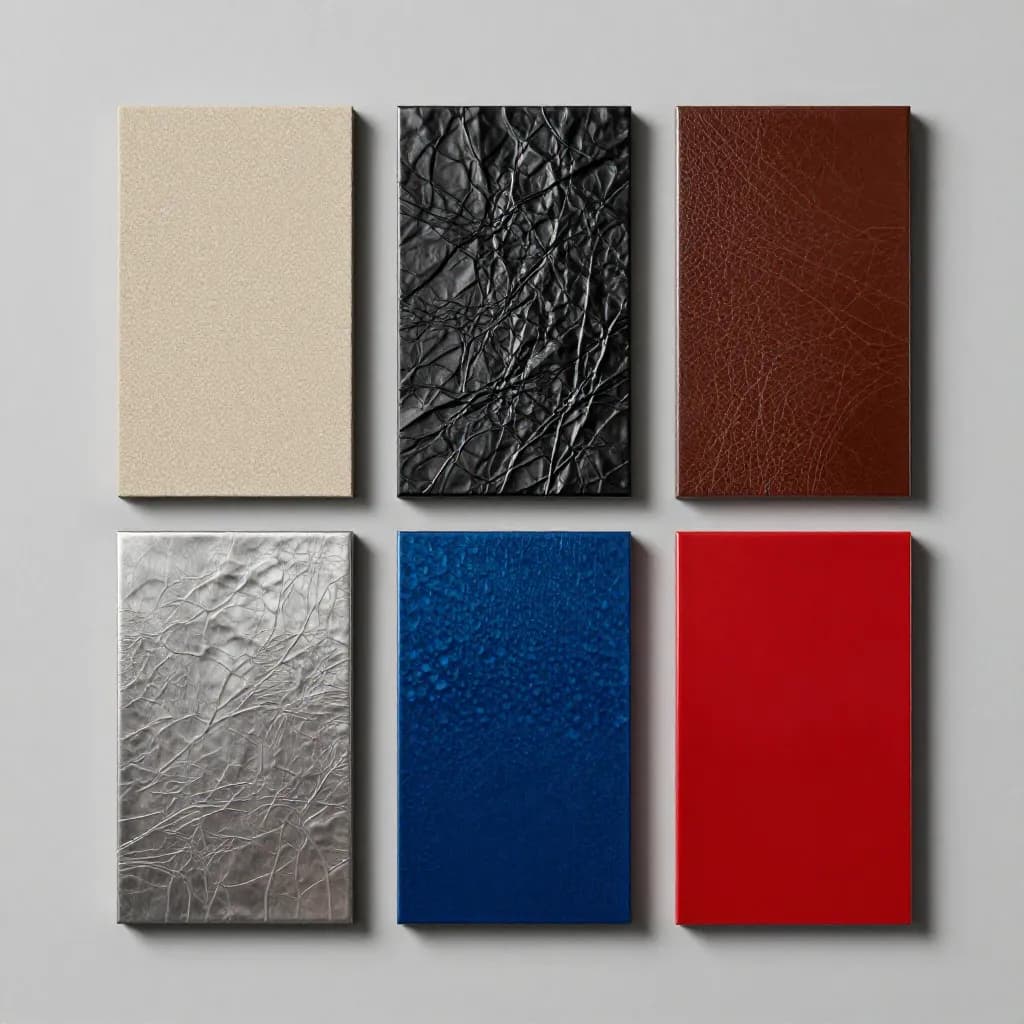
Beyond hiding flaws, textures add visual character and tactile interest to metal surfaces. A wrinkle finish on a valve cover, a fine sand texture on architectural metalwork, or a leather grain on furniture hardware each create a distinct look and feel that elevates the finished product. Texture transforms a plain metal part into something that looks intentional and refined.
Ready to Start Your Project?
From one-off customs to 15,000-part production runs — get precise pricing in 24 hours.
On This Page
Why Choose a Textured Finish
Textured finishes also offer practical advantages in use. They provide better grip than smooth coatings, which matters for handles, tool housings, and equipment enclosures. They tend to show fingerprints, scratches, and everyday wear less than smooth finishes, reducing maintenance and keeping parts looking good longer in high-traffic environments.
Fine and Coarse Sand Textures
Sand textures are the most widely used textured powder coatings, offering a subtle, uniform roughness that resembles fine sandpaper to the touch. Fine sand textures have a barely perceptible grit that adds just enough surface variation to hide minor imperfections while maintaining a relatively refined appearance. They are popular for architectural applications, office furniture, electrical enclosures, and retail fixtures.
Coarse sand textures have a more pronounced roughness that is clearly visible and tactile. They provide excellent imperfection hiding and a rugged, industrial aesthetic that works well on heavy equipment, outdoor structures, and utility enclosures. The deeper texture also provides enhanced grip and is more resistant to showing scratches and handling marks.
Sand textures are available in virtually any color and can be combined with different gloss levels, though most sand textures naturally fall in the low-gloss to satin range. The texture is created by additives in the powder formulation that disrupt the flow of the molten coating during cure, preventing it from leveling out into a smooth film. The result is a consistent, repeatable texture that is part of the coating itself, not a surface treatment applied afterward.
Wrinkle and Hammertone Finishes
Wrinkle finishes create a distinctive crinkled or creased surface pattern that has been a staple of industrial and automotive finishing for decades. The texture is formed during the curing process as the outer surface of the coating cures faster than the layer beneath it, causing the surface to contract and fold into a network of fine wrinkles. The result is a deeply textured, visually interesting finish with a classic, mechanical look.
Wrinkle black is arguably the most iconic textured powder coating, widely used on engine valve covers, air cleaner housings, tool boxes, amplifier chassis, and industrial equipment. It evokes a vintage, purposeful aesthetic that is equally at home on a restored classic car engine and a modern guitar amplifier. Wrinkle finishes are also available in red, blue, grey, and other colors, though black remains the most popular by a wide margin.
Hammertone, sometimes called hammer finish, creates a pattern of overlapping dimples that resembles the marks left by a ball-peen hammer on metal. It is a classic finish for tool boxes, electrical panels, and industrial housings. Hammertone provides excellent imperfection hiding and a distinctive retro-industrial look. Like wrinkle, the pattern is formed during the cure process and is highly consistent from part to part.
Leather and River Textures
Leather texture powder coatings replicate the look and feel of natural leather grain on metal surfaces. The texture ranges from fine, subtle grain to deep, pronounced pebbling depending on the specific product. Leather textures are popular for high-end furniture, decorative hardware, lighting fixtures, and interior architectural elements where a premium, tactile finish is desired.
River texture, also known as river vein or antique vein, creates a flowing, organic pattern that resembles the surface of a river or the veins in natural stone. This texture is achieved through a two-tone effect where the base color shows through channels in the top texture, creating depth and visual movement. River textures are often used on decorative ironwork, fireplace accessories, and ornamental gates and railings.
Both leather and river textures occupy the premium end of the textured finish spectrum. They are chosen primarily for their aesthetic impact rather than their practical benefits, though they do share the imperfection-hiding and scratch-resistance advantages of other textured coatings. These finishes work best on parts where the texture can be appreciated up close and where the visual and tactile experience is an important part of the product's appeal.
Matching Texture to Application
Smooth finishes are the best choice when appearance is the primary concern and the substrate is in excellent condition. High-gloss smooth coatings deliver the most vibrant colors and the deepest visual depth. They are ideal for automotive parts, show pieces, and any application where a flawless, reflective surface is the goal. However, they demand perfect preparation and a clean application environment.
Textures add value when the substrate has imperfections, when the part will be handled frequently, or when a specific aesthetic is desired. For industrial equipment, outdoor furniture, and fabricated metalwork, a sand or wrinkle texture is often the most practical and attractive choice. The texture hides the inevitable marks of fabrication and provides a finish that looks good even after years of use.
When choosing a texture, request physical samples from your coater or powder supplier. Textures are difficult to evaluate from photographs because the tactile quality and the way light interacts with the surface are essential parts of the experience. Hold the sample, feel it, and view it under the lighting conditions where the finished part will live. The right texture should complement the part's function, fit the design context, and deliver the practical performance your application demands.
Frequently Asked Questions
Can I get a textured finish in any color?
Most standard textures like sand and wrinkle are available in a wide range of colors from major powder manufacturers. Specialty textures like leather and river may have a more limited color selection. Custom color matching is possible for textured powders, though the texture can slightly affect how the color is perceived compared to a smooth finish in the same shade.
Is textured powder coating more durable than smooth?
The base durability is determined by the powder chemistry, not the texture. However, textured finishes are more practical in high-wear environments because they hide scratches, scuffs, and handling marks that would be obvious on a smooth surface. The texture effectively masks minor damage, so the finish looks good longer even if it experiences the same level of wear.
Can I apply a clear coat over a textured finish?
Technically yes, but a clear coat will partially fill and soften the texture, reducing its visual and tactile impact. For most textured finishes, a clear coat is unnecessary because the texture itself helps hide wear. If additional protection is needed, discuss options with your coater to find a clear coat that preserves as much of the original texture as possible.
How do I clean textured powder-coated surfaces?
Use warm water with a mild detergent and a soft brush or cloth. The textured surface can trap dirt in its valleys, so a soft-bristled brush is more effective than a flat cloth for getting into the texture. Avoid abrasive cleaners or scouring pads, which can damage the coating. For stubborn grime, a non-abrasive all-purpose cleaner works well.
Ready to Start Your Project?
From one-off customs to 15,000-part production runs — get precise pricing in 24 hours.