Rust bleeding through powder coating is one of the most alarming coating failures a property owner or equipment operator can encounter. It appears as orange, brown, or reddish-brown discoloration visible on or through the coating surface, often accompanied by blistering, bubbling, or lifting of the coating in the affected area.
Consumer
Rust Bleeding Through Powder Coating: Causes, Pretreatment Failure, Solutions, and Prevention
Sundial Powder Coating·April 23, 2026·11 min
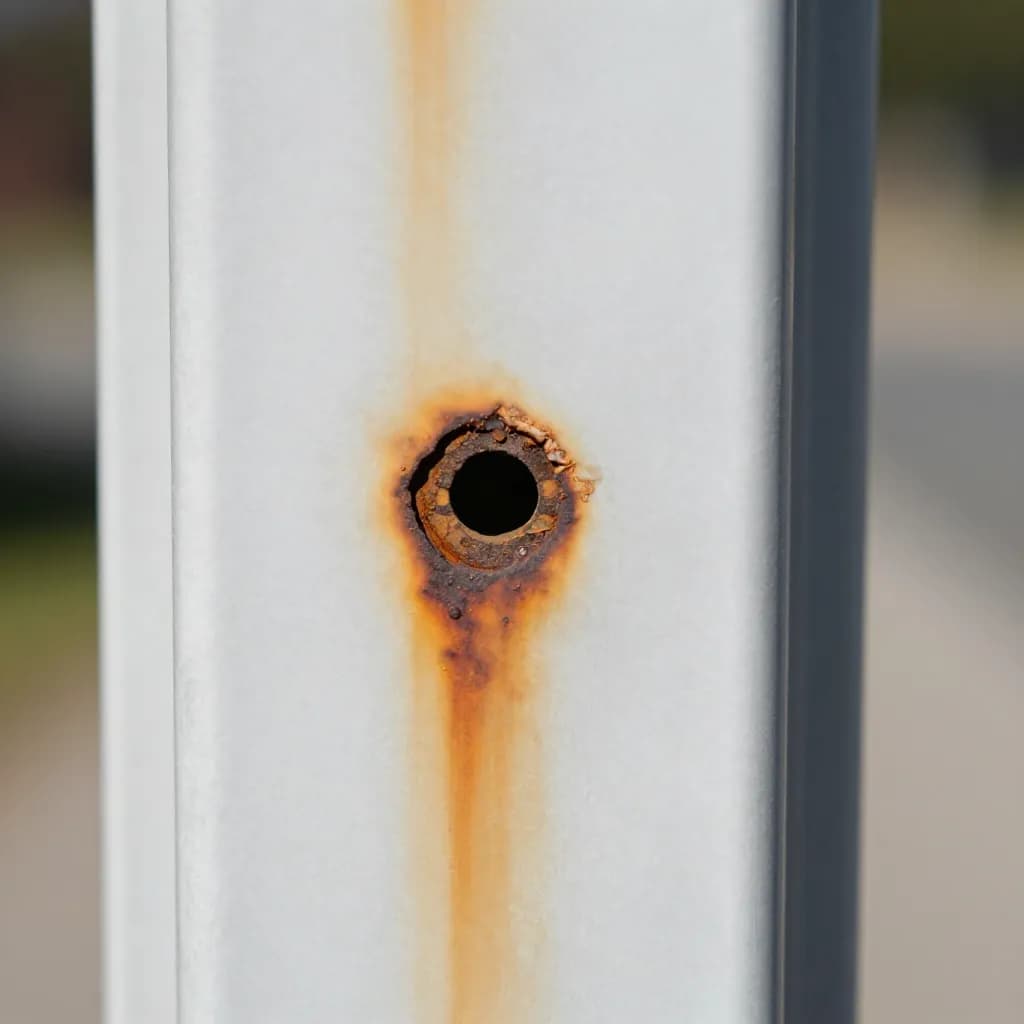
The appearance varies depending on the severity and stage of the problem. In early stages, rust bleeding may appear as faint orange or brown spots or streaks on the coating surface. The coating may still appear intact and adhered, but the discoloration beneath is clearly visible, particularly on light-colored coatings where the contrast is greatest.
Ready to Start Your Project?
From one-off customs to 15,000-part production runs — get precise pricing in 24 hours.
On This Page
What Rust Bleeding Through Powder Coating Looks Like
As the problem progresses, the coating begins to lift away from the substrate as corrosion products accumulate beneath it. Blisters form as the expanding rust pushes the coating outward. These blisters may be small and scattered or large and confluent, depending on the extent of the underlying corrosion. Pressing on a blister may reveal a soft, spongy feel as the coating flexes over the corrosion products beneath.
In advanced stages, the coating cracks and flakes away, exposing heavily corroded substrate beneath. The rust may have spread well beyond the visible damage area, undermining the coating's adhesion across a wide zone. At this point, the coating has completely failed in the affected area and the substrate is actively deteriorating.
Rust bleeding is distinct from surface rust staining, which occurs when rust from an external source, such as a rusting fastener or adjacent uncoated steel, washes onto the powder coated surface. Surface staining can be cleaned off; rust bleeding from beneath the coating cannot. The distinction is important because the causes and solutions are fundamentally different.
Root Causes: Why Rust Develops Beneath Powder Coating
Rust bleeding through powder coating always indicates that corrosion is occurring at the interface between the coating and the substrate. Several root causes can create this condition, and identifying the specific cause is important for determining the correct remedial action.
Inadequate surface preparation before coating is the most common cause. If the substrate was not properly cleaned of mill scale, existing rust, oil, grease, or other contaminants before powder coating, the coating bonds to the contamination rather than to clean metal. The contamination layer provides a weak point where moisture can penetrate and corrosion can initiate. Even a thin film of oil or a small patch of residual rust can seed corrosion that eventually bleeds through the coating.
Insufficient or failed pretreatment is closely related to surface preparation. Pretreatment processes such as iron phosphate, zinc phosphate, or chromate conversion create a chemical bond between the coating and the substrate that resists moisture penetration. If the pretreatment was skipped, improperly applied, or has degraded over time, the coating-substrate bond is weaker and more susceptible to moisture infiltration.
Insufficient film thickness, particularly at edges, corners, and recesses, allows moisture to penetrate through the coating to the substrate. Powder coating naturally thins at sharp edges due to the Faraday cage effect, and if the applicator did not compensate for this tendency, these thin spots become the first points of failure. Moisture penetrates the thin coating, reaches the substrate, and corrosion begins.
Moisture trapped in the substrate before coating is a less obvious but significant cause. Porous substrates such as cast iron, or substrates with crevices, joints, or enclosed spaces, can retain moisture from washing or environmental exposure. If this moisture is not completely removed before coating, it becomes trapped beneath the powder coating and initiates corrosion from within.
Mechanical damage to the coating after application, such as chips, scratches, or abrasion that breaches the coating barrier, allows moisture to reach the substrate. Once corrosion begins at the damage site, it can spread beneath the adjacent intact coating, eventually appearing as rust bleeding at locations away from the original damage point.
Pretreatment Failure: The Most Common Culprit
Pretreatment failure deserves special attention because it is the single most frequent cause of rust bleeding through powder coating. The pretreatment process is invisible in the finished product, making it easy to overlook, but it is arguably the most critical step in the entire powder coating process.
The purpose of pretreatment is twofold: to create a clean, chemically active surface that the powder coating can bond to, and to deposit a conversion coating that provides an additional barrier against corrosion. When pretreatment is done correctly, the result is a coating system with excellent adhesion and corrosion resistance. When it fails, the coating may look perfect initially but is vulnerable to premature failure.
Common pretreatment failures include insufficient cleaning that leaves residual oils, greases, or shop soils on the substrate. These contaminants prevent the conversion coating from forming properly and create weak spots in the coating adhesion. Even fingerprints left on a cleaned surface after the pretreatment process can cause localized adhesion failure and subsequent corrosion.
Chemical bath concentration and temperature control are critical for effective pretreatment. If the phosphate or conversion coating bath is too dilute, too cold, or has exceeded its useful life, the conversion coating will be thin, patchy, or absent. Regular monitoring and maintenance of pretreatment chemistry is essential for consistent results.
Rinse quality affects pretreatment performance. Contaminated rinse water can deposit minerals, chemicals, or biological material on the pretreated surface, interfering with coating adhesion. The final rinse before drying should use clean, low-mineral water to ensure a contaminant-free surface.
Drying after pretreatment must be thorough and prompt. If the pretreated surface is not dried quickly, flash rust can form on steel substrates, creating a layer of fresh rust between the pretreatment and the powder coating. This flash rust is a common cause of early coating failure and rust bleeding.
Time between pretreatment and coating application should be minimized. A pretreated surface that sits exposed to the shop environment for hours or days can accumulate contamination, develop flash rust, or have its conversion coating degraded by humidity. Best practice is to coat within hours of pretreatment completion.
What to Do When You Discover Rust Bleeding
Discovering rust bleeding through powder coating requires a measured response that addresses both the immediate problem and the underlying cause. The appropriate action depends on the extent of the damage and the criticality of the affected component.
First, assess the extent of the problem. Is the rust bleeding limited to one or two small spots, or is it widespread across the surface? Tap the coating around the visible rust with a fingernail or small tool to check for hollow sounds that indicate the coating has lost adhesion over a larger area than the visible damage suggests. The actual extent of the problem is often larger than what is visible on the surface.
For isolated, small areas of rust bleeding on non-critical surfaces, localized repair may be sufficient. Remove the coating in the affected area by scraping or sanding back to sound coating and clean substrate. Treat any rust with a converter, apply primer, and touch up with color-matched paint. Monitor the repair and surrounding area for recurrence.
For widespread rust bleeding or damage on critical structural components, professional assessment is recommended. A coating professional can evaluate the extent of the failure, identify the root cause, and recommend whether localized repair, partial recoating, or complete stripping and recoating is the appropriate response.
If the coating is relatively new and the rust bleeding appears to be a pretreatment or application defect, contact the coating applicator and the powder manufacturer. The failure may be covered under warranty, and the applicator needs to be aware of the problem to prevent it from recurring on other work. Provide photographs, the timeline of when the problem appeared, and any documentation of the original coating specification and application.
Document everything. Photograph the rust bleeding from multiple angles and distances. Note the location, extent, and any patterns in the damage distribution. Record the date of discovery and any environmental conditions that may be relevant. This documentation supports warranty claims, insurance claims, and root cause analysis.
Do not delay action on rust bleeding. Unlike cosmetic issues that can wait for scheduled maintenance, active corrosion beneath the coating is progressive and will continue to worsen until the affected coating is removed and the substrate is properly treated.
Repair and Remediation Options
The repair approach for rust bleeding depends on the extent of the damage, the root cause, and the performance requirements of the application. Options range from localized touch-up to complete stripping and recoating.
Localized repair is appropriate when rust bleeding is limited to a few small, isolated areas and the surrounding coating is sound. Remove the coating in the affected area by sanding or scraping, extending at least 25 millimeters beyond the visible damage to ensure all undermined coating is removed. Clean the exposed substrate to bare metal, removing all rust and corrosion products. Apply a rust-inhibiting primer, allow it to cure, then apply touch-up paint to restore the coating.
Partial recoating addresses larger areas of damage while preserving intact coating on unaffected portions of the surface. The damaged area is stripped back to clean substrate, pretreated, primed, and recoated. The transition between new and existing coating requires careful feathering and blending for an acceptable appearance. This approach is common for architectural panels and large industrial components where full recoating is impractical.
Complete stripping and recoating is the definitive solution for widespread rust bleeding or when the root cause is a systemic pretreatment failure that has compromised the entire coating. The existing coating is completely removed by chemical stripping, media blasting, or thermal stripping. The bare substrate is then properly pretreated and recoated with a new powder coating system.
When recoating after rust bleeding, address the root cause to prevent recurrence. If the original failure was due to inadequate pretreatment, ensure that the recoating process includes proper pretreatment with verified chemistry and process controls. If the failure was due to insufficient film thickness, specify and verify adequate thickness for the recoat. If moisture entrapment was the cause, ensure thorough drying before coating.
For critical applications where corrosion resistance is paramount, consider upgrading the coating system during recoating. Adding a zinc-rich primer beneath the powder topcoat provides galvanic protection that significantly improves corrosion resistance. Specifying a multi-stage pretreatment process such as zinc phosphate instead of iron phosphate provides a more robust foundation for the coating system.
Prevention: Ensuring Rust Does Not Bleed Through
Preventing rust bleeding starts with proper specification and continues through every step of the coating process. Each step builds on the previous one, and a failure at any point can compromise the entire system.
Specify the pretreatment process appropriate for the substrate and the intended service environment. For mild interior applications, iron phosphate pretreatment may be adequate. For exterior applications, particularly in coastal or industrial environments, zinc phosphate or more advanced pretreatment systems provide superior corrosion protection. The pretreatment specification should be part of the coating specification, not left to the applicator's discretion.
Require that the applicator demonstrate process control for pretreatment chemistry, temperature, contact time, and rinse quality. Certified applicators under Qualicoat, GSB, or similar quality programs are required to maintain documented process controls and submit to regular audits. Choosing a certified applicator provides assurance that pretreatment is being performed correctly.
Specify minimum film thickness requirements and verify compliance through measurement. Pay particular attention to edges, corners, and recesses where thin coverage is most likely. For critical applications, specify edge preparation such as radius grinding or edge sealing to improve coating coverage at these vulnerable points.
For substrates with complex geometries, enclosed spaces, or porous structures, specify thorough drying procedures before coating. Heated drying ovens or extended air drying with verification by moisture testing ensures that trapped moisture does not become a corrosion source beneath the coating.
Consider a primer system for applications with high corrosion risk. A zinc-rich epoxy primer beneath the powder topcoat provides galvanic protection that continues to protect the substrate even if the topcoat is damaged. This dual-layer approach is standard practice for structural steel in aggressive environments and is increasingly specified for architectural and industrial applications.
Maintain the coating after application. Regular inspection, prompt repair of any damage, and appropriate cleaning prevent the conditions that allow moisture to penetrate the coating and initiate corrosion. Even the best coating system will eventually fail if damage is left unrepaired and corrosive contaminants are allowed to accumulate on the surface.
Rust Bleeding vs Other Coating Discolorations
Not every discoloration on a powder coated surface is rust bleeding. Several other conditions can produce similar-looking symptoms, and correctly identifying the problem is essential for choosing the right response.
Surface rust staining from external sources is the most common look-alike. Rust from uncoated steel fasteners, adjacent rusting structures, or iron-rich water can wash onto the powder coated surface, creating orange or brown staining that resembles rust bleeding. The key difference is that surface staining sits on top of the coating and can be cleaned off, while rust bleeding comes from beneath the coating and cannot be removed by surface cleaning.
Tannin staining from wood in contact with or adjacent to powder coated surfaces can produce brown discoloration that resembles rust. This is common on railings, fences, and structures near wooden elements. Tannin stains are surface deposits that can be cleaned with appropriate products.
Chemical staining from industrial fallout, fertilizers, or cleaning products can cause brown or orange discoloration on powder coated surfaces. These stains are surface phenomena that do not involve substrate corrosion. They may be difficult to remove but do not indicate coating failure.
To distinguish rust bleeding from surface staining, examine the coating surface carefully. Rust bleeding is typically accompanied by blistering, lifting, or loss of adhesion in the affected area. The coating may feel soft or spongy when pressed. Surface staining does not affect the coating's adhesion or integrity; the coating beneath the stain is sound and firmly adhered.
If you are unsure whether discoloration is rust bleeding or surface staining, try cleaning the affected area with a mild detergent solution. If the discoloration washes off, it is surface staining. If it remains after cleaning and the coating shows signs of blistering or adhesion loss, it is likely rust bleeding from beneath the coating, and further investigation is warranted.
Frequently Asked Questions
Why is rust coming through my powder coating?
Rust bleeding through powder coating indicates corrosion at the substrate-coating interface. The most common causes are inadequate surface preparation before coating, failed or insufficient pretreatment, thin film thickness at edges or corners, and moisture trapped beneath the coating. Mechanical damage that breaches the coating can also allow corrosion to start and spread beneath the surface.
Can rust bleeding through powder coating be repaired?
Yes. For isolated spots, remove the coating in the affected area, clean the substrate to bare metal, treat the rust, apply primer, and touch up with paint. For widespread damage, partial or complete stripping and recoating is needed. Address the root cause during repair to prevent recurrence.
Is rust bleeding a warranty issue for powder coating?
It can be, depending on the cause and the warranty terms. If the rust bleeding results from a pretreatment or application defect, it may be covered under the applicator's or manufacturer's warranty. Document the damage, timeline, and original specification, and contact the applicator and powder manufacturer promptly.
How do I prevent rust from forming under powder coating?
Ensure proper surface preparation and pretreatment before coating, specify adequate film thickness with attention to edges and corners, use a zinc-rich primer for high-corrosion-risk applications, verify thorough drying of the substrate before coating, and maintain the finished coating with regular inspection and prompt repair of any damage.
How can I tell if discoloration is rust bleeding or surface staining?
Try cleaning the discoloration with mild detergent. Surface staining from external rust sources washes off; rust bleeding from beneath the coating does not. Rust bleeding is also typically accompanied by blistering, coating softness, or adhesion loss in the affected area, while surface staining does not affect the coating's integrity.
Ready to Start Your Project?
From one-off customs to 15,000-part production runs — get precise pricing in 24 hours.