Playground equipment coating is not merely an aesthetic consideration — it is a safety-critical specification that directly affects child health, injury risk, and equipment longevity. The coating on playground structures must be free of toxic substances that children might ingest through hand-to-mouth contact, resistant to degradation that could create sharp edges or rough surfaces, and durable enough to maintain its protective and aesthetic properties through years of heavy use by children in all weather conditions.
Consumer
Powder Coating Playground Equipment: Safety Standards, UV Stability, and Heavy-Use Durability
Sundial Powder Coating·April 22, 2026·11 min
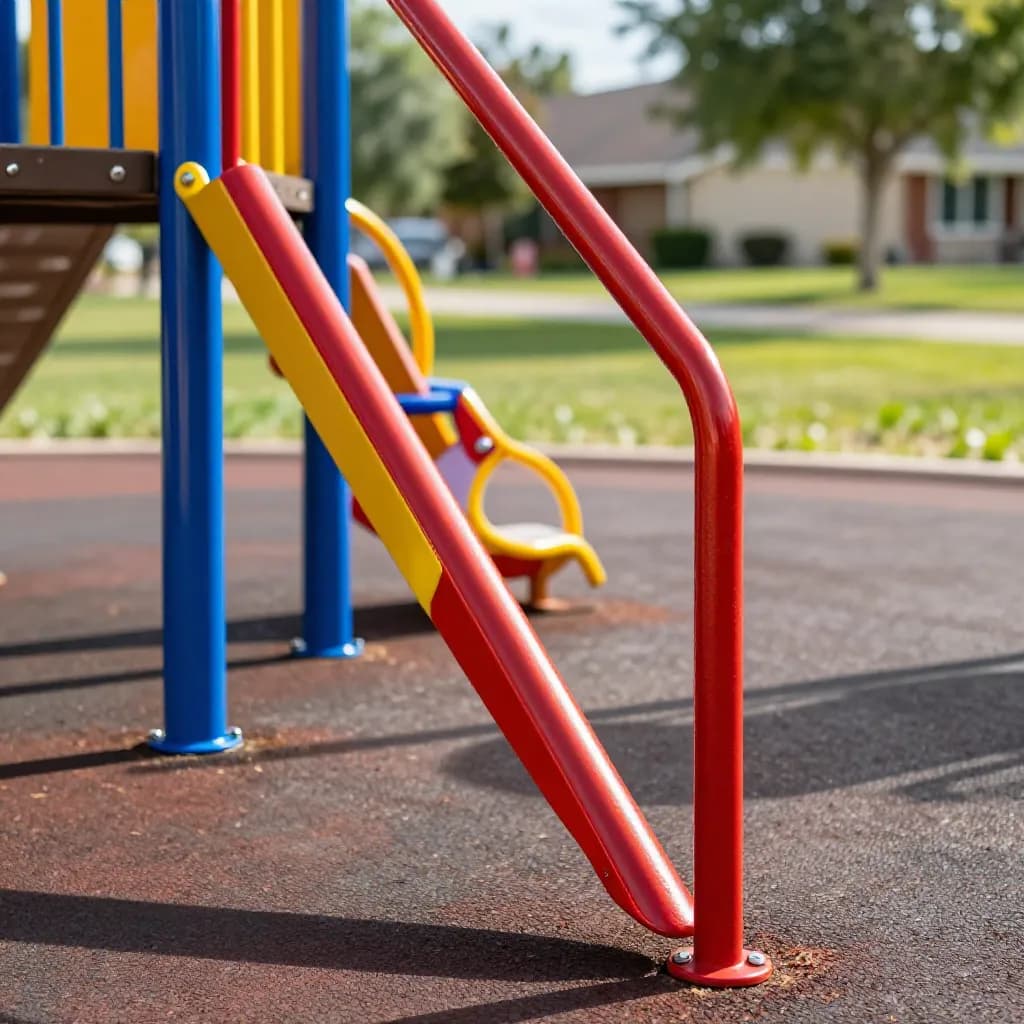
Powder coating has become the standard finishing technology for commercial and public playground equipment worldwide because it meets these demanding requirements more effectively than any alternative finishing method. The thermoset polymer film created by powder coating is inherently free of lead, hexavalent chromium, and other heavy metals restricted by consumer product safety regulations. It creates a smooth, continuous surface without drips, runs, or thin spots that could expose sharp metal edges. And its cross-linked molecular structure provides the impact resistance, abrasion resistance, and UV stability needed for outdoor playground service.
Ready to Start Your Project?
From one-off customs to 15,000-part production runs — get precise pricing in 24 hours.
On This Page
Why Coating Quality Is Critical for Playground Safety
The playground equipment market is governed by comprehensive safety standards — ASTM F1487 and CPSC guidelines in the United States, EN 1176 in Europe, CSA Z614 in Canada, and AS 4685 in Australia — that define requirements for materials, construction, and finishing. While these standards focus primarily on structural safety and entrapment hazards, they also establish requirements for surface finish quality, coating adhesion, and the absence of toxic substances that directly affect coating specification.
Safety Standards: ASTM F1487, EN 1176, and Toxic Substance Restrictions
ASTM F1487 (Standard Consumer Safety Performance Specification for Playground Equipment for Public Use) is the primary safety standard for playground equipment in the United States. While ASTM F1487 does not specify coating type or thickness, it requires that all surfaces accessible to children be free of sharp edges, protrusions, and rough surfaces that could cause injury. This requirement directly affects coating specification — the coating must maintain a smooth, continuous surface throughout the equipment's service life, without chipping, peeling, or cracking that could create sharp edges or expose rough metal substrates.
EN 1176 (Playground Equipment and Surfacing) is the European equivalent, with Part 1 covering general safety requirements and subsequent parts addressing specific equipment types. EN 1176 includes explicit requirements for surface finish, specifying that coatings must be non-toxic, resistant to weathering, and free of substances that could be harmful if ingested by children. The standard references EN 71-3 (Safety of Toys — Migration of Certain Elements) for limits on extractable heavy metals including lead, cadmium, chromium, mercury, and antimony.
The US Consumer Product Safety Improvement Act (CPSIA) sets a maximum total lead content of 90 ppm for children's products, including playground equipment coatings. This is significantly more restrictive than the older 600 ppm limit and effectively eliminates any coating formulation containing lead-based pigments or driers. Modern TGIC-free polyester powder coatings easily comply with the 90 ppm limit, as they are formulated entirely from lead-free raw materials.
Beyond heavy metals, playground coating specifications increasingly address volatile organic compounds (VOCs) and phthalates. Powder coatings inherently contain zero VOCs and no phthalate plasticizers, providing a clean compliance profile for the most restrictive children's product safety regulations worldwide. This inherent safety advantage over liquid paints — which may contain residual solvents, plasticizers, and co-solvents — is a primary reason for powder coating's dominance in the playground equipment market.
UV Stability and Color Retention for Outdoor Playground Service
Playground equipment spends its entire service life outdoors, exposed to intense UV radiation that degrades polymer coatings through photo-oxidation. Color fading and chalking are not merely aesthetic concerns on playground equipment — they signal underlying polymer degradation that reduces the coating's protective performance and can eventually lead to coating failure, substrate corrosion, and the creation of rough or sharp surfaces that pose injury risks to children.
Super-durable polyester powder coatings are the standard specification for playground equipment, providing significantly enhanced UV resistance compared to standard polyester formulations. These coatings incorporate high-performance UV absorbers (typically hydroxyphenyl benzotriazole or hydroxyphenyl triazine types) and hindered amine light stabilizers (HALS) that scavenge the free radicals generated by UV exposure, dramatically slowing the photo-oxidation process.
Accelerated weathering performance requirements for playground coatings typically specify maximum Delta E color change of 3-5 units and gloss retention above 50% after 2,000-3,000 hours of xenon arc exposure per ASTM G155 or ISO 11341. These requirements correspond to approximately 8-12 years of outdoor exposure in temperate climates. Premium playground equipment manufacturers may specify 4,000+ hours of accelerated weathering for their highest-tier product lines, corresponding to 15+ years of color retention.
Color selection for playground equipment favors bright, saturated primary and secondary colors — red, blue, yellow, green, orange, and purple — that are visually appealing to children and create an inviting play environment. These bright colors are among the most challenging for UV stability because the organic pigments used to achieve high chroma are inherently more susceptible to UV degradation than the inorganic pigments used in muted architectural colors. Powder manufacturers address this by using high-performance organic pigments with proven lightfastness ratings (Blue Wool Scale 7-8) and increasing the UV stabilizer loading in bright-color formulations.
Impact Resistance and Abrasion Durability for Heavy Use
Playground equipment experiences extraordinary mechanical stress from daily use by hundreds or thousands of children. Slides, climbing structures, monkey bars, and swing frames are subjected to repeated impact from shoes, hands, and bodies, abrasion from clothing and accessories, and the concentrated wear patterns that develop at popular play points. The coating must withstand this mechanical abuse without chipping, cracking, or wearing through to expose the metal substrate.
Impact resistance is measured per ASTM D2794 (Gardner impact test), with playground coating specifications typically requiring minimum values of 80-120 inch-pounds for both direct and reverse impact. This is significantly higher than the 40-60 inch-pounds typical of architectural coating specifications, reflecting the severe impact loading that playground equipment experiences. Powder coatings achieve these high impact values through their cross-linked polymer structure and the flexibility imparted by carefully balanced resin and cross-linker ratios.
Abrasion resistance is equally important, particularly on slide surfaces, handrails, and climbing grips where repeated contact creates concentrated wear. The Taber abrasion test (ASTM D4060) using CS-17 wheels at 1,000 gram load is the standard evaluation method, with playground specifications typically requiring weight loss below 100 mg after 1,000 cycles. Textured powder coatings, which incorporate fine aggregate particles or are formulated to create a controlled surface texture during cure, provide enhanced grip on climbing surfaces while also improving abrasion resistance through the thicker film build at texture peaks.
Thermal cycling adds another dimension to mechanical durability. Playground equipment in temperate and continental climates experiences temperature swings from -30°C in winter to +70°C on sun-exposed metal surfaces in summer. The coating must maintain adhesion and flexibility through these thermal cycles without cracking or delaminating. Thermal cycling tests per ASTM D6944 (typically -30°C to +70°C for 100-200 cycles) verify that the coating system can withstand the thermal stresses of outdoor playground service.
Antimicrobial Powder Coatings for Playground Hygiene
The COVID-19 pandemic accelerated interest in antimicrobial coatings for high-touch public surfaces, including playground equipment. Antimicrobial powder coatings incorporate biocidal agents — typically silver ion, zinc pyrithione, or copper-based compounds — that inhibit the growth of bacteria, mold, and mildew on the coated surface. While antimicrobial coatings do not replace proper cleaning and hygiene practices, they provide a supplementary layer of protection that reduces microbial populations between cleaning cycles.
Silver ion technology is the most widely used antimicrobial system in playground powder coatings. Silver ions are incorporated into a ceramic carrier (typically silver-doped glass or zeolite) that is blended into the powder formulation at 1-3% by weight. The silver ions are released slowly from the carrier over the coating's lifetime, providing sustained antimicrobial activity. Silver-based antimicrobial coatings have been tested per ISO 22196 (measurement of antibacterial activity on plastics and other non-porous surfaces) and JIS Z 2801, demonstrating 99.9% reduction in common bacteria including E. coli, Staphylococcus aureus, and MRSA within 24 hours of contact.
The regulatory framework for antimicrobial coatings on playground equipment varies by jurisdiction. In the United States, antimicrobial claims on coatings are regulated by the EPA under FIFRA (Federal Insecticide, Fungicide, and Rodenticide Act), requiring registration of the antimicrobial agent and substantiation of efficacy claims. In Europe, the Biocidal Products Regulation (BPR, EU 528/2012) governs antimicrobial treated articles. Playground equipment manufacturers must ensure that any antimicrobial coating claims comply with the applicable regulatory framework.
It is important to note that antimicrobial coatings are not a substitute for regular cleaning and disinfection of playground equipment. The antimicrobial agents reduce microbial populations on the surface but do not eliminate all pathogens, and their effectiveness can be reduced by dirt, organic matter, and surface wear. Playground maintenance programs should continue to include regular cleaning with appropriate disinfectants, with antimicrobial coatings providing supplementary protection between cleaning cycles.
Slide Surfaces: Low-Friction and Temperature Management
Playground slides present unique coating challenges that differ from other playground components. The slide surface must provide controlled friction — low enough for enjoyable sliding but high enough to prevent uncontrolled acceleration — while also managing surface temperature on sun-exposed metal slides and maintaining a smooth, defect-free surface that will not catch on clothing or skin.
Stainless steel is the preferred substrate for commercial playground slides due to its inherent corrosion resistance, smooth surface, and durability. However, stainless steel slides can reach surface temperatures exceeding 70°C in direct sunlight, creating a burn hazard for exposed skin. Powder coating stainless steel slides with solar reflective formulations can reduce surface temperatures by 10-20°C compared to bare stainless steel, significantly reducing the burn risk while also providing color and design flexibility.
The friction coefficient of the slide surface is a critical safety parameter. ASTM F1487 does not specify a friction coefficient for slides, but industry practice targets a dynamic friction coefficient of 0.2-0.4 for a safe and enjoyable sliding experience. Standard smooth polyester powder coatings typically provide friction coefficients in this range on stainless steel substrates. Textured or high-gloss coatings may fall outside this range and should be tested before specification for slide surfaces.
Coating adhesion on stainless steel slides is challenging because stainless steel's passive chromium oxide layer resists chemical bonding. Mechanical abrasion (80-120 grit aluminum oxide blast) to create a surface profile of 25-50 micrometers is essential for adequate powder adhesion. Some applicators also use specialized stainless steel primers or adhesion-promoting pretreatments to enhance the powder-to-substrate bond. The coating must withstand the concentrated abrasion of thousands of daily slides without wearing through, requiring film thicknesses of 80-100 microns and high-abrasion-resistance powder formulations.
Color Design and Inclusive Playground Considerations
Color design for playground equipment serves functional, psychological, and inclusive purposes beyond simple aesthetics. Research in environmental psychology demonstrates that color influences children's play behavior, emotional responses, and spatial orientation within the play environment. Thoughtful color design can encourage exploration, define play zones, support wayfinding for children with cognitive disabilities, and create an inclusive environment that welcomes children of all abilities.
High-contrast color combinations are essential for inclusive playground design. Children with visual impairments rely on color contrast to identify equipment boundaries, step edges, handrails, and transition points between different play elements. The Americans with Disabilities Act (ADA) and EN 1176 both emphasize the importance of visual contrast in playground design. Powder coating's ability to achieve precise, consistent colors across all components enables designers to create the high-contrast color schemes (minimum 70% luminance contrast ratio) recommended by inclusive design guidelines.
Nature-inspired color palettes — earth tones, forest greens, sky blues, and natural wood effects — are increasingly popular for playground equipment in parks and natural settings. Powder coating's sublimation transfer technology enables realistic wood-grain finishes on steel and aluminum playground components, providing the warm aesthetic of timber with the durability and safety advantages of metal construction. These nature-themed finishes are particularly popular for playground equipment in environmentally sensitive areas where visual integration with the natural landscape is a design priority.
Custom color matching allows playground designers to coordinate equipment colors with school colors, community branding, or specific design themes. Powder coating manufacturers can match any color reference sample with Delta E accuracy of 1.0 or less, enabling precise brand color reproduction across all playground components. This capability supports the growing trend toward themed and branded playground environments in schools, community centers, and commercial recreation facilities.
Maintenance and Lifecycle Management of Playground Coatings
Effective maintenance extends the service life of playground coatings and ensures ongoing compliance with safety standards. A structured maintenance program includes regular inspection, cleaning, minor repair, and eventual recoating — each element contributing to the safety and longevity of the playground equipment.
Inspection frequency for playground coating condition should follow the same schedule as structural safety inspections — daily visual checks by site staff, monthly detailed inspections, and annual comprehensive inspections per ASTM F1487 or EN 1176-7. Coating-specific inspection points include checking for chipping, peeling, or cracking that could create sharp edges; rust staining that indicates substrate corrosion beneath the coating; excessive chalking or fading that signals UV degradation; and wear-through on high-contact surfaces such as slide beds, handrails, and climbing grips.
Cleaning playground equipment with mild detergent and water on a regular schedule (weekly to monthly depending on use intensity) removes dirt, organic matter, and chemical contaminants that can accelerate coating degradation. Pressure washing at moderate pressure (1,000-1,500 psi) is effective for thorough cleaning but should not exceed 1,500 psi to avoid coating damage. Graffiti removal should use the mildest effective solvent — many graffiti marks can be removed from powder-coated surfaces with isopropyl alcohol or commercial graffiti removers without damaging the underlying coating.
Field repair of damaged playground coatings is typically performed using two-component polyurethane or epoxy touch-up paints that are color-matched to the original powder coat. The repair area is cleaned, lightly abraded, primed if bare metal is exposed, and topcoated. While liquid paint repairs do not match the original powder coat in durability, they provide effective protection and acceptable appearance until the equipment is scheduled for comprehensive recoating. Full recoating of playground equipment — stripping the old coating, re-preparing the surface, and applying new powder coat — is typically performed every 10-15 years depending on exposure conditions and maintenance quality.
Frequently Asked Questions
Is powder coating safe for playground equipment that children touch?
Yes. Modern TGIC-free polyester powder coatings contain zero lead (well below the 90 ppm CPSIA limit), no hexavalent chromium, no VOCs, and no phthalates. They comply with EN 71-3 heavy metal migration limits and all major children's product safety regulations. The cured thermoset film is chemically inert and safe for direct skin contact.
What safety standards apply to playground equipment coatings?
ASTM F1487 (US) and EN 1176 (Europe) are the primary playground safety standards. They require smooth, non-toxic surfaces free of sharp edges. CPSIA limits lead to 90 ppm in children's products. EN 71-3 restricts extractable heavy metals. Antimicrobial coatings must comply with EPA FIFRA (US) or EU Biocidal Products Regulation.
How long does powder coating last on playground equipment?
Super-durable polyester powder coatings maintain acceptable appearance and protection for 10-15 years on playground equipment with proper maintenance. High-contact surfaces like slides and handrails may show wear sooner. Regular cleaning, prompt repair of damage, and comprehensive recoating every 10-15 years maintains safety and appearance.
Do antimicrobial powder coatings work on playground equipment?
Silver ion antimicrobial powder coatings demonstrate 99.9% reduction in common bacteria (E. coli, Staph aureus, MRSA) per ISO 22196 testing. However, they supplement rather than replace regular cleaning. Effectiveness can be reduced by dirt and surface wear. Antimicrobial claims must comply with EPA FIFRA or EU BPR regulations.
Can powder coating reduce burn risk on metal playground slides?
Yes. Solar reflective powder coating formulations can reduce slide surface temperatures by 10-20°C compared to bare stainless steel or dark-colored coatings. Light colors and infrared-reflective pigments minimize solar heat absorption, significantly reducing the burn risk on sun-exposed metal surfaces during summer months.
Ready to Start Your Project?
From one-off customs to 15,000-part production runs — get precise pricing in 24 hours.