Pet products occupy a unique position in the consumer goods market where the finish must satisfy both human aesthetic expectations and animal safety requirements. Dog crates, pet gates, feeding stations, kennel systems, and exercise equipment are handled daily by pet owners and subjected to chewing, scratching, and biological contamination by animals. The coating on these products must be non-toxic if ingested, resistant to the mechanical forces of animal interaction, easy to clean and sanitize, and visually appealing in a home environment.
Consumer
Powder Coating for Pet Products and Kennels: Non-Toxic, Chew-Resistant Finishes for Animal Safety
Sundial Powder Coating·April 22, 2026·11 min
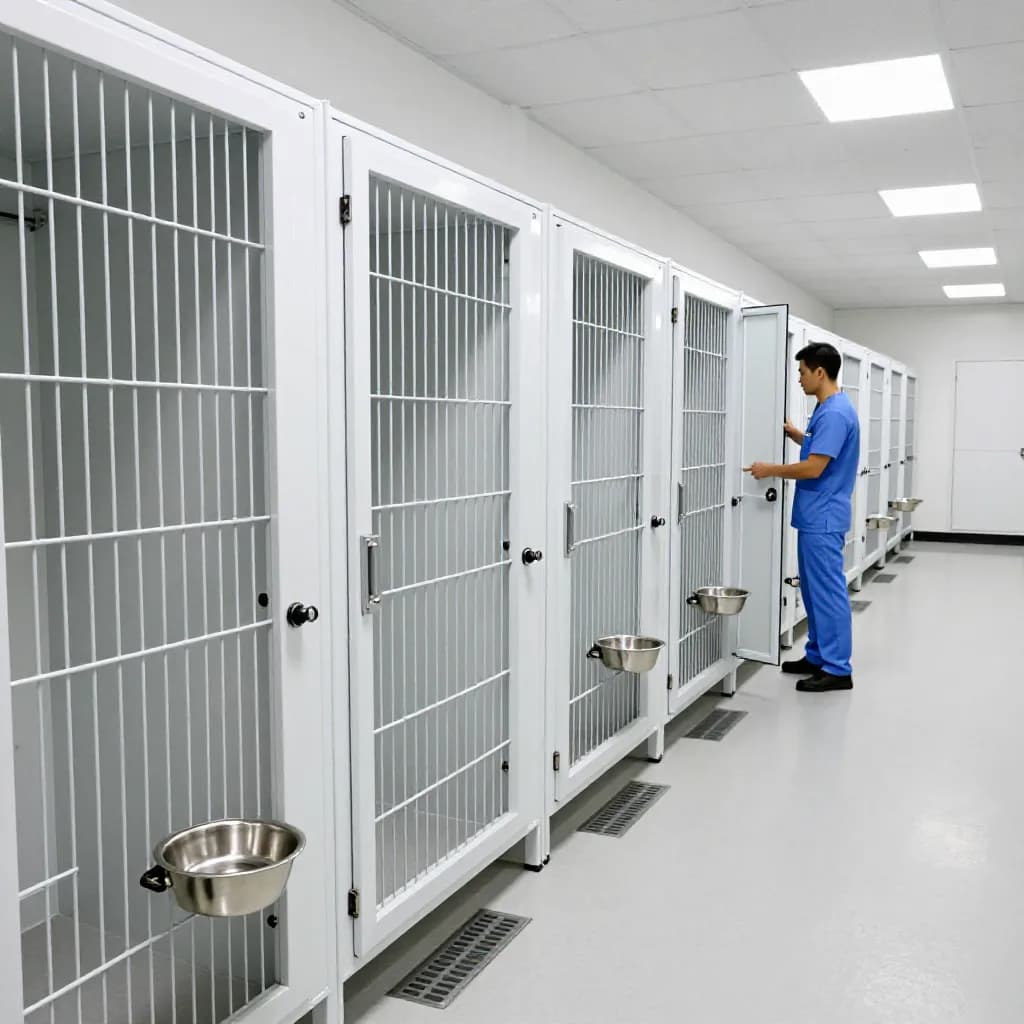
Powder coating meets all of these requirements more effectively than any alternative finishing technology. The fully crosslinked thermoset film is chemically inert after curing, producing no volatile emissions and presenting no toxicity risk if small amounts are ingested by pets. The dense, hard film resists scratching from claws and chewing from teeth far better than liquid paint, which can chip and flake in sheets that pose ingestion hazards. And the smooth, non-porous surface is easy to clean with standard household cleaners and pet-safe disinfectants.
Ready to Start Your Project?
From one-off customs to 15,000-part production runs — get precise pricing in 24 hours.
On This Page
Why Powder Coating Is Ideal for Pet Products
The pet product industry has grown substantially in recent decades, with pet owners increasingly willing to invest in high-quality products that are both functional and aesthetically compatible with home interiors. This trend has driven demand for pet products with premium finishes — sophisticated colors, smooth textures, and consistent quality — that powder coating delivers at production-efficient costs.
This article examines the specific requirements for powder coating pet products, covering toxicity and safety standards, chew and scratch resistance, cleaning and sanitation, and the design considerations that make powder-coated pet products successful in both consumer and professional markets.
Dog Crates and Wire Kennels
Wire dog crates are the highest-volume powder-coated pet product, with millions of units sold annually worldwide. These products consist of welded steel wire panels (typically 3-6 mm diameter wire) assembled into collapsible crate structures. The powder coating on wire crates must provide corrosion protection, aesthetic finish, and — most critically — a safe, non-toxic surface that dogs will inevitably chew, lick, and scratch.
The wire geometry of dog crates presents specific coating challenges. Each wire intersection creates a complex geometry where powder must coat the junction of two cylindrical surfaces meeting at right angles. The electrostatic attraction of powder coating handles these geometries well, wrapping powder around the wire surfaces and into the junction areas. However, achieving uniform film thickness on wire products requires careful control of application parameters — excessive powder charge can cause the Faraday cage effect to starve interior wire intersections, while insufficient charge results in poor wrap-around coverage.
Film thickness on wire crate components is typically 50-80 microns, providing a balance between corrosion protection and material economy. The wire diameter determines the minimum practical film thickness — on 3 mm wire, a 50-micron coating represents a significant proportion of the visible surface, and any thickness variation is noticeable. On 6 mm wire, the same 50-micron coating is proportionally less visible, and minor variations are less apparent.
Chew resistance is the defining performance requirement for dog crate coatings. Dogs, particularly puppies and anxious dogs, will chew on crate wires with forces that can exceed 100 kg at the canine teeth. The coating must resist this chewing force without chipping off in flakes that could be swallowed. Powder coating's superior adhesion (compared to liquid paint, which can delaminate in sheets) means that even when the coating is damaged by chewing, it tends to abrade gradually rather than flake off in large pieces.
The most common colors for dog crates are black (RAL 9005) and dark grey, chosen for their ability to blend with home interiors and hide minor soiling. White and colored crates are available for the premium market, where aesthetic coordination with home decor is a priority. Metallic finishes (silver, bronze) are used for decorative crates designed to function as furniture pieces.
Pet Gates and Barriers
Pet gates — pressure-mounted or hardware-mounted barriers used to restrict pet access to specific areas of the home — are another major application for powder-coated steel and aluminum. These products must combine structural strength (to resist a determined dog pushing against the gate) with a finish quality that is acceptable for installation in living spaces, kitchens, and hallways.
The structural design of pet gates typically uses steel tube frames (15-25 mm diameter) with vertical bar or mesh infill panels. The powder coating must cover all surfaces uniformly, including the interior of tube sections visible through open ends, weld joints where frame members are connected, and the edges of mesh or perforated panel infills. Consistent coverage at these detail areas is important both for corrosion protection and for the visual quality expected of a product installed in the home.
Pressure-mounted gates use rubber or silicone pads at the wall contact points to grip without damaging wall surfaces. The powder coating on the gate frame must be smooth and free of sharp edges or burrs that could scratch walls or floors during installation and removal. Post-coating inspection for edge quality is a standard quality control step for pet gate manufacturers.
The latch mechanism on pet gates must operate smoothly and reliably, and the powder coating at latch contact surfaces must not interfere with the mechanism's function. Film thickness in latch pocket areas is controlled to 40-60 microns (versus 60-80 microns on exposed surfaces) to ensure proper latch engagement and release. Some manufacturers mask latch components during coating and apply a separate lubricating finish to the mechanism.
Extra-tall and extra-wide pet gates for large dogs require enhanced structural rigidity, and the powder coating on these larger products must maintain visual consistency across the greater surface area. Color uniformity and gloss consistency are more challenging to achieve on larger panels, requiring careful control of spray gun overlap patterns and conveyor speed.
Outdoor pet gates and barriers for gardens and patios require enhanced weather resistance compared to indoor products. UV-stabilized polyester powder coatings and zinc phosphate pretreatment (rather than the iron phosphate adequate for indoor products) provide the additional protection needed for outdoor exposure. Stainless steel hardware (hinges, latches, springs) prevents the galvanic corrosion that can occur when dissimilar metals are used in outdoor environments.
Non-Toxic Requirements and Safety Standards
The non-toxic nature of cured powder coatings is one of the primary reasons the technology has been adopted so widely in the pet product industry. However, the claim of non-toxicity must be substantiated through appropriate testing and compliance with applicable safety standards.
In the United States, the Consumer Product Safety Commission (CPSC) regulates the safety of consumer products, including pet products that may be accessible to children. While there is no specific federal standard for pet product coatings, manufacturers typically reference ASTM F963 (Standard Consumer Safety Specification for Toy Safety) as a benchmark for coating safety, particularly for products that children might also contact. ASTM F963 limits the content of heavy metals (lead, cadmium, mercury, chromium, barium, antimony, arsenic, selenium) in surface coatings and requires that these elements do not exceed specified migration limits when tested per CPSC-CH-E1003.
The European Union's EN 71-3 (Safety of Toys — Migration of Certain Elements) provides equivalent requirements for products sold in European markets. This standard limits the migration of 19 elements from coatings into simulated gastric fluid, representing the worst-case scenario of a child or animal ingesting coating material. Powder coatings formulated for pet and toy applications use pigments and additives that comply with these migration limits.
Lead-free formulation is a fundamental requirement for pet product coatings. While lead-based pigments have been eliminated from most powder coating formulations for decades, verification through XRF (X-ray fluorescence) screening or wet chemistry analysis per CPSC-CH-E1001 confirms compliance. The total lead content in the dried coating must not exceed 90 ppm per the US Consumer Product Safety Improvement Act (CPSIA).
BPA (bisphenol A) content is an emerging concern for pet product coatings, particularly for feeding bowls and water dispensers. While standard polyester powder coatings do not contain BPA, some epoxy-based formulations use bisphenol-A epoxy resins. For food and water contact pet products, BPA-free powder coating formulations are available and increasingly specified by manufacturers responding to consumer concerns.
Volatile organic compound emissions from cured powder coatings are negligible because the crosslinking reaction during curing converts virtually all organic components into a stable, non-volatile polymer network. This means that powder-coated pet products do not off-gas harmful chemicals in the home environment, unlike some liquid-painted products that may emit residual solvents for weeks after manufacture.
Feeding Stations and Water Contact Applications
Pet feeding stations — elevated bowl holders, integrated feeding systems, and automatic dispensers — use powder-coated steel or aluminum frames that may come into contact with pet food and water. These applications require coatings that are food-safe, easy to clean, and resistant to the specific staining and corrosion challenges of pet feeding environments.
Food contact compliance for pet feeding products follows similar principles to human food contact regulations, though the specific standards differ. In the US, FDA 21 CFR 175.300 (Resinous and Polymeric Coatings) provides the framework for evaluating coatings that contact food. While this regulation technically applies to human food contact, responsible pet product manufacturers use it as the benchmark for pet feeding product coatings. Extraction testing per FDA protocols verifies that the coating does not leach harmful substances into food or water at levels that could affect animal health.
Staining resistance is a practical concern for pet feeding station coatings. Wet pet food, particularly red-pigmented formulations, can stain light-colored coatings if left in contact for extended periods. Polyester powder coatings with good stain resistance — verified by spot testing with common pet food types — maintain their appearance despite daily food contact. Dark colors (black, dark grey, bronze) are inherently more stain-resistant than light colors and are the most popular choices for feeding stations.
Water bowl areas experience continuous moisture exposure that tests the coating's adhesion and corrosion resistance. Standing water, particularly hard water with high mineral content, can leave deposits on the coating surface and create conditions for underfilm corrosion at any coating defects. Zinc phosphate pretreatment and polyester powder coating at 60-80 microns provide adequate protection for the intermittent water contact typical of pet feeding stations.
Automatic pet water dispensers and fountains present more demanding water contact conditions, with continuous water circulation and potential for biofilm formation on submerged surfaces. Coatings for these applications should be tested for water immersion resistance per ASTM D870 and evaluated for biofilm resistance. Antimicrobial powder coatings incorporating silver ion technology can reduce biofilm formation on water-contact surfaces.
The trend toward elevated feeding stations for large dogs (to reduce strain on the neck and improve digestion) has created demand for furniture-quality powder-coated frames that complement home interiors. These premium feeding stations use the same sophisticated colors and finishes as home furniture, with matte blacks, warm metallics, and wood-tone effects being popular choices.
Cleaning, Sanitation, and Hygiene Performance
Easy cleaning and effective sanitation are essential requirements for pet product coatings. Pet products accumulate hair, saliva, food residue, and biological waste that must be removed regularly to maintain hygiene and prevent odor. The coating must withstand frequent cleaning with household cleaners and pet-safe disinfectants without degrading, discoloring, or losing adhesion.
The smooth, non-porous surface of cured powder coating is inherently easier to clean than rough or textured surfaces. Bacteria, hair, and food particles have fewer attachment points on a smooth coating surface, and cleaning solutions can reach and remove contaminants more effectively. For pet products where hygiene is critical — feeding stations, veterinary equipment, and professional kennel systems — smooth gloss or semi-gloss powder coating finishes are preferred over textured alternatives.
Chemical resistance to common cleaning agents is validated through spot testing per ASTM D1308. The cleaning agents most commonly used on pet products include: mild dish soap (pH 7-8), quaternary ammonium disinfectants (pH 7-9), dilute bleach solutions (sodium hypochlorite at 0.5-1.0%, pH 11-12), enzymatic cleaners for biological waste, and vinegar-based natural cleaners (pH 2-3). Polyester powder coatings resist all of these agents without damage when exposure times are limited to normal cleaning durations (5-15 minutes).
Professional kennel and veterinary facility cleaning protocols are more aggressive than household cleaning, using higher concentrations of disinfectants and more frequent cleaning cycles. Kennel systems may be pressure-washed with hot water (60-80°C) and strong disinfectants on a daily basis. Epoxy-polyester hybrid powder coatings provide enhanced chemical resistance for these demanding professional applications, withstanding the concentrated disinfectants and frequent cleaning cycles without degradation.
Odor resistance is an often-overlooked coating property for pet products. Some coating surfaces can absorb and retain odors from pet waste, food, and biological fluids, becoming increasingly malodorous over time despite regular cleaning. The dense, non-porous surface of powder coating resists odor absorption more effectively than porous or micro-textured surfaces, maintaining a fresh-smelling product throughout its service life.
UV resistance is relevant for pet products used outdoors or near windows. Dog crates, outdoor kennels, and pet gates exposed to sunlight can experience color fading and chalking if the coating lacks adequate UV protection. Standard polyester powder coatings provide sufficient UV resistance for the intermittent sun exposure typical of indoor pet products near windows, while outdoor products benefit from UV-stabilized or super-durable polyester formulations.
Professional Kennel Systems and Veterinary Equipment
Professional kennel systems — used in boarding facilities, veterinary clinics, animal shelters, and breeding operations — represent the most demanding application for powder-coated pet products. These systems must withstand continuous use by multiple animals, aggressive daily cleaning, and the institutional requirement for long service life with minimal maintenance.
Professional kennel panels are typically fabricated from heavy-gauge steel tube (25-40 mm diameter) with welded wire mesh or bar infill. The powder coating specification for professional kennels exceeds that of consumer pet products: film thickness of 80-100 microns (versus 50-80 for consumer products), zinc phosphate pretreatment (versus iron phosphate), and impact resistance of 80+ inch-pounds to withstand the forces generated by large, powerful dogs.
Drain systems and floor-level components in professional kennels experience the most aggressive conditions — continuous moisture exposure, cleaning chemical contact, and biological waste accumulation. These components benefit from epoxy powder coatings that provide superior chemical and moisture resistance compared to standard polyester, though the reduced UV resistance of epoxy is acceptable for indoor kennel environments.
Veterinary examination tables, surgical equipment stands, and treatment room furniture use powder-coated steel frames that must meet healthcare-grade hygiene standards. The coating must resist the full range of veterinary disinfectants, including glutaraldehyde, peracetic acid, and chlorhexidine solutions, without degradation. Antimicrobial powder coatings are increasingly specified for veterinary equipment to provide continuous antimicrobial activity between cleaning cycles.
Animal shelter kennel systems face the additional challenge of accommodating animals of unknown health status, requiring the highest level of sanitation capability. The coating must withstand daily pressure washing with hot water and concentrated disinfectants, and the smooth surface must not harbor pathogens in micro-crevices or coating defects. Quality control for shelter kennel coatings includes holiday detection (pinhole testing) to identify any coating defects that could harbor bacteria.
Modular kennel systems that can be reconfigured for different animal sizes and facility layouts require coatings that withstand repeated assembly and disassembly. Connection points, panel edges, and latch mechanisms experience wear during reconfiguration, and the coating at these points must resist chipping and abrasion. Heavy-duty polyester powder coatings with impact resistance exceeding 100 inch-pounds provide the mechanical toughness these applications demand.
Frequently Asked Questions
Is powder coating safe if my dog chews on the crate?
Yes. Cured powder coating is chemically inert and non-toxic. Pet product coatings comply with ASTM F963 and EN 71-3 heavy metal migration limits. Unlike liquid paint that can flake off in sheets, powder coating tends to abrade gradually if chewed, minimizing ingestion risk. Lead-free formulation is verified through testing per CPSIA requirements.
How do you clean powder-coated pet products?
Clean with mild dish soap and water, quaternary ammonium disinfectants, or dilute bleach solutions (0.5-1.0%). The smooth, non-porous surface resists bacterial attachment and odor absorption. Avoid abrasive pads that could scratch the coating. Professional kennel systems withstand daily pressure washing with hot water and concentrated disinfectants.
Is powder coating on pet feeding bowls food-safe?
Powder coatings formulated for food contact comply with FDA 21 CFR 175.300 extraction testing requirements. BPA-free polyester formulations are available for feeding products. The coating resists staining from pet food and maintains its integrity under daily water and food contact conditions.
How long does powder coating last on dog crates?
For indoor use, powder-coated dog crates maintain their finish for 8-12 years under normal conditions. Heavy chewers may cause localized coating wear sooner. Outdoor kennels last 10-15 years with UV-stabilized polyester coatings. Professional kennel systems with heavy-duty coatings and zinc phosphate pretreatment provide 15-20 years of service.
What colors are available for pet products?
Any color in the RAL range plus custom colors. Black and dark grey are most popular for blending with home interiors. White, metallic silver, and bronze are common for premium decorative crates. Professional kennels typically use grey or beige for institutional environments. Custom colors are available for brand-specific pet product lines.
Ready to Start Your Project?
From one-off customs to 15,000-part production runs — get precise pricing in 24 hours.