Polyester powder coatings are specifically engineered for exterior exposure. Unlike epoxy-based powders that break down rapidly in sunlight, polyester resins are inherently UV-stable and form the backbone of virtually every outdoor powder coating specification. When someone refers to an exterior-grade powder coat, they are almost always talking about a polyester or superdurable polyester formulation.
Consumer
How Well Does Powder Coating Handle Outdoor Weather?
Sundial Powder Coating·April 20, 2026·9 min
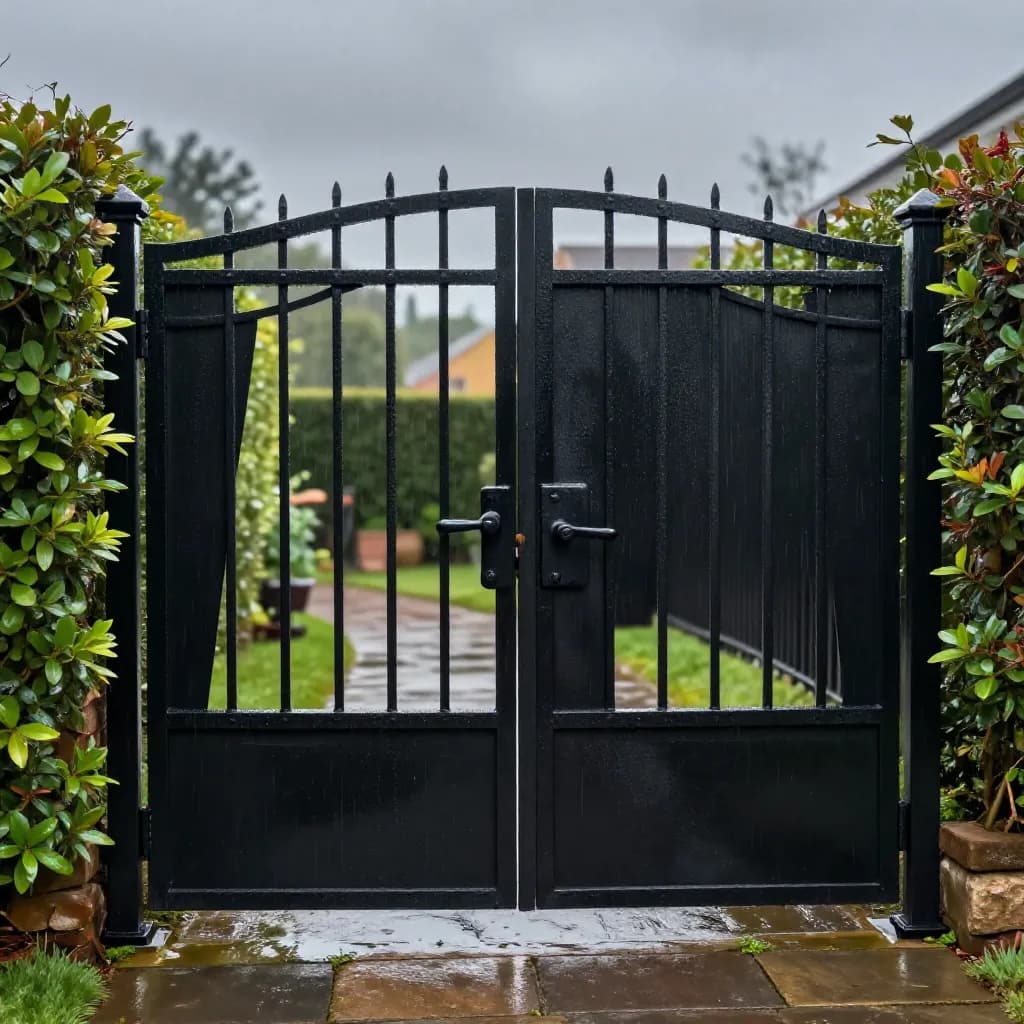
The outdoor performance of polyester powder coatings is not accidental — it is the result of decades of resin chemistry development driven by the architectural and automotive industries. Building facades, window frames, curtain walls, and outdoor furniture all demand coatings that maintain their appearance for years or decades under constant weather exposure. Polyester powder coatings were developed to meet these exact requirements.
Ready to Start Your Project?
From one-off customs to 15,000-part production runs — get precise pricing in 24 hours.
On This Page
Designed for the Outdoors
Industry standards like Qualicoat, GSB, and AAMA define rigorous testing protocols for outdoor powder coatings, including accelerated weathering, salt spray resistance, and Florida exposure testing. Coatings that pass these standards have demonstrated their ability to withstand real-world outdoor conditions across a range of climates, from tropical humidity to alpine freeze-thaw cycles.
UV Resistance
Ultraviolet radiation is the primary enemy of any outdoor coating. UV energy breaks chemical bonds in polymer chains, causing the coating to degrade at the surface. In coatings with poor UV resistance, this manifests as chalking — a powdery residue on the surface — along with fading, loss of gloss, and eventual embrittlement. Polyester powder coatings resist this degradation through the inherent stability of their chemical structure.
Standard polyester powders maintain their color and gloss for five to ten years of outdoor exposure in most climates. For more demanding applications, superdurable polyester formulations extend this to fifteen years or more. These advanced resins use modified chemical structures that are even more resistant to UV bond-breaking, and they are the standard specification for architectural facades and high-visibility outdoor installations.
Geography matters significantly for UV exposure. A powder-coated railing in Scotland faces far less UV stress than one in Arizona or Queensland. In high-UV environments, specifying a superdurable polyester is strongly recommended. In moderate climates, standard polyester provides excellent long-term performance without the need for premium formulations.
Rain, Humidity, and Moisture
Water is the essential ingredient in corrosion, and powder coating's primary job outdoors is to keep it away from the metal substrate. The cured powder film is non-porous and hydrophobic, meaning water beads on the surface rather than soaking through. This continuous barrier prevents moisture from reaching the metal and initiating the electrochemical corrosion process.
High-humidity environments present a constant challenge because the metal surface is perpetually exposed to moisture in the air. Powder coating handles this well because the film does not absorb water the way some liquid paints can. The cross-linked polymer structure is dimensionally stable in humid conditions, maintaining its adhesion and barrier properties without softening, swelling, or blistering.
The critical factor for moisture resistance is not just the topcoat but the pretreatment beneath it. A proper conversion coating — iron phosphate, zinc phosphate, or zirconium-based — creates a chemical bond between the metal and the powder that resists moisture undercutting. Without adequate pretreatment, even the best powder coating can eventually lose adhesion in persistently wet conditions, allowing corrosion to creep beneath the film.
Temperature Extremes
Powder coating performs reliably across a wide range of temperatures, from approximately -40°C to +80°C in continuous surface temperature exposure. This range covers virtually every outdoor environment on Earth, from arctic winters to desert summers. The cured polymer film remains flexible enough to accommodate thermal expansion and contraction of the metal substrate without cracking, peeling, or delaminating.
Freeze-thaw cycling is one of the most punishing conditions for any coating. Water that penetrates a crack or chip freezes and expands, forcing the coating away from the metal and enlarging the damaged area with each cycle. Powder coating's excellent adhesion and flexibility make it highly resistant to freeze-thaw damage, which is why it is the standard finish for outdoor infrastructure in cold climates.
At the high end of the temperature range, powder coating maintains its integrity on surfaces that get hot in direct sunlight. Dark-colored powder coatings on metal surfaces can reach 70-80°C on a hot summer day, well within the coating's service range. For applications that exceed normal outdoor temperatures, such as exhaust components or engine parts, specialized high-temperature powder coatings rated for 200°C or higher are available.
What Eventually Causes Outdoor Powder Coating to Degrade
No coating lasts forever, and understanding the eventual failure modes helps set realistic expectations. The most common form of degradation in outdoor powder coating is UV chalking — a gradual dulling and powdering of the surface caused by years of ultraviolet exposure breaking down the outermost layer of the polymer. This is a slow, cosmetic process that takes years to become noticeable and does not compromise the coating's protective function for a long time after it begins.
Mechanical damage is the other major cause of coating failure outdoors. Impacts from hail, falling branches, lawn equipment, or accidental contact can chip through the coating and expose bare metal. Once exposed, the metal begins to corrode, and if the damage is not addressed, rust can spread beneath the surrounding coating. Regular inspection and prompt repair of chips is the most effective way to extend the life of any outdoor powder coating.
Neglected maintenance accelerates both forms of degradation. Accumulated dirt, bird droppings, tree sap, and salt deposits can chemically attack the coating surface and trap moisture against it. A simple cleaning schedule — washing with mild soap and water a few times per year — removes these contaminants and allows the coating to perform at its best for its full expected lifespan.
Frequently Asked Questions
Will powder coating fade in the sun?
All coatings experience some degree of UV degradation over time, but polyester powder coatings are specifically formulated to resist fading. Standard polyester maintains color well for five to ten years, and superdurable polyester formulations can hold their color for fifteen years or more, even in high-UV environments.
Can powder coating handle coastal salt air?
Yes, with proper specification. A polyester topcoat over appropriate pretreatment provides good protection in coastal environments. For parts directly exposed to salt spray, a two-coat system with an epoxy primer and polyester topcoat is recommended. Regular freshwater rinsing also helps extend the coating's life near the coast.
Does powder coating crack in freezing temperatures?
No. Properly cured polyester powder coating remains flexible at temperatures well below freezing and handles freeze-thaw cycling without cracking or peeling. It is widely used on outdoor infrastructure, fencing, and street furniture in climates that experience harsh winters.
How often should outdoor powder-coated items be cleaned?
A wash with mild soap and water two to four times per year is sufficient for most outdoor applications. In coastal, industrial, or heavily polluted environments, more frequent cleaning is beneficial. Regular cleaning removes contaminants that can degrade the coating surface over time.
Ready to Start Your Project?
From one-off customs to 15,000-part production runs — get precise pricing in 24 hours.