The musical instrument industry has a long and evolving relationship with surface finishing technologies. From the lacquered bodies of acoustic guitars to the chrome-plated hardware of drum kits, the finish on a musical instrument is inseparable from its identity, perceived quality, and market appeal. Powder coating has carved out a significant and growing role in this industry, particularly for metal hardware components, stage equipment, and instrument accessories where durability, color variety, and production efficiency are valued.
Consumer
Powder Coating for Musical Instrument Hardware: Durable Finishes for Guitars, Drums, and Stage Equipment
Sundial Powder Coating·April 22, 2026·11 min
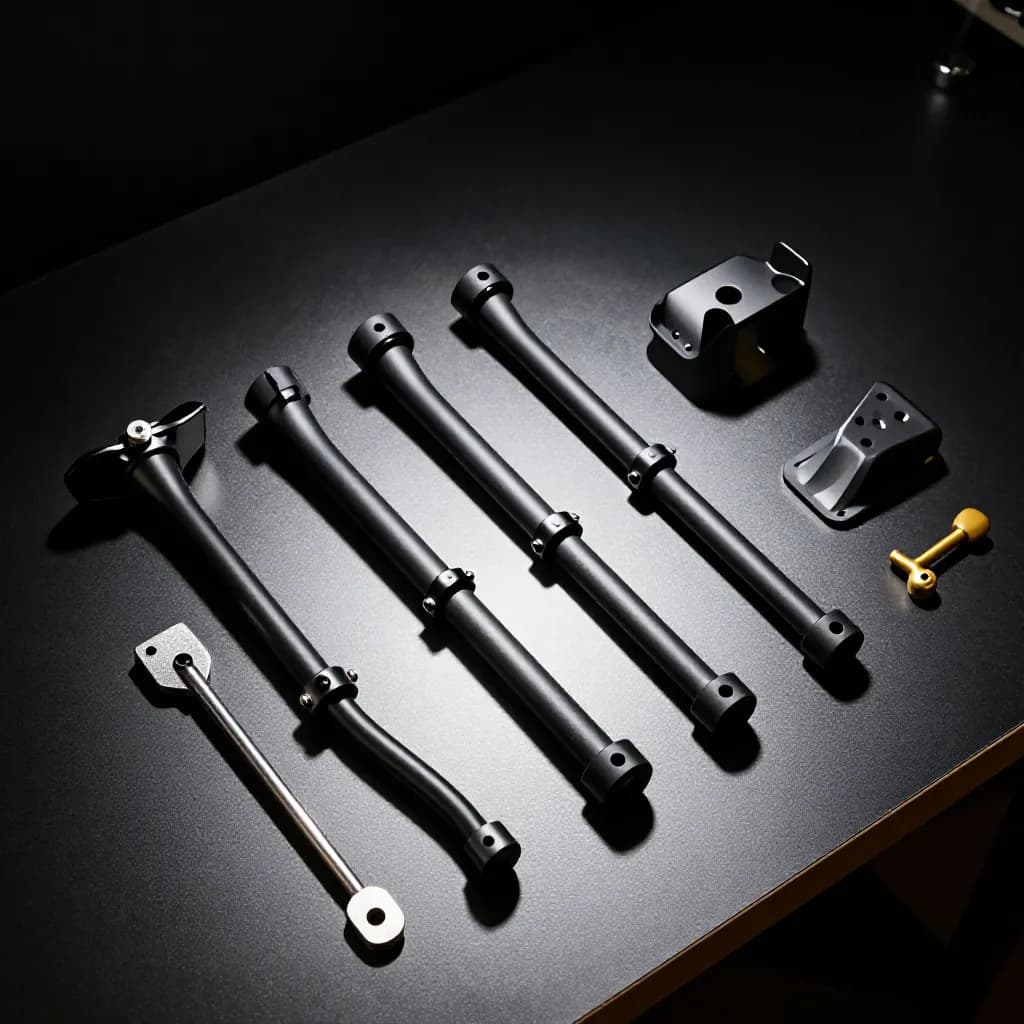
The adoption of powder coating in the music industry has been driven by several converging factors. Musicians and touring professionals demand finishes that withstand the rigors of live performance — transport, setup, teardown, sweat, spilled drinks, and the inevitable bumps and scratches of life on the road. Instrument manufacturers seek finishing technologies that deliver consistent quality at production volumes while meeting environmental regulations. And the creative community values the virtually unlimited palette of colors, textures, and effects that powder coating offers for expressing artistic identity through instrument aesthetics.
Ready to Start Your Project?
From one-off customs to 15,000-part production runs — get precise pricing in 24 hours.
On This Page
Powder Coating in the Musical Instrument Industry
Powder coating is now standard for a wide range of musical instrument and stage equipment applications: guitar bridge plates and pickup covers, drum hardware and shell reinforcement hoops, microphone bodies and stand components, amplifier chassis and speaker cabinets, lighting truss and rigging hardware, and keyboard and synthesizer housings. Each application presents distinct requirements related to the component's function, the stresses it experiences in use, and the aesthetic expectations of the musician.
This article explores the specific applications, technical requirements, and creative possibilities of powder coating in the musical instrument and professional audio/stage equipment sectors.
Guitar Hardware: Bridges, Pickups, and Tremolo Systems
Electric guitar hardware — bridges, tailpieces, pickup covers, tremolo systems, tuning machine housings, and control cavity covers — has traditionally been finished with electroplated chrome, nickel, or gold. While these plated finishes remain popular for their classic appearance, powder coating has emerged as a compelling alternative that offers greater color variety, environmental sustainability, and resistance to the tarnishing and wear that affect plated finishes over time.
Bridge plates and tailpieces are among the most visible hardware components on an electric guitar, and their finish contributes significantly to the instrument's overall aesthetic. Powder coating these die-cast zinc or machined steel components allows manufacturers and custom builders to offer bridges in any color — matching or contrasting with the guitar body finish — rather than being limited to the chrome, nickel, gold, and black chrome options available through electroplating.
The functional requirements for bridge component coatings are demanding. String contact points experience concentrated pressure and abrasion from steel or nickel-wound strings, and the coating at saddle contact surfaces must resist wear without affecting string intonation or sustain. Some builders leave string contact surfaces uncoated (masked during the coating process) to ensure metal-to-metal contact for optimal vibration transfer, while others use the coating as a deliberate tonal modifier that slightly dampens high-frequency harmonics.
Pickup covers — the decorative housings that surround guitar pickups — are ideal candidates for powder coating. These components experience minimal mechanical stress and are primarily aesthetic, making them perfect for creative color treatments. Metallic, textured, and color-shifting powder coatings create distinctive pickup cover finishes that differentiate custom and boutique instruments from mass-produced alternatives.
Tremolo system components (springs, base plates, and arms) experience significant mechanical stress during use. The tremolo arm pivot point and spring contact surfaces are high-wear areas where coating durability is critical. Polyester powder coatings with hardness ratings of 2H or higher resist the wear at these contact points, while the spring cavity components benefit from the corrosion protection that powder coating provides against the moisture and sweat that accumulate in this enclosed space.
Drum Hardware and Shell Components
The drum industry has embraced powder coating for both hardware components and drum shell reinforcement elements. Drum hardware — stands, pedals, mounting brackets, tension rods, and lugs — must withstand the repeated impacts, vibrations, and setup/teardown cycles of professional drumming while maintaining a professional appearance.
Drum stand components (tripod bases, boom arms, cymbal tilters, and memory locks) are fabricated from steel or aluminum tubing and die-cast fittings. These components experience concentrated stress at clamp points, pivot joints, and floor contact areas. Powder coating at 60-80 microns provides corrosion protection and aesthetic finish, with textured finishes preferred for their ability to hide minor scratches and provide grip at adjustment points.
Bass drum pedals and hi-hat stands are the most mechanically stressed drum hardware components, experiencing thousands of impacts per performance. The powder coating on pedal base plates, heel plates, and linkage components must resist the abrasion of drummer's shoes and the mechanical wear of moving parts. Chrome-plated components remain common for the highest-wear surfaces (cam mechanisms, bearing housings), but powder coating is increasingly used for the structural frame components where color customization is desired.
Drum shell reinforcement hoops (bearing edges and reinforcement rings) are traditionally finished with lacquer or wrap, but powder coating offers a durable alternative for metal-shelled drums. Steel and aluminum drum shells can be powder coated in any color, with metallic and sparkle effects creating finishes that rival or exceed the visual impact of traditional drum wraps. The coating must be applied uniformly to avoid affecting the drum's resonance characteristics — thickness variations around the shell circumference can create tonal inconsistencies.
Tension rod casings (lugs) are the decorative housings that hold the tension rods used to tune drum heads. These small, complex-geometry components are ideal for powder coating, and the wide color palette allows drum manufacturers to offer extensive customization options. Die-cast zinc lugs accept powder coating readily after appropriate pretreatment, and the electrostatic application process handles the complex lug geometries efficiently.
The trend toward matte black and satin finishes in drum hardware has been facilitated by powder coating technology. These low-gloss finishes are difficult to achieve consistently with electroplating but are straightforward with powder coating, which can be formulated to any gloss level from full matte (gloss <5 at 60°) to high gloss (gloss >85 at 60°).
Microphone Bodies and Professional Audio Equipment
Professional microphones are precision instruments where the finish must meet exacting aesthetic standards while providing protection against the unique stresses of live performance and studio use. Powder coating has become a popular finishing option for microphone bodies, offering advantages in durability, color variety, and production consistency over traditional liquid paint finishes.
Dynamic microphone bodies — the rugged workhorses of live sound — are typically machined from zinc die-castings or aluminum and must withstand drops, impacts, and the corrosive effects of performers' sweat and breath moisture. Powder coating at 60-80 microns provides a hard, chip-resistant finish that outperforms liquid paint in impact resistance and maintains its appearance through years of professional use. The dense, crosslinked powder coating film also provides a degree of electrical insulation that can reduce handling noise in sensitive microphone circuits.
Condenser microphone bodies for studio use demand flawless surface quality because these instruments are viewed at close range under studio lighting. Any coating defect — orange peel, contamination, or color variation — is immediately visible and unacceptable for premium studio microphones. Thin-film powder coatings applied at 40-60 microns with careful surface preparation achieve the smooth, uniform finishes required for studio-grade instruments.
Microphone grille screens — the perforated metal mesh that protects the microphone capsule — present a unique coating challenge. The fine mesh (typically 0.5-1.0 mm wire with 1-2 mm apertures) must be coated without blocking the openings, which would affect the microphone's acoustic performance. Thin-film powder coatings and careful control of electrostatic charge prevent excessive powder build-up on the mesh, maintaining the open area ratio required for transparent sound transmission.
DI boxes, audio interfaces, and signal processing equipment use powder-coated steel or aluminum enclosures that must provide both electromagnetic shielding and physical protection for the electronic components within. The coating must not compromise the enclosure's EMI shielding effectiveness, which requires maintaining electrical continuity at panel joints and connector mounting points. Grounding points are masked during coating to ensure metal-to-metal contact.
Stage monitor wedges and speaker cabinets use powder-coated steel grilles and hardware that must resist the impacts of stage equipment, road cases, and the occasional errant musician. Heavy-duty polyester powder coatings at 80-100 microns provide the mechanical toughness these applications demand.
Stage Equipment: Lighting, Rigging, and Truss Systems
Professional stage equipment — lighting fixtures, rigging hardware, truss systems, and staging structures — operates in demanding environments where the coating must provide corrosion protection, safety-critical color coding, and resistance to the thermal, mechanical, and chemical stresses of live event production.
Lighting truss systems, fabricated from aluminum or steel tube, are powder coated primarily for corrosion protection and aesthetic consistency. Black (RAL 9005) is the standard color for stage truss, chosen to minimize visual distraction and blend with the dark environment of performance venues. The coating must resist the scratching and abrasion that occurs during truss assembly and disassembly, where sections are connected using conical couplers or bolted joints that create metal-to-metal contact at connection points.
Stage lighting fixtures experience significant thermal stress from the heat generated by lamp sources. While LED fixtures operate at relatively low temperatures, traditional tungsten and discharge lamp fixtures can develop housing temperatures of 100-200°C during operation. High-temperature powder coatings (silicone-modified polyester or pure silicone formulations) are specified for fixture housings that operate above the 120°C continuous service limit of standard polyester powder.
Rigging hardware — shackles, turnbuckles, chain motors, and load-rated connection points — is safety-critical equipment where the coating must not compromise the rated working load. Powder coating rigging hardware requires careful control of film thickness at load-bearing surfaces and thread areas to avoid dimensional interference. Color coding of rigging hardware by load rating (using different powder coating colors for different capacity ranges) provides visual identification that supports safe rigging practice.
Flight cases and road cases use powder-coated steel or aluminum hardware (corners, edges, latches, and handles) that must withstand the extreme handling stresses of touring. These components are loaded and unloaded from trucks, stacked, dropped, and dragged across loading docks, testing coating adhesion and impact resistance to their limits. Heavy-duty polyester powder coatings at 80-100 microns with impact resistance exceeding 100 inch-pounds are standard for flight case hardware.
Portable staging and riser systems use powder-coated steel frames that must support significant loads (typically 500-750 kg/m²) while maintaining a professional appearance. The coating on staging components must resist the scuffing of shoes, the weight of equipment, and the cleaning chemicals used to maintain stage surfaces between events.
Aesthetic Possibilities and Custom Finishes
The creative possibilities of powder coating have made it a favorite among custom instrument builders, boutique manufacturers, and musicians seeking unique visual identities for their instruments and equipment. The technology's ability to deliver virtually any color, texture, and effect in a durable, professional finish opens design possibilities that are impractical or impossible with traditional instrument finishing methods.
Candy and transparent powder coatings create depth effects similar to automotive candy paint finishes, where a transparent tinted topcoat is applied over a metallic base coat. On guitar hardware and drum components, candy finishes produce rich, luminous colors that change intensity with viewing angle and lighting conditions. Red candy over silver metallic, blue candy over gold metallic, and green candy over copper metallic are popular combinations.
Texture coatings offer both aesthetic and functional benefits for musical equipment. Fine wrinkle textures on amplifier chassis and speaker cabinets evoke the classic appearance of vintage audio equipment while providing enhanced grip and scratch resistance. Coarse hammer-tone textures on pedal enclosures create distinctive visual effects that differentiate boutique effects pedals from mass-produced alternatives.
Glow-in-the-dark (phosphorescent) powder coatings have found a niche in stage equipment and instrument accessories, providing visibility in the dark environments of live performance. Drum hardware, microphone stands, and cable management accessories coated with phosphorescent powder glow for several hours after exposure to light, helping musicians locate equipment on dark stages.
Color-shifting (chameleon) powder coatings that change color depending on the viewing angle create dramatic visual effects on instrument hardware and equipment housings. These coatings use interference pigments that selectively reflect different wavelengths at different angles, producing color transitions such as blue-to-purple, green-to-gold, or red-to-copper as the viewer's perspective changes.
Soft-touch powder coatings with a rubberized feel are used for microphone bodies, drum stick grips, and equipment handles where tactile comfort enhances the user experience. These coatings provide a warm, non-slip surface that is more comfortable to hold than hard gloss or metallic finishes, particularly during extended performance sessions.
Durability Testing and Performance for Touring Equipment
Musical instruments and stage equipment used in professional touring face some of the most demanding conditions for any consumer or commercial product. The combination of frequent transport, rapid setup and teardown, temperature and humidity extremes, and the physical energy of live performance creates a stress profile that tests coating durability to its limits.
Transport stress is the primary mechanical challenge for touring equipment coatings. Equipment is loaded into trucks, shipped across countries or continents, unloaded, set up, used for a performance, torn down, and reloaded — often on a daily basis for extended tour runs. Each handling cycle creates opportunities for impacts, scratches, and abrasion that accumulate over hundreds of shows. Impact resistance testing per ASTM D2794 at 60-100 inch-pounds simulates the drop and collision impacts that touring equipment experiences.
Temperature and humidity cycling during transport and storage tests coating adhesion and flexibility. Equipment may travel from an air-conditioned venue to a hot, humid loading dock, then into an unheated truck for overnight transport in freezing conditions. This cycling can cause condensation on metal surfaces, testing the coating's moisture resistance and adhesion under thermal stress. Humidity resistance testing per ASTM D2247 (100% RH at 38°C for 500-1,000 hours) validates coating performance under these conditions.
Sweat and body chemistry exposure is unique to musical instrument applications. The salts, acids, and oils in human sweat are mildly corrosive and can degrade coatings over time, particularly on components that are in direct hand contact during performance. Artificial sweat testing (using standardized synthetic sweat solutions per ISO 12870 or EN 1811) evaluates the coating's resistance to this specific exposure.
Cleaning chemical resistance is important for equipment that is regularly cleaned between uses. Microphones, drum hardware, and stage equipment are cleaned with alcohol-based sanitizers, general-purpose cleaners, and occasionally harsh solvents. The coating must resist these cleaning agents without softening, discoloring, or losing adhesion. Chemical resistance spot testing per ASTM D1308 against common cleaning products verifies compatibility.
UV exposure during outdoor festivals and events can degrade coatings on equipment that spends extended periods in direct sunlight. While most musical equipment is used indoors or under stage covers, outdoor festival season exposes equipment to significant UV loads. Standard polyester powder coatings provide adequate UV resistance for the intermittent outdoor exposure typical of touring equipment.
Frequently Asked Questions
Can guitar hardware be powder coated without affecting tone?
Powder coating adds a thin polymer layer (60-80 microns) that can slightly dampen high-frequency harmonics at string contact points. Many builders mask string saddle contact surfaces to maintain metal-to-metal contact for optimal sustain. For non-contact components like pickup covers and control plates, the coating has no measurable effect on tone.
Is powder coating more durable than chrome plating for drum hardware?
Powder coating offers superior impact and scratch resistance compared to chrome plating, which can chip and flake under heavy use. Chrome provides a harder surface but is brittle. Powder coating also offers unlimited color options versus chrome's limited metallic palette. For touring drummers, powder coating's resilience to transport damage is a significant advantage.
Can microphone grilles be powder coated without affecting sound?
Yes, with careful technique. Thin-film powder coatings at 40-60 microns with controlled electrostatic charge prevent mesh blockage. The open area ratio of the grille must be maintained for transparent sound transmission. Properly applied powder coating has negligible effect on the microphone's frequency response.
What special finishes are available for musical equipment?
Powder coating offers candy/transparent tints over metallic bases, color-shifting chameleon effects, glow-in-the-dark phosphorescent finishes, wrinkle and hammer-tone textures, soft-touch rubberized surfaces, and sparkle effects with metallic flake. These finishes are achieved in a single durable coating layer, unlike multi-step liquid paint processes.
How does powder coating handle the heat from stage lighting?
Standard polyester powder coatings handle continuous temperatures up to 120°C, suitable for LED fixtures. Traditional tungsten and discharge lamp fixtures reaching 100-200°C require silicone-modified polyester or pure silicone powder coatings rated for 200-500°C continuous service.
Ready to Start Your Project?
From one-off customs to 15,000-part production runs — get precise pricing in 24 hours.