The fashion jewelry and accessories industry has discovered powder coating as a versatile finishing technology that delivers vibrant colors, durable protection, and hypoallergenic properties in a single application. While traditional jewelry finishing relies on electroplating (gold, silver, rhodium), anodizing, and liquid lacquer, powder coating offers advantages in color range, environmental sustainability, and skin compatibility that are driving adoption across multiple accessory categories.
Consumer
Powder Coating for Jewelry and Accessories: Thin-Film Color and Hypoallergenic Finishes
Sundial Powder Coating·April 22, 2026·11 min
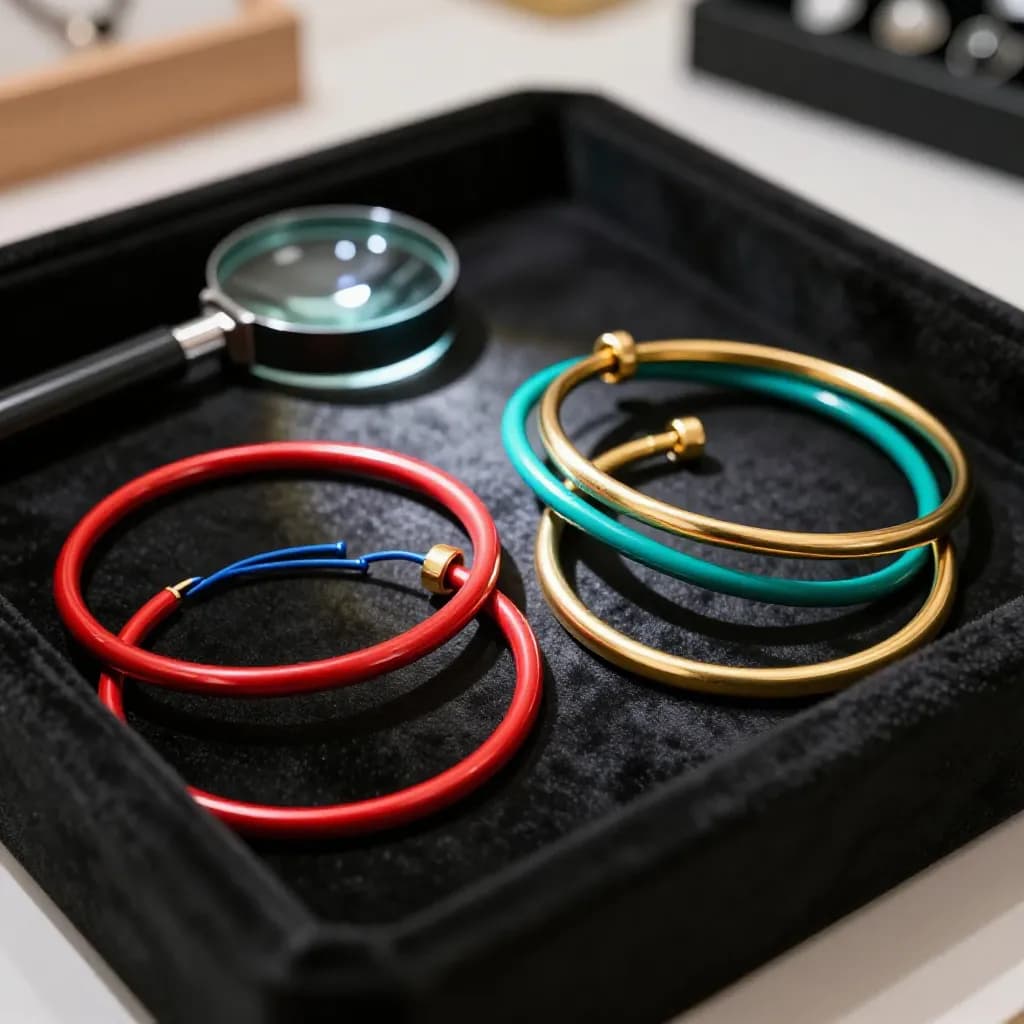
The application of powder coating to jewelry and accessories requires a fundamentally different approach than industrial or architectural coating. The components are small, delicate, and geometrically complex. Film thicknesses must be controlled to 20-50 microns — far thinner than the 60-120 microns standard in architectural applications — to preserve fine detail and maintain the dimensional precision that jewelry and eyewear demand. Surface quality must be flawless because these items are viewed at intimate distances and handled constantly.
Ready to Start Your Project?
From one-off customs to 15,000-part production runs — get precise pricing in 24 hours.
On This Page
Powder Coating Enters the World of Fashion and Accessories
Despite these challenges, powder coating has established itself in several key accessory markets. Fashion jewelry brands use powder coating to create bold color statements that would be impossible with traditional metallic plating. Watch case manufacturers use powder coating for colored sport and fashion watches. Eyeglass frame producers use powder coating as their primary finishing technology for metal frames. And the growing market for tech accessories — phone cases, laptop stands, smartwatch bands — has embraced powder coating for its combination of durability and design flexibility.
This article examines the specific technologies, techniques, and considerations for applying powder coating to jewelry and accessories, from thin-film application methods to hypoallergenic formulation requirements.
Fashion Jewelry: Bold Colors and Creative Finishes
Fashion jewelry — costume jewelry, statement pieces, and trend-driven accessories — is one of the most creatively exciting applications for powder coating. Unlike fine jewelry, where precious metal finishes are integral to the product's value proposition, fashion jewelry derives its appeal from design, color, and visual impact, making powder coating's unlimited color palette a powerful design tool.
Base metals commonly used in fashion jewelry — brass, zinc alloy (zamak), stainless steel, and aluminum — are all excellent substrates for powder coating. Zinc alloy castings, which account for the majority of fashion jewelry components, accept powder coating readily after appropriate cleaning and pretreatment. The electrostatic application process handles the complex three-dimensional geometries of jewelry components — rings, pendants, earring findings, and bracelet links — more uniformly than dip or spray liquid coating methods.
Color trends in fashion jewelry change seasonally, and powder coating's ability to produce small batches of custom colors economically supports the rapid product development cycles of the fashion industry. A jewelry manufacturer can introduce a new color collection each season without the minimum order quantities and lead times associated with custom electroplating solutions.
Matte finishes have become particularly popular in contemporary fashion jewelry, providing a sophisticated, understated aesthetic that contrasts with the traditional high-gloss metallic finishes of plated jewelry. Powder coating achieves consistent matte finishes (gloss <10 at 60° geometry) that are difficult to replicate with liquid coating methods, where achieving uniform low gloss on small, complex parts is challenging.
Textured powder coatings create tactile surfaces that add a sensory dimension to jewelry design. Sand textures, stone effects, and soft-touch finishes transform metal jewelry components into pieces that invite touch and interaction. These textured finishes also provide practical benefits — they hide minor surface imperfections in the base metal casting and resist showing fingerprints and minor scratches.
Multi-color and gradient effects are achieved through masking techniques or sequential coating operations. A pendant might feature a matte black body with a glossy red accent, or a bracelet might transition from deep blue to turquoise across its length. These effects require skilled application but produce unique pieces that command premium positioning in the market.
Watch Cases and Smartwatch Components
The watch industry uses powder coating for sport watches, fashion watches, and smartwatch housings where color, durability, and lightweight construction are priorities. Powder-coated watch cases offer advantages over traditional plated or PVD-coated cases in terms of color variety, impact resistance, and production flexibility.
Watch case coating requires exceptional precision. Film thickness must be controlled to 25-40 microns to maintain the tight dimensional tolerances of watch case construction — the case back, bezel, and crystal must all fit precisely, and excessive coating thickness can prevent proper assembly. Thin-film powder coating formulations with fine particle size distributions (D50 of 20-25 microns, compared to 30-40 microns for standard powders) enable the controlled, thin application these components demand.
The mechanical demands on watch case coatings are significant. Daily wear exposes the case to impacts against door frames, desks, and other hard surfaces. The case back experiences friction from wrist movement against skin and clothing. The crown and pushers are operated by fingers, creating localized wear at contact points. Polyester powder coatings with pencil hardness of 2H-3H and impact resistance exceeding 60 inch-pounds provide the mechanical durability these applications require.
Sweat resistance is a critical requirement for watch case coatings. The combination of salt, lactic acid, and urea in human sweat creates a mildly corrosive environment that can degrade coatings over time. Artificial sweat testing per ISO 12870 (using standardized synthetic sweat at 40°C for 48-168 hours) validates the coating's resistance to this specific exposure. Coatings that pass this test without discoloration, blistering, or adhesion loss are suitable for direct skin contact applications.
Smartwatches and fitness trackers add electronic considerations to the coating specification. The coating must not interfere with wireless signal transmission (Bluetooth, Wi-Fi, NFC), which means that metallic powder coatings containing conductive pigments may need to be avoided in antenna areas. Non-metallic colors applied at thin film thicknesses have negligible effect on wireless performance.
The trend toward customizable watch aesthetics — where consumers select case colors, strap combinations, and dial designs — has increased demand for powder coating's ability to produce small batches of diverse colors economically. A watch brand can offer 20-30 case color options without maintaining large inventories of pre-finished cases.
Eyeglass Frames: The Largest Accessories Market for Powder Coating
Metal eyeglass frames represent the single largest application for powder coating in the accessories industry. Virtually every metal-framed pair of glasses or sunglasses sold worldwide features powder-coated components, making this a multi-billion-unit annual market for the powder coating industry.
Eyeglass frame coating must meet an exceptionally demanding combination of requirements. The coating must be thin enough (20-40 microns) to preserve the fine detail of frame designs and maintain the precise dimensions required for lens fitting. It must be flexible enough to withstand the repeated bending of temple arms during daily use. It must resist sweat, cosmetics, hair products, and cleaning solutions. And it must maintain its color and surface quality for the 2-3 year typical replacement cycle of prescription eyewear.
The primary substrate materials for metal eyeglass frames are titanium, beta-titanium alloys, stainless steel, Monel (nickel-copper alloy), and aluminum. Each material requires specific pretreatment for reliable powder adhesion. Titanium frames, which command the premium segment, require careful surface activation (typically by micro-blasting with fine aluminum oxide) to overcome the tenacious oxide layer that inhibits coating adhesion.
The eyeglass frame coating process uses specialized equipment designed for the small, delicate components involved. Miniature electrostatic spray guns with low powder output rates (5-20 g/min compared to 100-400 g/min for industrial guns) provide the precise, controlled application needed for thin-film coating on small parts. Frames are typically hung on custom fixtures that present all surfaces to the spray guns while protecting lenses (if pre-fitted) and hinge mechanisms from overspray.
Color trends in eyewear follow fashion cycles, with current preferences favoring matte finishes, earth tones, and subtle metallic effects. The ability to produce exact color matches to fashion designer specifications — coordinating frame colors with clothing collections and seasonal palettes — is a key capability that powder coating provides to the eyewear industry.
Hypoallergenic performance is particularly important for eyeglass frames because they are in continuous skin contact for 12-16 hours per day. The powder coating acts as a barrier between the base metal and the wearer's skin, preventing nickel and other allergenic metals from contacting the skin. This barrier function is one of the primary reasons powder coating has displaced electroplating for many eyeglass frame applications.
Thin-Film Application Technology and Quality Control
Achieving the thin, uniform films required for jewelry and accessories demands specialized powder coating technology that differs significantly from standard industrial application methods. The key challenges are controlling film thickness to 20-50 microns (versus 60-120 microns for architectural work), maintaining coverage on small, complex geometries, and achieving flawless surface quality on components viewed at intimate distances.
Ultra-fine powder formulations are the foundation of thin-film application. Standard powder coatings have median particle sizes (D50) of 30-40 microns, which makes it difficult to achieve uniform films below 50 microns because individual particles are a significant fraction of the target film thickness. Thin-film powders are ground to D50 values of 15-25 microns, enabling smooth, uniform films at 20-40 microns. These finer powders require modified application equipment — lower air velocities, reduced electrostatic voltage, and specialized fluidization systems — to handle their different flow characteristics.
Triboelectric charging (friction-based) is often preferred over corona charging (high-voltage) for thin-film jewelry applications. Triboelectric guns produce a more uniform charge distribution on the powder particles, reducing the Faraday cage effect that causes powder to accumulate on outer surfaces while starving recessed areas. This more uniform charge distribution improves coverage on the complex geometries typical of jewelry and eyewear components.
Fixturing is critical for small-part coating. Each component must be securely held in a position that presents all surfaces to the spray guns while minimizing contact points that create uncoated areas. Custom fixtures for jewelry coating are often designed for specific product families, with spring clips, wire hooks, or magnetic holders that grip the component at inconspicuous locations.
Quality control for jewelry and accessory coatings is primarily visual, supplemented by instrumental measurement. Every coated piece is visually inspected under magnification (typically 3-5x) and standardized lighting for surface defects, color consistency, and coverage completeness. Film thickness is measured on sample pieces using eddy current or magnetic induction gauges calibrated for the thin films involved. Adhesion testing per ISO 2409 (cross-cut) verifies coating bond strength, with a rating of 0 (no coating removal) required for accessories that will experience daily handling and flexing.
The reject rate for jewelry and accessory coating is typically higher than for industrial applications due to the stringent visual quality requirements. Reject rates of 5-15% are common, with the most frequent defects being thin spots on complex geometries, contamination-related surface defects, and color variation between pieces in the same batch.
Hypoallergenic Properties and Skin Contact Safety
Skin contact safety is a defining requirement for powder coatings used on jewelry, watches, and eyeglass frames. Metal allergies — particularly nickel allergy, which affects 10-20% of the population — can cause contact dermatitis ranging from mild irritation to severe inflammatory reactions. Powder coating provides an effective barrier between allergenic base metals and the wearer's skin, making it a key enabling technology for hypoallergenic accessories.
The EU Nickel Directive (now incorporated into REACH Regulation, Annex XVII, Entry 27) limits nickel release from items intended for prolonged skin contact to 0.5 µg/cm²/week. This regulation effectively requires that nickel-containing base metals (including many stainless steels, Monel, and nickel-plated components) be coated with a barrier that prevents nickel migration to the skin surface. Powder coating, when applied at adequate thickness with complete coverage, provides this barrier function reliably.
Nickel release testing per EN 12472 (accelerated wear simulation) and EN 1811 (nickel release measurement) validates the barrier effectiveness of the powder coating. The test protocol subjects coated samples to simulated wear using an abrasive medium, then measures nickel release from the worn surface into artificial sweat solution. Powder coatings at 25 microns or more typically pass this test with nickel release well below the 0.5 µg/cm²/week limit, even after the simulated wear phase.
The powder coating formulation itself must be free of allergenic substances. Standard polyester powder coatings do not contain nickel, chromium, cobalt, or other common contact allergens, making them inherently suitable for skin-contact applications. However, some specialty pigments (particularly certain yellows and greens) may contain chromium compounds, so formulations for skin-contact accessories must be verified as free of regulated allergens.
Biocompatibility testing beyond nickel release may be required for accessories marketed as hypoallergenic or for medical device applications (such as MRI-compatible eyeglass frames). Cytotoxicity testing per ISO 10993-5 and sensitization testing per ISO 10993-10 provide additional assurance that the coating does not cause adverse biological reactions.
The durability of the hypoallergenic barrier is as important as its initial effectiveness. If the coating wears through at skin contact points — the inside of a ring band, the nose pads of eyeglasses, or the case back of a watch — the allergenic base metal is exposed and the barrier function is lost. Wear resistance at skin contact points is therefore a critical performance parameter, tested through accelerated wear simulation and real-world wear trials.
Sustainability and Market Trends in Accessory Coatings
The jewelry and accessories industry is experiencing a significant shift toward sustainable materials and processes, driven by consumer demand for environmentally responsible products and regulatory pressure to eliminate hazardous substances from consumer goods. Powder coating aligns strongly with this sustainability trend, offering environmental advantages over the traditional finishing technologies it replaces.
Electroplating — the dominant traditional finishing technology for jewelry and accessories — generates significant environmental impacts. Plating baths contain heavy metals (chromium, nickel, cadmium, copper, zinc) and strong acids that require careful waste treatment. Hexavalent chromium, used in decorative chrome plating, is classified as a carcinogen and is subject to increasing regulatory restriction under REACH and equivalent regulations worldwide. Powder coating eliminates these hazardous materials entirely, producing zero heavy metal waste and zero hazardous air emissions.
The circular economy potential of powder-coated accessories is another sustainability advantage. At end of life, powder-coated metal accessories can be recycled through standard metal recovery processes — the thin powder coating film is consumed during melting without generating hazardous byproducts. This contrasts with electroplated items, where the plating metals may complicate recycling and introduce contaminants into the recovered metal stream.
Consumer trends in the accessories market are creating new opportunities for powder coating. The demand for personalization and customization — choosing specific colors, textures, and finishes for individual pieces — aligns with powder coating's ability to produce small batches of diverse colors economically. Direct-to-consumer jewelry brands are leveraging this capability to offer made-to-order accessories in custom colors.
The convergence of fashion and technology in wearable devices (smartwatches, fitness trackers, smart jewelry) is creating new coating requirements that powder coating is well-positioned to address. These devices require finishes that are durable, skin-safe, wireless-signal-transparent, and available in fashion-forward colors — a combination of requirements that powder coating meets more comprehensively than any alternative finishing technology.
Minimalist and gender-neutral jewelry trends favor the matte, understated finishes that powder coating delivers naturally. The move away from traditional high-gloss gold and silver plating toward matte blacks, soft pastels, and earth tones plays directly to powder coating's strengths in producing consistent low-gloss finishes on small, complex components.
Frequently Asked Questions
Is powder-coated jewelry hypoallergenic?
Yes, when properly applied. Powder coating creates an effective barrier between allergenic base metals (particularly nickel) and the skin. Coatings at 25+ microns pass EU nickel release testing (EN 1811) with results well below the 0.5 µg/cm²/week limit. The coating formulation itself is free of common contact allergens.
How thin can powder coating be applied on jewelry?
Ultra-fine powder formulations with particle sizes of 15-25 microns (D50) enable uniform films as thin as 20-30 microns. This preserves fine detail on jewelry components while providing adequate protection and color coverage. Standard industrial powders cannot achieve these thin films consistently.
Does powder coating last on eyeglass frames?
Yes. Powder-coated eyeglass frames maintain their appearance through the typical 2-3 year replacement cycle. The coating resists sweat, cosmetics, hair products, and cleaning solutions. Flexibility testing confirms the coating withstands repeated temple arm bending without cracking. Thin-film application at 20-40 microns preserves frame dimensions for precise lens fitting.
Can powder coating replace gold or silver plating on jewelry?
Powder coating cannot replicate the metallic luster of precious metal plating, but it offers advantages in color variety, durability, and environmental sustainability. Metallic powder coatings provide attractive gold-tone, silver-tone, and rose-gold effects that satisfy fashion jewelry requirements. For fine jewelry where precious metal appearance is essential, plating remains preferred.
Does powder coating interfere with smartwatch wireless signals?
Non-metallic powder coatings at thin film thicknesses have negligible effect on Bluetooth, Wi-Fi, and NFC signals. Metallic powder coatings containing conductive pigments may attenuate signals and should be avoided in antenna areas. Watch manufacturers design antenna placement to work with the specified coating system.
Ready to Start Your Project?
From one-off customs to 15,000-part production runs — get precise pricing in 24 hours.