Hard water stains are among the most common cosmetic problems affecting powder coated surfaces, particularly on architectural installations, outdoor furniture, and vehicles. Understanding what causes these stains explains why they can be so stubborn and how to prevent them from becoming permanent.
Consumer
Hard Water Stain Removal from Powder Coated Surfaces: Mineral Deposits, Cleaning, and Prevention
Sundial Powder Coating·April 23, 2026·10 min
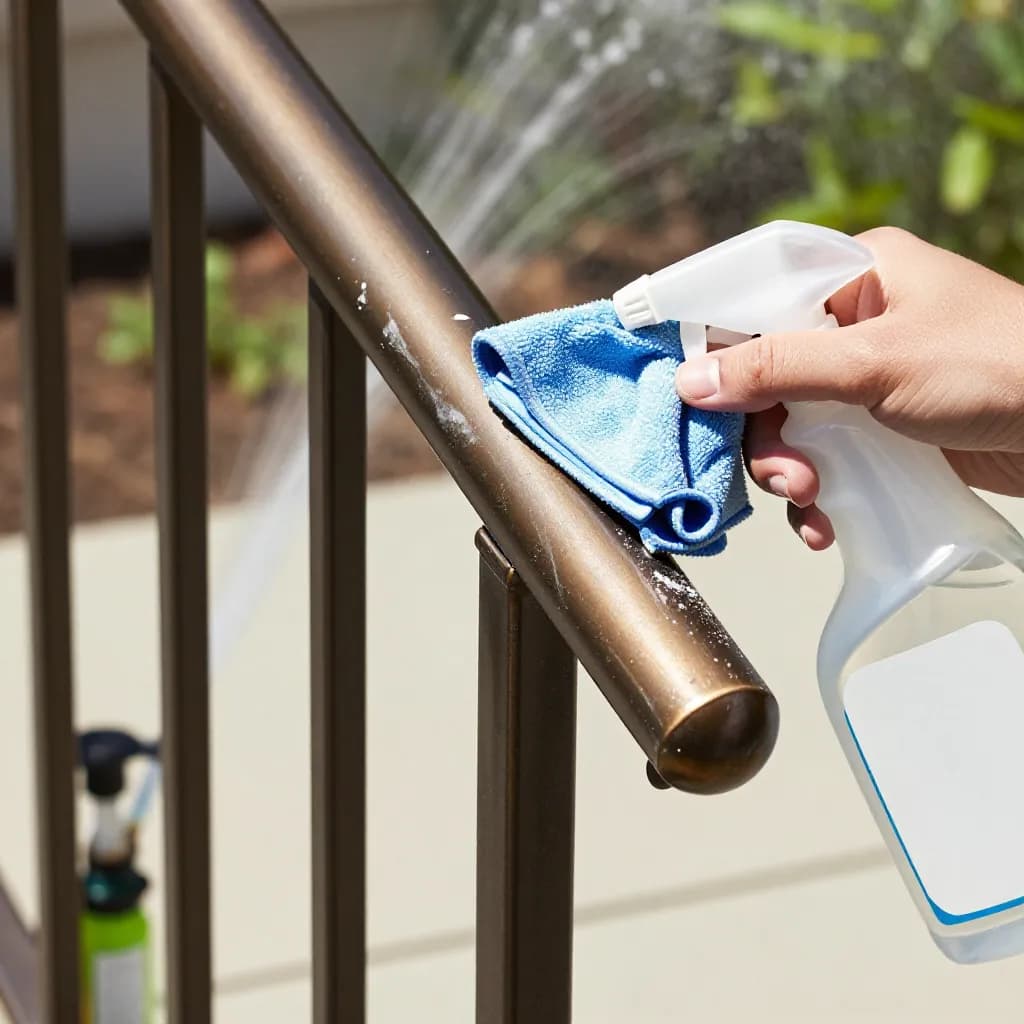
Hard water contains dissolved minerals, primarily calcium carbonate and magnesium carbonate, along with smaller amounts of silica, iron, and other minerals. When hard water contacts a powder coated surface and evaporates, the water disappears but the minerals remain behind as a solid deposit. Each water droplet leaves a small ring of mineral residue, and repeated wetting and drying cycles build up visible white or chalky deposits.
Ready to Start Your Project?
From one-off customs to 15,000-part production runs — get precise pricing in 24 hours.
On This Page
What Causes Hard Water Stains on Powder Coated Surfaces
The source of hard water varies by situation. Sprinkler systems are the most common cause of hard water staining on architectural surfaces and outdoor furniture. The water sprays onto the coated surface, evaporates in the sun, and leaves mineral deposits behind. Over weeks and months of regular sprinkler exposure, the deposits build up into heavy, visible staining.
Other sources include garden hoses with hard municipal water, rain runoff from concrete or masonry surfaces that picks up mineral content, condensation from air conditioning units, and even morning dew in areas with mineral-rich groundwater. Vehicles parked near sprinklers or washed with hard water without proper drying are also commonly affected.
The severity of staining depends on the mineral content of the water, measured in parts per million or grains per gallon. Water above 120 ppm or 7 grains per gallon is considered hard, and water above 180 ppm or 10.5 grains per gallon is very hard. In very hard water areas, visible staining can develop after just a few exposure cycles.
Fresh mineral deposits are relatively easy to remove. Aged deposits that have been baked onto the surface by sun and heat become progressively harder to remove and may eventually etch into the coating surface, causing permanent damage.
Safe Cleaning Methods for Light to Moderate Staining
Light to moderate hard water staining that has developed over weeks to months can usually be removed with readily available household products and gentle technique. The key is to dissolve the mineral deposits chemically rather than trying to scrub them off mechanically.
Diluted white vinegar is the most accessible and effective cleaner for calcium and magnesium carbonate deposits, which make up the majority of hard water stains. Mix one part white vinegar with ten parts water for a safe starting concentration. Apply the solution to the stained area with a soft cloth or spray bottle, allow it to sit for two to three minutes, then wipe away and rinse thoroughly with clean water.
For slightly heavier deposits, increase the vinegar concentration to one part vinegar to five parts water, but do not exceed this ratio. Undiluted vinegar has a pH around 2.5, which is acidic enough to etch the powder coating surface if left in contact too long. Always rinse thoroughly after using any vinegar solution, and never allow it to dry on the surface.
Commercial hard water stain removers designed for automotive or household use are effective alternatives to vinegar. Look for products with a pH between 3 and 5 that are labeled safe for painted surfaces or clear coats. These products are formulated to dissolve mineral deposits without damaging the underlying finish. Follow the manufacturer's instructions for application and contact time.
For staining on vertical surfaces such as facade panels or railings, apply the cleaning solution from the bottom up to prevent streaking. The solution running down over dry staining can create streak marks that are difficult to remove. Working from the bottom up ensures that the entire surface is wetted before the solution begins to run.
After removing the mineral deposits, wash the entire cleaned area with pH-neutral detergent and water to neutralize any remaining acid from the cleaning solution. Dry the surface with a clean cloth to prevent new water spots from forming as the rinse water evaporates. This final step is often overlooked but is important for achieving a spot-free result.
Tackling Heavy and Aged Mineral Deposits
Heavy mineral deposits that have accumulated over months or years, or deposits that have been baked onto the surface by repeated sun exposure, require more aggressive treatment than light staining. These deposits may have partially bonded with the coating surface, making them resistant to mild cleaning solutions.
For heavy calcium and magnesium deposits, a stronger acid solution may be needed. Citric acid dissolved in water at a concentration of 5 to 10 percent is effective and safer for powder coatings than stronger mineral acids. Citric acid is available as a powder from grocery stores and cleaning supply retailers. Dissolve it in warm water, apply to the stained area, and allow 5 to 10 minutes of contact time before rinsing.
Silica-based deposits, which appear as a hazy white film rather than distinct spots, are the most difficult hard water stains to remove. Silica is not dissolved by vinegar or citric acid. Specialized silica removers containing hydrofluoric acid derivatives are available, but these products must be used with extreme caution. They are aggressive chemicals that can damage powder coatings if used incorrectly. Follow the manufacturer's instructions precisely, use the minimum contact time, and rinse thoroughly.
For deposits that resist chemical removal, a clay bar treatment can be effective. Automotive clay bars are designed to remove bonded surface contaminants from painted surfaces without scratching. Lubricate the surface with a clay bar lubricant or soapy water, and gently glide the clay bar over the stained area. The clay picks up mineral deposits that are sitting on or lightly bonded to the coating surface.
If chemical and clay bar methods fail to remove the deposits completely, the minerals may have etched into the coating surface. At this point, the staining is no longer a surface deposit but actual damage to the coating. Light polishing with automotive compound may improve the appearance, but deeply etched mineral staining may require professional treatment or touch-up.
Always test any aggressive cleaning method on an inconspicuous area first. Heavy-duty mineral removers and extended acid contact times carry a real risk of damaging the powder coating. Confirming compatibility on a hidden area prevents visible damage to prominent surfaces.
Prevention Strategies for Hard Water Staining
Preventing hard water stains is far easier than removing them, and several practical strategies can eliminate or dramatically reduce mineral deposit buildup on powder coated surfaces.
Sprinkler management is the most impactful prevention measure for architectural and landscape applications. Adjust sprinkler heads so that water does not spray onto powder coated surfaces including fences, railings, window frames, and outdoor furniture. Even a small adjustment in spray angle or range can eliminate the problem entirely. If sprinklers must wet coated surfaces, schedule irrigation for early morning when surfaces are cool and evaporation is slow, reducing mineral concentration.
Water softening systems remove calcium and magnesium from the water supply before it reaches sprinklers, hoses, and taps. Softened water leaves virtually no mineral deposits when it evaporates. For properties with significant hard water staining problems, a water softener is a permanent solution that benefits all surfaces, not just powder coatings.
Drying surfaces after water contact prevents mineral deposits from forming. When washing powder coated items with hard water, dry them immediately with a clean cloth rather than allowing them to air dry. This simple step eliminates water spots entirely. For vehicles, a chamois or microfiber drying towel used after every wash prevents the gradual buildup of mineral deposits.
Protective wax or sealant creates a hydrophobic surface that causes water to bead and run off rather than sitting on the surface and evaporating in place. This reduces the amount of mineral residue left behind and makes any deposits that do form easier to remove during routine cleaning. Apply wax or sealant at least twice per year, or more frequently on surfaces with heavy water exposure.
For new construction and renovation projects, consider the hard water exposure risk during design. Position powder coated elements away from sprinkler zones, ensure adequate drainage to prevent water pooling on horizontal surfaces, and specify coatings with smooth, high-gloss finishes that shed water more effectively than textured or matte finishes.
Hard Water Staining on Architectural Powder Coated Surfaces
Architectural installations face unique hard water staining challenges because of their scale, fixed position, and long expected service life. Staining that might be a minor annoyance on a piece of furniture becomes a significant aesthetic problem on a building facade or entrance system.
Window frames are the most commonly affected architectural element. Condensation from the glass, rain runoff from the window head, and sprinkler overspray all contribute to mineral deposit buildup on powder coated window frames. The deposits are particularly visible on dark-colored frames where the white mineral residue creates high contrast.
Curtain wall mullions and transoms collect water at their horizontal surfaces and joints. Mineral deposits build up at these collection points and can create visible staining patterns that follow the water flow paths down the facade. Proper drainage design that moves water away from coated surfaces quickly reduces this problem.
Ground-level elements including entrance frames, bollards, and railings are vulnerable to sprinkler overspray and splash-back from hard surfaces. These elements are at eye level and highly visible, making staining particularly objectionable. Adjusting sprinkler coverage and installing splash guards or gravel strips between irrigated areas and coated surfaces provides effective prevention.
For existing architectural installations with established hard water staining, a professional cleaning program may be needed to restore the surfaces. Professional facade cleaning companies have the equipment, products, and expertise to remove mineral deposits from large areas efficiently and safely. After cleaning, implementing prevention measures ensures that the staining does not return.
Specification of appropriate coatings for areas with known hard water exposure can reduce the severity of staining. Smooth, high-gloss finishes shed water more effectively than textured or matte finishes, reducing mineral deposit accumulation. Some powder coating formulations include hydrophobic additives that further improve water shedding. Discuss hard water exposure with the coating specifier during the design phase to ensure the most appropriate product is selected.
Hard Water Issues on Powder Coated Vehicles and Equipment
Vehicles and outdoor equipment with powder coated components frequently develop hard water staining from car washes, garden hoses, sprinkler overspray, and environmental water exposure. The staining is particularly visible on dark-colored powder coated wheels, bumpers, and trim pieces.
Powder coated wheels are the most commonly affected automotive component. Water from car washes, rain, and road spray evaporates on the wheel surface, leaving mineral deposits that accumulate over time. The complex shape of wheels with spokes, barrels, and lips creates areas where water pools and evaporates slowly, concentrating mineral deposits in these recesses.
To prevent hard water staining on wheels, dry them thoroughly after every wash. Use a dedicated wheel drying towel to reach into the spoke areas and barrel. Applying a wheel sealant or ceramic coating creates a hydrophobic surface that repels water and makes mineral deposits easier to remove during routine cleaning.
For powder coated bumpers, running boards, and exterior trim, the same drying discipline applies. After washing the vehicle, dry all powder coated components before the water evaporates on its own. In hard water areas, consider using a final rinse with deionized or distilled water, which contains no minerals and leaves no deposits.
Outdoor equipment including lawn mowers, generators, compressors, and tools with powder coated housings can develop hard water staining from sprinkler exposure or storage in damp environments. Store equipment under cover when not in use, and wipe down with a dry cloth after exposure to water.
For commercial fleets and equipment with significant powder coated surface area, investing in a water deionization system for the wash bay eliminates hard water staining at the source. Deionized water rinses leave zero mineral residue, producing a spot-free finish without manual drying. This is particularly valuable for operations that wash vehicles and equipment frequently.
Frequently Asked Questions
Does vinegar remove hard water stains from powder coating?
Yes. Diluted white vinegar at one part vinegar to five or ten parts water effectively dissolves calcium and magnesium deposits. Apply for two to three minutes, then rinse thoroughly. Do not use undiluted vinegar or leave it on the surface for extended periods, as the acidity can etch the coating.
Can hard water permanently damage powder coating?
Yes, if mineral deposits are left on the surface for extended periods, especially in sun and heat. The minerals can etch into the coating surface, creating permanent marks that cannot be removed by cleaning alone. Regular removal of deposits before they bond to the surface prevents permanent damage.
How do I prevent water spots on powder coated wheels?
Dry wheels thoroughly after every wash using a dedicated drying towel. Apply a wheel sealant or ceramic coating to create a hydrophobic surface that repels water. In hard water areas, use a final rinse with deionized or distilled water. These steps prevent mineral deposits from accumulating on the wheel surface.
What causes white spots on powder coated surfaces near sprinklers?
The white spots are mineral deposits left behind when hard water from sprinklers evaporates on the surface. The minerals, primarily calcium and magnesium carbonates, remain as a solid residue. Adjusting sprinkler heads to avoid coated surfaces is the most effective prevention.
Is CLR safe to use on powder coating?
CLR and similar calcium-lime-rust removers are acidic products that should be used with caution on powder coated surfaces. Dilute according to the product instructions, limit contact time to two to three minutes, and rinse thoroughly. Test on an inconspicuous area first. For routine cleaning, diluted vinegar is a safer alternative.
Ready to Start Your Project?
From one-off customs to 15,000-part production runs — get precise pricing in 24 hours.