Garden gates and fencing represent some of the most demanding outdoor applications for any protective finish. Exposed to rain, UV radiation, temperature cycling, and physical contact year-round, these structures need a coating system that can withstand continuous environmental assault without degrading. Powder coating has emerged as the clear leader for residential and commercial fencing applications, outperforming traditional liquid paint, galvanizing alone, and even combination systems in many scenarios.
Consumer
Powder Coating for Garden Gates and Fencing: The Complete Guide to Durable Outdoor Metal Finishes
Sundial Powder Coating·April 22, 2026·12 min
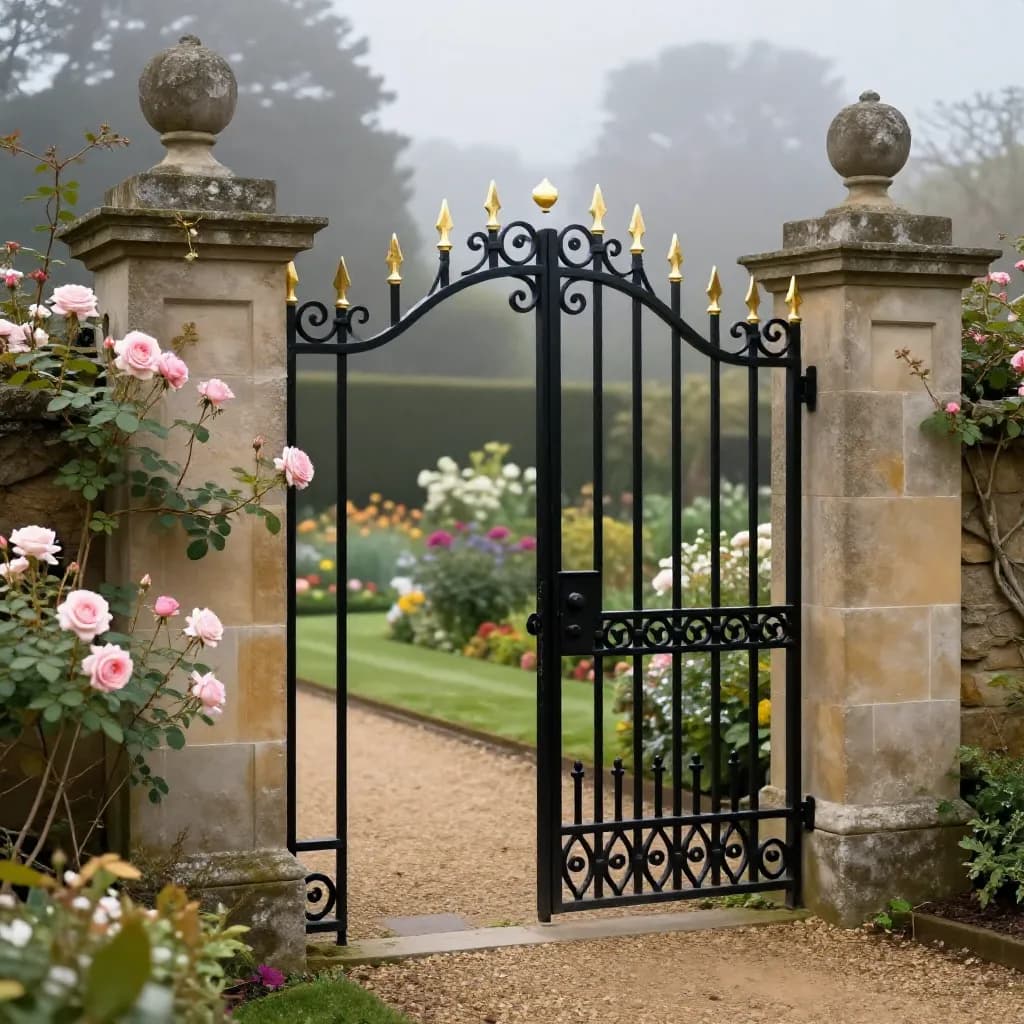
The fundamental advantage of powder coating on gates and fencing is film thickness. A single powder coat application delivers 60-120 microns of dense, cross-linked polymer film compared to the 25-40 microns typical of brush or spray-applied liquid paint. This thicker barrier provides substantially better protection against moisture penetration, the primary driver of corrosion on ferrous metals. For wrought iron gates that feature complex profiles with edges, scrollwork, and weld joints, the electrostatic application process ensures powder wraps around these geometries more effectively than liquid paint, which tends to thin on edges and pool in recesses.
Ready to Start Your Project?
From one-off customs to 15,000-part production runs — get precise pricing in 24 hours.
On This Page
Why Powder Coating Is the Ideal Finish for Gates and Fencing
Beyond corrosion protection, powder coating delivers superior UV resistance. Modern polyester powder formulations resist chalking and color fade for 15-20 years in moderate climates, compared to 3-5 years for standard alkyd or acrylic liquid paints. This means a powder-coated garden gate retains its appearance far longer, reducing the frequency of repainting and the associated labor and disruption.
Wrought Iron and Ornamental Gate Applications
Wrought iron gates are among the most popular candidates for powder coating, and for good reason. The intricate scrollwork, twisted bars, and decorative elements that define ornamental ironwork create numerous edges and crevices where liquid paint struggles to achieve adequate film build. Powder coating's electrostatic attraction to the grounded metal substrate draws powder into these difficult areas, providing more uniform coverage than any brush or spray-applied liquid system.
Preparation is critical for wrought iron. Old paint, mill scale, and existing rust must be completely removed before powder coating. Abrasive blasting to Sa 2.5 (near-white metal) per ISO 8501-1 is the standard preparation method, creating both a clean surface and an anchor profile of 50-75 microns that promotes mechanical adhesion. For gates with heavy rust or multiple layers of old paint, blasting with steel grit at 6-7 bar pressure is typical. After blasting, a zinc-rich primer powder or epoxy primer can be applied as a first coat, followed by a polyester topcoat for UV resistance.
The dual-coat system — epoxy primer plus polyester topcoat — is particularly important for wrought iron gates in exposed locations. The epoxy layer provides excellent adhesion and corrosion resistance at the metal interface, while the polyester topcoat resists UV degradation and maintains color stability. This combination routinely achieves 1,000-1,500 hours of salt spray resistance per ASTM B117, far exceeding the 200-400 hours typical of single-coat liquid paint systems on similar substrates.
For restoration projects involving antique or heritage wrought iron gates, powder coating offers the additional advantage of being completely removable by thermal stripping or chemical methods without damaging the underlying metalwork, allowing future restoration cycles.
Security Fencing and Anti-Climb Systems
Security fencing demands coating performance that goes beyond aesthetics. Palisade fencing, welded mesh panels, and anti-climb systems such as 358 mesh are subjected to physical abuse, attempted cutting, and deliberate damage in addition to normal weathering. Powder coating for security fencing must therefore combine corrosion protection with mechanical toughness — resistance to impact, abrasion, and flexing without cracking or delaminating.
The standard specification for security fencing in many markets calls for hot-dip galvanizing followed by powder coating, creating a duplex system with synergistic protection. The zinc galvanizing layer provides sacrificial cathodic protection to the steel substrate, while the powder coating acts as a barrier layer that prevents the zinc from corroding prematurely. Research published by the European General Galvanizers Association demonstrates that duplex systems last 1.5 to 2.3 times longer than the sum of the individual system lifetimes, a phenomenon attributed to the powder coating sealing the zinc surface from atmospheric attack.
For 358 anti-climb mesh (76.2 mm x 12.7 mm aperture with 4 mm wire), the powder coating must maintain adhesion on small-diameter wire intersections where mechanical stress concentrates during attempted climbing or cutting. Polyester powder coatings with flexibility ratings exceeding 2 mm on a conical mandrel bend test per ISO 6860 are specified to ensure the coating does not crack at these stress points.
Color selection for security fencing is often driven by planning requirements and site context. Dark greens (RAL 6005, RAL 6009) and black (RAL 9005) are standard choices that minimize visual impact in landscaped settings, while high-visibility yellow (RAL 1023) is used for hazard demarcation in industrial environments.
Weather Resistance and Climate Considerations
The performance of powder-coated gates and fencing varies significantly depending on the local climate and exposure conditions. Understanding these variables is essential for specifying the right powder chemistry and system build-up for each installation.
In temperate maritime climates with high rainfall and moderate UV exposure, standard polyester powder coatings perform well, typically delivering 15-20 years of service before significant degradation. The primary threat in these environments is moisture-driven corrosion, particularly at cut edges, weld joints, and areas where the coating has been mechanically damaged. Specifying a minimum film thickness of 80 microns and ensuring thorough edge coverage mitigates this risk.
Coastal environments present a more aggressive challenge. Airborne salt deposits accelerate corrosion dramatically, and fencing within 500 meters of the shoreline is classified as C4 (high) or C5 (very high) corrosivity per ISO 9223. In these zones, a duplex system of hot-dip galvanizing plus polyester powder coating is strongly recommended. The galvanizing provides a sacrificial zinc layer that protects cut edges and damage sites, while the powder coating prevents the rapid consumption of zinc that occurs in salt-laden atmospheres.
Hot, arid climates with intense UV radiation demand powder coatings with superior light stability. Super-durable polyester formulations, which incorporate UV-stabilized resins and HALS (hindered amine light stabilizers), maintain color and gloss retention to at least 50% after 10 years of South Florida exposure per AAMA 2604 requirements. Standard polyester powders may chalk and fade noticeably within 5-7 years under equivalent UV loads.
Freeze-thaw cycling in continental climates tests coating flexibility. As metal substrates expand and contract with temperature swings of 60°C or more between summer and winter extremes, the coating must flex without cracking. Polyester powders with elongation values exceeding 5% accommodate this thermal movement effectively.
Color Options and Decorative Finishes for Residential Fencing
One of the most compelling advantages of powder coating for residential gates and fencing is the virtually unlimited palette of colors and finishes available. Unlike galvanizing, which produces only a metallic grey appearance, or traditional paint, which is limited by the practical constraints of brush and spray application, powder coating offers the full RAL Classic range of over 200 standard colors plus RAL Design, NCS, and Pantone matching for custom requirements.
Smooth gloss finishes in classic colors such as black (RAL 9005), anthracite grey (RAL 7016), and moss green (RAL 6005) remain the most popular choices for residential fencing, providing a clean, contemporary appearance that complements most architectural styles. Satin and matte finishes have gained significant popularity in recent years, offering a more understated aesthetic that reduces glare and shows fingerprints and minor surface imperfections less readily than high-gloss alternatives.
Textured finishes add another dimension to the design palette. Fine texture, coarse texture, and leatherette effects create surfaces that are more forgiving of substrate imperfections and provide enhanced grip on gate handles and latch mechanisms. Wrinkle finishes, which produce a distinctive crinkled surface pattern, are particularly popular for heritage-style gates where a hand-forged appearance is desired.
Metallic powder coatings containing aluminum or mica flake pigments create striking visual effects that change character with viewing angle and lighting conditions. Bronze, copper, and antique gold metallics are frequently specified for ornamental gates where a premium appearance is required. These metallic effects are achieved within the powder coating itself, eliminating the need for separate metallic base coats and clear coats that add complexity and cost to liquid paint systems.
Dual-color applications are also possible, allowing different colors on opposite faces of a gate or fence panel. This technique is particularly useful where a gate faces both a public street and a private garden, enabling the exterior to match neighborhood aesthetics while the interior coordinates with garden design.
Surface Preparation and Pretreatment for Fencing Substrates
The longevity of any powder coating system on gates and fencing depends fundamentally on surface preparation. No powder formulation, regardless of quality, can compensate for inadequate substrate preparation. The goal is to achieve a surface that is clean, dry, free of contaminants, and profiled to promote mechanical adhesion.
For new mild steel fencing, the standard preparation sequence begins with degreasing to remove rolling oils, drawing compounds, and handling contamination. Alkaline spray wash systems operating at 50-60°C with surfactant-based cleaners are typical in production environments. Following degreasing, abrasive blasting or mechanical preparation creates the surface profile. Blast cleaning to Sa 2.5 per ISO 8501-1 using steel grit or aluminum oxide media produces an anchor profile of 50-75 microns that is ideal for powder adhesion.
Chemical pretreatment follows mechanical preparation and provides a conversion coating that enhances adhesion and corrosion resistance at the molecular level. Iron phosphate is the most common pretreatment for steel fencing, producing a thin (0.3-1.0 g/m²) amorphous coating that improves paint adhesion and provides mild corrosion resistance. Zinc phosphate pretreatment offers superior corrosion protection with crystalline coating weights of 1.5-4.0 g/m² but requires more complex process control.
For galvanized steel fencing, preparation differs significantly. The zinc surface must be cleaned of white rust (zinc oxide/hydroxide), oils, and chromate passivation layers. Light abrasive blasting with fine media or sweep blasting at reduced pressure avoids removing excessive zinc while creating adequate surface profile. Alternatively, T-wash (mordant solution) chemically etches the zinc surface to promote adhesion.
Aluminum gates and fencing require chromate-free conversion coatings such as zirconium or titanium-based treatments to comply with modern environmental regulations. These chrome-free alternatives achieve comparable adhesion and corrosion performance to traditional chromate processes when properly applied and controlled.
Maintenance and Long-Term Care of Powder-Coated Fencing
One of the primary reasons homeowners and property managers choose powder coating for gates and fencing is the dramatically reduced maintenance requirement compared to liquid paint. While painted fencing typically needs repainting every 3-5 years to maintain appearance and protection, powder-coated fencing can go 15-20 years between major maintenance interventions in moderate climates.
Routine maintenance for powder-coated fencing is straightforward. Washing with clean water and a mild, pH-neutral detergent two to four times per year removes accumulated dirt, pollen, bird droppings, and atmospheric deposits that can degrade the coating surface over time. A soft cloth or sponge is sufficient — abrasive pads, wire brushes, and harsh chemical cleaners should be avoided as they can scratch or chemically attack the powder coating surface.
In coastal environments, more frequent washing is recommended to remove salt deposits before they can initiate corrosion at any coating defects. Monthly washing of fencing within 1 kilometer of the coastline is a reasonable maintenance schedule that significantly extends coating life.
Damage repair is an inevitable requirement for any fencing system. Gate strikes, garden equipment impacts, and accidental damage from vehicles or machinery can chip or scratch the powder coating, exposing the substrate to corrosion. Small damage areas can be repaired using touch-up paint matched to the original powder coating color. For larger damage areas, the affected section can be removed, stripped, re-prepared, and re-powder-coated to restore full protection.
Hinge and latch mechanisms on gates deserve particular attention. These moving parts experience wear that can abrade the coating at contact points. Applying a thin film of silicone-based lubricant to hinge pins and latch mechanisms reduces friction and coating wear, extending the service life of both the hardware and the coating in these critical areas.
Comparing Powder Coating to Alternative Fencing Finishes
Homeowners and specifiers evaluating finishing options for gates and fencing typically consider four main alternatives: liquid paint, hot-dip galvanizing, powder coating, and duplex systems combining galvanizing with powder coating. Each has distinct advantages and limitations that influence the optimal choice for a given application.
Liquid paint remains the most accessible option for DIY applications and small-scale projects. Brush or aerosol application requires no specialized equipment, and touch-up is straightforward. However, liquid paint delivers thin films (25-40 microns), requires multiple coats with drying time between each, emits VOCs during application, and typically needs renewal every 3-5 years. For fencing that will remain in place for decades, the cumulative cost and effort of repeated repainting often exceeds the initial investment in powder coating.
Hot-dip galvanizing provides excellent corrosion protection through the sacrificial action of the zinc coating, which preferentially corrodes to protect the underlying steel. Galvanized fencing can last 40-70 years in rural environments and 20-30 years in urban or industrial atmospheres. The limitation is aesthetic — galvanizing produces only a metallic grey finish that weathers to a dull matte appearance over time. For applications where color and appearance matter, galvanizing alone is insufficient.
Powder coating alone on steel provides superior aesthetics and good corrosion protection, but lacks the sacrificial protection of zinc at damage sites. If the coating is breached, corrosion can initiate and spread beneath the intact coating film, a phenomenon known as undercutting or filiform corrosion.
The duplex system — hot-dip galvanizing followed by powder coating — combines the best attributes of both technologies. The zinc layer provides sacrificial protection at damage sites, while the powder coating protects the zinc from premature atmospheric consumption and delivers the desired color and finish. For premium residential gates and security fencing where maximum longevity is required, the duplex system represents the optimal specification, delivering service lives of 40 years or more in moderate environments.
Frequently Asked Questions
How long does powder coating last on garden gates and fencing?
Powder coating on garden gates and fencing typically lasts 15-20 years in moderate climates before significant maintenance is needed. In coastal or highly polluted environments, service life may be reduced to 10-15 years unless a duplex system (galvanizing plus powder coating) is specified, which can extend protection to 40 years or more.
Can you powder coat old wrought iron gates?
Yes. Old wrought iron gates are excellent candidates for powder coating. The existing paint and rust must be completely removed by abrasive blasting to Sa 2.5 standard, then a zinc-rich epoxy primer and polyester topcoat are applied. This process restores full corrosion protection and allows you to choose any color from the RAL range.
Is powder coating better than galvanizing for fencing?
Each has strengths. Galvanizing provides sacrificial corrosion protection but only a grey metallic finish. Powder coating offers unlimited colors and superior aesthetics but lacks sacrificial protection at damage sites. The best solution for maximum durability is a duplex system combining both — galvanizing for cathodic protection and powder coating for color and barrier protection.
What colors are most popular for powder-coated fencing?
The most popular colors are black (RAL 9005), anthracite grey (RAL 7016), and moss green (RAL 6005). These classic choices complement most architectural styles and landscaping. Metallic bronze and antique finishes are popular for ornamental gates, while high-visibility yellow is used for industrial security fencing.
How do you maintain powder-coated gates and fencing?
Wash with clean water and mild pH-neutral detergent two to four times per year using a soft cloth. Avoid abrasive pads and harsh chemicals. In coastal areas, monthly washing removes salt deposits. Repair any chips or scratches promptly with color-matched touch-up paint to prevent corrosion from developing at damage sites.
Ready to Start Your Project?
From one-off customs to 15,000-part production runs — get precise pricing in 24 hours.