Powder coating has become the predominant finishing technology for wheelchair frames across the full spectrum of products — from hospital-grade transport chairs to ultra-lightweight titanium sport wheelchairs. The technology delivers a combination of durability, weight efficiency, color flexibility, and chemical resistance that no other finishing method matches for this application. For wheelchair users who depend on their equipment daily, coating quality directly affects both the functional lifespan and the personal identity expression that a wheelchair represents.
Consumer
Powder Coating for Wheelchair Frames: Lightweight Durability, Custom Colors, and Medical Device Considerations
Sundial Powder Coating·April 23, 2026·12 min
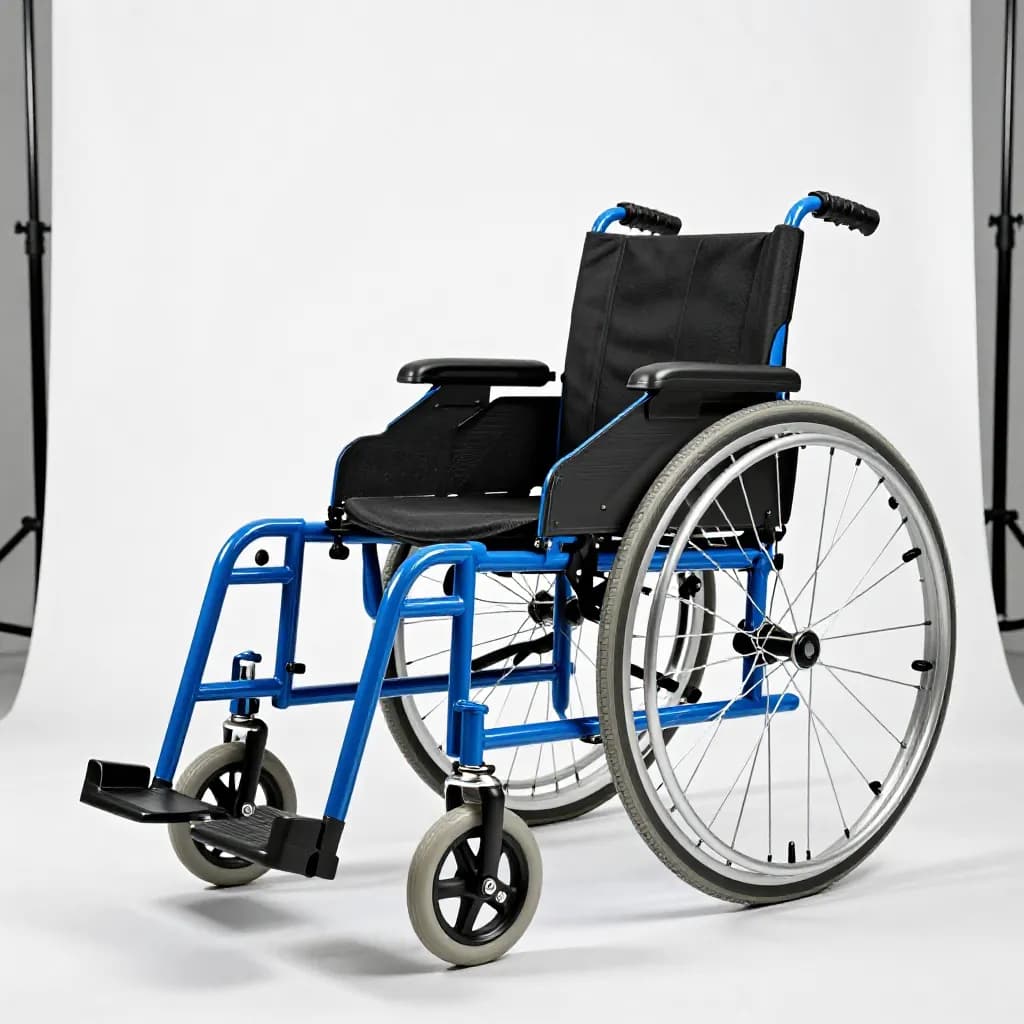
Wheelchair frames face a uniquely demanding service environment. They are subjected to constant hand contact on push rims and frame tubes, exposure to cleaning chemicals and sanitizers, impact from doorframes and curbs, UV exposure during outdoor use, and moisture from rain, snow, and perspiration. The coating must resist all of these stresses simultaneously while adding minimal weight to a product where every gram affects the user's mobility and independence.
Ready to Start Your Project?
From one-off customs to 15,000-part production runs — get precise pricing in 24 hours.
On This Page
Why Powder Coating Is the Standard for Wheelchair Frames
The wheelchair industry has specific requirements that distinguish it from general metal finishing. Biocompatibility considerations apply to surfaces that contact skin. Regulatory frameworks for medical devices impose documentation and traceability requirements. Color matching must accommodate both standard catalog options and individual custom orders for users who want their wheelchair to reflect personal style. And the coating must perform on the specialized alloys used in wheelchair construction — primarily 7000-series aluminum, chromoly steel, and increasingly titanium.
Powder coating meets all of these requirements while offering practical advantages in production. The solvent-free application process eliminates VOC emissions, the overspray reclaim system minimizes material waste, and the single-coat application achieves full film build without the multiple passes required by liquid paint systems. For wheelchair manufacturers producing a wide range of frame sizes and custom configurations, powder coating's rapid color change capability supports the high-mix, low-volume production model that characterizes the industry.
Lightweight Coating Specifications for Mobility Equipment
Weight is arguably the most critical specification parameter for wheelchair powder coating. An ultra-lightweight manual wheelchair may weigh as little as 4-6 kilograms for the frame alone, and users are acutely sensitive to weight differences that affect pushing effort, transfer ease, and vehicle loading. The powder coating specification must deliver adequate protection at the minimum possible film build to respect these weight constraints.
For lightweight manual wheelchairs, the target film build is typically 40-60 microns on external surfaces and 25-35 microns on internal tube surfaces. At these thicknesses, the total coating weight on a typical rigid-frame wheelchair is approximately 60-100 grams — a meaningful amount on a 5-kilogram frame but an acceptable trade-off for the corrosion protection and aesthetics the coating provides. Reducing film build below 40 microns on external surfaces risks inadequate edge coverage and reduced impact resistance, so this range represents the practical minimum for durable performance.
Thin-film powder formulations designed for weight-sensitive applications use finer particle size distributions with a D50 of 22-28 microns, compared to 35-40 microns for standard industrial powders. These fine powders flow more smoothly during curing, producing excellent surface finish at lower film builds. However, they require more careful handling — fine powders are more susceptible to moisture absorption, clumping, and fluidization problems in the feed hopper. Climate-controlled powder storage and application areas are recommended when working with thin-film formulations.
For power wheelchairs, where the frame weight is a smaller proportion of total vehicle weight due to batteries and motors, standard film builds of 60-80 microns are acceptable. The additional coating thickness provides better impact resistance for frames that are more likely to encounter collisions with furniture, walls, and vehicle loading equipment. Power wheelchair frames also benefit from textured finishes that hide minor scuffs and scratches accumulated during daily use in indoor environments.
Durability Requirements for Daily Wheelchair Use
A wheelchair is not an occasional-use product — it is an all-day, every-day mobility device that accumulates wear at a rate far exceeding most consumer goods. The powder coating must withstand continuous hand contact, repeated transfers in and out of vehicles, contact with doorframes and elevator walls, exposure to cleaning chemicals, and the general abrasion of daily life. Understanding these specific wear patterns is essential for specifying a coating that will maintain both appearance and protection throughout the wheelchair's service life.
Hand contact wear is the most visible degradation mechanism on manual wheelchair frames. Push rim surfaces and the frame tubes adjacent to the push rims experience constant friction from gloved and bare hands, gradually wearing through the coating to expose the substrate. While push rims themselves are often left uncoated or anodized for grip, the adjacent frame surfaces should be coated with a high-abrasion-resistance formulation. Polyester powder coatings with pencil hardness ratings of 2H or higher provide good resistance to hand wear.
Transfer abrasion occurs where the user's body and clothing contact the frame during transfers between the wheelchair and beds, vehicles, or other seating. The side guard and seat rail areas are particularly affected. Smooth, hard coatings resist this abrasion better than soft or textured finishes, though some users prefer a slight texture for grip during transfers.
Chemical resistance is critical for wheelchairs used in healthcare settings where frames are regularly cleaned with hospital-grade disinfectants, alcohol-based sanitizers, and bleach solutions. The powder coating must resist these chemicals without softening, staining, or losing adhesion. Standard polyester powder coatings provide good resistance to most common cleaning chemicals, but facilities using aggressive disinfectants should verify compatibility through spot testing. Epoxy-polyester hybrid coatings offer enhanced chemical resistance for institutional applications where cleaning chemical exposure is frequent and prolonged.
Custom Colors and Personal Expression
For many wheelchair users, their chair is an extension of personal identity — as much a fashion statement as a mobility device. The ability to choose custom colors has transformed wheelchair specification from a purely clinical process into an opportunity for self-expression. Powder coating enables this personalization by offering virtually unlimited color options with consistent quality and durability.
The standard color palette offered by major wheelchair manufacturers typically includes 15-30 options ranging from conservative blacks and silvers to vibrant reds, blues, and greens. Many manufacturers also offer premium color tiers that include metallics, candy colors, color-shift effects, and matte finishes. Custom color matching to any RAL, Pantone, or NCS reference is available from most manufacturers, though minimum order quantities may apply for truly custom formulations.
Color selection has particular significance in pediatric wheelchair specification. Children and adolescents often have strong color preferences, and a wheelchair in their favorite color can significantly improve acceptance and self-image. Pediatric wheelchair manufacturers have responded by offering expanded color ranges including bright, playful options that appeal to younger users. Some manufacturers offer color change programs that allow growing children to update their wheelchair color when they receive a new frame size, maintaining the personal connection to their equipment.
For sports wheelchairs used in competitive events, team colors and sponsor branding create additional color requirements. Multi-color schemes with sharp color breaks, metallic team colors, and high-visibility competition finishes are all achievable through powder coating. Racing wheelchairs often feature fluorescent or high-visibility colors for safety during road events, using specialized fluorescent pigments in the powder formulation that provide enhanced visibility under both daylight and artificial lighting.
The durability of powder coating colors is particularly important for wheelchair users because recoating requires taking the chair out of service — a significant inconvenience for someone who depends on it daily. Super-durable polyester formulations that maintain color and gloss for 7-10 years of outdoor exposure minimize the frequency of refinishing and keep the wheelchair looking its best throughout its service life.
Medical Device Regulatory Considerations
Wheelchairs are classified as medical devices in most regulatory jurisdictions, and this classification imposes specific requirements on all components including the powder coating finish. While the coating itself is not typically subject to separate device registration, it must be documented as part of the overall device design history file and must meet applicable biocompatibility, safety, and performance standards.
Biocompatibility is the primary regulatory concern for wheelchair coatings. Surfaces that contact the user's skin — particularly armrest pads, side guards, and frame tubes near the seating area — must not cause irritation, sensitization, or toxic reactions. Powder coatings are generally considered biocompatible for skin contact applications, as the fully cured thermoset polymer is chemically inert and does not leach harmful substances. However, formal biocompatibility testing per ISO 10993 may be required for new coating formulations or when changing suppliers, particularly for Class I medical devices sold in regulated markets.
Traceability requirements mean that wheelchair manufacturers must be able to identify the specific powder coating batch used on any given frame. This requires documented lot tracking from powder receipt through application and curing, with records linking each frame's serial number to the coating batch, application date, cure parameters, and quality test results. This level of documentation is standard practice in medical device manufacturing but may be unfamiliar to general-purpose coating shops.
Flammability testing is another regulatory requirement. Wheelchair frames must meet flammability standards that vary by market — ISO 7176-16 for international markets and specific RESNA standards in North America. The powder coating must not contribute to flame spread or produce toxic fumes when exposed to ignition sources. Standard polyester and epoxy-polyester powder coatings meet these requirements, but verification testing on the specific coating-substrate combination is typically required as part of the device certification process.
Manufacturers selling wheelchairs in the European Union must also ensure that the powder coating complies with REACH regulations regarding restricted substances, and that the coating does not contain substances of very high concern above threshold concentrations.
Substrate-Specific Coating Approaches
Wheelchair frames are manufactured from several different alloys, each requiring a tailored pretreatment and coating approach. The three primary frame materials — aluminum alloy, chromoly steel, and titanium — have distinct surface chemistries that affect coating adhesion, corrosion protection, and long-term performance.
Aluminum alloy frames, typically 7075-T6 or 6061-T6, are the most common substrate in the wheelchair industry. These alloys require alkaline cleaning, acid etching, and chromate-free conversion coating before powder application. The 7000-series alloys used in high-performance wheelchairs contain zinc as a primary alloying element, which makes them more susceptible to intergranular corrosion than 6000-series alloys. This increased corrosion sensitivity demands higher-quality pretreatment and coating to achieve equivalent service life. Zirconium-based conversion coatings at 30-50 milligrams per square meter provide excellent adhesion promotion and corrosion resistance on both alloy families.
Chromoly steel frames — typically 4130 alloy — are favored for their high strength, repairability, and ride quality characteristics. Steel frames require iron phosphate or zinc phosphate conversion coating for optimal powder adhesion. The primary corrosion concern with steel is red rust formation at any coating breach, which is more visually objectionable and structurally damaging than the white oxidation that occurs on aluminum. Steel wheelchair frames should target a minimum of 500 hours salt spray resistance, with 750 hours preferred for frames used in wet or winter climates.
Titanium frames represent the premium segment of the wheelchair market, valued for their exceptional strength-to-weight ratio, corrosion resistance, and fatigue life. Titanium is inherently corrosion-resistant due to its stable oxide layer, so powder coating on titanium serves primarily an aesthetic function rather than a protective one. Pretreatment for titanium involves alkaline cleaning and light abrasive blasting or chemical etching to create mechanical adhesion. The naturally passive titanium surface does not form conversion coatings as readily as aluminum or steel, so adhesion relies more heavily on mechanical interlocking between the powder and the roughened substrate surface.
Production Workflow for Custom Wheelchair Coating
Wheelchair manufacturing is characterized by high product variety and relatively low volume per configuration. A single manufacturer may offer dozens of frame models in multiple sizes, each available in 20 or more colors with various custom options. This high-mix production environment requires a coating workflow optimized for frequent color changes, small batch sizes, and rigorous quality documentation.
The typical production sequence begins with frame receipt and incoming inspection. Each frame is verified against its build order for correct model, size, and option configuration. Any welding defects, dimensional issues, or surface contamination are identified and addressed before the frame enters the pretreatment line. Frames are grouped by substrate material to ensure correct pretreatment chemistry — aluminum frames and steel frames may require different process sequences.
Masking is applied after pretreatment and before powder application. Wheelchair frames require masking at bearing seats, threaded bosses, axle plate interfaces, caster housing bores, and any other precision-machined surfaces where coating buildup would interfere with component fit. Custom masking fixtures that match each frame model speed this process and ensure consistency. The masking map for each frame model should be documented and version-controlled as part of the manufacturing quality system.
Powder application for wheelchair frames is predominantly manual due to the complex tube geometries and small batch sizes that make automatic reciprocating systems impractical. Skilled manual applicators can achieve consistent film builds on complex frame shapes, adjusting gun settings and spray patterns for different frame areas. The manual process also allows real-time quality assessment — experienced applicators can identify coverage problems and correct them during application rather than discovering them after curing.
Curing follows standard time-temperature profiles for the specific powder formulation, typically 15-20 minutes at 180-200 degrees Celsius measured at the substrate surface. Oven temperature uniformity is critical for consistent cure across the frame — temperature variations of more than 10 degrees Celsius within the oven can result in undercured areas with reduced hardness and chemical resistance. Infrared temperature measurement of the frame surface during cure provides more accurate data than oven air temperature alone.
Frequently Asked Questions
How much weight does powder coating add to a wheelchair frame?
At the thin film builds used for lightweight wheelchairs (40-60 microns), powder coating adds approximately 60-100 grams to a typical rigid-frame manual wheelchair. For an ultra-lightweight frame weighing 4-6 kilograms, this represents a 1-2 percent weight increase — a reasonable trade-off for the corrosion protection and aesthetics provided.
Can wheelchair users choose custom powder coating colors?
Yes. Most wheelchair manufacturers offer 15-30 standard colors plus custom color matching to any RAL, Pantone, or NCS reference. Options include metallics, mattes, textured finishes, and multi-color schemes. Custom colors allow users to express personal style and can be particularly meaningful for pediatric users.
Is powder coating safe for skin contact on wheelchairs?
Fully cured powder coating is generally considered biocompatible for skin contact applications. The thermoset polymer is chemically inert and does not leach harmful substances. However, wheelchair manufacturers may need to conduct formal biocompatibility testing per ISO 10993 for regulatory compliance, particularly for new coating formulations.
How durable is powder coating on a daily-use wheelchair?
Properly specified powder coating withstands years of daily wheelchair use including hand contact, transfer abrasion, cleaning chemicals, and outdoor exposure. High-wear areas like push rim adjacencies may show gradual wear over 3-5 years, but the overall coating system maintains corrosion protection and appearance for the typical 5-7 year frame service life.
Can you powder coat a titanium wheelchair frame?
Yes, though the process differs from aluminum or steel. Titanium requires alkaline cleaning and light abrasive blasting for adhesion since it does not form conversion coatings as readily. The coating serves primarily an aesthetic function on titanium, as the metal is inherently corrosion-resistant. Standard polyester powder coatings adhere well to properly prepared titanium surfaces.
Ready to Start Your Project?
From one-off customs to 15,000-part production runs — get precise pricing in 24 hours.