Custom metal table legs and bases have become one of the most popular categories in the maker and furniture design world. The combination of a live-edge wood slab or reclaimed timber top with sleek steel legs has defined the industrial-modern aesthetic that dominates contemporary interior design. And while the wood top gets most of the visual attention, the metal base is what gives the table its character, stability, and style.
Consumer
Powder Coating for Table Legs and Bases: Industrial Style Meets Custom Fabrication
Sundial Powder Coating·April 23, 2026·8 min
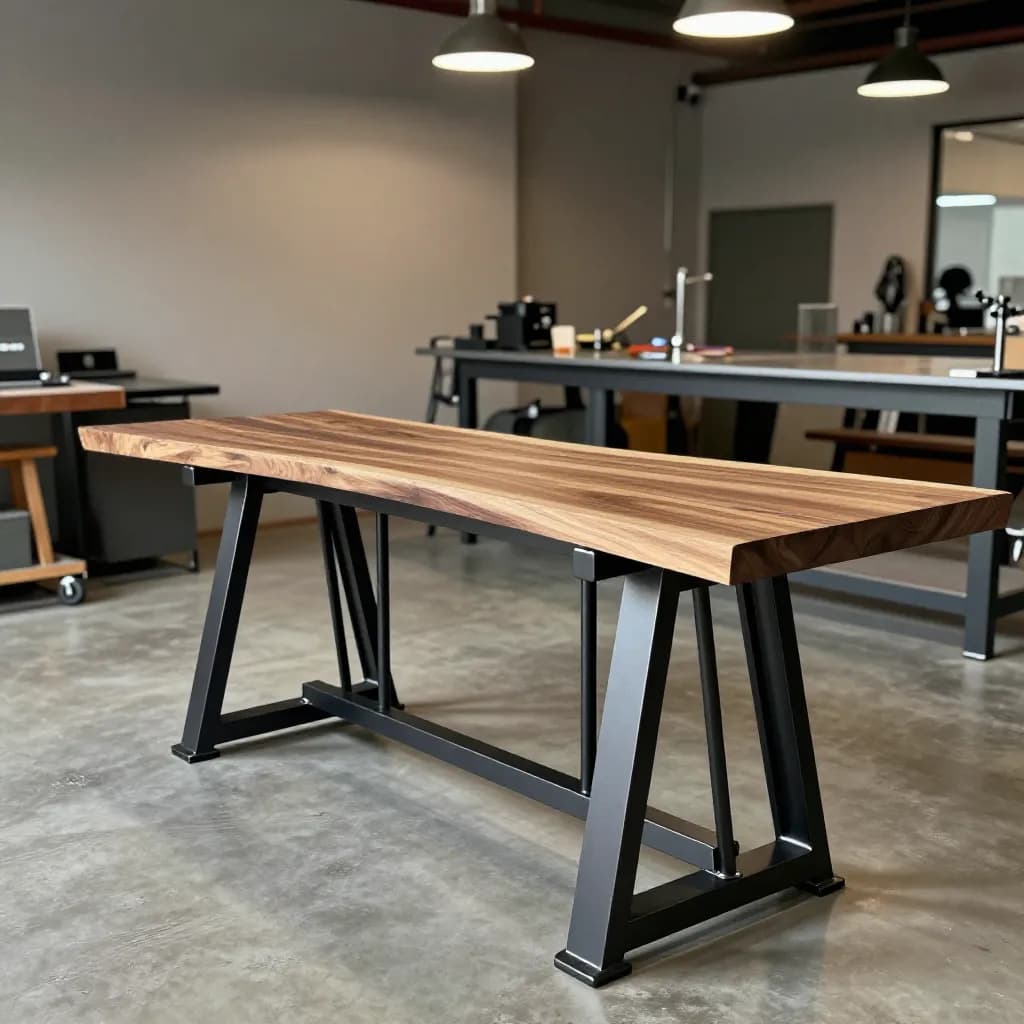
Powder coating is the finish that makes these metal bases look professional. Raw steel has an appealing industrial quality, but it rusts, stains surfaces it contacts, and transfers dark marks to hands and clothing. Clear-coated raw steel addresses some of these issues but still requires maintenance and eventually develops patina. Powder coating provides a permanent, maintenance-free finish that protects the steel while delivering the exact color and texture the design calls for.
Ready to Start Your Project?
From one-off customs to 15,000-part production runs — get precise pricing in 24 hours.
On This Page
The Custom Table Leg Revolution
The market for custom table legs has expanded dramatically with the growth of online fabrication services and local maker communities. Homeowners can now commission custom legs for a specific table project, and furniture makers can offer a range of base styles and finishes to pair with their tops. Powder coating is the common thread that gives all of these products a finished, retail-quality appearance.
Base Styles and Their Coating Requirements
Table bases come in a wide variety of styles, each with specific coating considerations. Hairpin legs — the iconic mid-century modern design made from bent steel rod — are among the simplest to coat. Their open, wire-frame construction allows powder to wrap around each rod evenly, and the simple geometry avoids coating challenges.
Flat steel legs — cut from plate or fabricated from flat bar — present broad, visible surfaces where finish quality is critical. Any surface imperfection, weld mark, or grinding scratch will be visible through the powder coat. These legs require careful surface preparation and smooth, consistent powder application to achieve the flawless appearance that buyers expect.
Trestle and X-frame bases involve welded joints where multiple members intersect. The weld quality at these joints directly affects the coated appearance. Clean, ground welds produce smooth transitions between members, while rough or spattered welds create visible bumps and irregularities under the coating. For visible joints, grinding and finishing the welds before coating is essential.
Pedestal bases — single central columns supporting the tabletop — are typically fabricated from steel tube or plate. Their vertical orientation and often complex geometry at the top plate and foot require careful coating technique to ensure even coverage on all surfaces. The top plate, where the base attaches to the tabletop, can be left uncoated if it will be hidden by the top, or coated for complete protection.
I-beam and channel bases use structural steel shapes for a heavy industrial aesthetic. These profiles have inside corners and flanges that can be challenging to coat evenly due to Faraday cage effects. Experienced coaters adjust their technique for structural shapes, ensuring complete coverage in the web-to-flange transitions.
Color and Finish Selection for Furniture
The finish on table legs sets the visual tone for the entire piece of furniture. It must complement the tabletop material, coordinate with the room's design scheme, and express the intended style — whether that is raw industrial, refined modern, rustic farmhouse, or something entirely unique.
Matte black is the default choice for industrial-style table legs, and for good reason. It provides a neutral, recessive base that lets the tabletop — whether live-edge walnut, reclaimed oak, or polished concrete — take center stage. Matte black also hides minor surface imperfections and does not show fingerprints or dust as readily as glossy finishes.
For warmer aesthetics, metallic bronze, copper, and gold powder coats add richness without the maintenance requirements of actual patinated metal. These warm metallic finishes pair beautifully with wood tops and create a more inviting, less industrial feel than black. Satin and brushed metallic effects are particularly effective, providing subtle shimmer without the flashiness of high-gloss metallics.
Textured finishes serve both aesthetic and practical purposes on table legs. A hammertone or wrinkle texture adds visual interest and tactile quality while hiding the minor surface imperfections that are inevitable in welded fabrication. For legs that will be touched frequently — coffee table legs within reach of seated users, for example — textured finishes also resist showing fingerprints.
White and light-colored legs have gained popularity in Scandinavian and minimalist design schemes. These lighter finishes create an airy, open feel and work well with light wood tops and neutral interiors. Matte white is the most popular light option, though soft grey and warm cream are also common choices.
Fabrication Quality and Surface Preparation
The quality of the finished table base starts with fabrication. Powder coating is a revealing finish — it follows every contour of the surface faithfully, making imperfections more visible rather than hiding them. Fabricators who want professional results must invest in clean metalwork before the parts go to the coater.
Weld preparation is the most critical step. All weld spatter must be removed, and visible welds should be ground smooth if a seamless appearance is desired. For designs where the weld is intended to be visible as a design element — common in industrial and rustic styles — the weld bead should still be clean and consistent, even if it is not ground flat.
Mill scale on hot-rolled steel must be removed completely before coating. Mill scale is the dark oxide layer that forms on steel during the rolling process, and powder will not adhere reliably to it. Media blasting is the most effective removal method, producing a clean, profiled surface that promotes strong powder adhesion.
Sharp edges and corners should be slightly rounded or broken before coating. Powder tends to pull away from razor-sharp edges during the curing process, leaving them thin and vulnerable to chipping. A light pass with a file or sanding disc along cut edges and corners ensures adequate coating thickness at these critical points.
For fabricators producing table legs in volume, establishing a consistent preparation workflow ensures uniform quality across production runs. Standardize your welding technique, grinding procedure, and edge preparation so that every set of legs arrives at the coater in the same condition. This consistency allows the coater to optimize their process and deliver reliable results.
Attaching Tops to Powder-Coated Bases
The connection between the tabletop and the powder-coated base requires planning to avoid damaging the finish during assembly. The most common attachment methods — through-bolts, threaded inserts, and Z-clips — all work well with powder-coated bases when properly executed.
Through-bolt connections use bolts that pass through holes in the base's top plate and into threaded inserts or T-nuts in the underside of the tabletop. The bolt holes in the base should be drilled before coating and masked during the coating process. After coating, the bolts pass through clean, uncoated holes and tighten against the coated surface without damaging it, provided washers are used to distribute the clamping force.
Z-clips and figure-eight fasteners allow the tabletop to expand and contract with humidity changes while remaining securely attached to the base. These fasteners sit in slots or recesses in the base's top plate, and the slots should be cut before coating. The fastener's movement within the slot may cause minor wear on the coating over time, but this is hidden beneath the tabletop and does not affect appearance.
Adhesive attachment — using construction adhesive or epoxy between the base and top — works on powder-coated surfaces. The cured powder coat provides a good bonding surface for most adhesives, though lightly scuffing the contact area with fine sandpaper improves adhesion. This method is permanent and does not allow for disassembly, so it is best suited for pieces that will not need to be separated for moving or refinishing.
For bases with adjustable leveling feet, the feet should be installed after coating. Threaded inserts welded into the base legs before coating provide the mounting points, and the leveling feet thread in after the coating is cured. This ensures the feet can be adjusted without affecting the finish on the legs.
Protecting Floors and Surfaces
Table legs contact floors, and the interaction between the coated leg and the floor surface matters for both the furniture and the flooring. Powder-coated steel legs on hardwood floors can scratch the floor finish if the legs are dragged or if grit becomes trapped between the leg and the floor. Protective pads or glides on the bottom of each leg prevent this damage.
Felt pads are the most common floor protector for table legs. They adhere to the bottom of the leg and provide a soft, non-scratching contact surface. For powder-coated legs, self-adhesive felt pads bond well to the smooth coating surface. Replace felt pads periodically as they wear and accumulate grit that could scratch floors.
Adjustable leveling glides serve double duty — they protect the floor and allow the table to be leveled on uneven surfaces. These glides typically have a plastic or rubber contact pad and a threaded shaft that screws into the leg. The threaded insert for the glide should be welded into the leg before coating, with the threads masked during the coating process.
For outdoor table bases on patios and decks, the bottom of the legs should be fully coated to prevent moisture wicking up from wet surfaces. Standing water on a patio can attack the coating from below if the leg bottoms are left uncoated. Rubber or plastic feet also help by elevating the metal slightly above the wet surface, reducing direct water contact.
Caring for Powder-Coated Table Bases
Powder-coated table bases are low-maintenance by design. Regular dusting and occasional wiping with a damp cloth keep the finish looking fresh. For kitchen and dining table bases that may accumulate food splatter or sticky residue, a mild soap solution and soft cloth handle cleanup without affecting the finish.
Avoid using abrasive cleaners, scouring pads, or harsh chemicals on powder-coated surfaces. These can scratch or dull the finish, particularly on matte and satin coatings where surface damage is more visible. If a stubborn stain resists mild cleaning, try a non-abrasive household cleaner applied with a soft cloth.
Kick marks on table legs — from shoes, chair legs, or vacuum cleaners — are the most common source of cosmetic damage. The lower portions of table legs are vulnerable to impacts from foot traffic and cleaning equipment. Powder coating resists these impacts better than paint, but repeated hard contact can eventually chip the finish. Positioning the table to minimize leg exposure to traffic paths reduces this risk.
If the finish does become significantly worn or damaged over time, the base can be disassembled from the top, stripped, and recoated. This is a practical option for high-quality custom bases that are worth preserving. The recoating process also provides an opportunity to change the color if the room's design has evolved since the table was originally finished.
Frequently Asked Questions
What is the most popular powder coating color for table legs?
Matte black is the most popular choice by a wide margin. It provides a neutral base that complements virtually any tabletop material and interior style. Metallic bronze, satin white, and textured dark grey are also common alternatives.
Will powder coating hide imperfections in welded table legs?
No. Powder coating follows the surface faithfully and can actually make imperfections more visible. Weld spatter, grinding marks, and rough welds should be cleaned and smoothed before coating. Textured finishes are more forgiving of minor imperfections than smooth, glossy finishes.
Can I attach a wood top to a powder-coated base without damaging the finish?
Yes. Through-bolts with washers, Z-clips, and adhesive all work well on powder-coated surfaces. Drill mounting holes before coating and mask them during the process. Use washers under bolt heads to distribute clamping force and prevent point-stress damage to the coating.
Do powder-coated table legs scratch hardwood floors?
They can if dragged or if grit is trapped between the leg and floor. Apply felt pads or protective glides to the bottom of each leg to prevent floor damage. Replace pads periodically as they wear and accumulate debris.
Can outdoor table bases be powder coated?
Yes. UV-stable polyester powders resist fading and chalking from sun exposure, and the sealed coating prevents corrosion from rain and humidity. Ensure the bottom of each leg is fully coated and consider rubber feet to elevate the metal above standing water on patios.
Ready to Start Your Project?
From one-off customs to 15,000-part production runs — get precise pricing in 24 hours.