Swimming pool equipment operates in a chemical environment unlike any other consumer application. The chlorinated water that keeps pools sanitary is simultaneously corrosive to metals and degrading to organic coatings. Free chlorine concentrations of 1-3 ppm in residential pools and 3-5 ppm in commercial pools create an oxidizing environment that attacks both the coating film and the substrate beneath it.
Consumer
Powder Coating for Swimming Pool Equipment: Chlorine-Resistant Finishes for Aquatic Facilities
Sundial Powder Coating·April 22, 2026·11 min
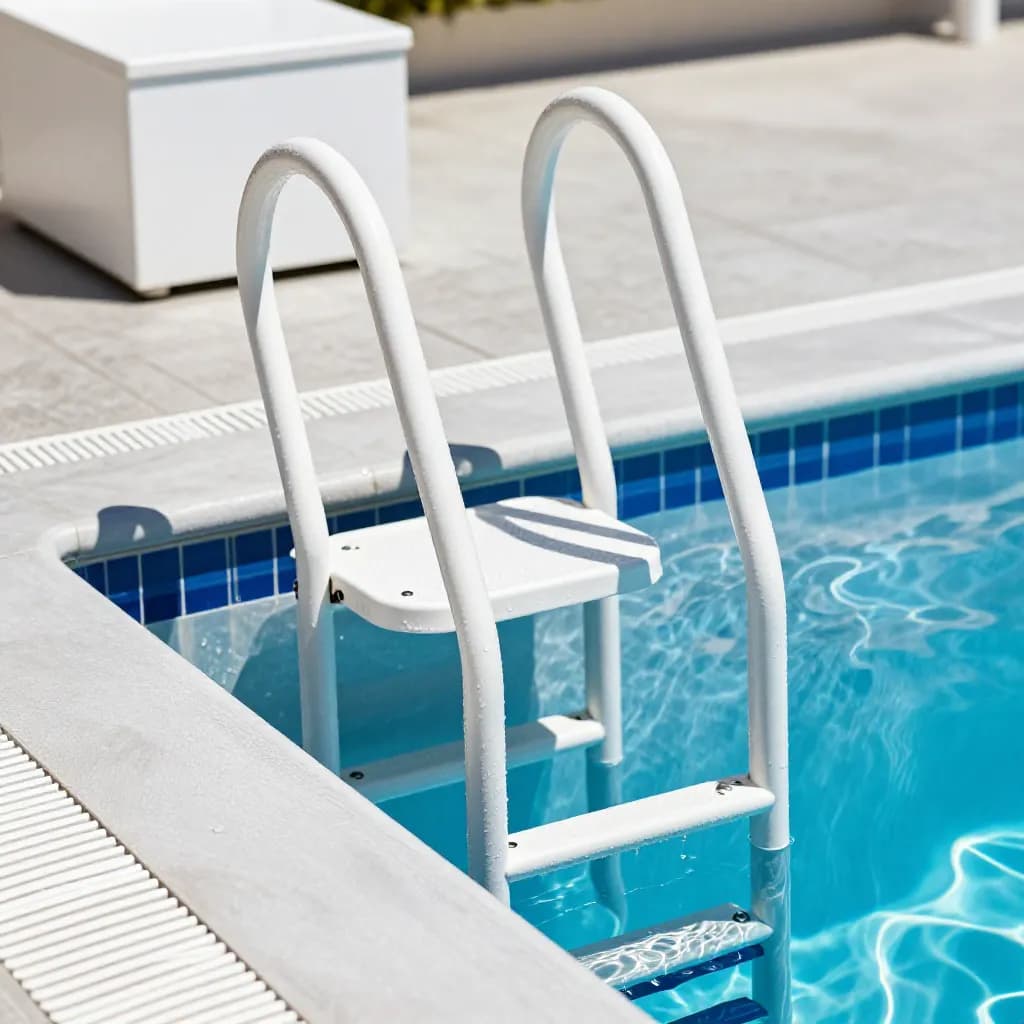
The challenge extends beyond the water itself. The atmosphere above a pool — particularly in indoor aquatic facilities — contains chloramine gases (monochloramine, dichloramine, and trichloramine) that are even more corrosive than the dissolved chlorine in the water. These gaseous chloramines attack metal surfaces and coating systems throughout the pool enclosure, not just on submerged equipment. Indoor pool environments are classified as highly corrosive (equivalent to ISO 9223 corrosivity category C4-C5) due to the combined effects of chloramines, high humidity, and elevated temperature.
Ready to Start Your Project?
From one-off customs to 15,000-part production runs — get precise pricing in 24 hours.
On This Page
The Chlorinated Environment: A Unique Coating Challenge
Pool equipment that requires powder coating includes ladders, handrails, diving board stands, starting blocks, lifeguard chairs, pool furniture (loungers, tables, chairs), fence panels, gate hardware, pump housings, filter tanks, and heater enclosures. Each category has specific exposure conditions — some are submerged, some are in the splash zone, and some are in the atmospheric zone — requiring tailored coating specifications.
Powder coating has become the preferred finish for pool equipment because it provides the chemical resistance, UV stability, and aesthetic quality that this demanding environment requires. The dense, cross-linked powder coating film resists chlorine penetration more effectively than liquid paint, and the zero-VOC application process aligns with the environmental consciousness of the aquatic industry.
Chlorine and Chemical Resistance Requirements
Pool equipment coatings must resist a specific chemical environment that includes chlorine-based sanitizers, pH adjustment chemicals, algaecides, and pool cleaning products. Understanding the specific chemicals and their effects on coating systems is essential for proper specification.
Sodium hypochlorite (liquid chlorine) at 12.5% concentration is the most common pool sanitizer. When diluted to pool water concentrations (1-5 ppm free chlorine), it creates a mildly alkaline, oxidizing environment (pH 7.2-7.8) that gradually degrades organic coatings through oxidative chain scission. The rate of degradation depends on the coating chemistry, with epoxy systems showing the best resistance to chlorine attack.
Calcium hypochlorite (granular chlorine) and trichloroisocyanuric acid (stabilized chlorine tablets) produce similar free chlorine levels but with different pH effects and byproducts. Calcium hypochlorite raises pH and can deposit calcium scale on coated surfaces, while trichlor lowers pH and can create localized acidic conditions at tablet contact points. Coatings must resist both alkaline and mildly acidic conditions across the pH range of 6.8-8.0 that represents normal pool water chemistry.
Muriatic acid (hydrochloric acid at 31.45%) is used for pH reduction and surface cleaning. Splashes of concentrated muriatic acid on coated surfaces can cause rapid coating degradation if not rinsed immediately. Pool equipment coatings should resist brief exposure (under 5 minutes) to muriatic acid at use concentration (typically 1:10 dilution) without permanent damage.
Salt chlorine generators, increasingly popular in residential pools, produce chlorine from dissolved sodium chloride at concentrations of 2500-4000 ppm. The salt concentration is below the threshold for significant salt corrosion (seawater is approximately 35,000 ppm), but the combination of salt, chlorine, and elevated pH at the generator cell creates a localized corrosive environment that affects nearby equipment.
Chemical resistance testing for pool equipment coatings should include immersion in chlorinated water (5 ppm free chlorine, pH 7.5, 30°C) for 1000-2000 hours, with evaluation for blistering, adhesion loss, discoloration, and gloss change per ASTM D714 and ASTM D3359.
Powder Chemistry Selection for Pool Equipment
The choice of powder coating chemistry for pool equipment depends on the specific exposure conditions — submerged, splash zone, or atmospheric — and the required service life.
Epoxy powder coatings provide the best chemical resistance to chlorinated water and are the preferred chemistry for submerged and splash zone equipment. The dense, highly cross-linked epoxy film resists chlorine penetration and maintains adhesion under continuous water immersion. Standard bisphenol-A epoxy powders at 80-100 microns provide 1000-2000 hours of chlorinated water immersion resistance. Novolac epoxy formulations extend this to 2000-3000 hours for the most demanding applications.
The limitation of epoxy coatings is UV sensitivity — they chalk and yellow when exposed to sunlight. For submerged equipment (ladder legs below the waterline, underwater light housings), this is irrelevant. For splash zone and atmospheric equipment, a two-coat system addresses both chemical and UV requirements: epoxy primer for chemical resistance and superdurable polyester topcoat for UV stability.
Superdurable polyester topcoats for pool equipment must be formulated for the specific UV conditions of the pool environment. Water reflection amplifies UV exposure by 10-30% compared to non-reflective surroundings, and the high-altitude locations of many pools further increase UV intensity. Maximum HALS and UVA stabilizer loading is recommended for pool equipment topcoats.
For pool furniture (loungers, tables, chairs) that is not submerged but is exposed to splashed pool water, sunscreen, body oils, and cleaning chemicals, a single-coat superdurable polyester at 70-90 microns provides adequate chemical resistance with excellent UV stability. These formulations must specifically resist sunscreen chemicals (avobenzone, oxybenzone, octinoxate) that can soften and stain some coating formulations.
Antimicrobial powder coatings with silver-ion technology are increasingly specified for pool equipment, particularly handrails, ladders, and furniture that is frequently touched by multiple users. The antimicrobial coating provides continuous bacterial reduction on the surface between cleaning cycles, supplementing the sanitizing effect of the chlorinated water.
Substrate Selection and Corrosion Protection Strategies
Pool equipment substrates must be selected for their inherent corrosion resistance in the chlorinated environment, with the powder coating providing supplementary protection and aesthetic finish.
316 stainless steel is the standard substrate for submerged pool equipment — ladders, handrails, and underwater fittings. The molybdenum content of 316 stainless provides resistance to chloride-induced pitting that would attack 304 stainless in pool water. Powder coating on 316 stainless serves primarily as a decorative and color finish, with the substrate providing the primary corrosion barrier. Pretreatment involves mechanical abrasion (80-120 grit blast) and adhesion-promoting primer to ensure reliable coating adhesion to the passive stainless steel surface.
Aluminum alloys (6061-T6, 6063-T5) are used for pool furniture frames, fence panels, and above-water equipment. Aluminum's natural oxide layer provides good corrosion resistance in the pool environment, but chloride ions can cause pitting corrosion at oxide layer defects. Powder coating provides a continuous barrier that prevents chloride contact with the aluminum surface. Chromate-free zirconium pretreatment enhances the aluminum's corrosion resistance and promotes coating adhesion.
Carbon steel is used for economy pool equipment and structural components. In the pool environment, carbon steel requires maximum coating protection because it has no inherent corrosion resistance to chlorinated water. A multi-coat system with zinc-rich primer, epoxy barrier coat, and polyester topcoat at 150-200 total microns is the minimum specification for carbon steel pool equipment. Galvanizing before powder coating provides additional cathodic protection for the most critical structural components.
Cast aluminum components — pump housings, filter heads, and valve bodies — require outgassing management before powder coating. A pre-bake at 200-220°C for 15-20 minutes drives off trapped gases and moisture from the casting porosity. Without pre-baking, outgassing during powder cure creates pinholes that allow chlorinated water to contact the substrate, initiating corrosion beneath the coating.
Commercial Pool Equipment and Code Compliance
Commercial swimming pool equipment is subject to building codes, health department regulations, and industry standards that influence coating specifications. Understanding these requirements is essential for manufacturers and specifiers of commercial pool equipment.
NSF/ANSI 50 (Equipment and Chemicals for Swimming Pools, Spas, and Hot Tubs) establishes requirements for pool equipment including material safety and performance. While NSF 50 does not specify coating requirements directly, it requires that all materials in contact with pool water be safe and not contribute contaminants. Powder coatings used on pool water contact surfaces should be evaluated for extractables under conditions simulating pool water contact.
ADA (Americans with Disabilities Act) compliance affects the design and coating of pool access equipment — ladders, lifts, and handrails. ADA-compliant pool equipment must provide specific grip characteristics, and the powder coating finish contributes to grip performance. Textured finishes on handrails and grab bars provide better grip than smooth finishes, particularly when wet. The coating must maintain its texture and grip characteristics throughout the equipment's service life.
ASTM F1346 (Standard Performance Specification for Safety Covers and Labeling Requirements for All Covers for Swimming Pools, Spas, and Hot Tubs) applies to pool cover hardware and anchors. The coating on these safety-critical components must maintain adhesion and corrosion protection to ensure the cover system functions as intended throughout its service life.
State and local health department regulations govern commercial pool equipment maintenance and replacement. Many jurisdictions require annual inspection of pool equipment, including assessment of coating condition on ladders, handrails, and diving equipment. Equipment with significant coating deterioration may be required to be repaired or replaced to maintain the facility's operating permit.
For commercial pool furniture, BIFMA (Business and Institutional Furniture Manufacturers Association) standards provide testing protocols for durability and safety. While BIFMA standards were developed for indoor furniture, they are increasingly referenced for commercial pool furniture testing, including coating adhesion, impact resistance, and chemical resistance.
UV Protection and Color Retention in Pool Environments
Pool equipment is exposed to intense UV radiation amplified by water reflection, creating accelerated coating degradation that challenges even the most UV-resistant formulations. Understanding and managing UV exposure is critical for maintaining the appearance of powder-coated pool equipment.
Water reflection increases UV exposure on pool deck equipment by 10-30% compared to equipment in non-reflective surroundings. The reflected UV strikes surfaces from below as well as above, exposing the undersides of furniture, the lower surfaces of handrails, and other areas that would normally be shaded. This multi-directional UV exposure means that all surfaces of pool equipment must be coated with UV-resistant formulations, not just the top-facing surfaces.
Color selection significantly affects UV durability in the pool environment. White and light colors reflect more UV radiation and experience less thermal stress than dark colors, which absorb UV energy and heat. Dark-colored pool furniture can reach surface temperatures of 70-80°C in direct sunlight, accelerating both UV degradation and thermal aging of the coating. Light colors are recommended for pool furniture both for coating longevity and user comfort.
Superdurable polyester formulations for pool equipment should achieve less than 50% gloss retention loss and Delta E color change of less than 3.0 after 3000 hours of accelerated weathering per ASTM G154 (UVA-340 cycle). This exceeds the standard 2000-hour requirement for general outdoor applications, reflecting the amplified UV exposure in the pool environment.
Clear topcoats over metallic or special-effect base colors provide additional UV protection for decorative pool equipment finishes. The clear coat absorbs UV radiation before it reaches the pigmented base coat, extending the life of the decorative effect. Clear topcoats should be formulated with maximum UV stabilizer loading and applied at 40-60 microns over the cured base coat.
Annual application of UV-protective wax or sealant to powder-coated pool furniture extends the coating's UV resistance and maintains gloss and color. These products deposit a sacrificial UV-absorbing layer on the coating surface that is renewed with each application, supplementing the UV stabilizers within the coating film.
Maintenance and Lifecycle Management for Pool Equipment
Pool equipment coating maintenance is essential for maximizing service life and maintaining the aesthetic standards expected at aquatic facilities. The chlorinated environment accelerates coating degradation compared to standard outdoor exposure, requiring more frequent inspection and maintenance.
Daily maintenance involves rinsing pool furniture and above-water equipment with fresh water to remove chlorinated water residue. Chlorinated water left to evaporate on coated surfaces deposits salt crystals that create concentrated corrosion cells and can cause surface staining. A quick freshwater rinse at the end of each day prevents this accumulation.
Weekly cleaning with a mild, pH-neutral cleaner removes sunscreen, body oil, and organic deposits that can stain and degrade the coating surface. Avoid abrasive cleaners, steel wool, and aggressive solvents that can scratch or soften the powder coating. Soft cloths or non-abrasive pads are recommended for cleaning pool equipment coatings.
Monthly inspection of submerged equipment — ladders, handrails, and underwater fittings — should check for coating damage, blistering, or discoloration that indicates chemical attack or adhesion failure. Any coating damage on submerged equipment should be repaired immediately because chlorinated water will rapidly corrode exposed substrate, undermining the surrounding intact coating.
Seasonal maintenance at pool opening and closing provides opportunities for thorough inspection and repair. At opening, all equipment should be inspected for winter damage, and any coating defects repaired before the pool is filled and treated. At closing, equipment should be cleaned, inspected, and treated with corrosion-inhibiting spray before winter storage or covering.
The expected service life of powder coating on pool equipment varies by exposure zone. Atmospheric equipment (furniture, fencing) with proper maintenance achieves 8-12 years. Splash zone equipment (deck-mounted ladders, handrails) achieves 5-8 years. Submerged equipment with epoxy coating achieves 5-10 years depending on water chemistry and maintenance. Commercial facilities with aggressive water treatment may see shorter coating life than residential pools with milder chemistry.
Frequently Asked Questions
Does powder coating resist pool chlorine?
Yes. Epoxy powder coatings provide excellent resistance to chlorinated pool water at normal sanitizer levels (1-5 ppm free chlorine). For submerged equipment, epoxy coatings at 80-100 microns withstand 1000-2000 hours of chlorinated water immersion. Two-coat systems with epoxy primer and polyester topcoat provide both chemical and UV resistance.
What powder coating is best for pool furniture?
Superdurable polyester at 70-90 microns is recommended for pool furniture, providing UV stability and resistance to splashed pool water, sunscreen, and body oils. Light colors are preferred for both coating longevity and user comfort. Antimicrobial additives provide supplementary hygiene protection on frequently touched surfaces.
How long does powder coating last on pool ladders?
Powder coating on pool ladders typically lasts 5-8 years in the splash zone and 5-10 years on submerged sections with epoxy coating, depending on water chemistry and maintenance. Regular freshwater rinsing and prompt repair of any coating damage maximize service life.
Can powder coating withstand saltwater pool systems?
Yes. Salt chlorine generator pools operate at 2500-4000 ppm salt — well below seawater levels. Standard pool equipment powder coating systems provide adequate protection. However, equipment near the salt cell should use enhanced coating specifications due to the localized corrosive environment at the generator.
Why does pool equipment powder coating fade faster than other outdoor coatings?
Water reflection amplifies UV exposure by 10-30% compared to non-reflective surroundings, and UV strikes from below as well as above. Pool equipment should use superdurable polyester formulations tested to 3000 hours of accelerated weathering, exceeding the standard 2000-hour requirement for general outdoor applications.
Ready to Start Your Project?
From one-off customs to 15,000-part production runs — get precise pricing in 24 hours.