Metal stair railings — whether ornate wrought iron balustrades or sleek modern steel and cable systems — rely on their finish for both protection and visual impact. Powder coating has become the industry standard finish for metal railings because it delivers the durability, consistency, and design flexibility that these prominent architectural elements require. From residential staircases to commercial building handrails, powder coating provides a finish that looks professional and lasts for years.
Consumer
Powder Coating for Stair Railings: Interior, Exterior, Building Codes, and Design Options
Sundial Powder Coating·April 22, 2026·9 min
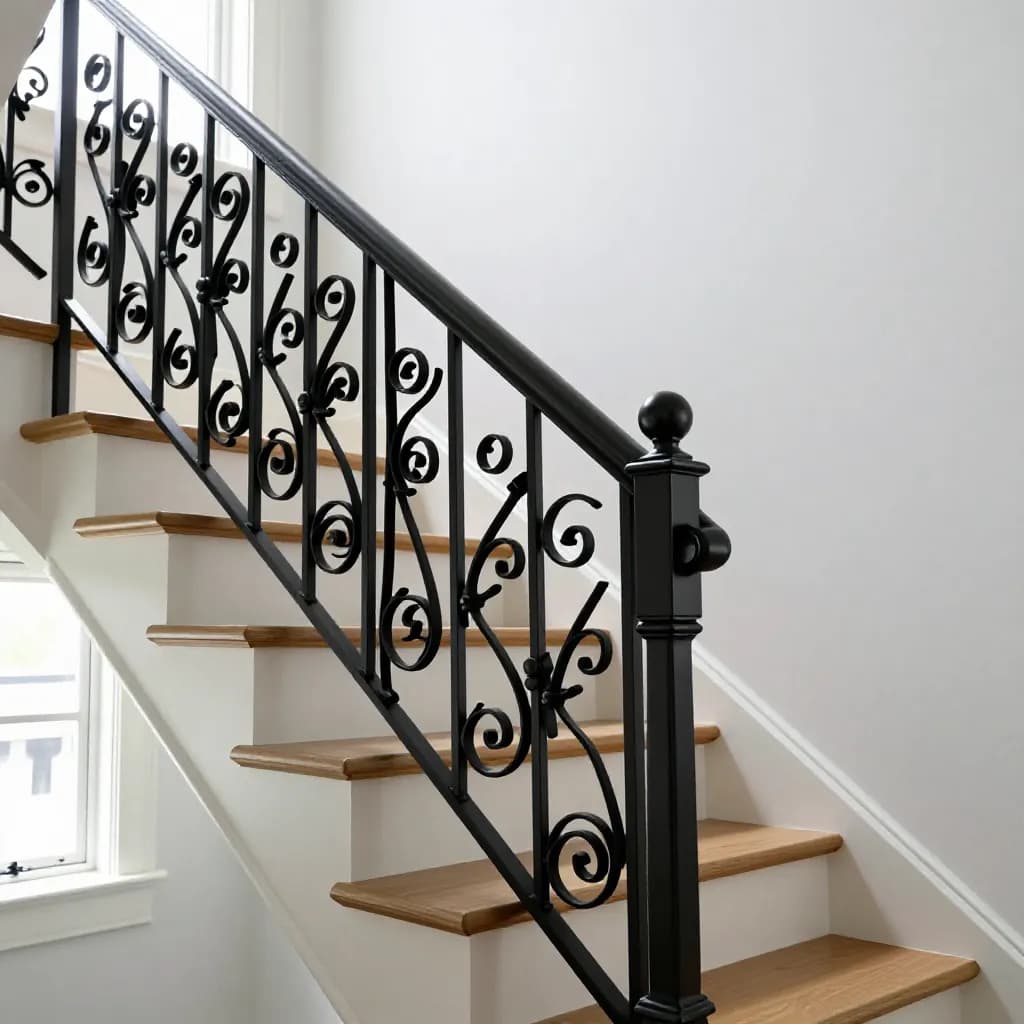
The demands on a railing finish are significant. Handrails are gripped by every person who uses the stairs, subjecting the finish to constant friction from hands, rings, and jewelry. Balusters and posts are bumped by furniture, vacuum cleaners, and foot traffic. Exterior railings face the additional challenges of UV exposure, rain, snow, and temperature cycling. Powder coating's thick, hard, well-adhered film handles all of these demands better than liquid paint, which tends to chip, peel, and wear through at contact points.
Ready to Start Your Project?
From one-off customs to 15,000-part production runs — get precise pricing in 24 hours.
On This Page
Powder Coating Is the Standard for Metal Railings
For railing fabricators and installers, powder coating offers process advantages as well. The single-coat application eliminates the multiple coats and drying time required for liquid paint systems. The finish is ready for handling and installation immediately after cooling from the oven. And the consistent, uniform appearance of powder coating eliminates the quality variations — drips, runs, thin spots, and brush marks — that can occur with field-applied liquid paint.
Interior Railings: Design and Finish Options
Interior stair railings are a focal point of home and building design, and the finish plays a major role in defining the railing's visual character. Powder coating offers interior railing designers an essentially unlimited palette of colors and finishes to work with, from classic wrought iron black to contemporary metallics and bold accent colors.
Matte black remains the most popular finish for interior metal railings, offering a timeless look that works with traditional, transitional, and modern design styles. The matte sheen minimizes fingerprint visibility and creates a sophisticated, understated appearance. Satin black provides slightly more sheen and depth, while gloss black makes a bolder statement but shows fingerprints and dust more readily.
Beyond black, the trend toward mixed metals in interior design has expanded the color palette for railings. Brass-tone and gold powder coatings pair beautifully with warm wood treads and natural stone. Brushed nickel and satin silver finishes complement cool-toned interiors with gray walls and white trim. Bronze and copper tones add warmth and richness to traditional and rustic spaces. For contemporary and minimalist interiors, white and light gray powder coatings create railings that blend with the walls rather than contrasting against them, producing a clean, airy effect that makes spaces feel larger.
Exterior Railings: Weather Resistance and Longevity
Exterior stair railings face the full force of weather exposure and must maintain both their appearance and structural integrity through years of sun, rain, snow, and temperature extremes. Powder coating provides the weather resistance these components need, but the coating system must be specified appropriately for the expected exposure conditions.
For exterior railings in moderate climates, a single coat of super-durable polyester powder at 60 to 80 microns provides excellent protection and color retention for seven to ten years. Super-durable polyester formulations contain UV stabilizers and hindered amine light stabilizers that resist the chalking and fading caused by prolonged sun exposure. Standard polyester powders are adequate for sheltered exterior locations but may show noticeable degradation within three to five years in direct sunlight.
In harsh environments — coastal areas with salt air, regions with heavy road salt use, or industrial areas with chemical exposure — a two-coat system is recommended. An epoxy primer provides superior adhesion and corrosion resistance at the metal interface, while a super-durable polyester topcoat provides UV resistance and the desired color and finish. This dual-layer approach is particularly important for railings in coastal locations, where salt air can penetrate single-coat systems at edges and fastener points and cause corrosion that undermines the coating from beneath.
Building Codes and Railing Requirements
Stair railings are life-safety components governed by building codes, and the powder coating process must not compromise code compliance. The International Building Code and International Residential Code specify requirements for railing height, baluster spacing, graspability of handrails, and structural load resistance. Powder coating does not affect the structural capacity of the railing, but it does add thickness to the components, which can have implications for graspability and spacing requirements.
Handrail graspability requirements specify that the handrail cross-section must fall within certain dimensional ranges to allow a secure grip. For circular handrails, the outside diameter must typically be between 32 and 51 millimeters. Powder coating adds approximately 0.1 to 0.2 millimeters to the diameter, which is negligible and will not push a compliant handrail out of specification. However, for handrails that are already at the upper limit of the allowable range, the coating thickness should be verified.
Baluster spacing requirements — typically a maximum of 100 millimeters between balusters, measured so that a 100-millimeter sphere cannot pass through — are similarly unaffected by powder coating. The coating adds thickness to each baluster, which actually reduces the clear spacing slightly and moves the installation further into compliance. The key code consideration is ensuring that the railing's structural capacity is maintained, which it is, since powder coating does not affect the mechanical properties of the steel or aluminum components.
Fabrication and Coating Sequence
The sequence of fabrication, coating, and installation significantly affects the quality and durability of a powder-coated railing system. The ideal approach is to fabricate the railing completely, including all welding, grinding, and fitting, then disassemble it into manageable sections for coating, and finally reassemble and install the coated sections on site.
For railings that are fabricated as a single welded assembly — common for residential staircases — the entire assembly is coated as one piece. This eliminates visible joints and provides a seamless finish, but it requires an oven large enough to accommodate the full railing. Many residential railings fit within standard industrial ovens, but large or complex assemblies may require a shop with oversized oven capacity.
Field joints — the connections made during on-site installation — are the most vulnerable points in a powder-coated railing system. These joints cannot be oven-cured, so they must be protected with touch-up paint or a two-part epoxy that provides comparable protection to the powder coating. Minimizing the number of field joints through careful design and fabrication planning improves both the appearance and durability of the finished installation. Where field joints are unavoidable, concealing them at post bases, wall connections, or other less visible locations keeps the visible railing surfaces seamless.
Ornamental and Decorative Railing Styles
Ornamental iron railings with scrollwork, rosettes, baskets, and other decorative elements are among the most visually striking applications for powder coating. These intricate designs showcase the versatility of powder coating, which follows the contours of even the most complex metalwork to provide uniform coverage and protection.
The challenge with ornamental railings is achieving complete coating coverage in the tight spaces and complex geometries created by decorative elements. Scrolls and curves create Faraday cage effects where electrostatic charge prevents powder from reaching recessed surfaces. Experienced coaters address this by reducing the electrostatic voltage for these areas, using manual touch-up passes with a small gun tip, and sometimes applying powder with the charge turned off entirely in the most difficult areas.
Color and finish selection for ornamental railings can enhance or diminish the visual impact of the decorative elements. Dark colors with a satin or semi-gloss finish tend to highlight the three-dimensional quality of scrollwork and ornamental details by creating subtle shadows and highlights. Very light colors can flatten the appearance of decorative elements by reducing shadow contrast. Multi-tone finishes — such as a dark base color with a lighter dry-brush accent on raised elements — create a hand-finished appearance that emphasizes the craftsmanship of the metalwork. This technique requires additional labor but produces stunning results on high-quality ornamental railings.
Maintenance and Long-Term Care
Powder-coated stair railings require minimal maintenance to maintain their appearance and protection. Interior railings need only periodic dusting and occasional wiping with a damp cloth and mild soap to remove fingerprints and smudges. The hard, smooth surface of powder coating resists dirt accumulation and is easy to clean, making it a low-maintenance choice for busy households and commercial buildings.
Exterior railings benefit from periodic washing to remove accumulated dirt, pollen, and environmental deposits. A soft brush or cloth with mild soap and water is sufficient for routine cleaning. Avoid pressure washing at close range, as the concentrated water stream can damage the coating at edges or areas where the finish may be thinner. After washing, inspect the coating for any chips, scratches, or areas where corrosion may be starting, and address any damage promptly with touch-up paint.
The most common maintenance issue with powder-coated railings is damage at contact points — where the railing meets the wall, where posts meet the floor, and where field joints were made during installation. These areas are prone to moisture intrusion and mechanical stress that can crack or chip the coating. Applying a bead of color-matched caulk at wall and floor connections seals these vulnerable joints and prevents moisture from reaching the bare metal beneath. Regular inspection and prompt repair of any coating damage ensures the railing maintains its appearance and structural protection for the full expected service life of the coating.
Frequently Asked Questions
Does powder coating affect stair railing building code compliance?
Powder coating does not affect the structural capacity or code compliance of stair railings. The coating adds approximately 0.1 to 0.2 millimeters to component dimensions, which is negligible for handrail graspability and baluster spacing requirements. The curing temperature does not affect the mechanical properties of the steel or aluminum.
How long does powder coating last on exterior railings?
Super-durable polyester powder coating on exterior railings typically lasts seven to ten years before noticeable fading or chalking in direct sun exposure. A two-coat system with epoxy primer extends corrosion protection even further. Coastal and harsh environments may reduce these timelines and benefit from the two-coat approach.
Can you powder coat an existing installed railing?
Railings must be removed for powder coating because the process requires oven curing at 180 to 200 degrees Celsius. Field coating with liquid paint is an alternative for railings that cannot be removed, but it will not match the durability of oven-cured powder coating. Removable railing sections can be individually coated and reinstalled.
What is the best finish for a handrail that gets heavy use?
A satin or matte polyester powder coating in a medium tone provides the best combination of wear resistance and appearance for high-traffic handrails. These finishes hide fingerprints and minor wear better than gloss finishes, and medium tones show less dirt than very light or very dark colors.
How do you handle field joints on powder-coated railings?
Field joints that cannot be oven-cured should be protected with a high-quality two-part epoxy touch-up paint that matches the powder coating color. Minimizing field joints through careful design and fabrication planning improves both appearance and durability. Concealing necessary joints at post bases and wall connections keeps visible surfaces seamless.
Ready to Start Your Project?
From one-off customs to 15,000-part production runs — get precise pricing in 24 hours.