Snowmobiles operate in conditions that push coatings to their limits. Temperatures plunging to minus 30 degrees Celsius and below, combined with road salt on trail crossings, ice crystal abrasion, and the thermal shock of a hot engine against frozen components, create a coating environment unlike any other recreational vehicle application. The metal components on a snowmobile need a finish that remains tough and flexible at extreme cold temperatures while resisting the chemical and physical abuse of winter riding.
Consumer
Powder Coating Snowmobile Parts: Extreme Cold Durability and Custom Finishes
Sundial Powder Coating·April 23, 2026·9 min
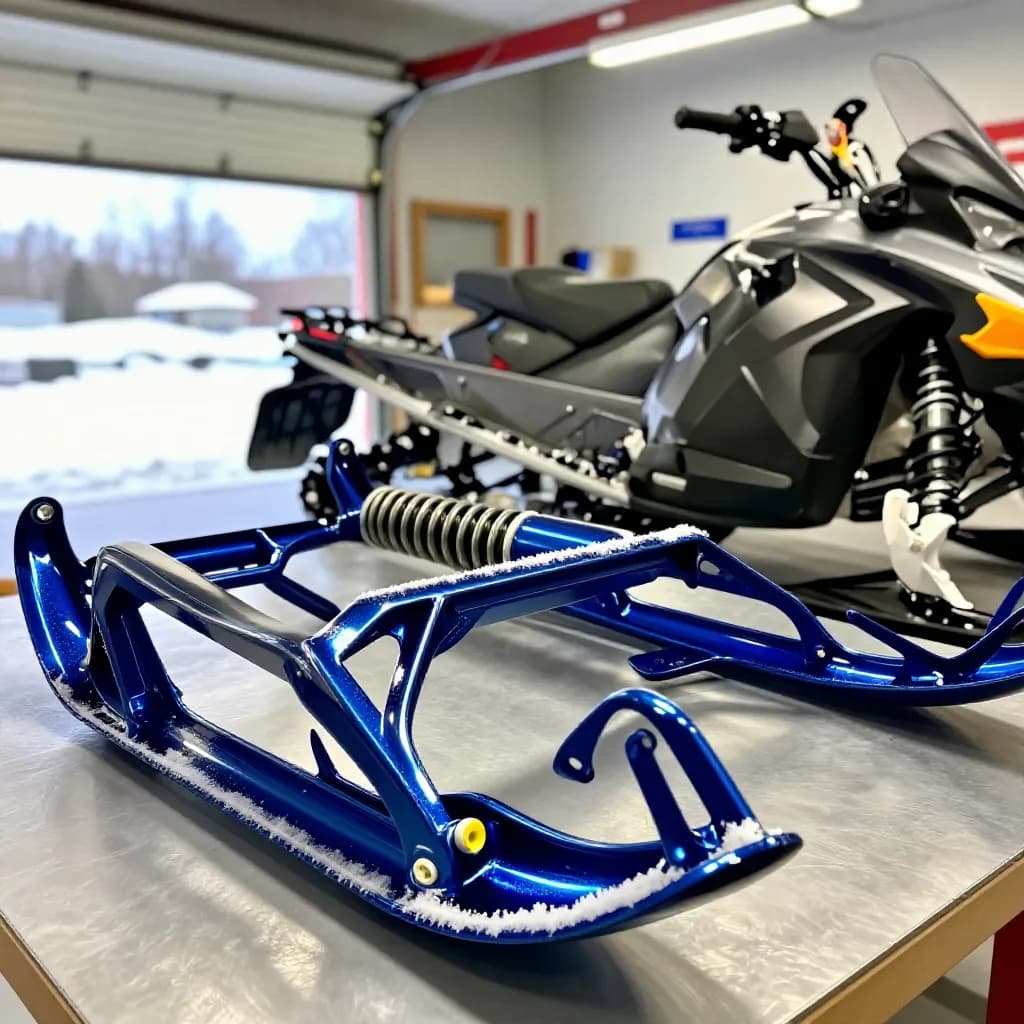
Factory coatings on snowmobile components vary widely in quality. Premium sleds from major manufacturers typically have good factory finishes, but these degrade over seasons of hard use. Budget sleds and older machines often have minimal coating that chips and corrodes quickly. The snowmobile aftermarket is also filled with bare steel and aluminum components that arrive unfinished, leaving the coating choice to the owner.
Ready to Start Your Project?
From one-off customs to 15,000-part production runs — get precise pricing in 24 hours.
On This Page
Snowmobiles and the Extreme Cold Challenge
Powder coating is the preferred finish for snowmobile components because it provides the combination of cold-temperature flexibility, chemical resistance, and impact durability that this application demands. The thick, cross-linked polymer film maintains its protective properties across the full temperature range a snowmobile encounters, from the heat of the engine compartment to the extreme cold of a winter trail ride.
Cold Temperature Performance of Powder Coatings
The behavior of powder coatings at extreme cold temperatures is a critical consideration for snowmobile applications. All polymers become more brittle as temperature decreases, and a coating that is flexible and impact-resistant at room temperature may crack and chip readily at minus 30 degrees Celsius. Understanding this behavior helps in selecting the right powder chemistry for snowmobile components.
Polyester powder coatings, the most common chemistry for automotive and recreational vehicle applications, maintain reasonable flexibility down to approximately minus 30 to minus 40 degrees Celsius. Below this range, the coating becomes increasingly brittle and susceptible to impact damage. For most snowmobile applications in temperate and northern climates, standard polyester provides adequate cold-temperature performance.
For extreme cold applications, such as snowmobiles operated in Arctic conditions or at very high altitudes, flexible polyester formulations offer improved low-temperature performance. These powders are formulated with plasticizers and flexible resin systems that maintain elongation at lower temperatures than standard polyesters. The trade-off is slightly reduced hardness at room temperature, which is an acceptable compromise for the improved cold-weather durability.
Epoxy primers provide excellent adhesion and flexibility at cold temperatures, making them an ideal base layer for snowmobile components. A two-coat system with an epoxy primer and polyester topcoat combines the cold-temperature flexibility of epoxy with the UV resistance and color options of polyester. This system is the recommended approach for components that experience both extreme cold and UV exposure.
Impact resistance at cold temperatures is particularly important for snowmobile bumpers, spindles, and tunnel components that contact ice, frozen debris, and trail obstacles. Testing the coating's impact resistance at the expected operating temperature, rather than at room temperature, provides a more realistic assessment of field performance.
Tunnel and Chassis Component Preparation
The tunnel is the backbone of a snowmobile chassis, running from the engine compartment to the rear of the sled. It houses the track, suspension, and drivetrain components, and its interior surface is in constant contact with the track, snow, ice, and road salt. The tunnel is the most critical component to coat properly because it is the most exposed to corrosion and the most structurally important.
Tunnel preparation begins with complete disassembly. Remove the track, suspension, heat exchangers, and all hardware from the tunnel. This exposes the full interior and exterior surfaces for preparation and coating. Attempting to coat a partially assembled tunnel will result in incomplete coverage and masked corrosion sites.
The tunnel interior is typically the most corroded area on a used snowmobile. Years of track contact, salt exposure, and moisture have usually created significant surface rust and pitting. Blast the interior thoroughly with aluminum oxide or steel grit to remove all corrosion and create a clean surface profile. Pay particular attention to the hyfax rail mounting areas and suspension pivot points where corrosion concentrates.
The exterior of the tunnel is less exposed but still benefits from coating. The exterior faces snow spray, salt, and UV exposure, and provides the visible surface that defines the sled's appearance. Blast and prepare the exterior to the same standard as the interior.
After blasting, apply a zinc phosphate conversion coating for maximum corrosion resistance. The tunnel's exposure to salt and moisture makes pretreatment quality critical. A zinc-rich epoxy primer beneath the polyester topcoat provides galvanic protection at any future chip or scratch sites, which is particularly important for the tunnel interior where track contact will inevitably wear through the topcoat over time.
Bumpers, Spindles, and Running Gear
Snowmobile bumpers, front spindles, ski saddles, and running gear components are all excellent candidates for powder coating. These parts are exposed to the full range of winter hazards and benefit from the thick, durable protection that powder coating provides.
Front bumpers and brush guards take direct impacts from ice chunks, frozen trail debris, and the occasional tree branch. The coating must withstand these impacts at cold temperatures without shattering. A flexible polyester or a two-coat epoxy-polyester system provides the best cold-temperature impact resistance. Textured finishes hide the inevitable minor damage from trail riding.
Front spindles and steering components are critical safety parts that must maintain their structural integrity. The powder coating cure temperature does not affect the mechanical properties of the steel alloys used in these components. Mask all bearing surfaces, king pin bores, and tie rod tapers to maintain proper fitment and function.
Ski saddles and ski mounting hardware are exposed to constant snow and ice contact. These components benefit from a smooth, hard coating that resists ice adhesion and facilitates snow shedding. A smooth gloss or satin finish is preferred over texture for ski-contact components, as the smooth surface reduces friction and prevents ice buildup.
Rear suspension components including rails, arms, and idler wheels can be powder coated for corrosion protection and appearance. Mask all bushing bores, bearing seats, and pivot points to maintain proper tolerances. The suspension operates in a harsh environment of snow, ice, salt, and track debris, making corrosion protection particularly valuable for these components.
Heat exchangers and coolant lines should not be powder coated, as the coating insulates the surface and reduces heat dissipation. These components rely on contact with snow and cold air for cooling, and any insulating layer reduces their effectiveness.
Salt, Ice, and Chemical Resistance
Snowmobiles encounter a surprising variety of chemicals during winter operation. Road salt on trail crossings, calcium chloride and magnesium chloride deicing compounds, two-stroke oil residue, coolant leaks, and the acidic compounds in exhaust emissions all contact the sled's metal components. The powder coating must resist all of these chemicals without degradation.
Road salt is the most aggressive chemical exposure for snowmobile components. Trail crossings over salted roads deposit concentrated salt solutions on the tunnel, suspension, and running gear. This salt remains on the components throughout the riding season, continuously attacking the coating and any exposed metal. A coating system with zinc phosphate pretreatment and zinc-rich epoxy primer provides the best defense against salt-induced corrosion.
Calcium chloride and magnesium chloride, increasingly used as road deicers, are more corrosive than traditional sodium chloride salt. These compounds are hygroscopic, meaning they attract moisture from the air and remain wet on surfaces even in cold, dry conditions. This persistent moisture contact accelerates corrosion at any coating defect. Rinsing the sled with fresh water after riding on treated roads removes these compounds before they can cause damage.
Ice crystal abrasion is a unique challenge for snowmobile coatings. Snow and ice particles propelled by the track and wind impact the tunnel interior and running gear at high velocity, creating a sandblasting effect that wears through coatings over time. The tunnel interior is most affected, and even the best powder coat will show wear in the track contact area after several seasons. Accepting this wear as normal and recoating the tunnel interior periodically is the practical approach.
Two-stroke oil residue and exhaust deposits are mildly acidic and can stain or soften coatings with prolonged contact. Clean these deposits regularly with a mild degreaser to prevent long-term coating damage.
Custom Colors and Sled Culture
The snowmobile community embraces bold colors and custom builds, and powder coating is a primary tool for creating distinctive sled identities. From factory color restorations to wild custom schemes, the color options are virtually unlimited.
Factory color matching is popular for restorations of vintage and classic snowmobiles. Matching the original Ski-Doo yellow, Arctic Cat green, Polaris blue, or Yamaha red brings a restored sled back to its original glory. Bring a clean sample of the original color to the powder supplier for matching, as factory colors from different eras may not correspond to current RAL or Pantone references.
Custom color schemes allow riders to express their personality and stand out on the trail. Bright, high-visibility colors like fluorescent orange, lime green, and electric blue are popular for both aesthetics and safety visibility. These colors make the sled more visible to other riders and trail users, which is a genuine safety benefit in low-light winter conditions.
Team and sponsor colors on powder-coated components add a professional touch to racing sleds. The durability of powder coating means team colors survive the rigors of competition, including the impacts, chemical exposure, and extreme temperatures of snowmobile racing.
Two-tone and multi-color schemes are achievable through masking. A tunnel with contrasting interior and exterior colors, or bumpers with accent-colored end caps, adds visual complexity to the build. Each additional color requires a separate coating and curing cycle.
Metallic and candy finishes create eye-catching effects that are particularly striking against a white snow background. A candy red or metallic blue tunnel catches light beautifully and makes the sled a visual standout at trailside stops and events.
Seasonal Maintenance and Storage
Snowmobile powder coat maintenance follows a seasonal pattern aligned with the riding season. Proper care during the season and correct storage procedures during the off-season maximize the coating's service life.
During the riding season, rinse the sled with fresh water after every ride that involves road crossings or exposure to deicing chemicals. This removes salt and chemical deposits before they can attack the coating. A pressure washer at moderate pressure effectively cleans the tunnel interior and suspension components. Avoid high-pressure washing directly at coating edges and chip sites, as the water pressure can lift the coating at these vulnerable points.
Inspect the coating periodically during the season for chips and scratches, particularly on the tunnel interior, bumpers, and spindles. Touch up any damage promptly with matching touch-up paint to prevent corrosion from starting. In the cold, wet environment of winter riding, exposed metal corrodes rapidly.
At the end of the riding season, perform a thorough cleaning and inspection. Wash the entire sled to remove all salt, chemical, and debris accumulation. Inspect all powder-coated surfaces for damage and touch up as needed. Apply a light coat of corrosion-inhibiting spray to the tunnel interior and any areas where the coating has worn thin.
Store the sled in a dry, covered location for the off-season. Moisture and humidity during storage can cause corrosion at any coating defect sites. If outdoor storage is unavoidable, a fitted sled cover prevents rain and UV exposure. Elevate the sled off the ground to prevent moisture wicking from the floor.
Before the next riding season, inspect all powder-coated components again. Address any corrosion that may have developed during storage, and verify that all mechanical components function properly. A pre-season inspection ensures the sled is ready for another season of reliable service.
Frequently Asked Questions
Does powder coating become brittle in extreme cold?
All polymers become more brittle at low temperatures. Standard polyester powder coatings maintain reasonable flexibility down to minus 30 to minus 40 degrees Celsius. For extreme cold applications, flexible polyester formulations or a two-coat epoxy-polyester system provides improved low-temperature impact resistance.
What snowmobile parts should be powder coated?
The tunnel, bumpers, spindles, ski saddles, suspension components, and various brackets and hardware all benefit from powder coating. Do not coat heat exchangers, coolant lines, bearing surfaces, or bushing bores. Remove all non-metal components before coating.
How do I protect the tunnel interior from track wear?
A two-coat system with zinc-rich epoxy primer and polyester topcoat provides the best protection. The tunnel interior will show wear from track contact over time, which is normal. Recoating the tunnel interior every few seasons maintains corrosion protection. Hyfax rails also help protect the tunnel surface.
Should I rinse my snowmobile after riding on salted roads?
Yes. Road salt and deicing chemicals are highly corrosive and should be rinsed off with fresh water after every ride involving road crossings. This simple maintenance step prevents salt from concentrating on powder-coated surfaces and attacking the coating at any chip or scratch sites.
Can I match factory snowmobile colors with powder coating?
Yes. Bring a clean sample of the original color to the powder supplier for custom matching. Factory colors from different eras may not correspond to standard color references, so a physical sample provides the most accurate match. Most powder suppliers can formulate a custom match within a few days.
Ready to Start Your Project?
From one-off customs to 15,000-part production runs — get precise pricing in 24 hours.