Skateboard trucks are the unsung workhorses of every setup, absorbing impacts, grinding on ledges and rails, and enduring the constant abuse of street and park skating. While most skaters focus on deck graphics and wheel colors for customization, powder coating the trucks opens up a world of personalization that transforms the entire look of the board. A set of custom-colored trucks makes a bold visual statement and sets a setup apart from the sea of raw aluminum and silver trucks at the skatepark.
Consumer
Powder Coating for Skateboard Trucks: Impact Resistance, Grinding Wear, Custom Colors, and Lightweight Options
Sundial Powder Coating·April 22, 2026·8 min
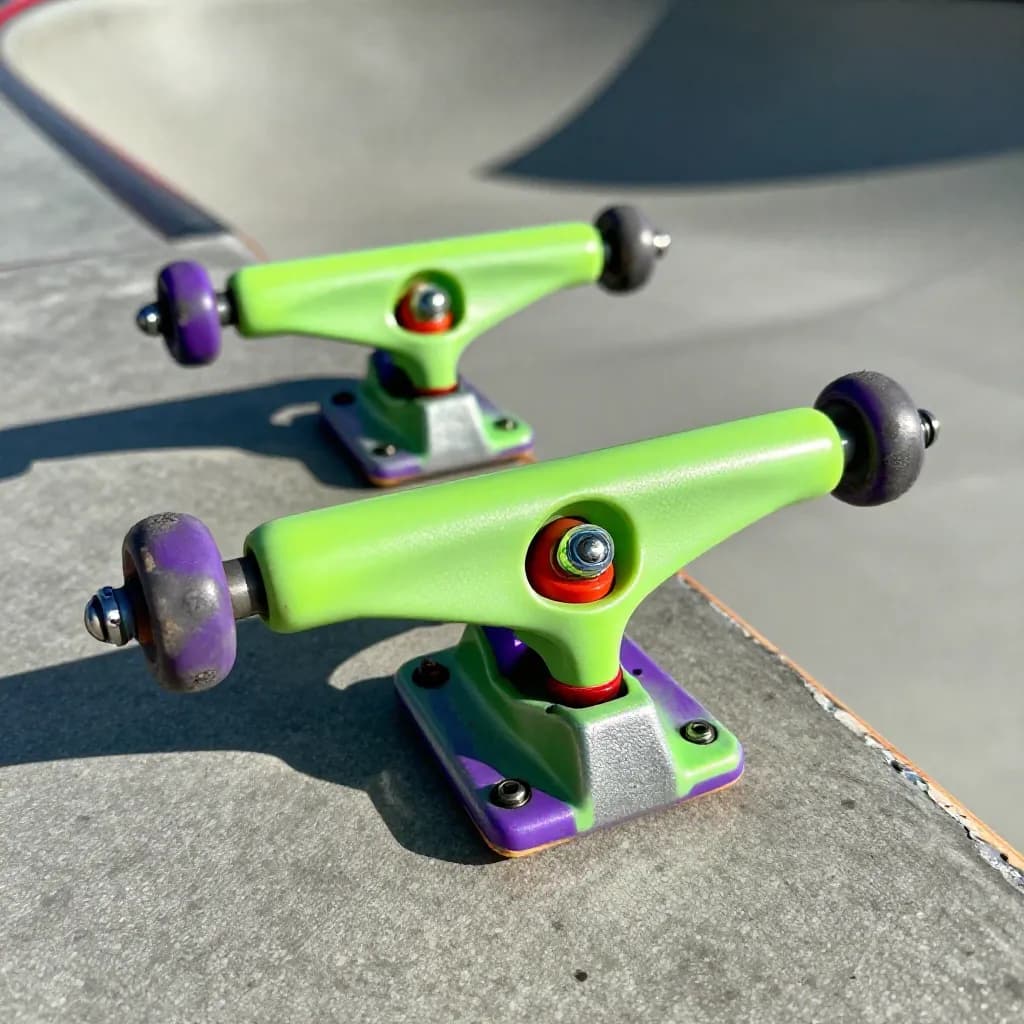
Powder coating skateboard trucks is a growing trend in the skating community, driven by the desire for unique setups and the availability of affordable powder coating services. The process works well on the cast or forged aluminum alloy that most trucks are made from, and the results are durable enough to withstand the demanding conditions of skateboarding — at least on the surfaces that are not in direct contact with grinding surfaces.
Ready to Start Your Project?
From one-off customs to 15,000-part production runs — get precise pricing in 24 hours.
On This Page
Custom Trucks Start with Powder Coating
The honest reality of powder coating skateboard trucks is that the coating will be destroyed on any surface that contacts ledges, rails, and coping during grinds. This is not a failure of the coating — no finish can survive the metal-on-concrete and metal-on-metal contact of grinding. The value of powder coating on trucks lies in the color and protection it provides on the non-grinding surfaces — the truck body, the baseplate top, and the kingpin area — which remain visible and protected during normal skating.
Understanding Truck Anatomy for Coating
A skateboard truck consists of several components, and understanding which parts benefit from powder coating helps set realistic expectations. The baseplate mounts to the deck and houses the pivot cup. The hanger is the T-shaped component that holds the axle and does the actual grinding. The kingpin holds the hanger to the baseplate through the bushings. The axle extends through the hanger and holds the wheels.
The hanger is the most visible component and the primary candidate for powder coating. The top and sides of the hanger display the coating color prominently when the board is flipped or viewed from the side. However, the bottom of the hanger — the grind surface — will have its coating removed within the first few grinds. This creates a two-tone appearance with the coated upper surfaces and the raw aluminum grind surface, which many skaters actually find appealing.
The baseplate can be coated on its top surface, which is visible between the deck and the hanger. The bottom of the baseplate, which mounts against the deck, should be left uncoated or lightly coated to maintain proper contact with the mounting hardware. The kingpin and axle should not be coated, as the coating would interfere with bushing fit on the kingpin and wheel bearing fit on the axle. Axle nuts and kingpin nuts are too small and functional to benefit from coating.
Impact Resistance for Skateboarding
Skateboard trucks endure tremendous impact forces. Landing tricks from height, slamming into obstacles during failed attempts, and the constant jarring of riding over rough surfaces all subject the trucks to repeated high-energy impacts. The powder coating must be tough enough to survive these impacts on the non-grinding surfaces without chipping, cracking, or peeling.
Polyester and polyester-epoxy hybrid powder coatings provide the best impact resistance for skateboard truck applications. These formulations offer a balance of hardness and flexibility that absorbs impact energy without fracturing. Pure epoxy coatings, while very hard, can be brittle under the sharp impacts that skateboarding produces. A flexible polyester formulation at 50 to 70 microns provides adequate protection without adding excessive weight or thickness.
The areas most vulnerable to impact damage on coated trucks are the edges of the hanger where it contacts obstacles during failed grinds, the baseplate edges that can strike curbs and ledges, and the area around the kingpin where the hanger pivots under load. These high-stress areas benefit from slightly thicker coating application and careful preparation to ensure maximum adhesion. Even with the best coating, skaters should expect some coating damage in these areas over time — it is the nature of the sport.
Grinding Wear: Setting Realistic Expectations
Grinding is fundamental to street and park skateboarding, and it is important to understand how powder coating interacts with this core activity. When a truck hanger grinds along a ledge, rail, or coping, the contact pressure and friction are extreme — far beyond what any coating can withstand. The powder coating on the grind surface will be removed within the first few grinding sessions, exposing the raw aluminum beneath.
This is not a defect or a reason to avoid powder coating trucks. The grind surface is a sacrificial area that wears regardless of the finish. Raw aluminum trucks develop the same polished grind surface through use. The difference with powder-coated trucks is the visual contrast between the colored upper surfaces and the silver grind surface, which creates a distinctive look that shows the truck has been used.
For skaters who primarily cruise, carve, or skate transition without grinding, the coating will last significantly longer because the grind surface is not being worn. Bowl and vert skaters who grind coping will see wear on the hanger's grind surface but the rest of the coating will remain intact. Street skaters who grind frequently will see the most rapid coating wear on the hanger bottom. Understanding these wear patterns helps skaters decide whether powder coating aligns with their skating style and expectations.
Custom Colors and Skate Culture
Color customization is the primary motivation for most skaters who powder coat their trucks. The standard options from truck manufacturers — raw aluminum, black, and occasionally a limited-edition color — leave little room for personal expression. Powder coating opens up the entire color spectrum, allowing skaters to create setups that are truly unique.
Color coordination between trucks, wheels, grip tape, and deck graphics is a hallmark of a well-thought-out setup. Matching the truck color to an accent color in the deck graphic creates a cohesive look. Contrasting colors — like bright red trucks on a black deck — make a bold statement. Pastel colors have become trendy in skate culture, with mint green, lavender, and baby blue trucks creating a softer, fashion-forward aesthetic that appeals to a growing segment of the skating community.
Metallic and anodized-look powder coatings are popular choices that give trucks a premium appearance. Gold, copper, and bronze metallics add a luxurious touch, while bright metallic blue and red create eye-catching setups. For skaters who want the ultimate in uniqueness, color-shifting and chameleon powder coatings change hue depending on the viewing angle, creating a dynamic appearance that draws attention at the park. Glow-in-the-dark powder coatings are another novelty option that adds a fun element to night skating sessions.
Weight Considerations for Performance
Weight is a meaningful consideration for skateboard trucks, as lighter trucks contribute to easier flip tricks and a more responsive feel. Powder coating adds a small amount of weight to the trucks — typically 10 to 20 grams per truck, depending on the truck size and coating thickness. For most skaters, this weight addition is imperceptible and has no noticeable effect on performance.
For competitive and technical street skaters who are sensitive to equipment weight, the coating thickness can be minimized to reduce weight addition. A thinner application of 40 to 50 microns provides color and basic protection while keeping weight addition to a minimum. This thinner coating will show wear more quickly than a standard-thickness application, but for skaters who prioritize performance over longevity, the trade-off may be worthwhile.
It is worth putting the weight addition in perspective. The difference between powder-coated and uncoated trucks is roughly equivalent to the weight of two or three kingpin nuts. Switching to lighter wheels, thinner grip tape, or a lighter deck would have a far greater impact on total setup weight than the coating on the trucks. For the vast majority of skaters, the weight of powder coating is a non-issue that should not factor into the decision.
Preparation, Coating, and Reassembly
Preparing skateboard trucks for powder coating requires complete disassembly. Remove the trucks from the deck, then disassemble each truck by removing the kingpin nut, bushings, washers, hanger, and pivot cup. The axle nuts and speed washers should also be removed. Only the metal hanger and baseplate go to the coater — all rubber, plastic, and urethane components must be removed.
The aluminum hanger and baseplate are degreased and blasted with non-ferrous media to remove any existing finish and create a surface profile for powder adhesion. A chromate-free conversion coating is applied for optimal adhesion on the aluminum alloy. The axle ends and axle threads on the hanger should be masked to maintain proper wheel and nut fit. The pivot cup socket on the baseplate and the pivot on the hanger should be masked to maintain proper pivot fit and truck turning characteristics.
After coating and curing, reassemble the trucks with fresh bushings if the originals are worn. Thread the kingpin through the baseplate, stack the bushings and washers, insert the hanger, and tighten the kingpin nut to the desired tightness. Mount the trucks to the deck and install the wheels. Take the setup for a test ride to verify that the trucks turn and respond normally — the coating should not affect the truck's performance, but confirming proper reassembly ensures everything is dialed in before hitting the park.
Frequently Asked Questions
Will powder coating survive grinding on ledges and rails?
No. The coating on the grind surface of the hanger will be removed within the first few grinding sessions. No coating can withstand the extreme contact pressure of grinding. The coating on the non-grinding surfaces — the top and sides of the hanger and the baseplate — will remain intact and provide color and protection.
How much weight does powder coating add to skateboard trucks?
Powder coating adds approximately 10 to 20 grams per truck, depending on truck size and coating thickness. This is roughly equivalent to the weight of two or three kingpin nuts and has no noticeable effect on performance for the vast majority of skaters.
Can you powder coat titanium skateboard trucks?
Yes. Titanium trucks can be powder coated with proper surface preparation. Titanium requires abrasive blasting to create a surface profile for adhesion, and a specialized primer may be needed for optimal coating performance. The process is straightforward but may require a coater experienced with titanium substrates.
Will powder coating affect how my trucks turn?
Powder coating does not affect truck turning characteristics as long as the pivot cup socket, pivot, and bushing seat areas are properly masked during coating. These surfaces must maintain their original dimensions for proper truck geometry and turning response. Reassemble with the same bushing setup for identical feel.
How long does powder coating last on skateboard trucks?
On non-grinding surfaces, powder coating lasts one to three years of regular skating before showing significant wear. The grind surface coating is removed within the first few sessions. Cruiser and transition skaters who do not grind will see longer coating life. The coating's longevity depends on skating style, frequency, and the types of obstacles encountered.
Ready to Start Your Project?
From one-off customs to 15,000-part production runs — get precise pricing in 24 hours.