The RC car hobby has evolved far beyond off-the-shelf toys. Today's enthusiasts build custom rigs with machined aluminum chassis, steel roll cages, and fabricated bumpers that rival the craftsmanship of full-scale vehicles. With that level of investment in parts and build quality, the finish matters. Powder coating has become the go-to choice for serious RC builders who want durability, color consistency, and a professional look that spray cans simply cannot deliver.
Consumer
Powder Coating for RC Car Parts: Custom Finishes for Scale Builds
Sundial Powder Coating·April 23, 2026·8 min
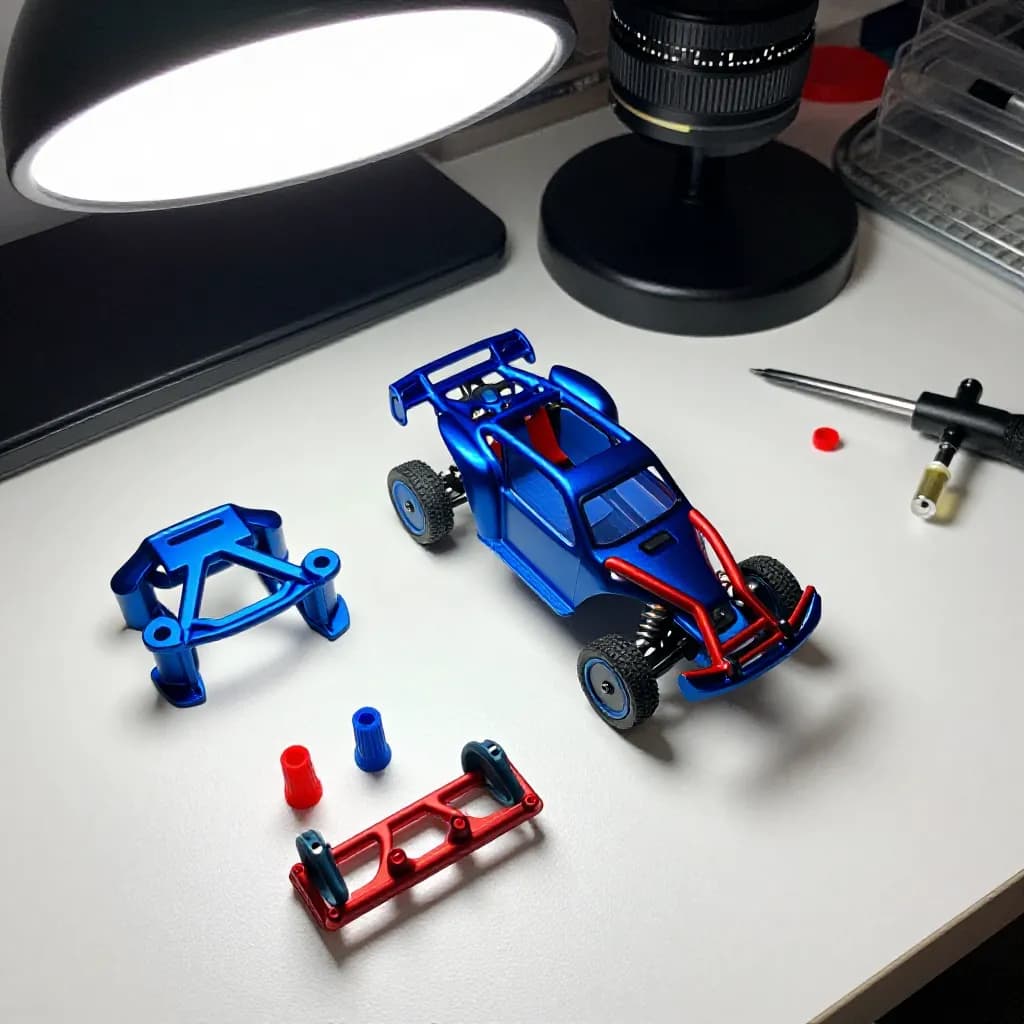
Unlike hobby-grade spray paint, powder coating bonds to metal at a molecular level during the curing process. The result is a finish that resists chipping from rock hits, shrugs off mud and water exposure, and holds its color through hours of UV exposure at outdoor tracks. For bashers who send their rigs off jumps and through rough terrain, this durability is not just cosmetic — it protects the metal underneath from corrosion and wear.
Ready to Start Your Project?
From one-off customs to 15,000-part production runs — get precise pricing in 24 hours.
On This Page
Why RC Enthusiasts Are Turning to Powder Coating
The visual impact is equally compelling. A powder-coated chassis plate or roll cage elevates the entire build, giving it a factory-finished appearance that turns heads at meetups and competitions. Whether you prefer a subtle matte black or a loud candy red, powder coating delivers a depth and consistency of color that rattle cans cannot match.
Which RC Car Parts Can Be Powder Coated
Any metal part on an RC car is a candidate for powder coating. The most popular items include aluminum chassis plates, steel roll cages, front and rear bumpers, skid plates, shock towers, and motor mounts. Some builders also coat smaller hardware like link mounts, servo guards, and battery trays for a fully coordinated look.
Aluminum parts are the most common substrate in the RC world, and they take powder coating exceptionally well. The lightweight nature of aluminum means the added film thickness from powder coating — typically 50 to 80 microns — adds virtually no measurable weight to the vehicle. Steel parts like roll cages and bumpers are equally suitable and benefit from the corrosion protection that powder coating provides.
There are a few parts to avoid. Anything with tight tolerances where the coating thickness could cause fitment issues — such as bearing housings or hinge pin bores — should be masked or left uncoated. Threaded holes also need masking to ensure bolts still thread in properly after coating. A good powder coater will discuss these details with you before starting the job, and most are happy to work with RC builders once they understand the scale and precision involved.
Preparing Small Parts for Powder Coating
Preparation is everything with small RC parts. Because these components are a fraction of the size of typical powder coating jobs, surface contamination and coating thickness become proportionally more critical. Every speck of oil, machining residue, or oxidation will show up in the finished product.
Start by fully disassembling the parts you want coated. Remove all bearings, screws, electronics, and plastic components. Clean the metal thoroughly with a degreaser to remove any residual oils from machining or handling. If the parts have been anodized previously, the anodizing layer needs to be stripped before powder coating, as powder will not adhere properly over anodized surfaces.
When you deliver parts to your coater, organize them clearly. Small RC parts can easily get mixed up in a busy shop. Bag related parts together, label everything, and provide a list of what needs coating versus what needs masking. If specific holes or surfaces must remain uncoated for fitment reasons, mark them clearly with tape and include written instructions. The more organized you are, the better your results will be.
Some RC builders invest in a small home powder coating setup for their hobby. Compact ovens and entry-level powder guns can handle the small part sizes typical of RC builds, and the learning curve is manageable for anyone comfortable with basic fabrication.
Color Options and Custom Finishes for RC Builds
Color selection is where powder coating really shines for RC builds. The full RAL color spectrum is available, along with custom matches to virtually any reference sample. Want to match your RC rig to your full-size truck? Bring a color code or paint chip and your coater can match it precisely.
Beyond solid colors, specialty finishes open up creative possibilities. Metallic powders add sparkle and depth, while candy and translucent coats over a chrome or silver base create eye-catching effects. Textured finishes like wrinkle and hammertone add visual interest and help hide minor surface imperfections on cast or machined parts. Matte finishes have become particularly popular in the RC community for their tactical, understated look.
Two-tone and multi-color schemes are achievable through masking. A chassis plate with a contrasting center section, or a roll cage with different colors on the main hoop versus the side bars, adds a level of customization that sets your build apart. The masking process requires precision at this small scale, so discuss your design ideas with your coater before committing.
For competition builds where weight matters, thinner coatings in the 40 to 60 micron range can be specified. This provides full color coverage and protection while minimizing any weight addition. The difference is negligible on most builds, but competitive racers appreciate every gram saved.
Durability on the Trail and Track
RC cars take a beating. Rock crawlers scrape over granite, bashers land hard from six-foot jumps, and trail trucks plow through mud and water. The finish on these vehicles needs to survive conditions that would destroy ordinary paint in a single session.
Powder coating handles this abuse remarkably well. The thermoset finish is significantly harder than spray paint, resisting chips and scratches from rock contact and debris impact. On aluminum chassis plates, powder coating acts as a sacrificial layer that absorbs impacts before the base metal is affected. Many builders report running powder-coated parts for years of hard use with only minor cosmetic wear at high-contact points.
Water and mud resistance is another major advantage. Powder coating creates a sealed, non-porous surface that does not absorb moisture or allow it to reach the metal underneath. After a muddy trail run, a quick rinse with water is all it takes to clean powder-coated parts back to their original appearance. This is a significant upgrade over bare aluminum, which can oxidize and pit when exposed to standing water or mud.
For parts that see extreme abrasion — like skid plates that drag across rocks — a textured powder finish provides extra durability. The raised texture distributes impact forces across a larger area and makes surface scratches less visible, keeping the build looking fresh longer.
Weight Considerations for Competitive Builds
Weight is a constant concern in competitive RC racing, and any finish adds some mass to the vehicle. The good news is that powder coating is one of the lightest durable finish options available for metal parts. A typical powder coat film at 60 microns on an RC chassis plate adds roughly two to five grams, depending on the surface area — a negligible amount even in weight-sensitive racing classes.
For context, that same chassis plate with multiple coats of spray paint could add a similar or greater weight with far less durability. Anodizing is lighter still but limited to aluminum and offers a narrower color range. Powder coating strikes the best balance between weight, durability, and aesthetic options for most builders.
If weight is truly critical, work with your coater to specify a thinner application. Skilled applicators can lay down a uniform coat at 40 to 50 microns that still provides full coverage and protection. On small RC parts, the difference between a standard and thin application might be just one or two grams per part, but across an entire build those grams add up.
It is also worth noting that powder coating can replace heavier finishing methods. Some builders use thick rubber coatings or multiple layers of paint and clear coat for protection. Switching to a single powder coat layer often results in a net weight reduction while improving durability.
Working with a Powder Coater on RC Projects
Not every powder coating shop is accustomed to working with tiny RC parts, so finding the right coater matters. Look for shops that have experience with small or custom work — motorcycle parts, firearms, or custom fabrication shops tend to be more comfortable with the precision required for RC components.
When you approach a shop, bring your parts fully disassembled and clearly labeled. Explain which surfaces need coating and which need masking. Provide reference images of the finished look you want, especially if you are requesting multi-color work or specific finish textures. The more information you provide upfront, the smoother the process will be.
Turnaround time for small RC parts is typically faster than larger jobs because the parts take up minimal oven space and can often be batched with other small work. Many shops can complete RC parts within three to five business days, though custom colors or multi-step finishes may take longer.
Batching your parts is the most economical approach. Rather than sending one or two parts at a time, accumulate all the components for a build and submit them together. This allows the coater to process everything in a single run, which is more efficient for both parties. If you are building multiple rigs or have friends in the hobby, combining orders can further improve the value.
Maintaining Powder-Coated RC Parts
Maintaining powder-coated RC parts is straightforward. After each run, rinse off mud, dirt, and debris with clean water. For stubborn grime, a mild dish soap solution and a soft brush will clean the surface without damaging the finish. Avoid abrasive cleaners, steel wool, or harsh solvents, which can dull or scratch the coating.
Inspect your coated parts periodically for chips or wear, especially on high-contact areas like skid plates and bumper edges. Small chips can be touched up with matching paint pens to prevent corrosion from starting at the exposed metal. While touch-up paint will not match the durability of the original powder coat, it provides adequate protection between full recoating cycles.
If a part takes significant damage — a deep gouge from a rock hit or a crack from a hard landing — the part can be stripped and recoated. Powder coating is fully renewable, meaning the old coating is removed and a fresh application goes on just like the original. This is one of the key advantages over anodizing, which is more difficult to strip and redo.
For long-term storage, keep powder-coated parts in a dry environment. While the coating itself is moisture-resistant, storing parts in damp conditions for extended periods can allow moisture to work into any chips or edge areas where the coating is thinnest. A simple parts bin in a climate-controlled space is all you need to keep your coated components in top condition.
Frequently Asked Questions
Does powder coating add noticeable weight to RC car parts?
The weight addition is minimal. A typical powder coat at 60 microns adds roughly two to five grams to an RC chassis plate, depending on surface area. For most builds this is negligible, and competitive racers can request thinner applications to minimize weight further.
Can anodized aluminum RC parts be powder coated?
Yes, but the existing anodizing must be stripped first. Powder coating will not adhere properly over an anodized surface. Your coater can chemically strip the anodizing as part of the preparation process before applying the powder.
Will powder coating affect the fitment of RC parts?
The coating adds 50 to 80 microns of thickness to each surface. On most RC parts this causes no fitment issues, but bearing housings, hinge pin bores, and threaded holes should be masked to maintain precise tolerances.
How long does powder coating last on RC cars that see heavy use?
With regular trail and track use, powder-coated RC parts typically maintain their appearance for several years. High-contact areas like skid plates may show wear sooner, but the overall finish far outlasts spray paint or rattle-can alternatives.
Can I powder coat RC parts at home?
Yes. Small home powder coating setups with compact ovens and entry-level guns are well suited to RC-sized parts. The small scale makes home coating more practical than with larger items, and many RC enthusiasts find the learning curve manageable.
Ready to Start Your Project?
From one-off customs to 15,000-part production runs — get precise pricing in 24 hours.