Model railroading is a hobby built on precision and realism. Every bridge, signal tower, and trackside structure is crafted to replicate the real world at miniature scale, and the finish on these pieces plays a huge role in selling that illusion. While most modelers rely on brush-on paints and airbrush techniques, powder coating offers a compelling alternative for metal accessories that need durability, consistency, and a factory-finished appearance.
Consumer
Powder Coating for Model Train Accessories: Scale-Accurate Finishes
Sundial Powder Coating·April 23, 2026·8 min
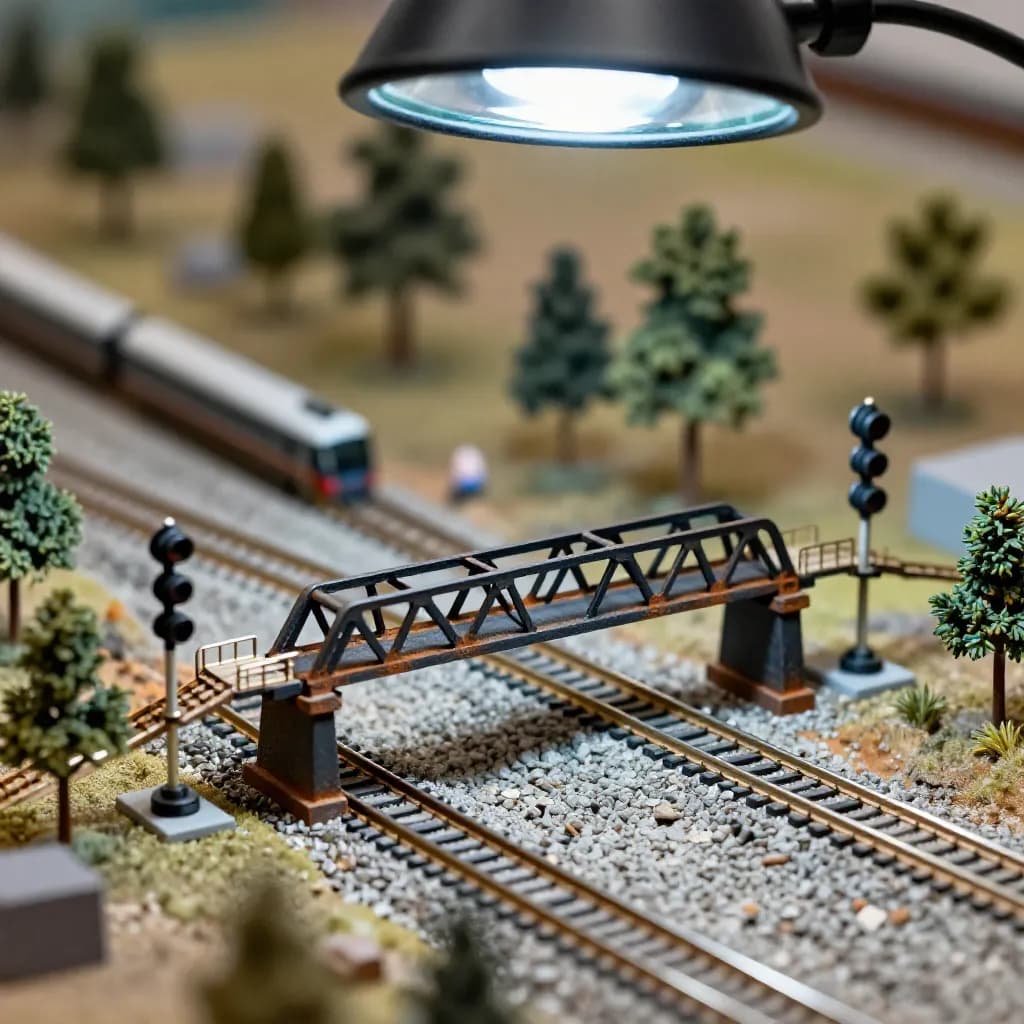
The appeal is straightforward. Powder coating produces a uniform, chip-resistant finish that does not fade, peel, or yellow over time. For metal bridges, signal masts, and structural components that form the backbone of a layout, this longevity means less maintenance and touch-up work over the years. A powder-coated bridge truss will look as crisp a decade from now as it does the day it is installed on the layout.
Ready to Start Your Project?
From one-off customs to 15,000-part production runs — get precise pricing in 24 hours.
On This Page
Powder Coating Meets the Model Railroad World
Powder coating is particularly relevant for modelers who build in larger scales — O gauge, G gauge, and garden railways — where metal components are common and the parts are large enough to coat practically. Smaller scales like HO and N present challenges due to part size, but even here, certain metal accessories and structural elements can benefit from the process.
Ideal Accessories for Powder Coating
Not every model train accessory is a candidate for powder coating, but many metal components are excellent fits. Bridges and trestles are among the most popular items. Whether you are working with a kit-built steel truss bridge or a custom-fabricated girder span, powder coating delivers the realistic, weathered-steel or painted-metal look that brings these structures to life.
Signal masts and gantries are another strong application. These tall, slender structures are prone to handling damage during layout construction and maintenance. A powder-coated signal mast resists fingerprint oils, minor bumps, and the occasional accidental knock far better than brush-painted alternatives. The finish also provides a more realistic representation of the heavy industrial paint used on real railroad signals.
Trackside buildings with metal components — engine houses, water towers, coaling stations, and industrial structures — benefit from powder coating on their structural frames and metal cladding panels. Even small details like metal fencing, railings, and platform canopy supports can be coated for a consistent, durable finish across the entire layout.
For garden railway enthusiasts who run their trains outdoors, powder coating is especially valuable. Outdoor layouts expose accessories to rain, UV radiation, temperature swings, and humidity — conditions that quickly degrade conventional hobby paints. Powder-coated outdoor accessories maintain their appearance through seasons of weather exposure.
Achieving Scale-Accurate Colors
Realism in model railroading depends heavily on color accuracy. Real railroad structures are painted in specific colors dictated by the railroad company, the era being modeled, and the function of the structure. Powder coating's access to the full RAL color system and custom color matching makes it possible to hit these targets precisely.
For bridge structures, common prototype colors include oxide red, silver aluminum, and various shades of grey and green depending on the railroad and era. A modeler recreating a 1950s Pennsylvania Railroad layout can specify the exact shade of Tuscan red used on PRR structures, while a modern BNSF modeler might request the specific orange and black used on contemporary signal bridges.
Matte and satin finishes are generally the most realistic for model railroad structures. Real-world railroad paint weathers quickly and rarely maintains a glossy appearance, so a matte or low-sheen powder coat replicates the look of painted steel that has been in service for years. For structures representing freshly painted prototypes, a satin finish provides a subtle sheen without looking toylike.
Weathering can be applied over powder-coated surfaces using standard modeling techniques. Washes, dry brushing, and pigment powders all adhere well to cured powder coat surfaces, allowing modelers to add realistic rust streaks, grime, and fading after the base coat is applied. The durable powder coat base ensures that weathering effects can be adjusted or removed without damaging the underlying finish.
Working at Small Scale: Challenges and Solutions
The primary challenge of powder coating model train accessories is scale. Powder coating was developed for industrial applications where parts are measured in feet, not inches. Applying a uniform coat to a delicate model bridge or a slender signal mast requires technique adjustments and careful attention to film thickness.
The main concern is coating thickness relative to part size. A standard powder coat of 60 to 80 microns is fine on a full-size railing but could obscure fine detail on a scale model. For model railroad work, thinner applications in the 30 to 50 micron range preserve detail while still providing full coverage and protection. This requires a skilled applicator who can control the powder gun at lower settings and maintain consistent coverage on small, intricate parts.
Faraday cage effects — where powder struggles to penetrate into recessed areas and inside corners — are more pronounced on small, complex parts. Bridge trusses with multiple gusset plates and cross-bracing can be particularly challenging. Experienced coaters address this by adjusting gun voltage, using specialized nozzles, and sometimes applying powder manually to hard-to-reach areas before the main spray pass.
Hanging and racking small parts for coating also requires creativity. Standard hooks and hangers designed for industrial parts are too large for model accessories. Many coaters fabricate custom fixtures from wire to hold small parts securely during spraying and curing. If you are working with a coater on model train parts, discuss fixturing in advance to ensure they have a plan for holding your pieces.
Garden Railways and Outdoor Durability
Garden railways represent the intersection of model railroading and outdoor living, and powder coating is a natural fit for this niche. G-scale and other large-scale outdoor layouts expose rolling stock, structures, and track accessories to the full range of weather conditions — sun, rain, frost, heat, and humidity. Conventional hobby paints struggle in this environment, often fading, peeling, or chalking within a single season.
Powder-coated garden railway accessories are built to handle outdoor exposure. UV-stable polyester powders resist fading and chalking for years, maintaining color accuracy through countless cycles of sun exposure. The sealed, non-porous surface prevents moisture from reaching the metal substrate, eliminating the corrosion that plagues bare or poorly painted metal in outdoor settings.
Bridges and trestles are the most common garden railway items sent for powder coating. These structures are large enough to coat easily, they are structural elements that benefit from corrosion protection, and they are highly visible focal points of the layout. A powder-coated garden railway bridge can serve as a permanent landscape feature that requires no more maintenance than an occasional rinse with a garden hose.
Signal structures, station platforms, and trackside buildings also benefit from outdoor-grade powder coating. For modelers who invest significant time and money in custom-built garden railway structures, powder coating protects that investment against the elements and ensures the layout looks its best year after year.
Detail Work and Masking Techniques
Model railroad accessories often require multiple colors on a single piece. A signal bridge might need a silver base with black details, or a station canopy might call for green structural members with cream-colored trim. Achieving these multi-color effects with powder coating requires careful masking between coating passes.
High-temperature masking tape and silicone plugs are the primary tools for multi-color powder work. The base color is applied and cured first, then areas that should remain the base color are masked before the second color is applied and cured. Each additional color requires another masking, spraying, and curing cycle, so complex color schemes add time and effort to the process.
For very fine detail work — lettering, small warning signs, or thin striping — powder coating reaches its practical limits. These details are better applied after powder coating using decals, hand painting, or airbrushing over the cured powder surface. The powder coat serves as a durable, consistent base color, and finer details are added on top using traditional modeling techniques.
This hybrid approach — powder coating for base colors and durability, with hand-applied details on top — gives modelers the best of both worlds. The structural finish is tough and long-lasting, while the artistic details can be refined, adjusted, and weathered using familiar modeling methods. Many experienced modelers find this combination produces results superior to either method alone.
DIY Powder Coating for Model Railroaders
The small scale of model train accessories makes them well suited to home powder coating setups. A compact toaster oven or small dedicated curing oven, an entry-level electrostatic powder gun, and basic masking supplies are all you need to start coating your own accessories. The investment in equipment pays for itself quickly if you have a large layout with many metal components to finish.
Home coating gives you complete control over color selection, film thickness, and finish quality. You can experiment with different powders, test colors on scrap pieces before committing, and coat parts on your own schedule without waiting for shop turnaround times. For modelers who enjoy the fabrication side of the hobby as much as the operation side, adding powder coating to your workshop capabilities is a natural extension.
Start with simple, flat parts to develop your technique before tackling complex structures. A flat metal building panel or a simple beam bridge is much easier to coat evenly than a detailed truss bridge with dozens of small members. As your skills improve, you can take on more challenging pieces with confidence.
Temperature control is critical for small parts. Because model accessories have low thermal mass, they heat up quickly in the oven and can overcure if left too long. Monitor oven temperature carefully and reduce cure times compared to what you would use for larger, heavier parts. A simple oven thermometer placed near your parts helps ensure consistent results.
Integrating Powder-Coated Pieces into Your Layout
Once your powder-coated accessories are finished, integrating them into the layout is straightforward. The cured powder surface accepts adhesives well, so gluing coated parts to bases, platforms, or other structures works just as it would with painted parts. Cyanoacrylate glue, epoxy, and construction adhesive all bond effectively to powder-coated surfaces.
For structures that need to be removable for maintenance or layout reconfiguration, powder-coated parts can be fastened with screws or bolts without concern about the finish cracking or flaking at attachment points. Unlike some paints that chip when hardware is tightened against them, powder coating is flexible enough to compress slightly under fastener pressure without damage.
Lighting integration is another consideration. Many model railroad structures include interior or exterior lighting, and the wiring for these lights needs to pass through or around the coated structure. Plan your wiring routes before coating and mask any holes or channels that will carry wires. Drilling through cured powder coat is possible but can cause chipping at the hole edges, so pre-drilling is always the better approach.
The visual consistency of powder-coated structures can elevate an entire layout. When bridges, signals, and buildings all share the same quality of finish, the overall impression is one of professional craftsmanship. Combined with careful weathering and scenic work, powder-coated accessories help create the immersive, realistic layouts that model railroaders strive for.
Frequently Asked Questions
What model train scales work best with powder coating?
Larger scales like O gauge, G gauge, and garden railway scales are the most practical for powder coating because the parts are big enough to coat effectively. HO scale metal accessories can be coated with careful technique, but very small N scale parts are generally too delicate for standard powder coating processes.
Will powder coating obscure fine details on model train accessories?
It can if applied too thickly. For model work, thinner applications in the 30 to 50 micron range preserve detail while providing full coverage. Working with an experienced coater who understands the need for thin, precise application is key to maintaining scale accuracy.
Can powder-coated model train parts be weathered?
Yes. Standard modeling weathering techniques including washes, dry brushing, and pigment powders all work well over cured powder coat surfaces. The durable base coat actually makes weathering easier because you can adjust or remove effects without damaging the underlying finish.
Is powder coating practical for garden railway accessories?
Absolutely. Garden railway parts are exposed to sun, rain, and temperature extremes that quickly degrade hobby paints. UV-stable polyester powder coatings resist fading and corrosion for years outdoors, making them ideal for permanent garden railway installations.
Can I powder coat model train accessories at home?
Yes. The small size of model train parts makes them well suited to home powder coating setups with compact ovens and entry-level guns. Start with simple flat parts to develop your technique before moving to complex structures like truss bridges.
Ready to Start Your Project?
From one-off customs to 15,000-part production runs — get precise pricing in 24 hours.