Metal bookends have enjoyed a renaissance as both functional objects and decorative art pieces. The rise of home office culture, the enduring appeal of physical books, and the maker movement's embrace of custom metalwork have combined to create strong demand for distinctive, well-crafted bookends. From minimalist geometric forms to elaborate figurative designs, metal bookends are a canvas for creative expression that also serves a practical purpose.
Consumer
Powder Coating for Metal Bookends: Custom Finishes for Decorative and Gift Items
Sundial Powder Coating·April 23, 2026·7 min
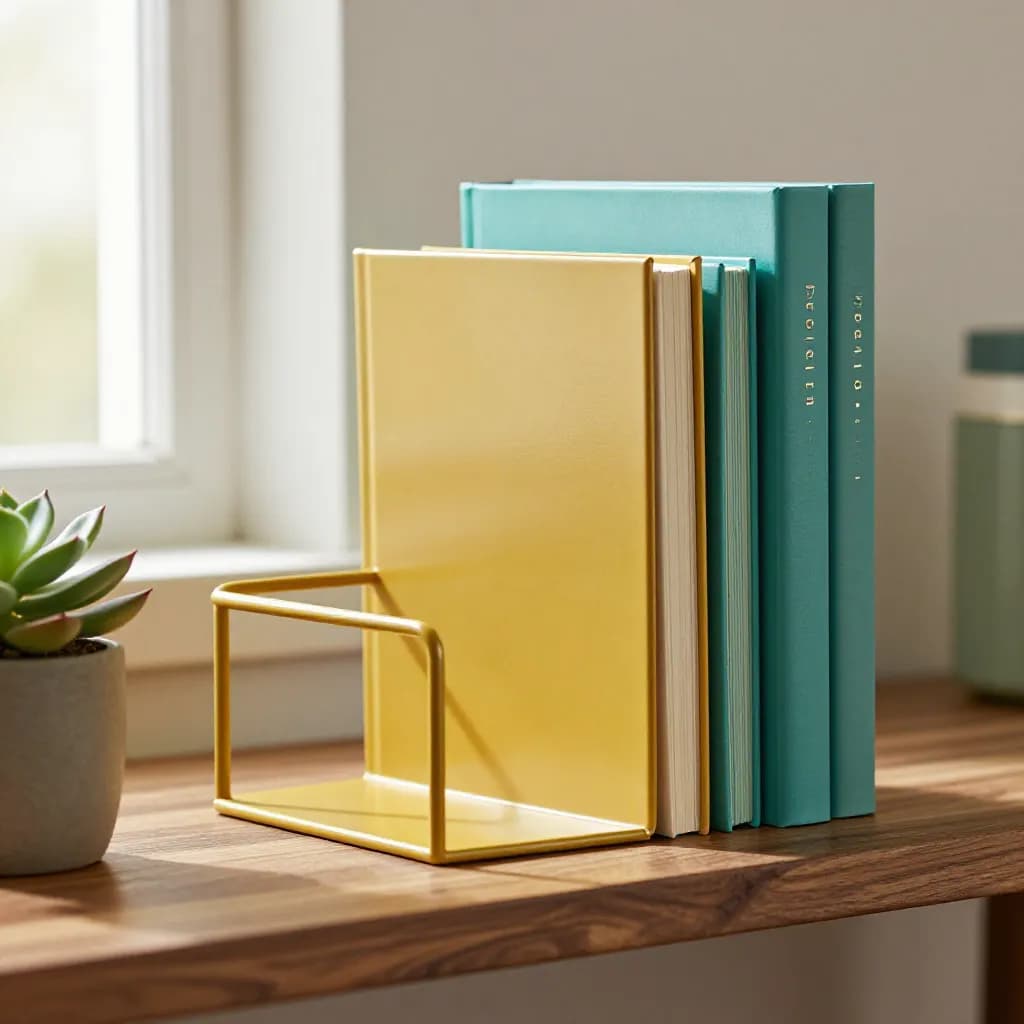
Powder coating is the finishing step that elevates metal bookends from raw fabrication to polished, retail-ready products. The process delivers a smooth, uniform finish with consistent color that transforms cut steel or aluminum into objects that look intentionally designed and professionally manufactured. For makers selling bookends at craft fairs, online marketplaces, or through retail channels, the powder coat finish is often what distinguishes their product from amateur alternatives.
Ready to Start Your Project?
From one-off customs to 15,000-part production runs — get precise pricing in 24 hours.
On This Page
Metal Bookends: Where Function Meets Decorative Art
The gift market is particularly strong for custom bookends. Personalized bookends — featuring initials, meaningful symbols, professional themes, or custom silhouettes — make thoughtful, lasting gifts for book lovers, graduates, retirees, and anyone who appreciates functional art. Powder coating ensures these gift items maintain their appearance for years, serving as lasting reminders of the occasion.
Design Styles and Fabrication Methods
Metal bookends are fabricated using several methods, each producing a different aesthetic and presenting different coating considerations. Understanding these methods helps makers and buyers choose the right approach for their desired result.
Laser-cut and plasma-cut bookends are the most common style in the custom market. A flat steel or aluminum plate is cut into a decorative shape — a city skyline, an animal silhouette, a geometric pattern, a monogram — and bent at a 90-degree angle to create the L-shaped form that supports books. The cut design faces outward as the decorative element, while the bent base slides under the books to provide stability.
Welded fabrication allows for three-dimensional bookend designs that go beyond flat silhouettes. Sculptural bookends with depth, layered elements, and complex forms are assembled from multiple pieces welded together. These designs offer more visual interest but require more careful coating technique to ensure complete coverage in all joints, recesses, and overlapping areas.
Cast metal bookends — produced by pouring molten metal into molds — create highly detailed, heavy pieces with a traditional, substantial feel. Cast iron and cast aluminum bookends have a long history in decorative arts, and powder coating provides a modern, durable finish for both new production and restoration of vintage cast pieces. Cast surfaces may have porosity that requires attention during preparation to prevent outgassing during curing.
Bent sheet metal bookends use simple folds and bends to create clean, modern forms without cutting or welding. These minimalist designs rely on the quality of the bend and the finish for their visual impact. Powder coating is particularly effective on these simple forms, as the smooth, uninterrupted surfaces showcase the coating's uniformity and color depth.
Color and Finish Selection for Bookends
Color choice for bookends should consider both the decorative intent and the practical context. Bookends sit on shelves alongside books, framed photos, and other decorative objects. The finish should complement this context while expressing the design's personality.
Matte black is the most versatile and popular choice, providing a clean, graphic look that works with any book collection and shelf arrangement. Black bookends recede visually, letting the books and the bookend's silhouette shape do the talking. For makers producing bookends for general retail, matte black is the safe, universally appealing option.
Metallic finishes — bronze, copper, gold, and silver — add warmth and sophistication that elevates bookends from functional objects to decorative accents. These finishes pair well with traditional and transitional interior styles and make bookends feel more like curated decor pieces. Satin metallic finishes provide a subtle glow without the flashiness of high-gloss metallics.
Bold colors work well for themed or personalized bookends. A set of bookends in a university's school colors, a child's favorite color, or a color that matches a room's accent palette adds personality and intention to the shelf display. Powder coating's precise color matching ensures the finished product hits the target color exactly.
Textured finishes add tactile interest and visual depth to bookends. A hammertone or wrinkle texture creates a hand-forged appearance that suits rustic and industrial designs. Sand textures provide a subtle, organic feel. These textures also have the practical benefit of hiding minor surface imperfections in the base metal, which is helpful for cast or roughly fabricated pieces.
Small-Batch Production for Makers
The economics of powder coating work well for small-batch bookend production. A typical production run of 20 to 50 pairs can be coated as a single batch, making the per-piece coating cost reasonable for makers selling at retail margins. The key to economical small-batch coating is organization and efficiency.
Batch your coating orders to maximize efficiency. Rather than sending five pairs at a time, accumulate inventory until you have a full batch worth coating. This reduces the per-piece cost because the coater's setup time — cleaning the gun, loading the powder, heating the oven — is spread across more pieces. If you produce bookends in multiple colors, group each color as a separate batch to minimize color-change downtime.
Standardize your designs to streamline the coating process. When every bookend in a batch is the same size and shape, the coater can optimize their fixturing, gun settings, and oven loading for that specific part. Variations in size and shape within a batch require adjustments that slow the process and increase the risk of inconsistent results.
Quality control after coating is important for retail products. Inspect every piece for consistent color, smooth finish, complete coverage, and any defects like runs, thin spots, or contamination. Set aside any pieces that do not meet your quality standard for rework rather than shipping subpar products. Your reputation as a maker depends on consistent quality, and the powder coat finish is the most visible indicator of that quality.
For makers just starting out, consider investing in a small home powder coating setup. The equipment cost is modest, and the ability to coat on your own schedule, experiment with colors, and control quality directly can be a significant advantage. Home coating is particularly practical for bookend-sized parts that fit easily in compact ovens.
Gift Market and Personalization
Custom bookends are among the most popular personalized gift items in the metalwork market. The combination of functional utility, decorative appeal, and personal meaning creates a gift that recipients genuinely appreciate and use. Powder coating is central to making these gift items look polished and professional.
Personalization typically combines powder coating with laser engraving. The bookend is coated in the desired color, then laser engraving cuts through the powder to reveal the contrasting metal underneath. Names, dates, monograms, quotes, and custom graphics can all be engraved with precision, creating a permanent, high-contrast mark that will not wear off.
Themed bookends for specific professions, hobbies, or interests are strong sellers in the gift market. Musical note bookends for musicians, mountain silhouettes for hikers, microscope shapes for scientists, or legal scale designs for lawyers — these themed designs resonate with recipients because they reflect their identity and passions. Powder coating in appropriate colors enhances the theme — forest green for nature themes, navy for nautical designs, warm bronze for classical motifs.
Wedding and milestone gifts represent a significant market segment. Bookends commemorating a wedding date, an anniversary, a retirement, or a graduation become meaningful keepsakes that serve a daily function on the recipient's shelf. The durability of powder coating ensures these commemorative pieces maintain their appearance for decades, preserving the memory they represent.
Packaging matters for gift items. A well-finished powder-coated bookend deserves presentation that matches its quality. Simple but attractive packaging — a kraft box with tissue paper, a branded sleeve, or a drawstring bag — elevates the unboxing experience and reinforces the premium quality of the product.
Practical Considerations: Weight, Stability, and Surface Protection
Bookends need weight to function — they must resist the lateral force of books leaning against them without sliding or tipping. The base metal provides this weight, and the powder coating adds negligible mass. Steel bookends are inherently heavier and more stable than aluminum, making steel the preferred material for bookends that need to support heavy book collections.
The base of the bookend — the horizontal portion that slides under the books — should have a non-slip surface to prevent sliding on smooth shelves. Powder coating alone provides moderate friction, but adding adhesive felt or rubber pads to the base significantly improves grip. These pads also protect the shelf surface from scratches that the coated metal base might cause.
For bookends on finished wood shelves, the interaction between the bookend base and the shelf surface is important. While powder coating is smooth and unlikely to scratch most surfaces, the weight of the bookend concentrated on a small base area can leave impressions on soft wood finishes over time. Felt pads distribute the weight and prevent surface damage.
The vertical face of the bookend — the surface that contacts the books — should be smooth to avoid damaging book covers and spines. Powder coating provides a smooth, non-abrasive surface that is gentle on books. Textured finishes on the decorative outward-facing surface are fine, but the book-contact surface should be smooth.
For bookends that will be shipped — whether as retail products or gifts — packaging must protect the powder-coated finish during transit. Wrap each bookend individually in soft material to prevent the pieces from contacting each other and causing scratches. Corrugated cardboard dividers between pieces in a shipping box provide additional protection against impact damage.
Frequently Asked Questions
What is the best powder coating color for metal bookends?
Matte black is the most versatile and popular choice, working with any book collection and interior style. Metallic bronze and copper add warmth for decorative applications. Bold colors work well for themed or personalized bookends. The best choice depends on the design intent and the recipient's preferences.
Can powder-coated bookends be laser engraved?
Yes. Laser engraving after powder coating cuts through the colored powder layer to reveal the contrasting metal underneath, creating a permanent, high-contrast mark. This technique is ideal for personalizing bookends with names, dates, monograms, and custom graphics.
Will powder-coated bookends scratch my shelves?
Powder coating provides a smooth surface that is unlikely to scratch most shelf materials. However, adding adhesive felt or rubber pads to the base is recommended to prevent any potential surface damage and to improve the bookend's grip on smooth shelves.
Is small-batch powder coating economical for bookend makers?
Yes. Batches of 20 to 50 pairs can be processed efficiently as a single job, making the per-piece cost reasonable for retail margins. Batching orders, standardizing designs, and grouping by color all help maximize coating efficiency and minimize per-piece costs.
Can cast iron bookends be powder coated?
Yes. Cast iron takes powder coating well, though the porous nature of cast surfaces may require a pre-bake cycle to drive out absorbed oils and moisture before coating. This prevents outgassing during curing that could cause bubbles or pinholes in the finished surface.
Ready to Start Your Project?
From one-off customs to 15,000-part production runs — get precise pricing in 24 hours.