Light fixtures are one of the most impactful elements in interior and exterior design, and powder coating gives homeowners and designers the ability to transform dated, damaged, or mismatched fixtures into pieces that perfectly complement their space. A brass chandelier from the 1980s can become a sleek matte black centerpiece. A corroded outdoor lantern can be restored to better-than-new condition. A set of mismatched sconces can be unified with a single coordinating finish.
Consumer
Powder Coating for Light Fixtures: Chandeliers, Sconces, Outdoor Lights, and Restoration
Sundial Powder Coating·April 22, 2026·8 min
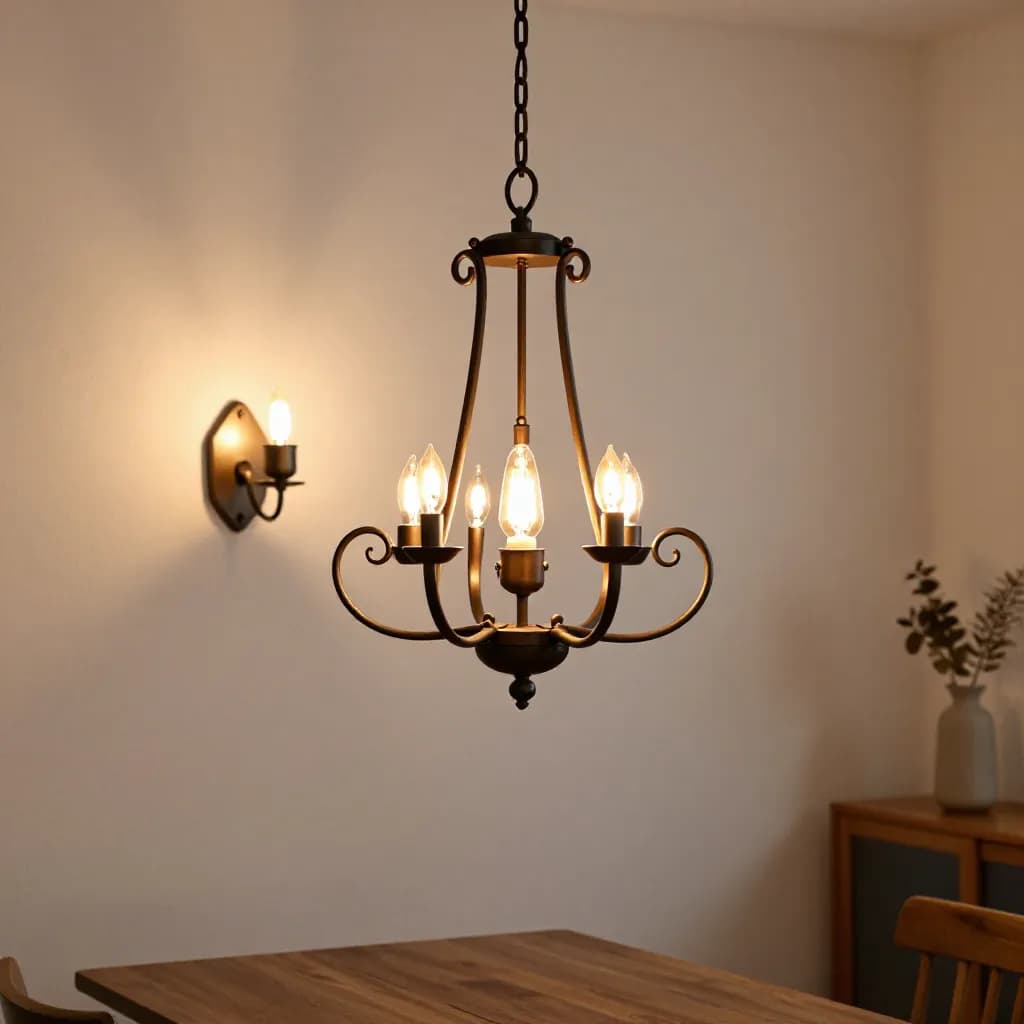
Powder coating is particularly well-suited to light fixtures because most fixtures are constructed from metals that accept the process readily — steel, aluminum, brass, copper, and cast iron are all common fixture materials that can be powder coated with excellent results. The relatively small size of most fixtures means they fit easily into standard ovens, and the coating process is straightforward for experienced applicators.
Ready to Start Your Project?
From one-off customs to 15,000-part production runs — get precise pricing in 24 hours.
On This Page
Transforming Light Fixtures with Powder Coating
The durability advantage of powder coating over spray paint or brush-on finishes is especially valuable for light fixtures. Fixtures are handled during bulb changes, cleaning, and seasonal decoration, and a thin paint finish chips and wears quickly at contact points. Powder coating's thick, hard film resists this handling wear and maintains its appearance for years. For outdoor fixtures exposed to weather, the corrosion resistance of powder coating provides protection that far exceeds decorative paint finishes.
Heat Considerations Near Light Bulbs
The most common concern about powder coating light fixtures is heat — specifically, whether the heat generated by light bulbs will damage the coating. The answer depends on the type of bulb and the fixture design. Modern LED bulbs generate very little heat at the socket and fixture body, typically keeping surface temperatures well below 60 degrees Celsius. Standard powder coatings are rated for continuous service at temperatures up to 120 to 150 degrees Celsius, so LED-equipped fixtures present no heat concerns whatsoever.
Incandescent and halogen bulbs generate significantly more heat. A 100-watt incandescent bulb can raise the temperature of the surrounding fixture body to 80 to 120 degrees Celsius, depending on the fixture design and ventilation. This is still within the safe operating range for most polyester powder coatings, but fixtures with enclosed or poorly ventilated designs that trap heat near the coating surface may approach the upper limits. In these cases, ensuring adequate ventilation or switching to LED bulbs eliminates any concern.
For fixtures that use high-wattage halogen bulbs in enclosed housings — such as recessed downlights or compact track lighting — temperatures near the socket can exceed 150 degrees Celsius. These applications may require high-temperature powder coatings or careful design to keep the coated surfaces away from the hottest zones. In practice, the widespread adoption of LED technology has largely eliminated heat as a concern for powder-coated light fixtures, as even high-output LED bulbs produce a fraction of the heat generated by their incandescent equivalents.
Chandelier Restoration and Refinishing
Chandeliers are among the most rewarding light fixtures to restore through powder coating. Vintage and antique chandeliers often have beautiful metalwork that has been obscured by decades of tarnish, corrosion, or multiple layers of poorly applied paint. Stripping these fixtures down to bare metal and applying a fresh powder coat reveals the original craftsmanship and gives the piece a new life that can last for decades.
The restoration process begins with complete disassembly. Every arm, socket cup, canopy, chain link, and decorative element must be removed and cataloged. Crystal or glass elements are set aside — they cannot be powder coated and must be cleaned separately. Electrical components including sockets, wiring, and junction boxes are removed and typically replaced with new components during reassembly, as vintage wiring may not meet current electrical codes.
Once disassembled, the metal components are stripped and blasted to remove old finishes and corrosion. Brass and copper fixtures may have multiple layers of lacquer and tarnish that require chemical stripping before blasting. Cast components need the standard outgassing pre-bake to prevent pinholes. After preparation, each component is individually coated, ensuring complete coverage of every surface. The reassembled chandelier emerges with a flawless, uniform finish that showcases the fixture's design while providing lasting protection.
Outdoor Light Fixtures: Weather Protection
Outdoor light fixtures face a demanding combination of UV exposure, rain, humidity, temperature cycling, and in coastal areas, salt air. These conditions degrade most decorative finishes within a few years, leaving fixtures with peeling paint, corroded surfaces, and a neglected appearance. Powder coating provides the weather resistance these fixtures need to maintain their appearance and structural integrity through years of outdoor exposure.
For outdoor fixtures, a super-durable polyester powder coating is the recommended formulation. Standard polyester powders provide good UV resistance for three to five years, but super-durable formulations extend this to seven to ten years before noticeable chalking or fading occurs. This extended UV performance is particularly important for fixtures in direct sunlight, where standard coatings may begin to show degradation within a couple of seasons.
Coastal environments present the most challenging conditions for outdoor fixtures. Salt air accelerates corrosion at any point where the coating is compromised, and the combination of salt, moisture, and UV creates a particularly aggressive environment. For coastal installations, a two-coat system with an epoxy primer and a super-durable polyester topcoat provides the best protection. All edges, weld joints, and fastener holes should receive extra attention during coating to ensure complete coverage in these vulnerable areas. Stainless steel mounting hardware should be used to prevent galvanic corrosion between dissimilar metals.
Wall Sconces and Interior Fixtures
Wall sconces, flush mounts, pendants, and other interior fixtures are excellent candidates for powder coating, whether the goal is restoration, color change, or simply upgrading a builder-grade fixture to a custom look. The relatively small size and simple geometry of most interior fixtures make them easy to coat, and the results can dramatically change the character of a room.
Updating the finish on existing fixtures is one of the most cost-effective ways to refresh a room's appearance. Replacing a set of brass sconces with new fixtures can be expensive, but powder coating the existing fixtures in a contemporary matte black or brushed nickel finish achieves the same visual update at a fraction of the cost. The original fixture quality and design are preserved, and the new finish is more durable than the original factory coating.
For interior fixtures, the full range of powder coating colors and finishes is available. Metallic finishes that replicate brushed nickel, oil-rubbed bronze, antique brass, and polished chrome are popular choices that coordinate with common hardware and plumbing finishes. Matte and satin sheens are preferred for contemporary interiors, while higher gloss levels suit traditional and formal spaces. Custom colors allow fixtures to be matched to specific design elements in the room, creating a coordinated, intentional look that off-the-shelf fixtures cannot achieve.
Electrical Safety and Reassembly
Electrical safety is a non-negotiable consideration when powder coating light fixtures. All electrical components — wiring, sockets, switches, and junction hardware — must be completely removed before the fixture enters the coating process. The curing oven temperature will destroy wire insulation, melt plastic components, and create fire hazards if electrical parts are left in place.
During reassembly, all wiring should be replaced with new, code-compliant wire rated for the fixture's operating temperature. Vintage fixtures should be rewired with modern wire and components that meet current electrical codes. Socket connections must be secure and properly insulated, and grounding conductors must be connected to ensure the fixture is safely grounded. If you are not comfortable with electrical work, have a licensed electrician handle the rewiring and installation.
The powder coating itself is an electrical insulator, which has implications for grounding. The fixture's grounding connection must make contact with bare metal, not the coated surface. This typically means scraping a small area of coating from the grounding point or using a grounding screw that penetrates through the coating to make metal-to-metal contact. This detail is critical for safety — a properly grounded fixture protects against electrical shock in the event of a wiring fault.
Matching Fixtures to Hardware and Decor
One of the most powerful applications of powder coating for light fixtures is the ability to match fixtures to other hardware and design elements in the home. Kitchen and bathroom fixtures can be coated to match cabinet hardware, faucets, and appliance finishes, creating a coordinated look that ties the room together. This is particularly valuable when the desired finish is not available in off-the-shelf fixtures, or when existing fixtures need to be updated to match a new design scheme.
The most common matching requests involve replicating popular hardware finishes: matte black, brushed gold, oil-rubbed bronze, satin nickel, and antique brass. Powder coating can closely replicate all of these finishes, though it is important to understand that a powder-coated finish will not be identical to a plated or patinated metal finish. The visual match is typically close enough to coordinate beautifully in a room, even if a side-by-side comparison would reveal subtle differences in texture and reflectivity.
For designers and homeowners pursuing a specific aesthetic, powder coating enables a level of customization that is simply not available through retail fixture shopping. A set of vintage industrial pendants can be coated in the exact shade of green that matches the kitchen tile. A pair of art deco sconces can be finished in a rose gold that coordinates with the bathroom hardware. This ability to customize existing fixtures to fit a specific vision is one of the most compelling reasons to choose powder coating for light fixture finishing.
Frequently Asked Questions
Will powder coating melt or discolor from light bulb heat?
With modern LED bulbs, heat is not a concern — LED fixtures stay well below the 120 to 150 degree Celsius limit of standard powder coatings. Incandescent bulbs generate more heat but typically remain within safe limits for most fixture designs. Switching to LED bulbs eliminates any heat-related concerns entirely.
Can you powder coat a brass chandelier?
Yes. Brass chandeliers are excellent candidates for powder coating. The brass must be stripped of any lacquer or tarnish, then blasted and coated. The original brass color will be completely covered by the powder coating, so this is ideal for changing the fixture's appearance to a different color or finish.
Is it safe to powder coat electrical light fixtures?
Yes, when done properly. All electrical components must be removed before coating, and the fixture must be rewired with new, code-compliant components during reassembly. The grounding connection must make contact with bare metal through the coating. Have a licensed electrician handle rewiring if you are not experienced with electrical work.
Can powder coating replicate an oil-rubbed bronze finish?
Powder coating can closely replicate the appearance of oil-rubbed bronze and other popular hardware finishes. Specialty powder formulations are available that mimic the color, sheen, and subtle variation of oil-rubbed bronze. The match is typically close enough to coordinate with other bronze-finished hardware in the same room.
How long does powder coating last on outdoor light fixtures?
A super-durable polyester powder coating on outdoor light fixtures typically lasts seven to ten years before noticeable fading or chalking occurs. Standard polyester formulations last three to five years in direct sun exposure. Coastal environments may reduce these timelines due to salt air exposure.
Ready to Start Your Project?
From one-off customs to 15,000-part production runs — get precise pricing in 24 hours.