Lawn and garden equipment operates in a uniquely challenging environment that combines outdoor weather exposure with aggressive mechanical abuse. Mower decks are bombarded by rocks, sticks, and debris at blade-tip speeds exceeding 300 km/h. String trimmers and edgers contact concrete, asphalt, and stone. Wheelbarrows carry abrasive loads of gravel, soil, and concrete. Garden tool handles are gripped with wet, dirty hands and stored in unheated sheds exposed to temperature extremes and humidity.
Consumer
Powder Coating for Lawn and Garden Equipment: Weather-Resistant Finishes for Outdoor Power Tools
Sundial Powder Coating·April 22, 2026·11 min
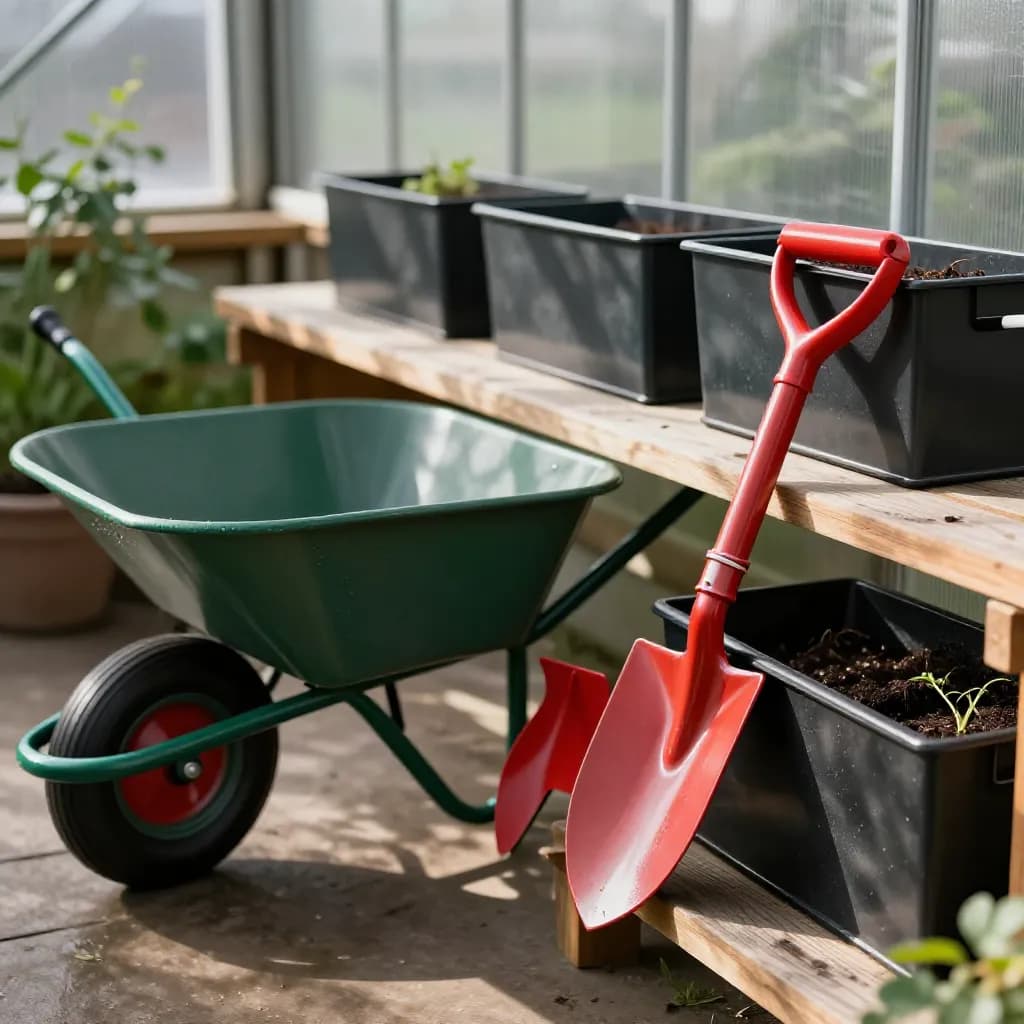
The coating on lawn and garden equipment must survive this combination of impact, abrasion, UV exposure, moisture, and chemical contact from fertilizers, pesticides, and fuel. A failed coating leads to rust that weakens structural components, stains hands and clothing, and diminishes the product's perceived quality and resale value.
Ready to Start Your Project?
From one-off customs to 15,000-part production runs — get precise pricing in 24 hours.
On This Page
Lawn and Garden Equipment: A Demanding Coating Application
Powder coating has become the standard finish for metal lawn and garden equipment components, replacing the baked enamel and spray lacquer finishes that were common through the 1990s. Every major outdoor power equipment manufacturer — Deere & Company, Husqvarna, Honda, Toro, Stihl, and Briggs & Stratton — uses powder coating on their metal components. The transition delivered dramatic improvements in chip resistance, UV stability, and corrosion protection that extended product life and reduced warranty claims.
The lawn and garden equipment market is highly competitive and cost-sensitive, requiring coating solutions that deliver maximum performance at minimum cost. Powder coating's high material utilization (95-98%), single-coat application, and rapid cure cycle provide production efficiency advantages that support competitive manufacturing costs.
Mower Deck Coating: The Ultimate Impact Resistance Test
Mower decks represent the most demanding impact resistance application in consumer powder coating. The underside of a mower deck is continuously bombarded by rocks, sticks, and debris launched by the rotating blade at tip speeds of 250-350 km/h. These impacts generate forces that test coating adhesion and chip resistance to their absolute limits.
The mower deck substrate is typically 12-14 gauge (2.0-2.7 mm) stamped steel, formed into the complex three-dimensional shape of the deck cavity. The stamping process creates residual stresses and surface conditions that affect coating adhesion. Post-stamping cleaning removes forming lubricants, and iron phosphate or zinc phosphate pretreatment provides the adhesion promotion and corrosion protection foundation for the coating system.
Mower deck powder coatings are formulated for maximum chip resistance using flexible polyester or hybrid epoxy-polyester chemistries with high impact resistance. Direct impact resistance of 120-160 inch-pounds per ASTM D2794 is typical for mower deck formulations — significantly higher than the 60-80 inch-pounds specified for general industrial applications. This extreme impact resistance is achieved through flexible resin systems with low glass transition temperatures and optimized cross-link density that absorbs impact energy without cracking.
Film thickness on mower decks is typically 80-120 microns — thicker than standard industrial applications to provide additional impact and abrasion protection. The thicker film also provides better edge coverage on the stamped edges and discharge chute opening that are particularly vulnerable to impact damage.
Gravelometer testing per ASTM D3170 is the standard chip resistance evaluation for mower deck coatings. Premium mower deck formulations achieve ratings of 8A-9A (minimal chipping, no substrate exposure), while economy formulations may achieve 6A-7A. The difference in chip resistance directly correlates with the coating's service life on the mower deck — premium formulations maintain protection for 5-8 years of regular use, while economy formulations may show significant degradation within 2-3 years.
Some premium mower manufacturers apply a two-coat system on deck undersides: an epoxy primer for maximum adhesion and corrosion protection, followed by a flexible polyester topcoat for impact resistance. This dual-layer approach provides the best combination of adhesion, corrosion protection, and chip resistance for the most demanding mowing conditions.
UV and Weather Resistance for Seasonal Outdoor Exposure
Lawn and garden equipment spends its entire service life outdoors — in use during the growing season and often stored in unheated sheds or even outdoors during the off-season. The coating must maintain appearance and protection through years of UV exposure, rain, snow, temperature cycling, and humidity.
Superdurable polyester powder coatings are the standard chemistry for exterior surfaces of lawn and garden equipment. These formulations achieve less than 50% gloss retention loss after 2000 hours of accelerated weathering per ASTM G154, providing 5-10 years of acceptable appearance in typical outdoor exposure. For premium equipment with longer expected service lives, formulations tested to 3000+ hours provide extended UV protection.
Color selection for lawn and garden equipment is driven by brand identity, with each manufacturer's signature color requiring specific UV-resistant pigment systems. John Deere green and yellow, Husqvarna orange, Toro red, and Honda red each require custom formulations that maintain color accuracy while providing maximum UV stability. Organic pigments used in bright colors (reds, oranges, yellows) are inherently less UV-stable than inorganic pigments, requiring premium UV-resistant pigment grades and higher stabilizer loading.
Moisture resistance is critical for equipment stored in humid environments. Condensation forms on metal surfaces during temperature changes, and equipment stored in unheated sheds experiences daily condensation cycles during spring and fall. The powder coating must prevent moisture penetration to the substrate during these prolonged humidity exposures. Salt spray resistance per ASTM B117 of 500-750 hours is a typical specification for lawn and garden equipment.
Fertilizer and pesticide resistance is a specific requirement for lawn and garden equipment. Ammonium nitrate, urea, potassium chloride, and various herbicide and insecticide formulations can splash onto equipment surfaces during application. These chemicals range from mildly acidic to alkaline and can cause coating softening, discoloration, or adhesion loss if the coating is not properly formulated. Chemical resistance testing against common lawn care chemicals should be part of the coating qualification process.
Engine and Exhaust Component Coatings
Lawn and garden equipment powered by internal combustion engines requires specialized coatings for engine components, exhaust systems, and fuel system parts that operate at elevated temperatures and are exposed to petroleum products.
Engine shrouds and covers are typically powder coated with standard polyester or hybrid formulations at 50-70 microns. These components operate at moderate temperatures (60-120°C) that are within the capability of standard powder coatings. The coating must resist engine oil, gasoline, and the vibration-induced abrasion that occurs at mounting points and contact surfaces.
Exhaust mufflers and heat shields require high-temperature powder coatings rated for continuous operation at 300-500°C. Silicone-modified polyester or pure silicone powder coatings in matte black or dark grey provide the necessary heat resistance. These coatings must be conditioned at their rated service temperature before first use to complete the silicone cross-linking reaction and drive off volatile by-products that would otherwise cause smoke and odor during initial operation.
Fuel tanks on lawn and garden equipment are increasingly powder coated for corrosion protection and aesthetic consistency with the rest of the product. The exterior coating must resist gasoline and ethanol-blended fuels that may splash during refueling. Hybrid epoxy-polyester formulations provide good fuel resistance for exterior tank surfaces. Interior fuel tank coatings, where used, must comply with EPA and CARB (California Air Resources Board) evaporative emission regulations that limit fuel permeation through the tank and coating system.
Battery-powered lawn equipment — an increasingly large market segment — eliminates the need for high-temperature and fuel-resistant coatings but introduces new requirements. Battery housings and motor enclosures must be coated with formulations that provide electrical insulation, thermal management (heat dissipation from battery and motor), and resistance to the electrolyte chemicals used in lithium-ion batteries. EMI-shielding coatings may be specified for motor controller enclosures to prevent electromagnetic interference with nearby electronic devices.
Production Efficiency for High-Volume Manufacturing
Lawn and garden equipment manufacturing is a high-volume, seasonal industry where production efficiency directly impacts profitability. Manufacturers must build inventory during the off-season for peak spring and summer demand, requiring coating lines that operate at maximum throughput for extended periods.
Automatic powder coating lines for lawn and garden equipment typically process 200-500 parts per hour, depending on part size and complexity. Mower decks, the largest and most complex components, require dedicated coating lines with application systems optimized for their deep-cavity geometry. Smaller components — handles, brackets, guards, and trim pieces — are processed on general-purpose lines with quick-color-change capability.
The Faraday cage effect is a persistent challenge for mower deck coating. The deep cavity of the deck, combined with the discharge chute and mulching baffles, creates recessed areas where electrostatic powder deposition is significantly reduced. Application strategies include reduced gun voltage (40-60 kV), increased powder flow rate, tribo-charging guns for interior surfaces, and pre-heating the deck to 80-100°C for thermal tack deposition. Robotic application systems with articulated arms can position spray guns inside the deck cavity for optimal coverage of interior surfaces.
Color change efficiency is important for manufacturers producing equipment in multiple brand colors. Quick-color-change booth systems with cartridge-style powder feed and automated booth cleaning achieve color changes in 10-15 minutes, minimizing production downtime. Dedicated coating lines for high-volume colors (the manufacturer's primary brand color) eliminate color change requirements entirely for the highest-volume products.
Cure oven design for lawn and garden equipment must accommodate the wide range of part sizes and thermal masses processed on the same line. Programmable multi-zone ovens with variable air circulation rates ensure that both heavy mower decks and light trim pieces reach cure temperature without over-curing the lighter components. Infrared pre-gel zones accelerate the initial melt and flow phase, improving surface finish quality and reducing overall cure time.
First-pass yield is a critical metric for high-volume lawn and garden equipment coating. Rework is expensive and disrupts production flow, so coating processes must be optimized for consistent, defect-free results. Statistical process control of application parameters, regular maintenance of spray equipment, and automated film thickness monitoring help maintain first-pass yields above 95%.
Consumer Expectations and Warranty Considerations
Consumer expectations for lawn and garden equipment finish quality have risen significantly, driven by the premium positioning of brands like John Deere, Honda, and Husqvarna. Today's consumers expect a finish quality comparable to automotive or appliance standards — smooth, uniform, free of defects, with consistent color and gloss across all components of the assembled product.
Surface finish quality is evaluated by visual inspection under controlled lighting conditions. Orange peel, fisheyes, inclusions, color variation, and gloss inconsistency are all defects that can trigger consumer complaints and warranty claims. Powder coating processes must be optimized to minimize these defects through proper powder selection, application parameter control, and cure schedule management.
Warranty coverage for powder coating on lawn and garden equipment varies by manufacturer and product category. Premium riding mowers may carry 5-year coating warranties against peeling, flaking, and excessive fading. Walk-behind mowers typically carry 2-3 year coating warranties. Hand tools and accessories may have limited or no specific coating warranty. These warranty periods reflect the expected coating service life under normal use conditions and drive the coating specification decisions.
Coating durability directly impacts customer satisfaction scores and brand loyalty. Consumer reviews frequently mention coating quality — both positively ("still looks new after 5 years") and negatively ("paint started peeling after one season"). Manufacturers track coating-related warranty claims and customer complaints as key quality metrics, using this data to refine coating specifications and process controls.
Aftermarket touch-up products are offered by most major manufacturers, allowing consumers to repair minor coating damage before corrosion initiates. These touch-up products are color-matched to the original powder coating and typically consist of spray-applied acrylic or alkyd enamel. While touch-up paint does not match the durability of the original powder coating, it provides adequate protection for small damaged areas and extends the overall product appearance.
End-of-life recyclability of powder-coated lawn and garden equipment is straightforward. Steel components are recycled through standard ferrous scrap processing, and the thin powder coating film does not interfere with recycling. Aluminum components are similarly recyclable. The zero-VOC powder coating process and high recyclability of the finished product support the sustainability messaging that is increasingly important to environmentally conscious consumers.
Specialized Applications: Garden Furniture and Decorative Metalwork
Beyond power equipment, powder coating is the standard finish for metal garden furniture, decorative metalwork, planters, trellises, and landscape lighting fixtures. These products prioritize aesthetic quality and weather resistance over the extreme mechanical durability required for power equipment.
Garden furniture — chairs, tables, benches, and loungers — requires powder coatings that maintain their appearance through years of outdoor exposure while resisting the specific stresses of furniture use. Superdurable polyester at 60-80 microns provides UV resistance and weather protection. The coating must resist sunscreen, insect repellent, food and beverage spills, and the abrasion of clothing and cushion fabrics without staining or softening.
Wrought iron and cast aluminum garden furniture features complex ornamental geometry with deep recesses, tight radii, and intricate detail that challenges uniform powder coating application. Manual application with experienced operators is often required to ensure complete coverage of decorative details. Pre-heating cast aluminum components to 80-100°C before powder application improves coverage in recessed areas through thermal tack deposition.
Color trends in garden furniture follow broader outdoor living design trends. Current popular colors include matte black, charcoal grey, sage green, and warm bronze tones that complement natural garden settings. White and cream remain popular for traditional and coastal design styles. Textured finishes — particularly fine hammertone and antique effects — add visual interest and hide the minor scratches and scuffs that occur during outdoor furniture use.
Planters and raised garden beds fabricated from steel or aluminum are powder coated for corrosion protection and aesthetic appeal. These products are in continuous contact with moist soil, creating a persistent corrosion challenge. Interior surfaces should be coated with epoxy primer for maximum moisture resistance, while exterior surfaces use superdurable polyester for UV stability. Drainage holes must be kept clear of coating to prevent water accumulation that accelerates interior corrosion.
Landscape lighting fixtures require powder coatings that resist UV degradation, moisture, and the heat generated by the light source. LED fixtures operate at lower temperatures than traditional incandescent or halogen fixtures, allowing standard polyester coatings. For fixtures with higher-wattage light sources, heat-resistant formulations may be required for the lamp housing while standard formulations are used for the post and base.
Frequently Asked Questions
How does powder coating protect mower decks from rock damage?
Mower deck powder coatings use flexible polyester or hybrid formulations with impact resistance of 120-160 inch-pounds — double the standard industrial specification. Film thickness of 80-120 microns and Gravelometer ratings of 8A-9A provide maximum chip resistance against rocks and debris launched by the blade.
Does powder coating on lawn equipment resist fertilizer and pesticides?
Yes. Quality powder coatings for lawn equipment are tested against common fertilizers (ammonium nitrate, urea, potassium chloride) and pesticide formulations. Properly formulated coatings resist these chemicals without softening, discoloration, or adhesion loss under normal splash exposure conditions.
How long does powder coating last on outdoor garden furniture?
Superdurable polyester powder coating on garden furniture typically lasts 5-10 years of outdoor exposure, depending on UV intensity and maintenance. Light colors last longer than dark colors due to lower thermal stress. Annual cleaning and periodic wax application extend coating life.
What powder coating is used on lawn mower exhaust mufflers?
Exhaust mufflers use silicone-modified polyester or pure silicone powder coatings rated for continuous operation at 300-500°C. These coatings must be heat-conditioned before first use to complete silicone cross-linking and prevent smoke and odor during initial operation.
Can powder-coated garden equipment be recycled?
Yes. Steel and aluminum garden equipment components are fully recyclable through standard scrap processing. The thin powder coating film (less than 1% of product weight) does not interfere with metal recycling and is burned off during the melting process.
Ready to Start Your Project?
From one-off customs to 15,000-part production runs — get precise pricing in 24 hours.