Powder coating has found a growing niche in the knife world, applied to both handles and blades for a combination of functional and aesthetic purposes. Custom knife makers, tactical knife manufacturers, and kitchen knife producers all use powder coating to enhance their products with corrosion protection, improved grip, distinctive colors, and a durable finish that withstands the demanding conditions knives encounter in daily use.
Consumer
Powder Coating for Knife Handles and Blades: Food Safety, Grip Texture, and Corrosion Protection
Sundial Powder Coating·April 22, 2026·9 min
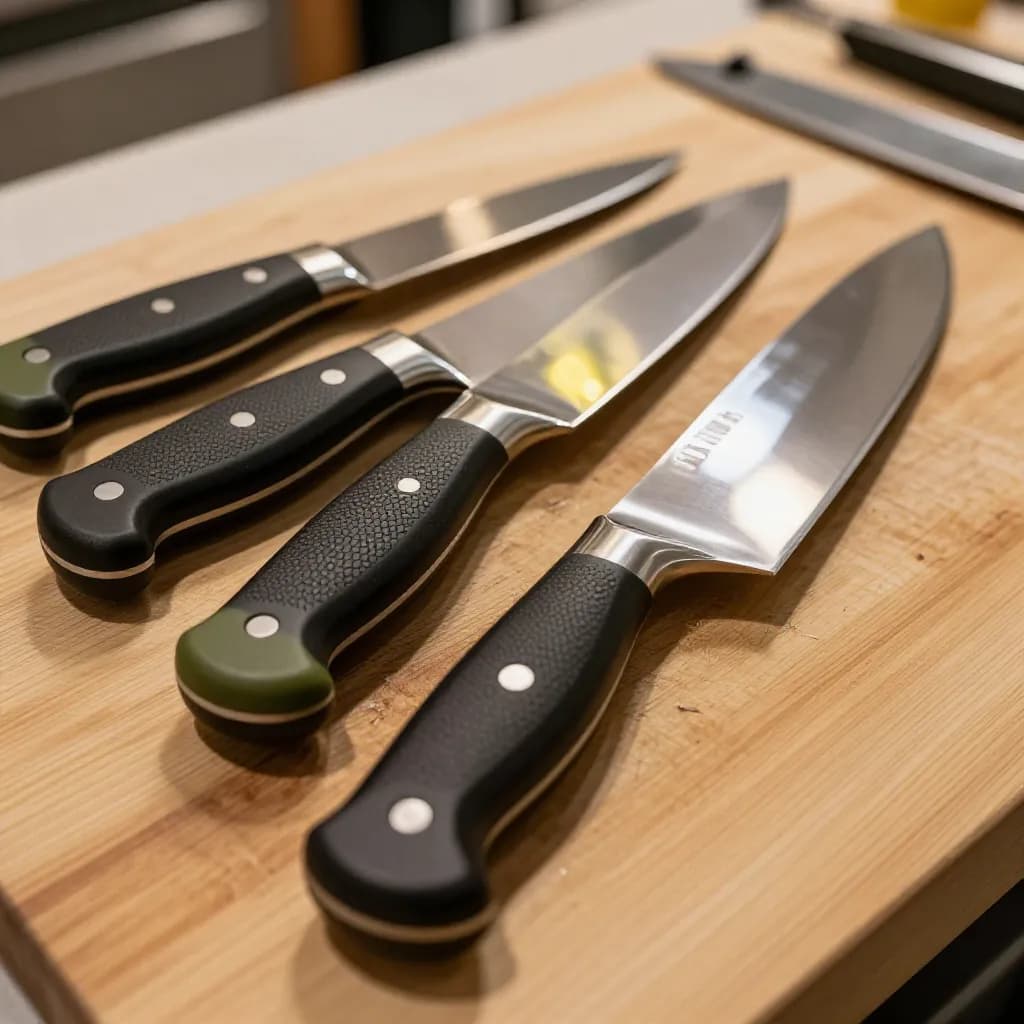
The appeal of powder coating for knives lies in its versatility. On handles, it provides a textured grip surface that improves control in wet or oily conditions. On blades, it reduces glare, provides corrosion protection, and creates a non-stick surface that reduces friction during cutting. The color options allow knife makers to create distinctive products that stand out in a crowded market, and the durability of the coating ensures the finish holds up through years of use.
Ready to Start Your Project?
From one-off customs to 15,000-part production runs — get precise pricing in 24 hours.
On This Page
Powder Coating in the Knife World
Powder coating on knives is not without trade-offs, and understanding these trade-offs helps knife owners and makers decide where and how to apply the coating. Blade coatings affect edge geometry and must be kept away from the cutting edge. Handle coatings add thickness that changes the grip feel. Food safety considerations apply to kitchen knives. This article examines all of these factors to provide a complete picture of powder coating in knife applications.
Blade Coating: Benefits and Limitations
Coating a knife blade with powder provides several functional benefits. The coating creates a barrier against moisture, acids, and salts that cause corrosion on carbon steel blades. It reduces light reflection, which is valued in tactical and hunting applications where glare can be a disadvantage. The coating also creates a slightly lower-friction surface that can reduce drag during cutting, particularly when slicing through sticky or wet materials.
The primary limitation of blade coating is that the cutting edge must remain uncoated. Powder coating on the edge would be immediately destroyed during sharpening and would interfere with the blade's cutting ability. The standard approach is to coat the blade flats and spine while leaving the edge bevel uncoated. This is achieved by masking the edge before coating or by sharpening the blade after coating, which removes the coating from the edge bevel.
Coating thickness on blades is typically kept thinner than on other applications — 30 to 50 microns rather than the standard 60 to 100 microns used on most products. This thinner application minimizes the effect on blade geometry and reduces the step between the coated flat and the uncoated edge bevel. Thinner coatings also flex better on the thin blade cross-section, reducing the risk of cracking or chipping during use. Some knife makers use specialized thin-film powder formulations designed specifically for blade applications.
Handle Coating: Grip and Comfort
Powder coating on knife handles serves primarily as a grip enhancement and corrosion protection layer. Metal handles — whether full tang with exposed steel, aluminum scales, or titanium frames — benefit from the textured surface that powder coating provides. The texture improves grip security in wet, oily, or gloved conditions, which is critical for safety during knife use.
The texture options for handle coating range from fine sand texture that provides subtle grip enhancement to aggressive textures that create a pronounced tactile surface. The choice depends on the knife's intended use and the user's preference. Fine textures suit everyday carry knives and kitchen knives where comfort during extended use is important. Coarser textures suit tactical and outdoor knives where maximum grip security in adverse conditions is the priority.
Color selection for handle coatings allows knife makers to create distinctive products and knife owners to personalize their tools. Earth tones like olive drab, flat dark earth, and coyote brown are popular for tactical and outdoor knives. Bright colors like orange and yellow improve visibility for knives used in outdoor and marine environments where a dropped knife needs to be easily spotted. Black remains the most popular choice for its versatility and professional appearance. Custom colors allow makers to create signature looks that identify their brand.
Food Safety for Kitchen Knives
Kitchen knives that contact food directly raise legitimate food safety questions about blade coatings. The concern is whether coating materials can transfer to food during cutting, and whether the coating is safe if small particles are ingested. For powder-coated kitchen knives, the answers are reassuring but require some nuance.
Fully cured powder coatings are chemically inert thermosetting polymers that do not leach chemicals into food under normal use conditions. The coating does not dissolve in water, oils, acids, or any common food substance. FDA-compliant powder coatings formulated under 21 CFR 175.300 are specifically approved for food-contact applications and are manufactured from resins and pigments that have been tested for safety in direct food contact.
The practical concern with coated kitchen knife blades is physical wear rather than chemical leaching. Repeated cutting on hard surfaces — cutting boards, plates, and bone — gradually wears the coating on the blade flats near the edge. Small particles of coating may be released during this wear process. While these particles are non-toxic, some users prefer to limit blade coating to non-food knives and use uncoated or traditionally finished blades for kitchen use. For kitchen knives where blade coating is desired, specifying an FDA-compliant formulation and accepting that the coating near the edge will wear over time is the practical approach.
Corrosion Protection for Carbon Steel Blades
Carbon steel is prized by knife enthusiasts for its ability to take and hold an exceptionally sharp edge, but it is significantly more prone to corrosion than stainless steel. Carbon steel blades can develop rust spots within hours of exposure to moisture, acids, or salt, making corrosion protection a constant concern for carbon steel knife owners. Powder coating provides an effective barrier that dramatically reduces the maintenance burden of owning carbon steel knives.
The coating protects the blade flats and spine from the moisture, food acids, and handling oils that cause corrosion. The uncoated edge bevel remains vulnerable, but this area is regularly refreshed through sharpening, which removes any surface corrosion along with a thin layer of steel. The result is a blade that requires far less maintenance than an uncoated carbon steel blade — no constant oiling, no immediate washing and drying after every use, and no worry about rust developing during storage.
For outdoor and tactical knives made from carbon steel, powder coating is particularly valuable. These knives are exposed to rain, sweat, blood, and other corrosive substances during use, and they may be stored in sheaths where moisture can be trapped against the blade. The coating provides a reliable barrier that keeps the blade in good condition between uses, even in humid or marine environments where uncoated carbon steel would corrode rapidly.
Custom Knife Making and Powder Coating
Custom knife makers have adopted powder coating as a finishing option that adds value and visual distinction to their work. The ability to offer customers a choice of coating colors and textures expands the maker's product range and allows each knife to be personalized to the buyer's preferences. For makers who produce tactical, outdoor, and utility knives, powder coating has become a standard offering alongside traditional finishes like bluing, parkerizing, and acid etching.
The coating process for custom knives requires careful handling to protect the maker's work. Blades are typically heat-treated and ground to final dimensions before coating, with the edge left slightly thick to allow for final sharpening after the coating is applied. Handle scales or frame components are coated separately from the blade, and the knife is assembled after all components are coated. This approach ensures complete coverage of all surfaces and allows different colors or finishes on the blade and handle.
For makers who want to combine powder coating with other finishing techniques, interesting effects are possible. A powder-coated blade with an acid-etched logo creates a two-tone appearance where the etched area reveals the bare steel beneath the coating. Laser engraving through the coating produces crisp, detailed graphics and text. Combining a coated blade with natural handle materials like wood, bone, or micarta creates a contrast between the modern coating and the organic handle material that many knife enthusiasts find appealing.
Application Process for Knife Components
Powder coating knife components requires more precision than coating larger items because of the tight tolerances involved. Blade thickness, handle fit, pivot dimensions on folding knives, and sheath fit all depend on maintaining specific dimensions, and the coating adds measurable thickness to every surface.
For fixed blade knives, the blade is masked along the edge bevel and any areas that will be covered by handle scales. The tang — the portion of the blade that extends into the handle — may be left uncoated to ensure proper fit with the handle material, or coated for additional corrosion protection if the handle design accommodates the added thickness. Pin holes and fastener holes should be masked to maintain proper dimensions for handle assembly.
Folding knives present additional challenges because of the precise fit required between the blade, liners, and handle scales. The blade pivot hole must be masked to maintain the exact diameter needed for smooth, play-free operation. Lock engagement surfaces — whether liner lock, frame lock, or back lock — must be left uncoated to ensure reliable lock function. The blade tang area that contacts the lock must also remain bare for proper engagement. These masking requirements make folding knife coating more complex than fixed blade coating, but the results are worth the effort for a custom, durable finish.
Frequently Asked Questions
Is powder coating on a knife blade food safe?
Fully cured powder coating is chemically inert and does not leach substances into food. FDA-compliant powder coatings formulated under 21 CFR 175.300 are approved for direct food contact. The practical concern is physical wear of the coating near the cutting edge over time, which releases non-toxic but visible coating particles.
Will powder coating affect a knife's cutting ability?
The cutting edge must remain uncoated for proper cutting performance. Powder coating is applied to the blade flats and spine only, with the edge bevel left bare or sharpened after coating. The coating on the blade flats can slightly reduce friction during cutting, which some users find beneficial for slicing tasks.
How durable is powder coating on a knife blade?
Powder coating on knife blades is durable under normal use but will show wear over time, particularly near the cutting edge where the blade contacts cutting surfaces. The coating on the blade flats and spine typically lasts for years. Tactical and outdoor knives see more coating wear than kitchen or display knives.
Can you powder coat a folding knife?
Yes, but folding knives require careful masking of the pivot hole, lock engagement surfaces, and blade tang contact areas. These precision surfaces must remain uncoated for proper function. The blade and handle components are typically coated separately and assembled after coating.
Does powder coating prevent rust on carbon steel knives?
Powder coating provides excellent corrosion protection on the coated areas of carbon steel blades. The blade flats and spine are protected from moisture and acids that cause rust. The uncoated cutting edge remains vulnerable but is regularly refreshed through sharpening. Overall maintenance requirements are significantly reduced compared to uncoated carbon steel.
Ready to Start Your Project?
From one-off customs to 15,000-part production runs — get precise pricing in 24 hours.