House numbers and address signs serve a fundamental purpose — helping people find your home or business. But they also make a first impression. A crisp, well-finished set of house numbers communicates care and attention to detail, while faded, peeling, or corroded numbers suggest neglect. The finish on these small but visible elements matters more than their size might suggest.
Consumer
Powder Coating for House Numbers and Signs: Weather-Resistant Curb Appeal
Sundial Powder Coating·April 23, 2026·7 min
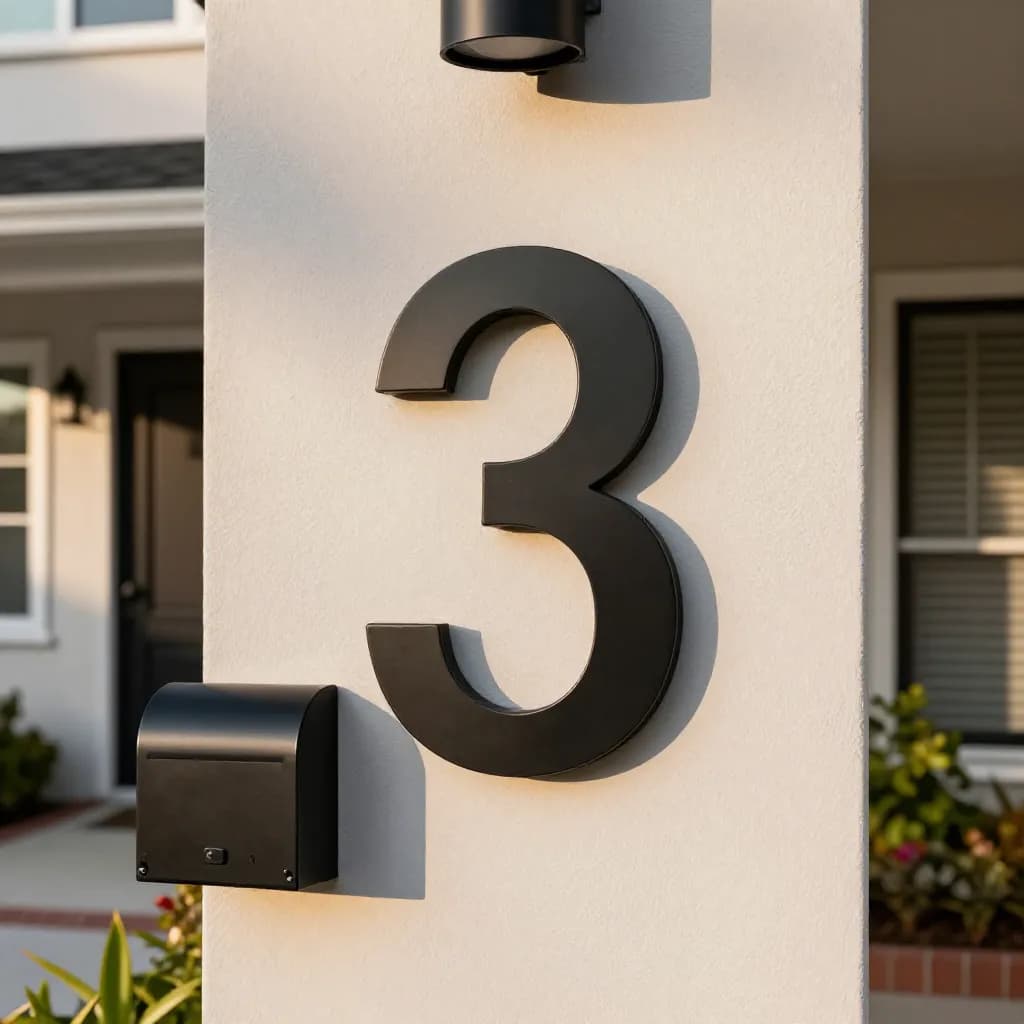
Powder coating provides the durability and visual quality that house numbers and signs demand. These items are permanently exposed to weather — sun, rain, frost, heat, and humidity — with no shelter and no rest. The finish must maintain its color, adhesion, and protective properties through years of continuous outdoor exposure without maintenance.
Ready to Start Your Project?
From one-off customs to 15,000-part production runs — get precise pricing in 24 hours.
On This Page
House Numbers and Signs That Last
The custom fabrication market for house numbers and signs has grown significantly, driven by homeowners who want distinctive, personalized address displays rather than generic hardware-store options. Laser-cut, plasma-cut, and CNC-machined numbers and signs in steel, aluminum, and stainless steel are widely available from makers and fabricators. Powder coating is the finishing step that turns these custom pieces into weather-proof, long-lasting installations.
Material Choices and Coating Compatibility
House numbers and signs are fabricated from several metals, each with its own coating characteristics. Mild steel is the most common and economical choice. It takes powder coating readily and benefits significantly from the corrosion protection the coating provides. Without coating, mild steel house numbers would rust within months of outdoor installation.
Aluminum is popular for its light weight and natural corrosion resistance. Powder coating on aluminum adds color and UV protection while enhancing the already good corrosion resistance of the base metal. Aluminum numbers are easier to mount on lightweight surfaces like vinyl siding or stucco because they do not require the heavy-duty fasteners that steel numbers demand.
Stainless steel offers the highest base corrosion resistance but is more expensive and harder to fabricate. Powder coating on stainless steel is less about corrosion protection and more about color — stainless steel's natural silver appearance may not suit every design scheme. Coating stainless steel requires proper surface preparation, as the passive oxide layer that gives stainless its corrosion resistance can also inhibit powder adhesion if not properly addressed.
Corten steel — the weathering steel that develops a stable rust patina — is sometimes used for house numbers where a rustic, natural aesthetic is desired. Powder coating and Corten are generally not combined, as the appeal of Corten is its natural patina. However, selective powder coating on Corten — coating some elements while leaving others to patina naturally — can create interesting two-tone effects.
Visibility and Contrast for Address Identification
The primary function of house numbers is identification, and visibility is paramount. Emergency services, delivery drivers, and visitors all need to read the address quickly and accurately, often from a moving vehicle or in low-light conditions. The powder coating color and finish should maximize readability against the mounting surface.
Contrast is the key to visibility. Dark numbers on a light wall, or light numbers on a dark surface, provide the contrast needed for quick identification. Matte black numbers on a white or light-colored wall offer excellent daytime visibility and remain readable in low light. White or silver numbers on dark brick, stone, or siding provide equally strong contrast.
Finish sheen affects visibility in different lighting conditions. Matte finishes provide consistent readability in all lighting because they do not create glare or reflections that can obscure the numbers. Glossy finishes can be harder to read in direct sunlight due to specular reflection, though they may be more visible at night when illuminated by headlights or porch lights. Satin finishes offer a middle ground with moderate reflectivity.
For maximum nighttime visibility, consider how the numbers will be illuminated. Backlit numbers — mounted on standoffs with lighting behind them — create a dramatic halo effect that is highly visible after dark. The powder coating color on backlit numbers is less critical for nighttime visibility since the silhouette provides the identification, but it should still provide good daytime contrast.
Reflective powder coatings are available for applications where nighttime visibility without dedicated lighting is important. These specialty powders contain reflective elements that bounce back light from headlights and flashlights, making the numbers visible from a distance in the dark.
Weather Resistance for Permanent Outdoor Installation
House numbers and signs are installed once and expected to perform for decades. Unlike seasonal decor that comes inside during bad weather, address hardware faces every storm, heat wave, freeze, and UV assault the climate delivers. The coating must be engineered for this permanent, unprotected outdoor exposure.
UV-stable polyester powder coatings are the standard specification for house numbers and signs. These formulations resist the fading and chalking that UV radiation causes over time, maintaining color accuracy and surface quality for ten to fifteen years or more in most climates. For south-facing installations that receive maximum sun exposure, super-durable polyester formulations provide even longer color retention.
Moisture resistance prevents corrosion at the most vulnerable points — cut edges, mounting holes, and the back surface where the number contacts the wall. Complete coating coverage on all surfaces, including edges and backs, is essential. Any uncoated area becomes a potential corrosion initiation point that can eventually undermine the coating from behind.
The mounting interface — where the number attaches to the wall — deserves special attention. Moisture can wick between the number and the wall surface, creating a persistently damp zone that challenges any coating. Standoff mounting, where the number is held away from the wall on spacers, allows air circulation behind the number and prevents moisture trapping. This mounting method also creates an attractive shadow effect that adds depth and dimension to the address display.
Business Signs and Commercial Applications
Commercial signage has different requirements than residential house numbers, though the coating technology is the same. Business signs are typically larger, may include logos and graphics in addition to text, and must project a professional image that represents the brand.
Powder-coated metal signs offer a premium alternative to vinyl, plastic, and printed signage. The dimensional quality of cut metal letters and logos — with their depth, shadow, and tactile presence — creates an impression of permanence and quality that flat signage cannot match. For professional offices, retail storefronts, and hospitality venues, this premium appearance aligns with the brand image they want to project.
Color matching to brand standards is straightforward with powder coating. Provide the brand's Pantone or RAL color specification, and the coater can match it precisely. For businesses with strict brand guidelines, this precision ensures the signage accurately represents the brand's visual identity.
Multi-color signs require masking and multiple coating passes, with each color applied and cured separately. This process adds time and complexity but produces results that are impossible with single-color methods. A business logo with two or three colors can be faithfully reproduced in powder-coated metal, creating a sign that is both visually striking and extremely durable.
For illuminated commercial signs, powder coating provides the base finish over which lighting elements are integrated. Channel letters with powder-coated faces and LED illumination combine the durability of powder coating with the visibility of lit signage. The coating withstands the modest heat generated by LED lighting without degradation.
Installation and Mounting Methods
How house numbers and signs are mounted affects both their appearance and the longevity of the powder-coated finish. The mounting method should secure the piece firmly, allow for thermal expansion, and minimize moisture trapping between the sign and the wall.
Standoff mounting is the premium installation method for house numbers. Each number is attached to the wall using threaded studs that hold the number 15 to 25 millimeters away from the surface. This creates a floating effect with attractive shadows that change throughout the day as the sun moves. The air gap behind the number prevents moisture trapping and allows the back surface to dry quickly after rain.
Flush mounting — attaching numbers directly to the wall surface — is simpler but creates the moisture-trapping concern mentioned earlier. If flush mounting is preferred, apply a bead of clear silicone sealant around the perimeter of the number's back surface to create a moisture barrier. This prevents water from wicking behind the number while allowing the adhesive to secure the piece to the wall.
For stucco, brick, and masonry walls, appropriate anchors are essential. The weight of metal house numbers, while modest, requires secure fastening to prevent loosening over time. Masonry anchors or concrete screws provide reliable attachment in these materials. For wood siding, stainless steel screws prevent galvanic corrosion between dissimilar metals.
Adhesive mounting using high-strength outdoor adhesive tape or construction adhesive is suitable for lightweight aluminum numbers on smooth surfaces. This method avoids drilling into the wall, which is advantageous for renters or for surfaces where drilling is impractical. Ensure the adhesive is rated for outdoor use and for the weight of the numbers being mounted.
Frequently Asked Questions
How long do powder-coated house numbers last outdoors?
With UV-stable polyester powder coating, house numbers maintain their color and finish for ten to fifteen years or more in most climates. Super-durable formulations extend this further. The key factors are coating quality, complete coverage on all surfaces, and the severity of the local climate.
What color is best for house number visibility?
Maximum contrast with the mounting surface provides the best visibility. Dark numbers like matte black on light walls, or light numbers like white or silver on dark surfaces, are the most readable. Matte finishes avoid glare that can reduce readability in direct sunlight.
Can powder-coated signs include multiple colors?
Yes. Multi-color signs are achieved through masking and multiple coating passes, with each color applied and cured separately. This process produces durable, precise color separation for logos and graphics, though it adds time and complexity to the coating process.
Should house numbers be mounted flush or on standoffs?
Standoff mounting is preferred for both aesthetics and longevity. The air gap behind the number prevents moisture trapping, allows the back surface to dry after rain, and creates attractive shadows. Flush mounting works but should include moisture management measures like silicone sealant.
Can stainless steel house numbers be powder coated?
Yes, though proper surface preparation is essential. The passive oxide layer on stainless steel must be addressed through abrasive blasting or chemical etching to ensure strong powder adhesion. Once properly prepared, stainless steel accepts powder coating well and benefits from the added color options.
Ready to Start Your Project?
From one-off customs to 15,000-part production runs — get precise pricing in 24 hours.